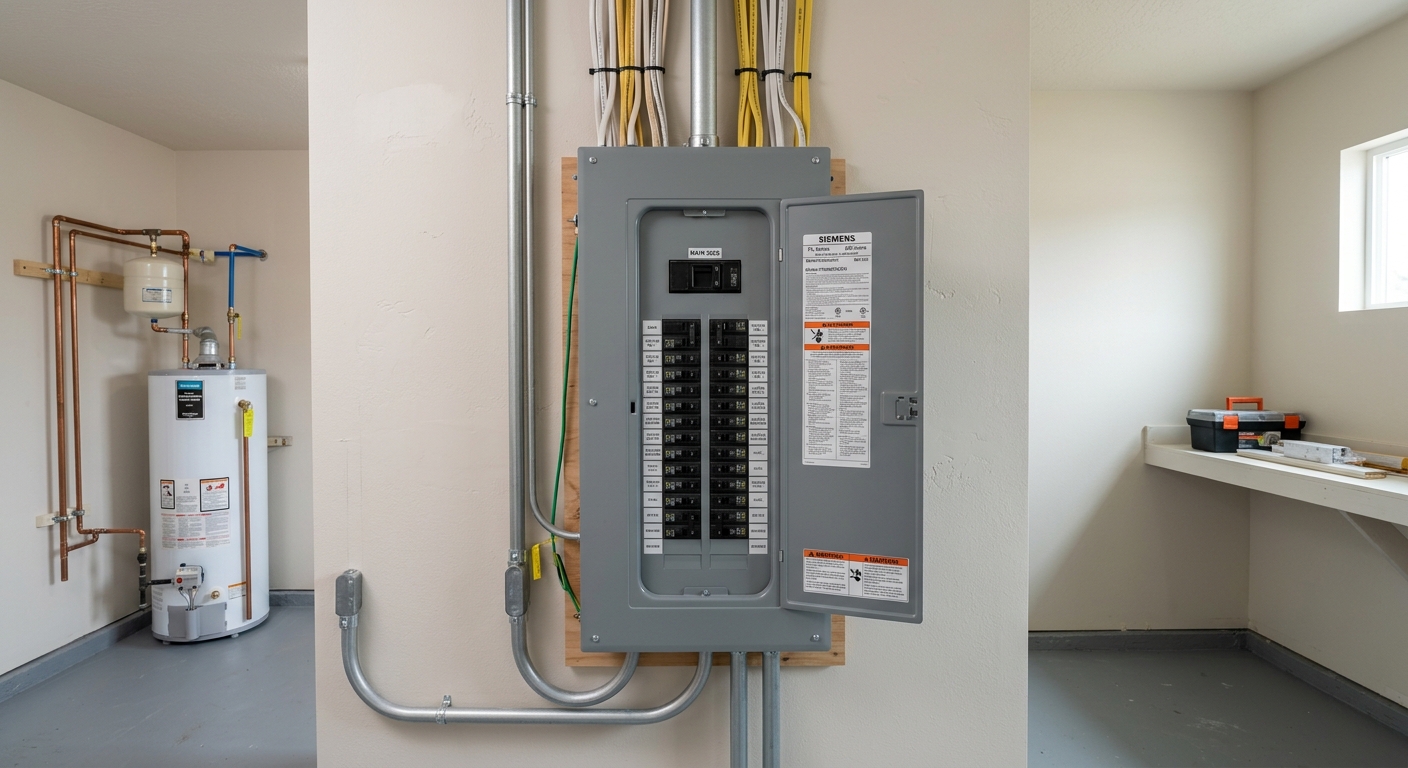
Electrical services and costs in Coaldale
Electrical work in Coaldale is often shaped by the type of housing most of us actually have. In the 2021 Census, 40.7% of homes in the area were built before 1981, which lines up with the kinds of wiring and service issues we keep running into—upgrades to remove knob-and-tube, remediate older wiring, and bring modern breaker and protection requirements up to standard. With 8,771 residents and a homeowner-heavy market (82.9% of households own), there’s steady demand for renovations, service upgrades, and safety fixes rather than just cosmetic changes.
The Lethbridge–Medicine Hat economic region has a blend of older housing stock and newer suburban development, so costs can swing based on how much “legacy” equipment is still in place. Winter cold snaps increase heating demand, and that can make an undersized panel show its limits faster—especially when homeowners add high-draw loads like EV charging, heat pumps, and electric stoves. At the same time, the pace of EV adoption is pushing more Level 2 charger permit applications, and that labour demand affects scheduling in busy periods.
In Coaldale, contractors often feel the highest pressure for service upgrades and rewiring in established residential pockets near main routes such as Mayor Magrath Drive, where many homes have older electrical systems and straightforward access for panel work. From there, it’s common to see follow-on costs for new circuits and upgraded protection once the panel is opened and assessed. Use the table below to benchmark the typical permit-driven scope you’ll be quoted in Coaldale.
| Service |
Why It's Needed |
Permit Required |
Price Range |
| Panel upgrade — 100A to 200A service |
Modern load calculations often require more capacity for EV chargers, heat pumps, and larger kitchen loads; also improves breaker selection and safety. |
Yes (service upgrade and load calculation) |
$2,500 – $5,000 |
| EV charger installation (Level 2, 40–50A) |
Adds a dedicated supply for reliable charging with the correct breaker, wiring size, and protection. |
Yes (new circuit/connection) |
$1,200 – $2,500 |
| Knob-and-tube wiring removal and replacement |
Older wiring increases risk from insulation deterioration and terminations; full replacement improves safety and insurability. |
Yes (rewiring) |
$3,000 – $10,000 |
| Aluminum wiring remediation (CO/ALR connectors) |
Homes with aluminum branch wiring need licensed work and approved methods (connectors and terminations) to address long-term joint heating risk. |
Yes (alteration of conductors/circuits) |
$2,500 – $7,500 |
| New dedicated circuit (HVAC, appliance, hot tub) |
Dedicated circuits reduce nuisance tripping and meet load and protection requirements for higher-demand appliances. |
Yes (new circuit) |
$800 – $2,200 |
| Whole-home rewire (older home, full replacement) |
When wiring is widespread or unsafe, full replacement ensures consistent protection and code-compliant outlets/switches throughout the home. |
Yes (full rewiring) |
$6,000 – $18,000 |
Prices are estimates only and vary by project scope, site access and material selection.
What affects the price of electrical work in Coaldale
In Coaldale and the wider Lethbridge–Medicine Hat region, the same job can produce quotes that differ by 30–50% because the scope is rarely identical once a contractor opens the panel, traces circuits, and confirms wiring type. Labour, inspection sequencing, and how much of the original wiring must be removed or remediated all change the real work—especially in older homes. A dominant cost driver is housing age: homes built before 1950 sometimes still have knob-and-tube wiring, and insurance companies increasingly push back on continued coverage. On the other hand, many 1960s–70s homes have older service sizing and wiring materials that weren’t designed for today’s loads.
For example, aluminum wiring is commonly seen in homes built roughly between 1965 and 1976, and it typically requires licensed remediation using approved CO/ALR connectors or full replacement of affected sections. Meanwhile, Alberta’s EV trend is increasing demand for Level 2 chargers, and that adds new circuit work plus permit/inspection steps. If you’re upgrading from a 100A service toward a 200A setup, that often lands in the $2,500 – $5,000 band for many typical homes—assuming access is reasonable and the utility/service entrance work isn’t complicated. If the electrician also has to rewire portions of the home, you can drift from the wiring band toward $3,000 – $10,000 and beyond depending on how many rooms and how much concealed wiring is involved.
Two concrete Coaldale examples: first, homes with finished basements or tight crawl spaces can increase labour time for fishing wire and replacing outlets, pushing the total toward the upper part of the $3,000 – $10,000 wiring range. Second, if your EV charger location is already near the panel (short cable route), you may stay closer to the $1,200 – $2,500 EV installation band; a long run through exterior walls and soffits can move you away from the low end.
| Price Factor |
Why It Matters |
Cost Impact |
| Panel size upgrade — 100A to 200A is the standard minimum today |
Modern load calculations with EV charging and heat pumps require additional capacity and proper breaker layout. |
$2,500 – $5,000 |
| Wiring type — copper vs. aluminum remediation vs. K&T removal |
Aluminum joints require approved remediation; knob-and-tube usually needs removal or extensive replacement. |
Often shifts work into the $2,500 – $10,000 combined range depending on extent |
| Number of new circuits — each adds material and labour time |
More circuits mean additional cable, breakers, boxes, and time for tracing and termination. |
Typical adds can move totals several hundred to a few thousand dollars |
| Permit + ESA/TSBC inspection fee — mandatory for all major work |
Major electrical changes require permits and inspection, regardless of whether the homeowner sees “visible work.” |
Budget upward by the permit/inspection portion included in many quotes |
| Labour rate for licensed electricians — journeyman rates in Lethbridge–Medicine Hat |
Local service calls and hourly rates directly affect the final price when troubleshooting or rework is needed. |
Commonly priced with labour around $80 – $130/hour (varies by contractor) |
| EV charger amperage — 40A vs. 50A circuit affects cable and breaker cost |
A higher-amperage circuit can require different conductors and breaker components. |
May shift EV installs within $1,200 – $2,500 |
| Emergency or after-hours premium |
After-hours callouts cost more because electricians schedule around safety-critical availability. |
Often adds a noticeable premium to labour and minimum service time |
| Load calculation required for service upgrade |
A proper load calculation and documentation can add time, but it prevents an under-sized install. |
Typically included in a service-upgrade quote; affects whether the job stays in the $2,500 – $5,000 band |
Permits & regulations in Alberta
In Alberta, essentially all electrical work beyond changing a light bulb must be done by a licensed electrician. That includes panel upgrades, service upgrades (for example, 100A to 200A), new circuits, rewiring, and EV charger installations. It also covers most changes involving outlets/switches when wiring is altered or new cable runs are required. You generally should expect permits to be required for these kinds of projects, because the work must pass inspection before it’s considered compliant.
Permitted work must be inspected by the provincial electrical safety authority (in Alberta this is handled through the Technical Safety BC/ESA-type system and provincial administration—homeowners commonly see inspection steps coordinated locally). The key point is: the licence holder completes the work, and the inspection verifies safety and code compliance. “DIY” is not a reliable pathway for anything involving wiring alterations, breaker changes, or panel/service work, even for homeowners who are handy—because the permit and inspection requirements are the line that protects you.
To verify a contractor for Coaldale projects, do it in this order: (1) confirm their Alberta electrician licence status using the province’s public registry entry for the contractor; (2) request a certificate of liability insurance naming their business and confirm it’s current; (3) ask for WSIB/WCB coverage proof—don’t accept “it’s not needed,” because you’re responsible for your contractor’s site safety; (4) request written documentation of the permit process (permit pull included or added as a line item) and the inspection schedule. If they can’t produce licence and coverage details quickly, treat that as a major red flag.
When your Coaldale home needs an electrical upgrade
In Coaldale, many electrical problems start as inconvenience and then become safety or compliance issues—especially in older housing stock where insulation condition and service sizing weren’t built for today’s loads. Start with the breakers: if breakers trip regularly, it usually points to an overloaded panel, undersized circuits, or deteriorating connections that worsen with heat and cold cycling. That’s often not a “wait and see” situation, because repeated tripping can damage components and create intermittent faults.
Next, look for knob-and-tube wiring. The key concern isn’t simply that it’s old—it’s that insulation contact and aging materials can increase the risk of overheating. If knob-and-tube is present, you’re typically looking at planned replacement rather than isolated repairs, and it can affect insurance and sale timelines.
Check your panel amperage if you’re planning upgrades. A 60A or 100A service is frequently inadequate for a modern Coaldale home running an EV charger, heat pump, and electric stove at the same time. In those cases, a 200A upgrade is the standard solution, commonly within the $2,500 – $5,000 band when access is straightforward.
For aluminum wiring (often pre-1976 construction), it may not be an immediate “fire now” hazard if maintained, but it does require licensed remediation and approved connector methods. Finally, missing AFCI/GFCI protection or too few outlets—extension cords everywhere—can become a code-compliance problem, and it often surfaces during home sale inspections.
Example: if your EV charger can’t be added safely without upgrading the service, paying for a 200A panel move may cost more upfront, but it avoids repeated nuisance trips and costly rework. Trying to “work around it” with extra breakers on an undersized service is usually the more expensive path.
| Warning Sign |
What It Means |
Recommended Action |
Urgency |
Price Band |
| Breakers trip frequently |
Often indicates overload, failing connections, or undersized/incorrect circuits relative to modern usage. |
Troubleshoot load and circuit design; check panel and terminations; add capacity if needed. |
Immediate (arrange service call) |
$800 – $2,200 |
| Knob-and-tube wiring present |
Aging materials and insulation issues can increase safety risk and insurance concern. |
Plan removal/replacement of K&T circuits and update protection and grounding. |
High (schedule remediation) |
$3,000 – $10,000 |
| 60A or 100A panel (inadequate load capacity) |
May not support simultaneous modern loads like EV charging and electric cooking. |
Perform load calculation; upgrade to 200A service and reconfigure breakers. |
High (before adding major new loads) |
$2,500 – $5,000 |
| Aluminum wiring (pre-1976 construction) |
Branch wiring can require approved termination/remediation to prevent long-term joint heating. |
Inspect and remediate with approved CO/ALR connectors or replacement where required. |
Planned (but don’t ignore) |
$2,500 – $7,500 |
| Insufficient outlets — extension cords everywhere |
Increases nuisance and safety risk; can also indicate undersized circuit coverage. |
Add receptacles with new circuits as needed (avoid daisy-chaining). |
Medium (plan before it becomes hazardous) |
$800 – $2,200 |
| No AFCI or GFCI protection where required |
Lack of modern protection can leave you vulnerable to arc-fault and shock hazards. |
Upgrade receptacles/breakers and add required GFCI/AFCI protection. |
Planned (prioritize safety-critical areas) |
$150 – $800 |
How to choose a electrical work contractor in Coaldale
Choosing the right electrician in Coaldale comes down to proof and process. First, verify Alberta licensing: ask for their licence number and confirm it in the provincial registry before work starts. Next, request liability insurance documentation (certificate of insurance) and check that it’s active and matches the contractor’s business name. Finally, confirm WSIB/WCB coverage—inspectors and municipalities won’t protect you from liability if an uninsured contractor has a workplace incident. If they won’t provide coverage proof, that’s a major gap.
When you ask for quotes, get 2–3 itemised proposals that break down labour and materials rather than a single lump sum. Make sure the scope clearly states: which circuits are being changed, which wiring method is used, whether permit pull is included, and whether disposal (old breakers/wiring/panel debris) is included. Ask how they will handle unknowns once the wall/panel is opened—good contractors will explain an allowance and change-order process.
Warranty matters for both workmanship and materials. Ask the length of the workmanship warranty, whether manufacturer warranties apply to breakers/chargers/panels, and whether warranties transfer to subsequent owners if you sell your home. Payment schedules should be conservative: never more than about 10–15% upfront, with a holdback until the job is complete and inspected. Also insist on a written start date and completion estimate, so you’re not stuck waiting during permit/inspection windows.
- Confirm Alberta licence number and business name match the quote.
- Request liability insurance certificate before the first invoice.
- Verify WSIB/WCB coverage paperwork is current.
- Ask if permit pull and inspection scheduling are included in the quoted price.
- Get an itemised quote: labour hours, materials, breakers/cable type, and panel components.
- Ensure the scope states exactly what is being replaced vs. what is being remediated.
- Ask how they’ll handle concealed wiring once access is opened (change-order rules).
- Confirm disposal/recycling of old materials is included or quoted separately.
- Ask about protection requirements (GFCI/AFCI where applicable) and how they verify compliance.
- Require a workmanship warranty (ask for the term in writing).
- Use conservative payments: 10–15% max upfront; hold back until completion and inspection.
- Get start date, inspection timing, and completion estimate documented.
In Coaldale, watch for red flags like: vague scope (“we’ll upgrade what we find”), no proof of Alberta licence/coverage, quotes without permit/inspection clarity, asking for large upfront payments, and refusing to provide an itemised breakdown or written start/completion timeline.
Frequently asked questions — electrical work in Coaldale
Why do my breakers keep tripping?
If breakers trip in Coaldale, it’s usually not random—it’s a protective response to overload, a failing connection, or a circuit mismatch with today’s load. Cold weather can also push demand higher (especially if you’re using electric heat or running multiple high-draw appliances). In homes with older wiring types, terminations can loosen over time, which increases heat and can cause faults. If you have a 60A or 100A service, adding loads like EV charging, an electric range, or a heat pump can exceed what the system was originally designed to carry.
A proper diagnosis includes checking which breaker trips, measuring loads, inspecting panel terminations, and verifying wiring size and breaker ratings. If the fix is simply a new dedicated circuit, it may fit within the $800 – $2,200 band; if your service is undersized, you may need a service upgrade closer to $2,500 – $5,000.
How do I compare electrical quotes?
Comparing quotes is easiest when they’re truly like-for-like. Ask each contractor for an itemised breakdown: labour hours, materials (panel model, breakers, cable type), and whether permits and inspections are included. In Alberta, permit/inspection steps apply to major changes like panel upgrades, rewiring, new circuits, and EV charger installations, so don’t compare a “cash price” that skips compliance. Also check whether the quote addresses known risks, such as aluminum wiring remediation (CO/ALR connectors) or knob-and-tube removal—those scope differences drive large swings.
Get clarity on exclusions: is disposal included, is drywall restoration part of the job, and how will unknown conditions be handled once access is opened? If one quote lands near the panel upgrade band of $2,500 – $5,000 but another includes additional circuit additions or substantial wiring remediation, that can explain a higher total. The cheapest quote isn’t always the best value if it leaves safety or code compliance gaps.
How long does a panel upgrade take in Coaldale?
For a typical residential panel upgrade in Coaldale—like moving from 100A to 200A—actual on-site labour is often a matter of a day, but the whole timeline depends on permitting and inspection scheduling. The electrician still needs time for load calculation documentation, equipment setup, safe shutdown/switching, and proper breaker and conductor connections. If your panel location is difficult to access, or if the service entrance wiring needs upgrades, it can take longer.
In practice, you’ll usually be looking at more than “just one day,” because permits and inspections have fixed steps under Alberta’s safety framework. Ask your contractor for the expected permit submission date and the likely inspection window. If you also add new circuits at the same time (for example, for an EV charger), that can add labour hours and material planning. Budget-wise, the base panel upgrade often aligns with $2,500 – $5,000, while added wiring or new circuits can move the total upward.
What is a GFCI outlet and where is it required in Alberta?
A GFCI (Ground Fault Circuit Interrupter) outlet is a protective device that trips when it detects an unsafe ground-fault condition—helping reduce shock risk in areas where water and moisture are more likely. In Alberta, the requirement follows the electrical safety code and the intended use of the receptacles (for example, kitchens aren’t “automatically all GFCI,” but wet-area and outside-related receptacles typically are). If your home is older, you may have fewer modern protection devices than today’s rules call for.
If you’re doing updates in Coaldale—especially renovations, adding outlets, or adding a new circuit—an electrician will determine where GFCI/AFCI protection is needed based on current requirements. For homeowners, a GFCI upgrade is often an attainable safety improvement and may fall into the $150 – $800 range depending on whether it’s a simple outlet swap, a breaker-based upgrade, or part of a larger circuit rework.
How do I know if my Coaldale home has aluminum wiring?
Aluminum branch wiring is most commonly associated with homes built in the mid-1960s through mid-1970s, which is one reason it comes up frequently in older Coaldale neighbourhoods. The quickest way is an electrician’s inspection at your panel and accessible junction points—look for conductor markings and how the wiring is terminated. Aluminum conductors typically have specific markings on the cable jacket or on the conductor, and the terminations may show older connector styles.
For many homeowners, the real-world clue is the combination of “older home + remediations needed when you open the panel.” If you’re planning an EV charger or panel upgrade, the electrician will usually assess wiring condition and termination methods anyway. If aluminum wiring is present, remediation commonly involves approved CO/ALR connectors, or in some cases partial/full replacement where damage or improper terminations exist. Remediation work can commonly land in the $2,500 – $7,500 band depending on scope.
What is the cost of rewiring a house in Coaldale?
The cost of rewiring depends heavily on the home’s wiring condition, how much of the house has unsafe wiring, and how much access is available (finished basements, blocked chases, and difficult fishing routes all matter). In Coaldale, many rewiring scopes come from older housing stock—especially where knob-and-tube wiring is present or when multiple circuits are outdated and unsafe. For a partial rewire or circuit-by-circuit replacement, you might stay closer to the $3,000 – $10,000 band; for a whole-home rewire, budgets are often substantially higher because you’re replacing conductors, outlets, switches, and updating the protection strategy throughout.
It’s also important to plan for permits and inspection steps under Alberta’s safety framework, which adds to overall cost regardless of how “hidden” the work feels. If your goal is also to add an EV charger or upgrade service capacity, many electricians coordinate rewire and panel work to avoid paying twice for cable runs and access.