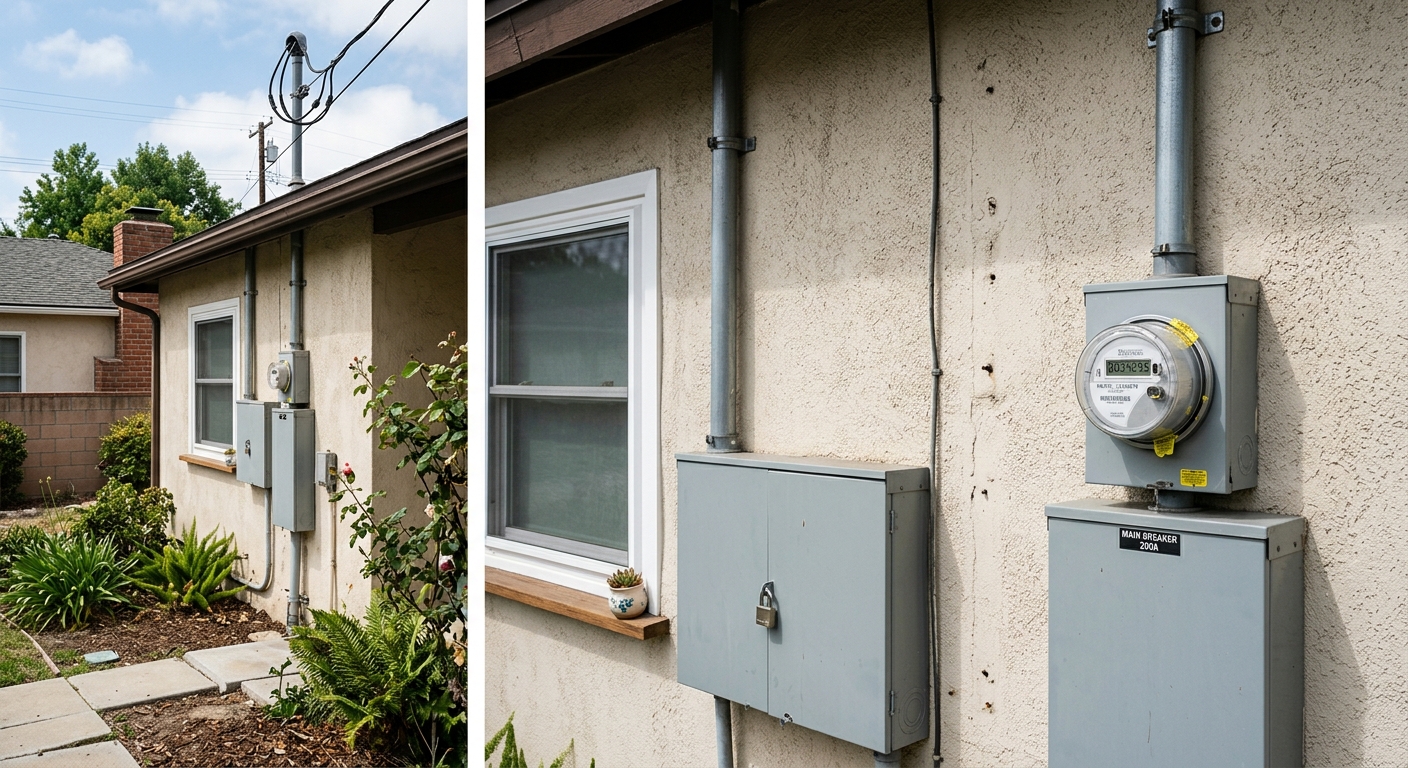
Electrical services and costs in Fort Macleod
Electrical services in Fort Macleod often come down to keeping older homes safe while meeting today’s higher power demands. With about 60.8% of local dwellings built before 1981 (Statistics Canada, 2021 Census), it’s common to see legacy wiring and aging panel equipment that can’t reliably handle modern loads. That older housing stock is also why projects like knob-and-tube removal, aluminum remediation, and full rewire quotes are so prevalent here—especially in neighbourhoods with more pre-1980 construction along the town’s established residential pockets.
In the Lethbridge–Medicine Hat economic region, seasonal temperature swings and long winter demand more from household electrical systems, and that pushes up the workload for load calculations and service upgrades. At the same time, the market has both older homes and growing suburban development, so contractors need to plan around mixed wiring types, different service conductor conditions, and accessibility constraints typical of mature lots. Local rates generally reflect a licensed electrician’s time in the $80–$130/hour range, plus mandatory permit and inspection costs under Alberta’s Safety Codes framework. EV charger installs are also increasing, and that often means an upgrade from a 100A service to a 200A service before the charger can be installed safely and with proper breaker protection.
For homeowners comparing bids, the table below is the fastest way to understand typical permit-backed cost ranges in Fort Macleod before you request an itemised quote.
| Service |
Why It's Needed |
Permit Required |
Price Range |
| Panel upgrade — 100A to 200A service |
Modern homes add heat pumps, electric stoves, outlets for jobsite tools, and EV charging; a 100A service is frequently at or near its practical limit. |
Yes (service change and panel replacement) |
$2,500–$5,000 |
| EV charger installation (Level 2, 40–50A) |
Dedicated circuit and correctly sized breaker/cable reduces overheating risk and supports consistent charging performance. |
Yes (new circuit and charger connection) |
$1,200–$2,500 |
| Knob-and-tube wiring removal and replacement |
Knob-and-tube is obsolete and can fail with age; replacing it restores safe insulation and proper grounding/bonding for modern devices. |
Yes (wiring changes/rewire scope) |
$3,000–$10,000 |
| Aluminum wiring remediation (CO/ALR connectors) |
Aluminum branch wiring from mid-1960s to mid-1970s requires approved methods to reduce loose-connection heating risks. |
Yes (wiring remediation) |
$3,000–$8,500 |
| New dedicated circuit (HVAC, appliance, hot tub) |
Prevents nuisance tripping and supports higher continuous loads with correct wire sizing and protection. |
Yes (new circuit) |
$900–$2,500 |
| Whole-home rewire (older home, full replacement) |
When multiple rooms, services, and feed-throughs have mixed wiring types, a full replacement is often the safest and most resale-friendly option. |
Yes (complete wiring replacement) |
$6,000–$18,000 |
Prices are estimates only and vary by project scope, site access and material selection.
What affects the price of electrical work in Fort Macleod
In Fort Macleod and across the Lethbridge–Medicine Hat region, it’s normal to see 30–50% differences between quotes for what sounds like the same job. The main reason isn’t “extra profit”—it’s the amount of hidden work uncovered once panels open, wires are tested, and the load calculation is completed. Housing age is the dominant cost driver: homes built before about 1950 can have knob-and-tube wiring that may be harder to insure and more difficult to leave in place, which can push projects toward partial or full replacement. Homes from the 1960s–70s often have 60A or 100A panels that were fine at the time but are now strained by EV chargers, heat pumps, and induction stoves.
Aluminum wiring, common in that era, also affects price. Remediation using approved CO/ALR connectors and proper termination work is labour-intensive and must be done by a licensed electrician; in some cases the scope grows to full replacement if connections, devices, or wiring runs don’t test well. Meanwhile, EV adoption is driving a surge in Level 2 charger permit applications, and that frequently starts with service capacity upgrades—so costs can shift from “charger only” to “charger plus 100A to 200A panel upgrade.”
Local conditions can raise or lower cost. For example, longer cable runs through finished walls, older service mast/conduit conditions, and limited attic access typically add time. Conversely, straightforward attic crawlspace access, minimal panel corrosion, and wiring that’s already copper can keep a project closer to the lower end of the $2,500–$5,000 panel upgrade band or the $3,000–$10,000 wiring/remediation band.
| Price Factor |
Why It Matters |
Cost Impact |
| Panel size upgrade — 100A to 200A is the standard minimum today |
More capacity is needed for modern continuous loads and EV charging. |
$2,500–$5,000 |
| Wiring type — copper vs. aluminum remediation vs. K&T removal |
Aluminum and knob-and-tube require specific methods, parts, and testing. |
$3,000–$10,000 |
| Number of new circuits — each adds material and labour time |
Dedicated circuits require breakers, cable, terminations, and often outlet work. |
$900–$2,500 (per circuit, typical) |
| Permit + ESA/TSBC inspection fee — mandatory for all major work |
Alberta permits/inspections are required for service changes, rewiring, and new circuits. |
$150–$600 (typical combined) |
| Labour rate for licensed electricians — journeyman rates in Fort Macleod |
Licensed hours in Alberta are billed at a local market rate reflecting skilled work. |
$80–$130 per hour (labour) |
| EV charger amperage — 40A vs. 50A circuit affects cable and breaker cost |
Higher amperage can require larger cable and a compatible breaker setup. |
$1,200–$2,500 (typical installed) |
| Emergency or after-hours premium |
Urgent call-outs increase crew costs and scheduling overhead. |
$200–$600 (typical premium) |
| Load calculation required for service upgrade |
Accurate load calculations prevent undersizing and help justify the correct service size. |
$0–$250 (often bundled, sometimes itemised) |
Permits & regulations in Alberta
In Alberta, ALL electrical work beyond changing a light bulb must be done by a licensed electrician. That includes panel upgrades, new circuits (including EV chargers), rewiring, service upgrades, and most work involving changes to wiring routes, breakers, receptacles, or fixed appliances. In other words, if the job touches conductors, panels, grounding/bonding, or adds capacity, it’s almost always permit-required. DIY electrical is heavily restricted for homeowner safety reasons; narrow homeowner activities may be limited to things like replacing certain like-for-like fixtures, but most anything that impacts wiring, panel equipment, or protection devices requires a permit and inspection.
Permits are issued under Alberta’s Safety Codes framework, and the permitted work must pass inspection by the provincial electrical safety authority. In practice, your electrician will coordinate the permit and inspection steps with the municipality/accredited agency process. Before work starts in Fort Macleod, ask for the permit number (or confirmation it’s applied) and ensure the scope matches what’s being inspected.
Step-by-step checks you can do: (1) Verify the contractor’s Alberta electrician licence credentials via the provincial registry/search tool referenced by the employer’s paperwork. (2) Request a clearance letter and confirm their liability insurance certificate lists current coverage. (3) Ask about WSIB/WCB coverage and confirm it’s active for the electrical contractor (and any subcontractors). (4) Ensure their quote states what portion of the job is permitted, and whether they’re handling the permit pull and inspection scheduling.
When your Fort Macleod home needs an electrical upgrade
If your Fort Macleod home is showing electrical warning signs, it’s usually less about convenience and more about safety and system capacity. First, breakers that trip regularly—especially when you run the kettle, microwave, hair dryer, or space heater—often point to an overloaded panel, undersized or misconfigured circuits, or worn breaker connections. Second, knob-and-tube wiring isn’t just “old”; the bigger issue is aging insulation and contact points that can fail, creating higher risk over time. If you have knob-and-tube, treat it as a planned priority at minimum, and don’t wait for an incident.
Third, pay attention to service size. If you have a 60A or 100A panel, it’s often inadequate for a modern household running an EV charger, heat pump, and electric stove together. In Fort Macleod, winters mean higher heating loads, and even when you’re not using electric heat daily, combined loads can still push a small service past its practical operating headroom—making a 200A upgrade the standard solution. Fourth, aluminum wiring in pre-1976 construction may not be immediately dangerous if properly maintained, but it requires licensed remediation (commonly CO/ALR connector methods) because poor terminations can overheat.
Fifth, insufficient outlets and constant extension cords are a code-compliance and trip hazard issue, not a “buy a power bar” fix—especially if you’re missing AFCI/GFCI protection where required. A key budgeting example: if you’re already paying to add one “cheap” outlet and run cable, sometimes it’s smarter to coordinate that work with a service upgrade. The panel upgrade band ($2,500–$5,000) can be more cost-effective than doing separate rounds of circuit additions that still leave you short on capacity.
| Warning Sign |
What It Means |
Recommended Action |
Urgency |
Price Band |
| Breakers trip frequently |
Often indicates overload, failing breaker, incorrect circuit wiring, or undersized protection. |
Schedule a load assessment and inspect panel/circuits; add dedicated circuits only if justified. |
Immediate |
$900–$2,500 (often starts here) |
| Knob-and-tube wiring present |
Obsolete wiring type with aging insulation issues; insurance and safety concerns often escalate. |
Plan removal/replacement (partial to begin, or full rewire if widespread). |
Planned priority |
$3,000–$10,000 |
| 60A or 100A panel (inadequate load capacity) |
Insufficient capacity for modern appliances and EV charging; higher chance of nuisance trips. |
100A to 200A service upgrade with updated breakers and load calculation. |
Priority |
$2,500–$5,000 |
| Aluminum wiring (pre-1976 construction) |
Terminations can loosen/overheat if not remediated using approved methods. |
CO/ALR connector remediation where appropriate, or full replacement if needed. |
Planned priority |
$3,000–$8,500 |
| Insufficient outlets — extension cords everywhere |
More load sharing on a few circuits increases heat buildup risk and nuisance tripping. |
Add receptacles and, where necessary, add dedicated circuits to distribute loads. |
Planned priority |
$900–$2,500 (typical) |
| No AFCI or GFCI protection where required |
Increases risk of arcing and shock; can also be a problem during resale or sale condition checks. |
Upgrade protection devices during rewiring/circuit additions. |
Priority |
$150–$800 (device/fixture-related scope) |
How to choose a electrical work contractor in Fort Macleod
Choosing the right electrical contractor in Fort Macleod starts with verification, not sales pitch. First, confirm they’re properly licensed in Alberta for the scope you need (service upgrades, rewiring, and new circuits all require a licensed electrician). Next, request proof of liability insurance and ask for the certificate of insurance—make sure it’s current and matches the contractor company name. Also ask about WSIB/WCB coverage (and ensure any subcontractors used are covered too). If they can’t provide paperwork quickly, that’s a serious red flag.
Then get 2–3 itemised written quotes. Look for a labour-and-materials breakdown (permit coordination, panel components, breakers, cable, receptacles, disposal/cleanup, and any testing). Avoid “all-in” quotes with no detail—electrical scopes expand once we discover wiring type, accessibility, and what’s actually on the circuit. Confirm whether permit pull and inspection scheduling are included, and whether waste/disposal of removed material is included or billed separately.
Warranty matters: ask for the workmanship warranty length, and whether the manufacturer warranty transfers to you on breakers/panels/EV equipment. Also set payment expectations. Never pay more than 10–15% upfront; a holdback until completion is reasonable, especially when inspections are required. Finally, insist on a start date and a completion estimate in writing.
- Licence number and scope match your exact job (service/panel, EV charger, rewiring).
- Provide permit pull confirmation and inspection responsibility in writing.
- Itemised materials list (panel model, breakers, cable type/size, approved connectors).
- Labour hours estimate and assumptions about access/unfinished spaces.
- Clarify what’s excluded (drywall repairs, cable fishing, disposal, attic access issues).
- Confirm if AFCI/GFCI protection is included where required.
- State how they’ll handle knob-and-tube/aluminum portions (scope and plan).
- Workmanship warranty details in the contract.
- Product/manufacturer warranty documentation for panels/breakers/charger equipment.
- Payment schedule with no large upfront deposit (10–15% max).
- Start date and completion window tied to inspection scheduling.
- Clean-up and safe removal of old wiring/components included.
In Fort Macleod, common red flags include contractors who won’t show their Alberta licence number, won’t provide insurance/WSIB/WCB proof, provide only a lump-sum price without scope detail, dismiss the need for permits/inspections, or ask for most payment upfront before any work and inspection are done.
Frequently asked questions — electrical work in Fort Macleod
What are signs of an overloaded electrical panel?
In Fort Macleod, overloaded panels often show up as breakers that trip repeatedly, lights that dim when you start appliances, and a “burning smell” near the panel after heavy use. You may also notice frequent nuisance trips when multiple loads run at once—like microwave plus kettle plus space heating. Sometimes the panel itself looks crowded with older breakers or mixed wiring methods. If you also have an older home (and many in the area are pre-1981), the odds of needing a capacity upgrade are higher. A common remedy is a load calculation followed by a service upgrade; many homeowners end up with a 100A to 200A panel upgrade in the $2,500–$5,000 range, especially when adding EV charging.
Can I do my own electrical work in Alberta?
In Alberta, most DIY electrical work is not permitted. Beyond simple like-for-like fixture changes (where allowed), electrical work that affects wiring, breakers, panels, circuits, grounding/bonding, or introduces new connections must be done by a licensed electrician and is typically permit-required. For Fort Macleod homeowners, the key takeaway is that “it still works” isn’t a safety standard—Alberta requires that permitted work passes inspection under the province’s electrical safety framework. If you’re considering DIY because costs are high, it’s usually smarter to book a licensed electrician for a diagnosis and an itemised plan. You’ll still be able to control costs by scoping the work clearly, but you shouldn’t try to bypass licensing or permits for anything beyond minor non-wiring tasks.
How long does a rewiring job take?
Rewiring timelines depend on how extensive the wiring replacement is and how accessible the home is. A smaller “targeted” remediation (for example, a few runs tied to aluminum terminations) can be quicker, while a whole-home rewire takes longer because electricians have to re-run cable, replace devices, test circuits, and coordinate inspection steps. In Fort Macleod, older homes with plaster walls, tight attics, or knob-and-tube remnants can stretch schedules. Expect planning for inspection scheduling as part of the timeline. If your home is pre-1981 (Statistics Canada, 2021 Census), there’s often more condition variance, and that can add days. For budgeting, whole-home rewire work commonly falls into the $3,000–$10,000 band and sometimes higher depending on walls/access and scope.
Why do my breakers keep tripping?
Frequent tripping is usually one of three things: overload (too much on one circuit), a wiring/protection issue (loose terminations, damaged wiring, aging breakers), or incorrect circuit design for modern loads. In Alberta winters, households also run more lighting and heating, so it becomes more noticeable. If your home has older wiring types—especially aluminum wiring from mid-1960s to mid-1970s—heat and connection quality can contribute to nuisance trips and safety concerns. Another common cause is inadequate panel capacity for today’s appliances and EV charging. The right fix starts with identifying the exact circuit(s) that trip, testing, and doing a load assessment. If the panel can’t support additional loads, homeowners often end up with a 200A upgrade (typically $2,500–$5,000) rather than simply adding more breakers to an undersized service.
How do I compare electrical quotes?
When you compare quotes in Fort Macleod, focus on scope detail—not just the total price. Ask for itemised labour and material breakdowns, including whether permit pull and inspection coordination are included. Clarify what’s excluded: drywall patching, cable fishing through finished walls, disposal of removed materials, and testing. Compare what they’re proposing for wiring type changes: for aluminum wiring, you want approved CO/ALR connector methods (or replacement where required), and for knob-and-tube, you want a defined removal plan. Also check whether the quote includes the load calculation and the correct circuit protection devices (AFCI/GFCI where required). If one quote covers a full service upgrade and another only addresses a small outlet issue, the difference can be rational even if one price looks higher—especially when panel upgrades typically sit around $2,500–$5,000.
How long does a panel upgrade take in Fort Macleod?
A panel upgrade in Fort Macleod is often faster than a full rewire, but the schedule still depends on service conditions and inspection timing. Commonly, the on-site electrical portion might be completed within a day or two for straightforward replacements, but permit processing and the required inspection can add days. The electrician also needs time for load calculation, verification of existing service conductors, and safe disconnect/reconnect of branch circuits. If the home has older wiring components or accessibility challenges, expect more time. From a budgeting standpoint, many homeowners choose a 100A to 200A upgrade because it better supports modern loads; typical pricing for that service change is $2,500–$5,000 in this region. Ask your contractor to provide a written start date and a realistic completion estimate that includes inspection.