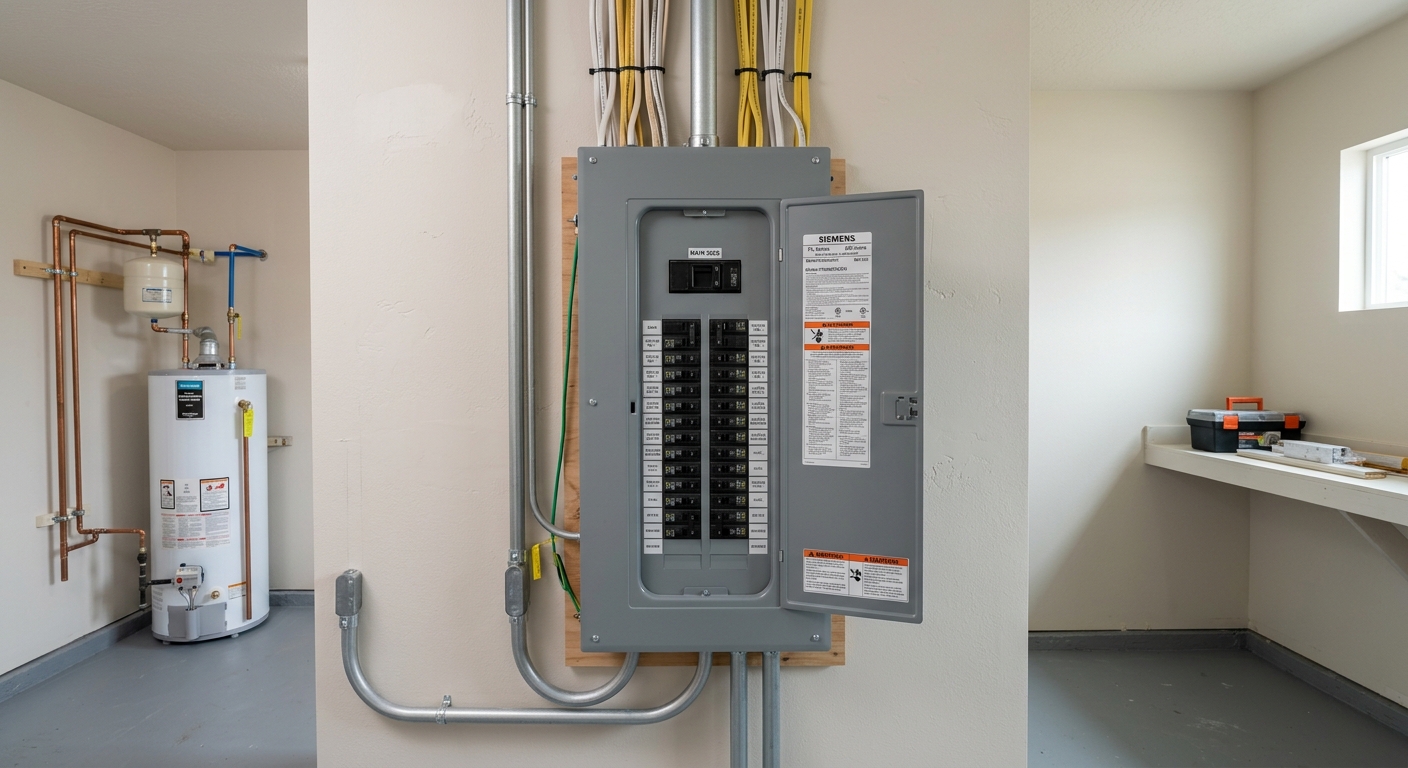
Electrical services and costs in Midnapore
Midnapore homeowners usually feel electrical work costs most when they’re moving from an older electrical setup to a modern one, and the demand is especially strong in pockets close to the newer growth areas where basements and additions are common. With a Census-reported population of 6,480 in Midnapore (Statistics Canada, 2021 Census), you can still find a wide mix of house ages—many pre-1980 homes were built with wiring and service sizing that predate today’s loads. In Calgary’s broader housing market, that often means knob-and-tube wiring, aluminum branch circuits in mid-century builds, and smaller 60–100A services that were never designed for EV charging, heat pumps, induction cooking, and electric heating working at the same time.
Calgary-area pricing is strongly shaped by site conditions and the way services are delivered: overhead vs underground utility feeds, whether trenching or hydrovac is needed, and how much panel work is hidden in finished walls. Winter cold snaps also make scheduling harder—tight timelines and indoor access matter when electricians are working around furnaces, finished basements, and limited crawlspace clearance. Labour availability can tighten during peak renovation season, and that can move a quote within a given price band even when the electrical scope is similar.
In Midnapore, work is especially common around the more mature residential blocks where older electrical is tucked into renovations and where homeowners are finishing basements. Next, here’s a practical cost comparison table you can use to sanity-check quotes before you book a site visit.
| Service |
Why It's Needed |
Permit Required |
Price Range |
| Panel upgrade — 100A to 200A service |
Modern homes add higher continuous loads (EV chargers, heat pumps, electric ranges), and many older panels have limited breaker space and insufficient capacity. |
Yes (service and panel work) |
$2,500 – $8,000 |
| EV charger installation (Level 2, 40–50A) |
Dedicated circuit reduces risk of nuisance trips and supports safer, code-compliant charging for today’s EV adoption. |
Yes (new branch circuit / breaker work) |
$900 – $2,500 |
| Knob-and-tube wiring removal and replacement |
Old K&T insulation and wiring methods are a fire risk and are frequently a deal-breaker for insurance; removal is often paired with a panel and grounding upgrade. |
Yes (rewiring/alterations to wiring) |
$4,000 – $15,000 |
| Aluminum wiring remediation (CO/ALR connectors) |
Pre-1976 homes with aluminum branch circuits may require approved connector remediation and careful terminations to meet modern connection practice. |
Yes (altering wiring connections) |
$4,000 – $10,000 |
| New dedicated circuit (HVAC, appliance, hot tub) |
Dedicated breakers protect motors and high-demand appliances, improve safety, and reduce overheating risks. |
Yes (new circuit) |
$1,200 – $4,500 |
| Whole-home rewire (older home, full replacement) |
When wiring is extensive (K&T, mixed aluminum/copper, degraded cables), full replacement is the cleanest path to long-term safety and code compliance. |
Yes (complete rewiring) |
$10,000 – $25,000 |
Prices are estimates only and vary by project scope, site access and material selection.
What affects the price of electrical work in Midnapore
In Midnapore and the wider Calgary economic region, quotes for the “same” electrical task can vary by roughly 30% to 50% because the underlying scope is rarely identical—especially when older wiring, service size, or hidden routing are involved. The dominant cost driver is housing age. Pre-1950 homes are more likely to have knob-and-tube wiring, and insurance underwriters increasingly scrutinize it; that can force a bigger remediation plan than homeowners expect. Meanwhile, many homes from the 1960s–70s were built around 60A or 100A panels that can struggle with today’s load profile, including EV chargers and heat pumps used through cold Calgary winters.
Aluminum wiring is another frequent source of variation. In many builds from the mid-1960s through mid-1970s era, aluminum branch circuits require licensed remediation using approved methods (like CO/ALR connector work) or, in some cases, selective replacement. Those connection details affect labour time and material costs. If you’re upgrading for EVs, the surge in Level 2 charger permit applications means scheduling and inspection coordination can influence pricing.
Two–three concrete Midnapore examples help explain the swings. First, a panel upgrade can be closer to $2,500–$8,000 when the service equipment location is accessible and the utility-side work is minimal. It can climb toward the upper end when underground service, trenching/hydrovac, or relocation is involved. Second, a “simple” dedicated circuit may be inexpensive if the run is short and unobstructed, but it can add thousands if cables must be fished through finished ceilings/walls. Third, aluminum remediation is often cheaper when it’s limited to a few problematic terminations; it’s more expensive when the scope expands to multiple branch circuits and panel work.
| Price Factor |
Why It Matters |
Cost Impact |
| Panel size upgrade — 100A to 200A is the standard minimum today |
Modern load demands (EV charging, HVAC/heat pumps, electric cooking) often require larger service and more breaker space. |
$2,500–$8,000 typical for service/panel work |
| Wiring type — copper vs. aluminum remediation vs. K&T removal |
Different wiring methods require different licensed procedures, approved components, and sometimes wholesale replacement. |
Aluminum/K&T scopes can shift jobs from “few circuits” to major rewiring |
| Number of new circuits — each adds material and labour time |
Every new breaker requires cable, terminations, testing, and often drywall access. |
More circuits generally push wiring work toward the $4,000–$15,000 range |
| Permit + ESA/TSBC inspection fee — mandatory for all major work |
Permitting and inspection coordination is a non-negotiable part of Code compliance. |
Can add noticeable line-item costs even when labour is modest |
| Labour rate for licensed electricians — journeyman rates in {region} |
Senior labour, scheduling, and the complexity of working around finished spaces drives total hours. |
Directly affects the spread between quotes (30–50% swings) |
| EV charger amperage — 40A vs. 50A circuit affects cable and breaker cost |
Higher amperage may require different breaker sizing and conductor selection. |
Usually changes EV installs within the $900–$2,500 band |
| Emergency or after-hours premium |
Nights/weekends or urgent safety work often requires prioritized scheduling. |
Can increase labour costs beyond standard project pricing |
| Load calculation required for service upgrade |
Proper sizing must match your connected loads and future planning; undersized service risks callbacks. |
Often adds professional time, but prevents costly rework |
Permits & regulations in Alberta
In Alberta, ALL electrical work beyond changing a light bulb must be done by a licensed electrician. That includes panel upgrades, new circuits, rewiring, and any service upgrade—work that affects protection, wiring methods, grounding, or the service equipment. For homeowners in Midnapore, the important takeaway is that DIY is prohibited for most electrical tasks, and even when a homeowner can do non-electrical prep, the licensed contractor must complete the electrical portion and obtain the necessary approvals.
Permits are generally required for major work such as: installing or replacing a panel, adding circuits (including EV charger circuits), performing rewiring, and upgrading service size (for example, 100A to 200A). Work that typically does NOT require a permit is limited to minor, like replacing fixtures when the wiring connections are not altered—however, in practice, many “fixture changes” still need a careful look. If you’re changing from one type of device to another (or touching junctions), it can trigger permitting.
In Alberta, permitted electrical work must pass inspection by the electrical safety authority in the province (Technical Safety BC is used in BC, while Alberta uses its own provincial safety administration). To verify a contractor: (1) confirm their Alberta licence/registration, (2) request a clearance/permit reference connected to the project, (3) provide proof of liability insurance, and (4) confirm WSIB/WCB coverage. A reputable contractor should hand you certificates and clearly explain how inspections will be coordinated before the first hour of labour starts.
When your Midnapore home needs an electrical upgrade
Electrical upgrades aren’t just about convenience in Midnapore—they’re often about preventing overheating, nuisance tripping, and unsafe wiring conditions that worsen as your household loads grow. Start with the warning signs that are safety-critical. First, breakers that trip regularly usually point to overloaded circuits, deteriorating connections, or protection that doesn’t match the load; this is an “address soon” issue, especially in winter when electric heating and hot water run more often.
Second, knob-and-tube wiring is a key concern because insulation and contact conditions can create higher fire risk, and it can affect insurance—this calls for evaluation and often removal even if it’s still “working.” Third, a 60A or 100A service can be inadequate for a modern household running an EV charger, heat pump system, and electric stove together; in the Calgary market, a move to a 200A upgrade is commonly the standard fix after a load calculation.
Fourth, aluminum wiring (often seen in pre-1976 construction) isn’t automatically an emergency if maintained, but it requires licensed remediation to ensure connections are made with approved methods. Fifth, insufficient outlets and reliance on extension cords is not “cheap”—it’s a code-compliance and safety signal. Finally, missing AFCI or GFCI protection where required is a common find during sale preparations; it can delay closing or require corrective work.
As a pricing reality check: if your only option is adding a few dedicated circuits, you may stay in the $1,200–$4,500 range per added high-demand circuit. If you discover inadequate service capacity and must upgrade to 200A, that’s often the justified step moving toward the $2,500–$8,000 panel/service band, because it prevents repeated upgrades that don’t solve the root capacity problem.
| Warning Sign |
What It Means |
Recommended Action |
Urgency |
Price Band |
| Breakers trip frequently |
Potential overload, faulty breaker/cable, or wiring not sized for current loads. |
Load check, circuit inspection, and correction to code. |
Immediate to planned (same week if frequent) |
$1,200 – $6,000 |
| Knob-and-tube wiring present |
Older wiring method with insulation/contact risks; often impacts insurability. |
Professional assessment and removal/replacement plan. |
Planned upgrade (but don’t delay too long) |
$4,000 – $15,000 |
| 60A or 100A panel (inadequate load capacity) |
Modern electrification exceeds service/panel capacity and breaker space. |
Load calculation and 100A-to-200A service upgrade. |
Planned upgrade (prioritize before EV/heat pump) |
$2,500 – $8,000 |
| Aluminum wiring (pre-1976 construction) |
Connection method and termination quality matter; remediation may be needed. |
CO/ALR approved connector remediation or selective replacement. |
Planned upgrade |
$4,000 – $10,000 |
| Insufficient outlets — extension cords everywhere |
Overuse of temporary power increases risk of overheating and nuisance faults. |
Add receptacles and dedicated circuits where appropriate. |
Immediate for heavy-use areas |
$1,200 – $4,500 |
| No AFCI or GFCI protection where required |
Safety protection gaps and potential sale compliance problems. |
Upgrade receptacles/breakers to meet requirements for the affected circuits. |
Planned upgrade (sooner before sale) |
$200 – $2,500 |
How to choose a electrical work contractor in Midnapore
Choosing a contractor is where homeowners in Midnapore can avoid expensive surprises. Start with licensing and coverage. In Alberta, you want a contractor who is properly licensed for the work they’re doing and who can provide proof of liability insurance and WSIB/WCB coverage. Ask for the certificate of insurance before work starts, and request their insurance to include electrical contracting activities. Then verify the licence through the provincial online registry and compare the company details to the quote and invoice.
Next, get 2–3 itemised written quotes. A good estimate breaks out labour hours, materials (cable, breakers, connectors, panel components), and any specialty items like EV charging equipment or approved grounding accessories. Avoid “lump sum” quotes unless the scope is extremely clear; instead, ensure each quote states what’s included for permits, inspection coordination, and cleanup. Confirm whether permit fees and inspection scheduling are included, whether waste disposal is included, and what happens if concealed wiring conditions are worse than expected.
Warranty matters too: ask for the workmanship warranty length, and note whether the manufacturer warranty is tied to the specific equipment model installed. Also ask if warranties are transferable to future owners—often relevant in Calgary-area resale timelines.
For payment, don’t pay more than about 10% to 15% upfront. Hold back remaining funds until the job is complete and inspected (where required). Finally, request an in-writing start date and completion timeline, especially in winter when site access and scheduling can change quickly.
- Licensed Alberta electrician name and registration number on the quote
- Proof of liability insurance and WSIB/WCB coverage before work starts
- Itemised pricing (labour, materials, permits/inspection coordination)
- Clear scope: what’s included vs excluded (panel relocation, trenching/hydrovac, drywall restoration)
- Permit pull responsibility stated in writing
- Inspection coordination noted (who books what, and when)
- Safety testing results included (as applicable)
- Workmanship warranty stated in writing
- Manufacturer warranty details for EV chargers, panels, and breakers
- Payment schedule with 10–15% maximum upfront
- Start date and completion estimate in writing
- Proper permits/labeling for the finished panel/circuit directory
Red flags to watch in Midnapore: they won’t provide licence/insurance proof on request; they refuse to itemise permit and labour components; they quote panel/service work without discussing a load calculation; they ask for most of the payment upfront; or they minimize safety testing/inspection steps (“permits are optional” is a hard no).
Frequently asked questions — electrical work in Midnapore
How do I compare electrical quotes?
Start by comparing like-for-like scope. In Midnapore and across Calgary, two quotes can both mention “panel upgrade” but differ massively in what’s included (service relocation, utility-side work, trenching/hydrovac, grounding changes, breaker types, or disposal and drywall restoration). Ask for an itemised breakdown of labour and materials, plus line items for permits and inspection coordination. Use the local price bands as your anchor: for example, panel/service work is typically in the $2,500 – $8,000 range under normal conditions. Also compare timelines, warranty terms, and whether they’ll run a load calculation. The best quote is usually the one that explains the plan clearly and matches the same assumptions to all bidders.
How long does a panel upgrade take in Midnapore?
For many homes in the Midnapore area, a panel upgrade can be completed within a day or two, but the real schedule depends on access and whether any utility-side or service routing issues are present. If the panel location is straightforward and there’s no need for major service relocation, electricians often focus on swapping the equipment, updating breakers, and completing testing and labeling—then coordinating inspection. If underground service work is involved or walls/cabinets restrict access, it can extend the timeline. Permitting/inspection lead times also matter in winter when trades scheduling tightens. Plan for a short interruption of certain circuits during the changeover, and confirm in writing when power can be restored and when the inspection will occur.
What is a GFCI outlet and where is it required in Alberta?
A GFCI (Ground-Fault Circuit-Interrupter) outlet is designed to quickly shut off power when it senses an unsafe ground-fault condition, helping protect people from shock. In Alberta, GFCI protection is required in specific locations where shock risk is higher, such as areas with moisture. Typical examples include kitchens, bathrooms, garages, basements, laundry rooms, and exterior receptacles—especially where receptacles are within reach of sinks, showers, or wet floors. The exact application depends on circuit type and room classification under the Canadian Electrical Code as adopted in Alberta. If you’re seeing “mystery” tripping, old 2-prong receptacles, or no protection during a sale, ask an electrician to verify the receptacle/circuit requirements and bring the affected circuits up to code.
How do I know if my Midnapore home has aluminum wiring?
You can’t reliably tell just by age or by looking at the receptacle face—many homes have mixed materials after renovations. The best way is a licensed electrician’s inspection. They’ll check conductor markings in the panel (aluminum conductors are often stamped/marked), examine any visible splices, and trace wiring types where possible. In Calgary-area markets, aluminum wiring is especially common in homes from the 1965–1976 era, which aligns with many older neighbourhood renovations in the broader area. If you want a DIY starting point: look for a panel label that indicates aluminum, and check for overheated/brittle conditions at terminations. But don’t assume—get a proper evaluation, because remediation methods (like approved connectors) must be done correctly to meet safety expectations.
What is the cost of rewiring a house in Midnapore?
Whole-home rewire costs vary widely based on whether you’re replacing all branch circuits, moving to new locations, and how much drywall access is required. In the Midnapore/Calgary market, wiring and rewiring commonly fall within the $4,000 – $15,000 band for many partial-to-moderate projects, while full rewire projects typically exceed that and can move higher depending on house size and complexity. If the work includes knob-and-tube removal and panel updates, the scope often expands. If aluminum remediation is limited to specific terminations with CO/ALR connector work, costs can be lower than a full replacement. To get an accurate number, ask for a walkthrough, a written scope, and an itemised quote tied to the actual wiring condition found in your home.
What electrical upgrades are required when selling a home in Alberta?
Alberta doesn’t usually require “modernising everything,” but the electrical components that are unsafe or not meeting applicable requirements may need correction before sale completion, especially when the home inspection flags hazards. Common findings in the Calgary area include missing required GFCI/AFCI protection in specified locations, unsafe or deteriorated connections, overloaded panels, and older wiring conditions that can trigger insurance or lender concerns. In Midnapore, many sales run into capacity and protection issues because older 60A/100A services may not comfortably support modern loads. If you’re seeing a need for it, panel/service upgrades often land in the $2,500 – $8,000 range under typical conditions. The best approach is to have an electrician evaluate the house early, so you’re fixing the right items rather than scrambling after buyer-driven negotiations.