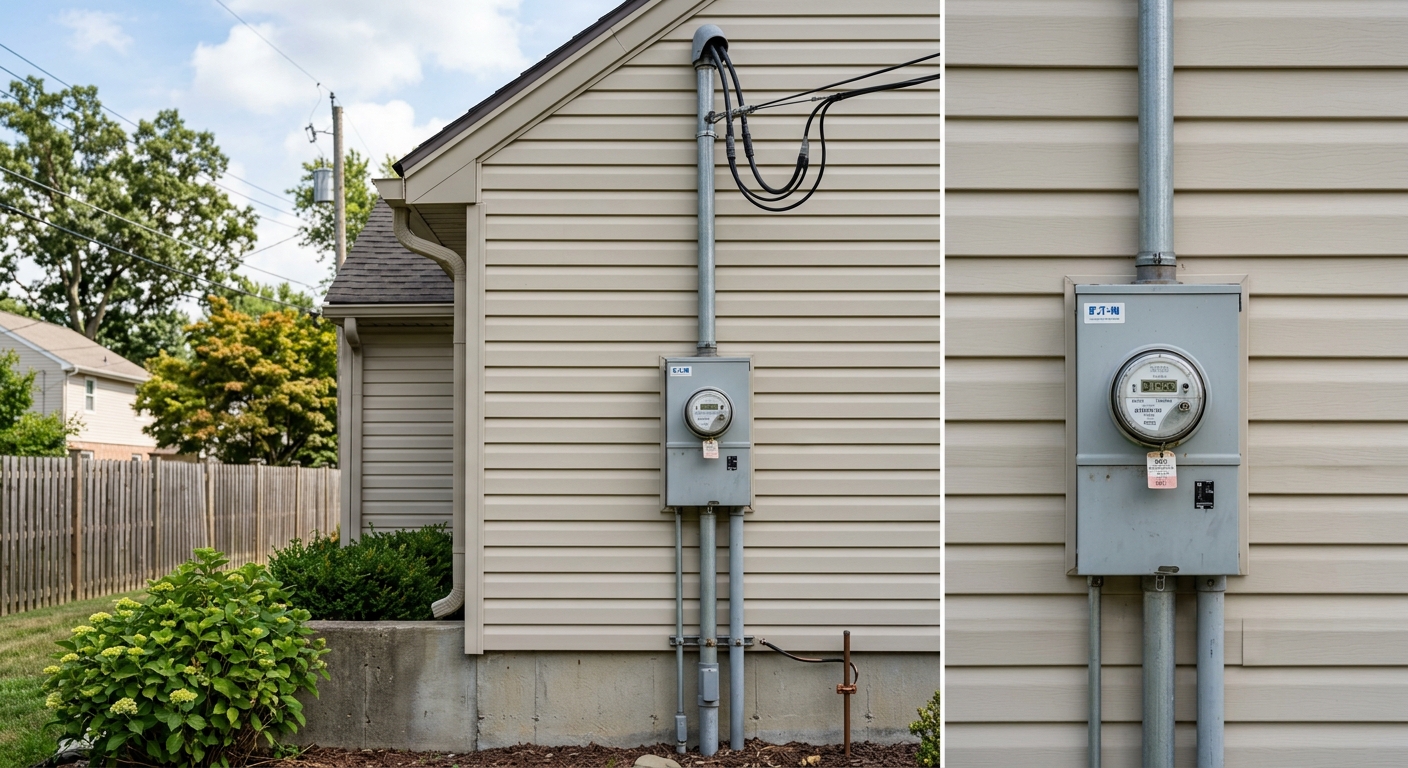
Electrical services and costs in Sylvan Lake
Sylvan Lake homeowners often notice electrical issues sooner than you’d think, especially as day-to-day loads rise with heat pumps, EV charging, and more entertainment/office devices. With 14,7% of homes built before 1981 in the area (Statistics Canada, 2021 Census), it’s common to see older wiring types and panels that were never designed for today’s demand—sometimes alongside aluminum wiring and insulation that doesn’t age well. That older housing mix also means service upgrades and wiring remediation are in steady demand across Red Deer and Red Deer County, and contractors plan around permit workloads and material availability.
Alberta’s climate plays a real role in cost. Winter heating loads drive higher baseline usage, so electricians spend more time on load management and load calculations to prevent nuisance trips and overheating. In neighbourhoods like Prairie Estates, where many homes reflect earlier builds and families are adding EVs and workshop circuits, we often see repeat demand for panel upgrades and dedicated charging circuits. If your home is in a similar older segment, it’s also more likely you’ll need a permit scope that includes both panel/service work and circuit additions, which is why pricing can cluster tightly around the province’s panel-and-service and wiring bands.
Below is a practical comparison of the most requested electrical services in Sylvan Lake and what typically drives the cost—then you can match your situation to a realistic budget before calling for a detailed quote.
| Service |
Why It's Needed |
Permit Required |
Price Range |
| Panel upgrade — 100A to 200A service |
Modern loads (EV chargers, heat pumps, electric stove, larger HVAC) exceed older panel/service capacity; improves safety and reduces nuisance breaker trips. |
Yes (service/panel change and any meter/service entrance work). |
$2,850 – $6,850 |
| EV charger installation (Level 2, 40–50A) |
Dedicated circuit with correct breaker and cable sizing for safe, reliable charging. |
Yes (new circuit, charger connection). |
$900 – $2,200 |
| Knob-and-tube wiring removal and replacement |
Older insulation/contact risks and insurance complications; new circuits provide safer termination and modern protection. |
Yes (rewiring/removal and new circuits). |
$4,500 – $18,000 |
| Aluminum wiring remediation (CO/ALR connectors) |
Aluminum terminations need licensed remediation with approved connectors to reduce overheating risk and comply with modern safety practice. |
Typically yes if you’re opening walls/doing junction work or adding circuits (scope-dependent). |
$1,800 – $5,400 |
| New dedicated circuit (HVAC, appliance, hot tub) |
Adds proper protection and prevents overload on existing kitchen/laundry circuits. |
Yes (new branch circuit). |
$600 – $2,000 |
| Whole-home rewire (older home, full replacement) |
When wiring, outlets, and protections are too compromised to “piecemeal” safely; brings the home up to modern circuit protection. |
Yes (full rewire and permit inspection). |
$12,000 – $30,000 |
Prices are estimates only and vary by project scope, site access and material selection.
What affects the price of electrical work in Sylvan Lake
In Red Deer region pricing, the same electrical request can come in 30–50% apart depending on what the electrician finds after opening panels and junctions. This is especially true in Sylvan Lake and surrounding communities because many homes are older and were built before today’s load expectations—so labour shifts from “swap and connect” to more planning, tracing, cable routing, and safety upgrades. When a quote includes a proper load calculation and a clean circuit plan, you’re often paying for fewer surprises later.
Housing age is the dominant cost driver. Homes built before 1950 may have knob-and-tube wiring, and insurance coverage issues can accelerate the timeline for full removal or targeted replacement. Homes from the 1960s–70s commonly show undersized 60A or 100A panels. With today’s typical add-ons—EV chargers, heat pumps, and higher-demand cooking—those panels can be inadequate, which pushes projects toward a panel upgrade in the $2,850 – $6,850 band. Aluminum wiring is also a common factor in homes built roughly between 1965 and 1976; remediation typically requires approved CO/ALR connectors and careful termination work—if the problem is widespread, full rewiring can move you into higher bands closer to $4,500 – $18,000 for wiring-heavy scopes.
Local conditions also affect labour time. For example, an exterior service location with snow-drift access or long cable runs through finished basements increases cable and labour. Conversely, a straightforward panel replacement with clear access to studs and joists can keep costs near the low end of the $2,850 – $6,850 range. EV adoption is another market driver: Level 2 chargers (40A vs. 50A) can change cable size and breaker cost, and in Alberta they require permits and inspection before energization.
| Price Factor |
Why It Matters |
Cost Impact |
| Panel size upgrade — 100A to 200A is the standard minimum today |
Requires new main breaker, bus capacity, and often service/battery disconnect and meter arrangements. |
$2,850 – $6,850 |
| Wiring type — copper vs. aluminum remediation vs. K&T removal |
Aluminum and knob-and-tube increase labour because of connector methods, safe termination, and sometimes rewiring. |
$1,800 – $18,000 |
| Number of new circuits — each adds material and labour time |
Each circuit adds breakers, wire, routing time, and testing/labeluing. |
$600 – $2,000 per circuit |
| Permit + ESA/TSBC inspection fee — mandatory for all major work |
Service, panel, and new circuits must be permitted and inspected; fees are required regardless of contractor. |
$250 – $900 |
| Labour rate for licensed electricians — journeyman rates in Alberta |
Red Deer area projects rely on licensed journeyperson time, not “untrained hours.” |
30% – 60% of total |
| EV charger amperage — 40A vs. 50A circuit affects cable and breaker cost |
Higher amperage can require larger conductors and different breaker/charging setup. |
$100 – $700 |
| Emergency or after-hours premium |
Scheduling constraints and overtime increase the hourly cost and sometimes crew size. |
+10% – +40% |
| Load calculation required for service upgrade |
Proper calculation prevents undersized upgrades and supports a correct permit scope. |
$150 – $500 |
Permits & regulations in Alberta
In Alberta, all electrical work beyond changing a light bulb must be performed by a licensed electrician. That includes work like panel and service upgrades, adding new circuits, rewiring, and installing EV charger circuits. Permits are required for major work, and the finished work must pass inspection by the provincial electrical safety authority (in Alberta, that’s STANDATA). DIY electrical is broadly prohibited for most homeowner tasks because safety risk is high and the work must be verified in the field before it can be energized.
To be concrete: you typically do need a permit for panel replacements/upgrades, service entrance changes, new branch circuits (including for hot tubs, HVAC, and EV chargers), and any rewiring that adds or alters conductors in a way that changes the circuit arrangement. You typically do not need a permit for like-for-like fixture swaps (for example, replacing a ceiling fixture with another properly rated fixture) when no wiring changes are made—but once you’re connecting new wiring, moving outlets, or altering the circuit, you’re in permitted territory.
When hiring in Sylvan Lake, verify the licence before work starts. Ask for the electrician’s Alberta licence number and confirm it through the provincial online registry. Request a clearance letter (or written proof) if your contractor provides it as part of your project file. Also confirm liability insurance and WSIB/WCB coverage—ask for certificates of insurance and keep them in your paperwork, especially if the electrician will access shared areas or do any demolition/rebuild. If they can’t show documentation promptly, treat that as a scheduling and risk red flag.
When your Sylvan Lake home needs an electrical upgrade
Your home in Sylvan Lake doesn’t need electrical work just because it’s old—what matters is whether the system is safe for today’s loads and protections. First, breakers that trip regularly can indicate an overloaded panel, undersized circuits, or failing connections. This is often more noticeable in winter when heating loads and indoor demand rise, especially if you also run electric cooking or a space heater.
Second, knob-and-tube wiring is a key safety-and-insurance concern. The issue isn’t only “age,” it’s insulation condition and contact risks, which is why many insurers tighten requirements. Third, 60A or 100A services can be inadequate for modern setups where an EV charger, heat pump, and electric stove might run in overlapping windows—here, a 200A upgrade is commonly the standard minimum solution. Fourth, aluminum wiring (often seen in pre-1976 homes) may not be immediately dangerous if it’s been properly maintained, but it does require licensed remediation and approved termination methods. Finally, insufficient outlets or missing AFCI/GFCI protection isn’t just inconvenient; it’s frequently a code-compliance issue that can surface during a sale.
On urgency: if you smell burning, see scorching at outlets/panels, or breakers are tripping with heat, treat it as immediate. If outlets are limited or you’re planning upgrades like EV charging, that’s usually a planned upgrade—still permit-required in Alberta. For example, if your goal is an EV charger but your panel is tight, a $2,850 – $6,850 panel/service upgrade may be justified versus repeatedly adding circuits to an already constrained system (which can cost more over time and still fail a proper load calculation).
| Warning Sign |
What It Means |
Recommended Action |
Urgency |
Price Band |
| Breakers trip frequently |
Overload, mis-sizing, or connection issues—often becomes worse with winter loads. |
Schedule an inspection and load calculation; check for overloaded circuits and loose terminations. |
Immediate to short-term (days) |
$600 – $2,000 |
| Knob-and-tube wiring present |
Insulation and termination risks; can trigger insurance refusal or cancellation. |
Plan K&T removal and replacement where required; prioritize active circuits and junctions. |
Planned to urgent (weeks to months) |
$4,500 – $18,000 |
| 60A or 100A panel (inadequate load capacity) |
Can’t support modern EV/heat pump/electric range loads without frequent nuisance trips. |
Upgrade to a properly sized service (commonly 200A) with a full load calculation. |
Planned (before adding EV/major loads) |
$2,850 – $6,850 |
| Aluminum wiring (pre-1976 construction) |
Risk is mainly at terminations; may need remediation rather than full replacement. |
Licensed remediation with approved CO/ALR connectors and inspection/testing of affected points. |
Planned (after inspection) |
$1,800 – $5,400 |
| Insufficient outlets — extension cords everywhere |
Indicates overloaded receptacle circuits and increased trip/overheating risk. |
Add receptacle circuits and dedicated branches where needed. |
Short-term (weeks) |
$600 – $2,000 |
| No AFCI or GFCI protection where required |
Modern protection gaps increase shock and arc-fault risk; often flagged during sale. |
Upgrade protection devices and verify protection coverage across required areas. |
Planned (before sale or remodel) |
$200 – $1,500 |
How to choose a electrical work contractor in Sylvan Lake
Choosing the right electrician in Sylvan Lake is about more than price—it’s about verification and scope clarity. First, confirm Alberta licensing: ask for the electrician’s Alberta licence number and check it using the provincial online registry. Next, verify liability insurance—request a certificate of insurance showing current coverage and confirm it includes electrical contracting work. For worker protection, make sure they carry appropriate WSIB/WCB coverage (ask for proof/certificate). If a contractor won’t provide documentation before scheduling, move on.
When you request quotes, get 2–3 itemised written estimates that break out labour and materials rather than one lump sum. Ensure the scope includes what you expect: for example, will they pull permits, apply labels, and include disposal of removed breakers/old materials? Ask whether permit and inspection fees are included or billed separately. Also ask how they handle access challenges—open walls, patching, or rerouting cable. A good contractor will describe exclusions clearly.
Warranty matters too. Ask for the workmanship warranty length, whether product warranties are manufacturer-backed, and if any warranties are transferable if you sell the home. Payment scheduling should be conservative: never pay more than 10–15% upfront; agree on holdback until the job is complete, inspected, and cleaned up. Finally, get a start date and completion estimate in writing so you’re not left guessing during permit lead times.
- Licence number provided up front; verified via the Alberta registry
- Certificate of liability insurance with electrical contractor coverage
- WSIB/WCB clearance or certificate for the workers who will be on site
- Itemised quote (labour vs. materials) with quantities and make/model where possible
- Permit scope stated clearly (what is being permitted and what is included)
- ESA/inspection responsibility included (who schedules and who pays fees)
- Disposal/haul-away included or priced separately—no surprises
- Label-lid and panel directory updates included after service/panel work
- Testing and commissioning included (torque checks, polarity checks, functional checks)
- Workmanship warranty stated in writing (length and what it covers)
- Clear timeline with start and estimated inspection/return-to-site date
- Payment schedule capped at 10–15% upfront, with holdback at completion
Red flags I see in Sylvan Lake: contractors who won’t verify Alberta licence details in writing, quotes that ignore permit/inspection entirely, refusal to itemise labour/materials, promises of “no load calculation needed” for a service upgrade, and demanding large upfront payments before any permit is pulled.
Frequently asked questions — electrical work in Sylvan Lake
What is the cost of rewiring a house in Sylvan Lake?
Rewiring costs in Sylvan Lake vary widely because the term “rewire” can mean anything from targeted replacement to a full system swap. For whole-home rewires in older Alberta housing, many homeowners land in the higher portion of typical wiring-heavy budgets; for example, service-plus-circuit heavy work can cluster around the $4,500 – $18,000 range depending on how much wiring, outlet locations, and protection devices need replacement. If knob-and-tube wiring is present, the scope often expands because sections must be removed safely and circuits rebuilt to a modern standard. If you also need an equipment change like an EV-ready panel upgrade, that can add to the total. A proper site inspection and load calculation are the fastest way to avoid underquoting and later change orders. (Statistics Canada, 2021 Census data shows a meaningful share of homes are older in the Sylvan Lake area, which is why electricians see this frequently.)
What electrical upgrades are required when selling a home in Alberta?
Alberta doesn’t work like a single universal “must upgrade everything” checklist for every sale, but safety requirements and inspection expectations still matter. In practice, if a home has unsafe wiring, missing required protection (like GFCI/AFCI in the locations where it’s expected by current safety practice), or outdated service that can’t support the home’s intended loads, issues often surface during home inspections and negotiations. Homes with known hazards such as knob-and-tube wiring frequently trigger insurance concerns and buyer reluctance, even when the electrical system is still functioning. If your sale is coming and you’re planning upgrades like adding an EV charger or major electric appliances, it’s smart to address capacity first: panel/service upgrades often fall into the $2,850 – $6,850 band, which can prevent delays later. Your best next step is to ask your electrician for a pre-sale electrical assessment and a written scope of what must be corrected versus what’s optional.
What is a load calculation and why does my electrician need one?
A load calculation is the process of estimating the electrical demand of your home—accounting for fixed appliances, heating loads, receptacle/outlet allowances, and any planned additions (like an EV charger or heat pump). In Alberta, a correct calculation supports a properly sized panel/service and breaker/cable selection that meets safety requirements for the intended use of the home. Without it, a service upgrade can be under-sized, which may cause overheating or repeated nuisance trips, especially in Sylvan Lake’s winter when overall demand is higher. It also helps define the right permit scope. For example, if your home has a 60A or 100A service and you’re adding a Level 2 EV charger, the calculation determines whether you should plan on a 200A upgrade that typically sits around $2,850 – $6,850. A reputable electrician will do the calculation before quoting a service change, not after the fact.
How do I find a licensed electrician in Sylvan Lake?
Start by asking the contractor for their Alberta licence number and confirm it through the provincial online registry. Then ask for proof of liability insurance and WSIB/WCB coverage—request certificates rather than accepting “trust me” answers. In Sylvan Lake, good electricians are easy to verify because permits and inspections are part of the work for major upgrades, and they should be comfortable providing documentation before scheduling. You can also compare quotes to ensure they’re consistent on permit scope: for example, a panel upgrade or any new EV charger circuit must be permitted and inspected before energization. Be cautious with contractors who won’t pull permits or who provide vague scopes. If you’re comparing price bands, remember that panel/service work is commonly in the $2,850 – $6,850 range, while wiring-heavy projects can run higher depending on wiring type and access.
Can I add a subpanel to my Sylvan Lake home?
Yes, adding a subpanel is often possible in Sylvan Lake, but the feasibility depends on your existing service size, available space in the main panel/service equipment, and how the home is wired. A subpanel is usually installed to distribute circuits more safely—common reasons include separating basement workshop loads, adding circuits for renovations, or managing dedicated loads like EV charging circuits. Because a subpanel installation typically involves new branch circuit work and reconfiguration of how breakers are supplied, it generally requires permits and inspection in Alberta. Your electrician will likely check whether you need a main 200A service upgrade first, which can fall within the $2,850 – $6,850 band for panel/service work. If your home has aluminum wiring or older materials, remediation or rewiring may be required at connection points before you can safely add new circuits.
How much does an electrician cost in Sylvan Lake?
Electrician pricing in Sylvan Lake is typically built from a labour rate plus materials and permit/inspection requirements, so the “exact” cost depends on how complex the job is. For common projects, you can use the regional bands as a starting point: panel upgrades/services are commonly estimated around $2,850 – $6,850, while dedicated EV charger installations (Level 2, 40–50A) often fall in the $900 – $2,500 range when trenching or major panel changes aren’t required. Lighting/fixtures frequently sit around $200 – $1,500. If you’re dealing with knob-and-tube removal or full rewiring, budgets are usually much higher because the scope is labour-intensive and must meet safety and permitting requirements. The most reliable way to get a fair price is an itemised quote that lists labour hours, materials, permit handling, and what’s included/excluded for access, disposal, and any required remediation.