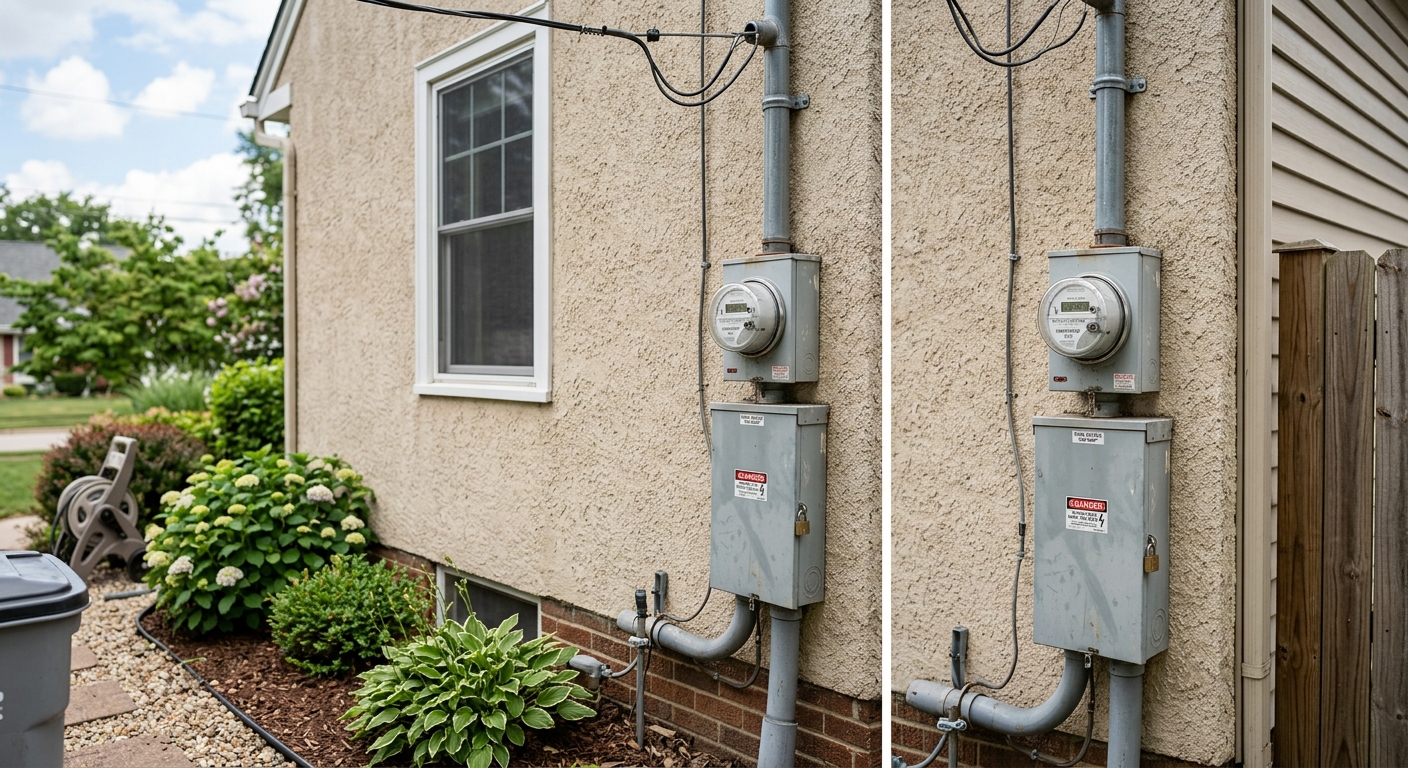
Electrical services and costs in Cadboro Bay
Electrical services in Cadboro Bay often come down to upgrading older electrical systems that were built for a different lifestyle. With a population of about 4,000 residents (Statistics Canada, 2021 Census), the neighbourhoods around Cadboro Bay Road and the surrounding local streets typically see steady demand from homeowners planning renovations, adding appliances, or preparing homes for resale. A large share of the local housing stock is older—meaning many projects involve removing knob-and-tube and correcting aluminum branch-circuit issues, while also modernizing protection devices like AFCI/GFCI where applicable. In the Lower Mainland–Southwest, costs are shaped by tight urban access, higher labour demand, and the fact that many homes still start with 60A or 100A services that simply can’t comfortably support today’s loads.
Lower Mainland–Southwest winters bring damp, wind-driven cold spells that push heating systems harder, and that load pattern matters when you’re deciding whether to add circuits or perform a full service upgrade. Meanwhile, EV adoption is accelerating across the region, so many households are adding Level 2 chargers (often 40–50A), which commonly triggers panel or full service capacity upgrades. Permits and inspections under the BC Electrical Code and the Safety Standards Act are mandatory for major electrical changes, and coordinating any service change with BC Hydro can add scheduling time and civil work.
In practice, that’s why Cadboro Bay estimates can vary widely: a simple dedicated circuit can be straightforward, while a “same goal” upgrade (more capacity and safer wiring) may require a panel and wiring remediation package. Use the table below as a realistic starting point for budgeting before you request itemised quotes.
| Service |
Why It's Needed |
Permit Required |
Price Range |
| Panel upgrade — 100A to 200A service |
Modern loads (EV charger, induction stove, heat pump back-up, more receptacles) exceed older panel capacity and require updated overcurrent protection. |
Yes, service equipment and breaker/panel work typically require a permit and inspection. |
$1,800 – $4,500 |
| EV charger installation (Level 2, 40–50A) |
Provides faster charging while maintaining code-required protection and safe conductor sizing for continuous load. |
Yes, charger circuit and any related panel/service upgrade work require permits and inspection. |
$900 – $2,500 |
| Knob-and-tube wiring removal and replacement |
Knob-and-tube wiring is obsolete; insulation degradation and wiring configuration issues create safety risk and can affect insurance coverage. |
Yes, rewiring/removal requires permits and inspections. |
$8,000 – $20,000 |
| Aluminum wiring remediation (CO/ALR connectors) |
Aluminum branch circuits (often found in homes built mid-1960s to mid-1970s) require approved connection methods and licensed remediation. |
Yes, remediation work involving wiring changes typically requires permits and inspection. |
$8,000 – $20,000 |
| New dedicated circuit (HVAC, appliance, hot tub) |
Adds proper capacity and reduces nuisance tripping or unsafe “shared” loads. |
Usually yes for new circuits (especially where new breakers/conductors are installed). |
$900 – $2,500 |
| Whole-home rewire (older home, full replacement) |
When multiple circuits are at end-of-life, scattered wiring types exist, and a full safety and code-compliance upgrade is the most practical solution. |
Yes, full rewiring requires permits and staged inspections. |
$8,000 – $20,000 |
Prices are estimates only and vary by project scope, site access and material selection.
What affects the price of electrical work in Cadboro Bay
In the Lower Mainland–Southwest, quotes for the same electrical goal can differ by 30–50% because the starting condition of each home is rarely identical—especially in Cadboro Bay. Across British Columbia, contractor availability, permit processing timelines, and how much hidden work is uncovered once walls and ceilings are opened can all move pricing. The dominant driver in this region is the age and type of the housing stock. Homes built before 1950 often contain knob-and-tube wiring, and insurance companies increasingly scrutinize or refuse coverage when obsolete wiring is present. Meanwhile, homes from the 1960s–70s frequently have 60A or 100A panels that were adequate for earlier loads, but are now strained by EV chargers, heat pumps, and high-demand kitchens (like induction stoves). Aluminum wiring—commonly seen in construction roughly between 1965 and 1976—also requires licensed remediation using approved CO/ALR connectors or replacement, which adds labour time and material cost.
EV adoption in the Lower Mainland–Southwest is creating a surge in Level 2 charger permit applications, and that often leads to panel capacity work. For example, if you’re installing a Level 2 charger and your existing service is limited, a panel upgrade may be needed in addition to the charger circuit; that’s when costs can shift from the EV charger band of roughly $900 – $2,500 toward the panel/service upgrade band of $1,800 – $4,500. Likewise, if your home has a mix of wiring types, “targeted” remediation may become a broader rewire scope.
In Cadboro Bay specifically, cost can be higher when service equipment is on the exterior of a tight-access lot (more labour and coordination), but it can be lower if you have accessible basements/crawlspaces and a straightforward cable path. Scheduling BC Hydro coordination for service upgrades can also add time—especially when the project requires civil access around the service point.
| Price Factor |
Why It Matters |
Cost Impact |
| Panel size upgrade — 100A to 200A is the standard minimum today |
Modern households need more capacity and updated safety equipment. |
$1,800 – $4,500 |
| Wiring type — copper vs. aluminum remediation vs. K&T removal |
Aluminum requires approved connection methods; knob-and-tube removal is labour-intensive. |
$8,000 – $20,000 |
| Number of new circuits — each adds material and labour time |
More circuits means more breakers, conductors, terminations, and finish work coordination. |
$900 – $2,500 per typical dedicated circuit |
| Permit + ESA/TSBC inspection fee — mandatory for all major work |
Inspections and permit staging are required for compliance and resale/insurance. |
Often adds a meaningful fixed portion to the total job |
| Labour rate for licensed electricians — journeyman rates in Lower Mainland–Southwest |
Labour demand and complexity drive pricing in dense urban areas. |
Can swing totals by tens of percent on the same scope |
| EV charger amperage — 40A vs. 50A circuit affects cable and breaker cost |
Higher amperage can require larger conductors and different breaker/charger configuration. |
Typically shifts the charger project up within the $900 – $2,500 band |
| Emergency or after-hours premium |
Scheduling urgency increases overhead and manpower costs. |
Usually increases total labour cost |
| Load calculation required for service upgrade |
Service change requires proper assessment of present and proposed loads for code compliance. |
May add professional time, but prevents costly rework |
Permits & regulations in British Columbia
In British Columbia, ALL electrical work beyond changing a light bulb must be done by a licensed electrician. That includes panel upgrades, adding or modifying circuits, rewiring, service equipment changes, and installing EV charger circuits—projects like these require permits and inspections. In BC, permitted electrical work must pass inspection under the provincial electrical safety framework administered through Technical Safety BC, with work also governed by the BC Electrical Code and the Safety Standards Act. While homeowners can sometimes do very limited tasks (for example, replacing certain fixtures where no wiring changes are made), DIY electrical wiring or opening up wiring systems for electrical changes is not the expectation for electrical safety and compliance.
What typically DOES require a permit in BC:
- Upgrading a panel or service (e.g., 100A to 200A), including breaker changes tied to service equipment
- Adding new circuits (dedicated outlets, appliance circuits, hot tub/hvac circuits)
- Rewiring portions or doing full rewires
- EV charger installations (Level 2) and any related new breaker/cable work
- Remediation work that changes wiring connections or re-routes conductors (common for aluminum and obsolete wiring concerns)
How to verify before work starts in Cadboro Bay: first, ask for the electrician’s BC licence info and confirm it using the provincial licensing/registry resources. Next, request a certificate of insurance (liability) showing current coverage and ask whether WSIB/WCB coverage applies to workers on site. Finally, confirm that the electrician will pull the permit under the job scope and provide inspection completion documentation when the work is done—this matters for insurance and future resale.
When your Cadboro Bay home needs an electrical upgrade
Electrical upgrades in Cadboro Bay are often first noticed as “comfort issues,” but they’re usually safety or compliance problems underneath. Start with the warning signs that require attention because they can indicate overloads, degraded wiring, or protection gaps. (1) Breakers that trip regularly usually means an overloaded panel, undersized circuit wiring, or a fault you should not ignore. (2) Knob-and-tube wiring is the key concern in older homes: the issue isn’t only the age—it’s insulation condition and connection safety, and it can lead to insurance cancellations if it’s left in place. (3) A 60A or 100A service in a modern home is frequently inadequate when you combine an EV charger, heat pump back-up loads, and a high-demand kitchen; a 200A upgrade is often the standard solution in this market to keep capacity margins.
(4) Aluminum wiring (commonly seen in pre-1976 homes) is not always immediately “sparking dangerous” if it’s well maintained, but it does require licensed remediation—typically with approved CO/ALR connectors or full replacement where needed. (5) Insufficient outlets—extension cords everywhere, shared power strips powering heaters—can indicate both a safety hazard and a code-compliance problem. (6) Missing AFCI/GFCI protection (where required) can surface during resale, because buyers and insurers expect current safety standards for fire and shock prevention.
For Cadboro Bay’s coastal, damp climate, moisture management matters—GFCI protection and properly protected exterior/garage circuits are important as storms and foggy months increase the chance of faults. As a cost example, if your goal is EV charging, installing a Level 2 charger may fit the $900 – $2,500 band only when capacity is available; if your service needs an upgrade, budgeting closer to the $1,800 – $4,500 panel/service range is often justified.
| Warning Sign |
What It Means |
Recommended Action |
Urgency |
Price Band |
| Breakers trip frequently |
Possible overload, failing connections, or an unsafe shared circuit. |
Have the electrician diagnose the load and check for faults before adding more devices. |
Immediate |
$900 – $2,500 |
| Knob-and-tube wiring present |
Obsolete wiring methods with insulation concerns and increased insurance scrutiny. |
Plan K&T removal and replacement; often includes rewiring multiple circuits. |
High (planned ASAP) |
$8,000 – $20,000 |
| 60A or 100A panel (inadequate load capacity) |
Not enough headroom for EV charging, heat pumps, and modern appliances. |
Schedule a service/panel upgrade and perform a proper load calculation. |
High |
$1,800 – $4,500 |
| Aluminum wiring (pre-1976 construction) |
Requires approved terminations; improper connections can overheat over time. |
Have circuits inspected and remediate with approved CO/ALR methods or rewire as needed. |
Planned (not “wait forever”) |
$8,000 – $20,000 |
| Insufficient outlets — extension cords everywhere |
Overuse of temporary power increases overheating and trip hazards. |
Add grounded receptacles and dedicated circuits where needed. |
Medium to High |
$900 – $2,500 |
| No AFCI or GFCI protection where required |
Higher risk of shock/fire and potential resale inspection issues. |
Upgrade protection devices and ensure bedroom/living areas and wet locations meet current requirements. |
Planned |
$200 – $800 |
How to choose a electrical work contractor in Cadboro Bay
Choosing a contractor in Cadboro Bay starts with confirming licensing and coverage—because in British Columbia you want the work permitted, inspected, and accountable. Ask for their valid BC electrician licence details and confirm it through the provincial online registry resources. Next, request a certificate of liability insurance and confirm the contractor’s workers’ coverage (WSIB/WCB) so you’re not left holding risk if something goes wrong on site. For itemised quotes, get 2–3 written estimates that separate labour and materials rather than one lump sum; a good quote will clearly list breakers/panels, cable sizes, charger hardware (if included), and any finish restoration assumptions.
Read the scope carefully: what’s excluded (ceiling/floor patching, electrical drywall repairs, disposal of old equipment, upgrades to grounding/bonding, or permit pulling)? Confirm whether the permit application and inspection scheduling are included. Warranty matters too: workmanship warranty length (often longer than product warranty), product/manufacturer warranty start date, and whether any warranty is transferable to new owners. Payment schedule is another key safeguard—never pay more than 10–15% upfront; keep a holdback until the job is complete and you’ve received documentation for inspections.
Finally, get timing in writing: a start date window, expected workdays, and completion targets. In this region, service upgrade coordination (when BC Hydro involvement is needed) can affect timelines, so it should be addressed before you sign.
- Verify BC licence through the provincial registry and confirm the company is eligible to pull permits.
- Request a current certificate of liability insurance and check effective dates.
- Confirm WSIB/WCB coverage for workers who will be on your property.
- Ask for a permit plan: who pulls the permit, and when will inspection be scheduled?
- Get an itemised quote (labour + materials + disposal + travel/time assumptions).
- Clarify exclusions: patching, drywall/ceiling repairs, and any painting/finishing.
- Confirm disposal of old breakers/panels/wiring components is included or itemised.
- Ensure grounding/bonding checks are included in service upgrades (often overlooked).
- Ask how they will protect floors/finishes and how debris will be managed.
- Confirm warranty: workmanship coverage duration and what it includes.
- Set a payment schedule with a 10–15% maximum deposit and a completion holdback.
- Require a written timeline and notification process if BC Hydro scheduling changes.
Red flags to watch for in Cadboro Bay: contractors who won’t provide a permit plan in writing, quotes that are “lump sum” without listing materials and breaker sizes, claims that DIY work is acceptable or that permits are optional, warranty terms that are vague or shorter than expected, and high deposits requested without a clear scope and start date.
Frequently asked questions — electrical work in Cadboro Bay
What is a GFCI outlet and where is it required in British Columbia?
In British Columbia, a GFCI (Ground Fault Circuit Interrupter) outlet is designed to quickly shut off power when it detects a dangerous ground fault (for example, current leaking through water). In practice, GFCI protection is commonly required in wet and outdoor locations—such as bathrooms, kitchens with specific conditions, garages, and exterior outlets—because moisture increases the risk of shock. During renovations or when you add new circuits in Cadboro Bay, electricians typically confirm the required protection level under the BC Electrical Code for the location and use case. If your outlets are old and not protected, upgrading can be relatively modest compared to major work; for budgeting, protection updates often land in the $200 – $800 range depending on quantity and access.
How do I know if my Cadboro Bay home has aluminum wiring?
Aluminum wiring is usually associated with older construction periods in the Lower Mainland–Southwest, especially homes built in the mid-1960s to mid-1970s. The most reliable way is an electrician’s inspection: they can identify aluminum conductors by marking/labeling and by checking conductor condition and compatibility with current devices. You can also look for telltale signs at accessible junctions—such as labels, conductor appearance, or mismatches with copper-only devices—though you should not attempt to disconnect wiring yourself. In many Cadboro Bay homes, the issue appears during service upgrades or when troubleshooting overheating at terminations. Remediation can involve approved CO/ALR connectors or, in more involved cases, selective rewiring; these projects often fall into the $8,000 – $20,000 band depending on how much wiring must be corrected.
What is the cost of rewiring a house in Cadboro Bay?
Rewiring cost in Cadboro Bay depends heavily on how much of the home needs replacement and what wiring types are present. If you’re removing knob-and-tube in multiple rooms, or doing a whole-home rewire, expect labour-intensive work and permit inspections throughout the project. For many typical residential scopes in this tier, wiring & rewiring budgets often land around $8,000 – $20,000. Some smaller scopes—like replacing a limited number of circuits or remediating aluminum in a targeted way—may price lower within that band, while full replacement is usually at the higher end due to the increased number of conductors, terminations, and finish coordination. A detailed, itemised quote that lists the wiring quantities and circuit counts is the best way to determine which part of the band applies to your home.
What electrical upgrades are required when selling a home in British Columbia?
British Columbia doesn’t require you to “fully modernize” every device in the house just for resale, but you do need the electrical system to meet current safety expectations for permitted changes. The most common upgrades during sale prep are bringing protection up to code where the home has known deficiencies, such as adding or updating GFCI/AFCI protection in required locations, correcting obsolete wiring methods, and resolving aluminum wiring concerns. If your home has knob-and-tube or other unsafe/obsolete wiring, the buyer’s financing, insurer requirements, or safety concerns can force remediation before closing. Also, if you’re doing a service upgrade or new circuit, permits and inspections are mandatory. The result is that a sale can trigger work that otherwise might have been “planned later,” particularly in older Cadboro Bay neighbourhoods where many homes have older services and wiring.
What is a load calculation and why does my electrician need one?
A load calculation is an electrical sizing assessment used to determine whether your existing service and panel can safely support current and planned loads. In Cadboro Bay and across BC, when you’re doing a service upgrade (for example, moving from 100A to 200A) or making changes that increase demand—like adding a Level 2 EV charger, new HVAC equipment, or upgrading major appliances—your electrician needs to demonstrate the electrical capacity is adequate for compliance. It’s not just paperwork: it prevents the common mistake of adding circuits without sufficient service headroom, which can lead to nuisance tripping, overheating connections, or costly rework. A load calculation also helps justify the upgrade—when the numbers show capacity is insufficient, budgeting around the $1,800 – $4,500 panel/service upgrade band is usually the safer, code-compliant route.
How do I find a licensed electrician in Cadboro Bay?
Start by asking potential electricians for their BC licence information and confirming it through the provincial online registry resources. Then request a certificate of liability insurance and verify whether they have WSIB/WCB coverage for their workers—this matters for homeowner risk management if anything goes wrong on your property. After that, collect 2–3 itemised written quotes so you can compare scope details, not just total price. A good electrical contractor in Cadboro Bay will clearly state what permits they will pull, how inspections are handled, what’s included or excluded (for example, disposal of old equipment and any patching assumptions), and provide warranty terms in writing. If you’re planning EV charging or service work, make sure their quote addresses the permit and inspection steps required in BC and includes coordination timing where BC Hydro involvement is needed.