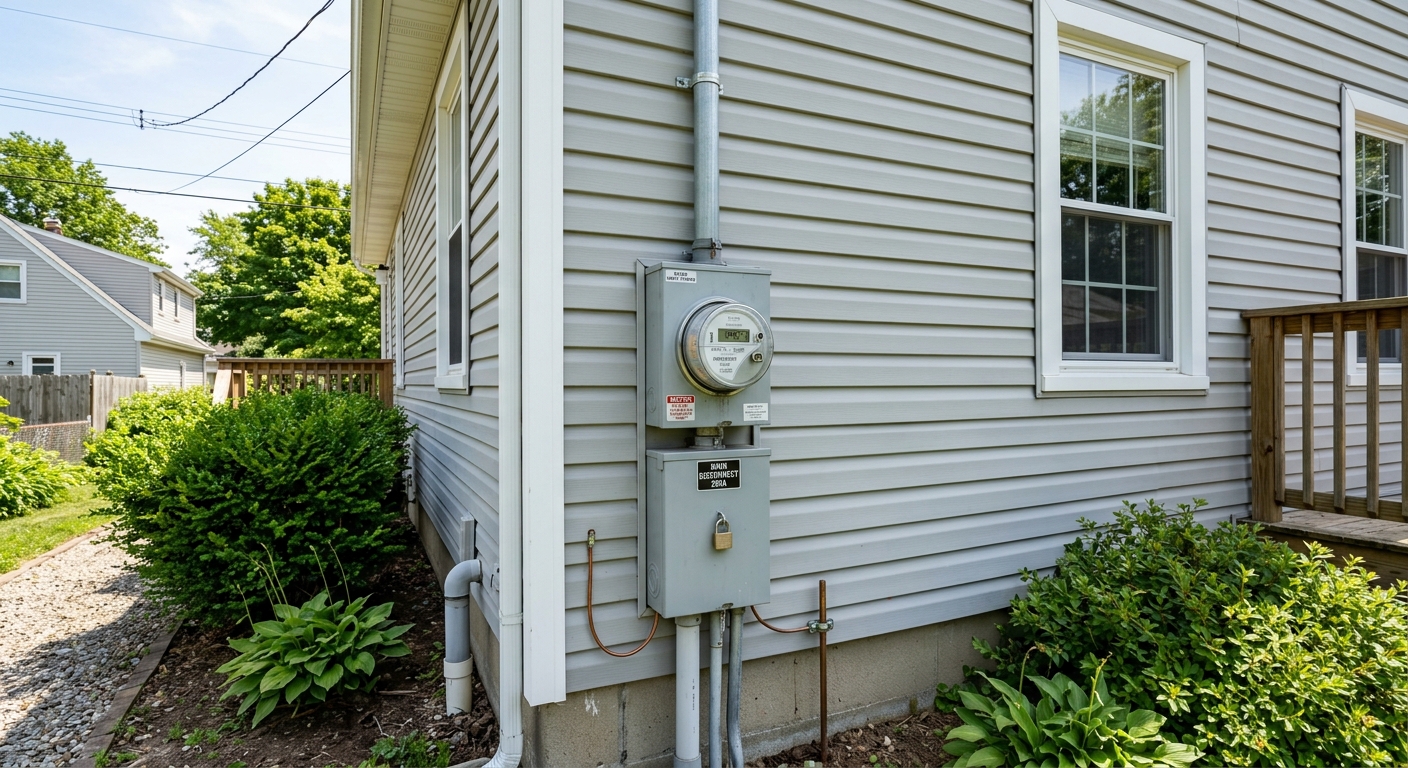
Electrical services and costs in Chetwynd
Chetwynd electricians see a steady mix of older homes, modern appliance upgrades, and winter-driven service stress. With 56.1% of homes built before 1981, many properties are prime candidates for panel work, safety upgrades, and—where present—removing older wiring types that don’t meet today’s insurance and electrical expectations. In Chetwynd’s housing stock, single-detached houses make up 57.8% of dwellings, so contractors often travel between lots with longer site access times and weather-dependent installation conditions.
In Northeast British Columbia, winter cold and frequent peak electrical demand matter. Resistance heating and baseboards can create sharp winter load spikes, and that pressure is amplified when homeowners add modern loads like hot tubs, shop equipment, induction stoves, or a Level 2 EV charger. Labour availability can also tighten during renovation seasons, and cold-weather work can slow panel and wiring installs—especially where conduits, service entrances, or outdoor disconnects need extra care.
Demand is especially noticeable in and around the residential areas off Alaska Highway, where many properties were originally built with lower-capacity panels and fewer dedicated circuits. If your goal is to improve reliability before the next deep-cold stretch, getting a proper load assessment is the right starting point—because it’s what determines whether you’re looking at a typical panel upgrade or a bigger service and rewire plan. The comparison below shows common upgrades and what they usually involve.
| Service |
Why It's Needed |
Permit Required |
Price Range |
| Panel upgrade — 100A to 200A service |
Supports modern loads (EV charging, heat pumps, electric cooking) and reduces nuisance trips during winter peak demand. |
Yes (service change requires permitting and inspection) |
$2,500–$6,000 |
| EV charger installation (Level 2, 40–50A) |
Adds a dedicated circuit designed for continuous charging and safer wiring connections. |
Yes (new circuit and charger installation) |
$1,200–$3,000 |
| Knob-and-tube wiring removal and replacement |
Older insulation and wiring methods can fail over time and are frequently flagged by insurers and safety standards. |
Yes (rewiring scope requires permitting/inspection) |
$4,000–$20,000 |
| Aluminum wiring remediation (CO/ALR connectors) |
Helps address connection risk in aluminum branch circuits using approved remediation methods (often CO/ALR). |
Yes (remediation typically requires inspection) |
$3,500–$9,500 |
| New dedicated circuit (HVAC, appliance, hot tub) |
Provides proper wire sizing, breaker selection, and protection for high-demand equipment. |
Usually yes (new circuit/capacity work requires permitting) |
$900–$4,000 |
| Whole-home rewire (older home, full replacement) |
Replaces aging wiring throughout to improve safety, code compliance, and sale/insurance readiness. |
Yes (full rewiring requires permitting/inspection) |
$8,000–$20,000 |
Prices are estimates only and vary by project scope, site access and material selection.
What affects the price of electrical work in Chetwynd
In the Northeast region of British Columbia—and across the province—two homeowners can receive quotes that differ by 30% to 50% for what sounds like the same job. The biggest reason is that “panel upgrade” or “new circuit” often hides variable realities: distance from panel to the work area, how much wiring must be removed, the condition of the service entrance, and whether a load calculation shows you truly need a 200A service rather than incremental additions.
In Chetwynd, the dominant cost driver is housing age. Homes built before 1950 are where knob-and-tube wiring may appear, and insurer requirements can push upgrades from “nice to have” to “must do.” Even for homes from the 1960s to 1970s, many have older-capacity panels (often 60A or 100A) that struggle when modern loads arrive. Aluminum wiring was common during that era; where CO/ALR remediation isn’t sufficient, it turns into localized rewiring, which is labour-heavy. In practice, aluminum remediation can move the project from the lower end of the $2,500–$6,000 panel/service band into a wider range closer to $4,000–$20,000 when rewiring or extensive connection work is required.
Local climate and demand also matter. Northeast winters mean higher peak load for resistance heat and baseboards, and when EV adoption rises, you’re more likely to need to redistribute circuits or do a proper service upgrade. A concrete example: installing a Level 2 charger might sit near the $1,200–$3,000 range when the panel has spare capacity, but if the load calculation requires a 200A upgrade, many homeowners see the total come closer to the $2,500–$6,000 panel/service range plus the charger circuit cost.
Cost can also go down when the panel is already upgraded and you’re simply adding a dedicated breaker and properly routed cable—fewer walls opened, fewer hours in cold weather, and less coordination. The next table breaks down the factors that swing your quote.
| Price Factor |
Why It Matters |
Cost Impact |
| Panel size upgrade — 100A to 200A is the standard minimum today |
Determines whether you can safely run EV charging, heat pumps, and electric cooking without overloading. |
$2,500–$6,000 |
| Wiring type — copper vs. aluminum remediation vs. K&T removal |
Aluminum and knob-and-tube methods require approved remediation or full replacement; both add labour and testing. |
$3,500–$20,000 |
| Number of new circuits — each adds material and labour time |
Each circuit typically requires breakers, correctly sized cable, terminations, and sometimes trenching/routing. |
$900–$4,000 per circuit |
| Permit + ESA/TSBC inspection fee — mandatory for all major work |
Major work must be permitted and inspected; paperwork and inspections are built into labour planning. |
$150–$600 |
| Labour rate for licensed electricians — journeyman rates in Northeast BC |
Travel time, scheduling, and cold-weather install constraints influence total labour hours. |
$120–$200 per hour |
| EV charger amperage — 40A vs. 50A circuit affects cable and breaker cost |
Higher amperage can require larger cable and breaker parts; setup changes may also affect load planning. |
$150–$600 |
| Emergency or after-hours premium |
Urgent troubleshooting and overtime logistics cost more, especially during winter. |
$200–$1,000 |
| Load calculation required for service upgrade |
Verifies actual demand from baseboards, kitchen loads, HVAC, and EV charging; prevents under-sizing. |
$250–$800 |
Permits & regulations in British Columbia
In British Columbia, electrical work beyond changing a light bulb must be done by a licensed electrician. That includes work like adding or modifying circuits, replacing receptacles when wiring is altered, installing dedicated breakers for appliances, and—most importantly—any panel upgrade, rewiring, or service change (including EV charger installations). Permits are also required for work that affects service capacity or adds new power outlets and hardwired equipment. Once the electrician completes the permitted work, it must pass inspection by the provincial electrical safety authority (in BC, that’s Technical Safety BC).
DIY electrical is severely limited. Homeowners should not attempt new wiring runs, breaker/cable changes, service entrance modifications, or anything that alters how power is distributed. Even “small” jobs—like adding a new circuit outlet or moving wiring—can require a permit because they change the electrical system’s protected load and routing.
To verify a contractor in Chetwynd, do this step-by-step: (1) confirm their BC licence using the provincial online registry for the contractor/electrician; (2) request a certificate of liability insurance and ensure it’s current for your project timeline; and (3) confirm coverage paperwork for workers’ compensation (WCB)—ask for proof directly. A reputable electrician will also provide a clear permit/inspection plan and a receipt or documentation that shows the work was permitted where required.
When your Chetwynd home needs an electrical upgrade
Chetwynd homeowners usually don’t “shop” for safety-critical electrical upgrades until something starts failing. The key is recognizing which warning signs point to an urgent hazard versus a planned improvement—especially because Northeast BC winters can stress overloaded systems quickly.
(1) Breakers that trip regularly often indicate an overloaded panel, an undersized/incorrectly wired circuit, or a failing device. This is an immediate action item if it happens repeatedly or comes with burning smells or heat at outlets. (2) Knob-and-tube wiring is a primary concern for insulation deterioration and insurance refusal, not just “old age.” If knob-and-tube is present, treat it as a high priority upgrade, typically starting with safety assessment and staged replacement. (3) A 60A or 100A service can be inadequate once you add an EV charger, heat pump/air conditioning, or even an electric stove—especially in a climate where baseboards run longer. In many cases, a 200A upgrade is the standard solution to avoid constant load management.
(4) Aluminum wiring (pre-1976 construction) isn’t always “instant danger” but it does require licensed remediation (often approved connectors like CO/ALR) and sometimes partial rewiring at failed connections. (5) Insufficient outlets—extension cords everywhere—isn’t just inconvenient; it signals that circuit capacity and protection may not match real usage. (6) Missing AFCI/GFCI protection where required is a code-compliance issue that can surface at sale or inspection, turning a “later” problem into a costly retrofit.
Cost justification example: if your panel is already near capacity, adding a Level 2 EV charger alone can look like a $1,200–$3,000 project, but if a load calculation shows you need a service upgrade, the total often expands toward the $2,500–$6,000 panel/service band—yet that’s still usually cheaper than repeated nuisance trips and emergency callouts.
| Warning Sign |
What It Means |
Recommended Action |
Urgency |
| Breakers trip frequently |
Possible overload, failing components, or mis-sized/incorrectly protected circuits during peak winter load. |
Schedule troubleshooting and a load assessment; check for hot spots and improper connections. |
Immediate |
$900–$4,000 |
| Knob-and-tube wiring present |
Older insulation and wiring methods that can fail and may be refused by insurers. |
Do a safety evaluation and plan removal/replacement in phases. |
High priority |
$4,000–$20,000 |
| 60A or 100A panel (inadequate load capacity) |
Limited headroom for EV charging and modern appliance loads; more trips during cold-weather peaks. |
Run a load calculation and consider upgrading to a 200A service. |
Planned (soon) |
$2,500–$6,000 |
| Aluminum wiring (pre-1976 construction) |
Connection risk at terminations; requires approved remediation or replacement at problem locations. |
Have terminals assessed; remediate with approved methods (often CO/ALR) or rewire sections. |
Planned |
$3,500–$9,500 |
| Insufficient outlets — extension cords everywhere |
Indicates poor circuit distribution and likely misuse of temporary power, especially in winter. |
Add properly protected receptacles and dedicated circuits where needed. |
Planned |
$900–$4,000 |
| No AFCI or GFCI protection where required |
Higher risk of arc faults and shock hazards; can become a problem on sale/inspection. |
Update protection devices and verify code requirements for your wiring type and layout. |
Planned (before sale/renos) |
$300–$2,500 |
How to choose a electrical work contractor in Chetwynd
Choosing the right contractor matters more in Chetwynd because travel time, winter conditions, and older housing stock can turn a “small” electrical job into a longer install. Start by verifying their British Columbia licence using the provincial online registry. Next, request proof of liability insurance (certificate of insurance showing active coverage for the project period). Finally, confirm WCB/workers’ compensation coverage—ask for documentation and ensure it’s current. If a contractor can’t provide these items, that’s a major warning sign.
When you get quotes, ask for 2–3 itemised written estimates, not just a lump sum. You want separate lines for labour, materials (breakers, cable, connectors, panel equipment), permits, and any required inspection coordination. Read the scope carefully: what’s excluded (drywall patching, trenching, cable hiding, disposal of removed wiring), and is permit pulling included? In BC, permit/inspection coordination is part of compliant execution for major work, and your quote should reflect it.
Warranty is another differentiator. Ask for the workmanship warranty length, and whether product warranties transfer. For payment, avoid paying more than 10% to 15% upfront; hold back until the job is complete and inspected. Finally, get a written start date and a completion estimate, so you’re not left waiting during cold snaps.
- Licence number and trade details match the person/company on the quote
- Proof of liability insurance is provided before work starts
- WCB/workers’ compensation documentation is current
- Quote is itemised (labour, materials, permits, disposal)
- Scope states what’s excluded (patching, conduit modifications, long cable runs)
- Permit pulling is clearly included for new circuits/panel work
- Load calculation included if service upgrade is being considered
- EV charger brand/model compatibility listed (and whether wiring changes affect cost)
- Workmanship warranty in writing
- Clear timeline and communication plan if weather slows install
- Payment schedule doesn’t front-load more than 10% to 15%
- Cleanup and waste handling described (removed breakers/wiring materials)
Red flags to watch for in Chetwynd include: offering to do permitted panel/service work without handling the permit, vague “lump sum” quotes with no breakdown, refusing to provide insurance or licence proof, starting work before confirming your scope in writing, and pressuring you to pay most of the invoice upfront without an inspection plan.
Frequently asked questions — electrical work in Chetwynd
How much does an EV charger installation cost in Chetwynd?
In Chetwynd, most Level 2 EV charger installs land in the $1,200–$3,000 range when you have reasonable access to the panel and spare capacity. Your total can be higher if the electrician must run longer cable distances through finished walls, replace older breakers, or address wiring condition issues. Northeast BC weather also affects scheduling; cold snaps can slow outdoor conduit/routing work near the service entrance. If your panel is already close to its limit—common in homes with older service capacity—your electrician may recommend a load calculation and a panel/service upgrade, which typically falls in the $2,500–$6,000 band in addition to the charger circuit. Because service changes require permitting and inspection in British Columbia, the final price is confirmed only after the site assessment.
What is knob-and-tube wiring and should I replace it?
Knob-and-tube wiring is an older wiring method where conductors are routed using porcelain knobs and insulated tubes. In British Columbia, if it’s present, it’s rarely treated as a “leave it forever” situation because insulation can age and connections can become unreliable. For Chetwynd homeowners, the practical concern is safety plus insurance and resale readiness: many insurers view knob-and-tube as a risk. Since 56.1% of homes in the local profile were built before 1981, it’s common enough to justify a careful inspection if you see evidence of it. Whether you must replace everything depends on extent, condition, and what’s being added, but the usual approach is a safety assessment and a plan to remove the knob-and-tube portions. Full rewires can range up to $4,000–$20,000, while smaller targeted replacements may be less, depending on how much of the home is affected.
Is aluminum wiring safe in older Chetwynd homes?
Aluminum wiring in homes from the mid-1960s to the 1970s can be safe when it’s properly installed and maintained—but it often needs licensed remediation at terminations. The issue isn’t usually the aluminum conductor itself; it’s how connections perform over time and under load cycling. In Chetwynd, where winter demand can be high due to heating loads, problems at connection points can become more noticeable. If an inspection finds oxidation, looseness, or unsuitable connections, a licensed electrician typically uses approved remediation methods (commonly CO/ALR connectors) or rewires affected sections. In many cases, homeowners spend on remediation rather than full rewiring, with typical budgets ranging roughly from $3,500–$9,500 depending on how extensive the problem areas are. The safest move is to have the panel and key connections assessed and ensure the work is permitted and inspected where required in British Columbia.
Do I need a permit for electrical work in British Columbia?
Yes—if the work goes beyond simple bulb replacement, permits are typically required in British Columbia for tasks like adding new circuits, rewiring portions of a home, replacing or upgrading panels, and any service changes, including EV charger installations. In Chetwynd, most homeowners only realize this when they see the scope: a new breaker, a new dedicated circuit for an appliance, or any change to how power enters the home generally triggers permitting and inspection requirements. Work must also be completed by a licensed electrician. To verify compliance, ask the contractor whether the work will be permitted and inspected, and request documentation after completion. Permit and inspection requirements help ensure your work meets the BC Electrical Code and is checked by the provincial electrical safety authority (Technical Safety BC). For safety-critical upgrades, skipping permits can create inspection failures and insurance complications during claims or resale.
What are signs of an overloaded electrical panel?
Common signs in Chetwynd homes include breakers that trip frequently, dimming lights when certain appliances start, and warm or discoloured outlets or panel components. Overload issues are more likely in winter because heating loads can raise peak demand, and older panels can have less headroom—especially in homes from earlier eras where service capacity may not match today’s appliances. If you’re planning an EV charger, induction cooking, or heat pump upgrades, you may also notice you’re “managing” loads to avoid tripping. A reliable next step is a load calculation and inspection, because an overload risk isn’t always obvious without measuring the real demand pattern. If the electrician determines you need a larger service, upgrading from 100A to 200A is commonly the standard solution, usually priced within the $2,500–$6,000 band. If you have heat, burning smell, or frequent nuisance trips, treat it as urgent and stop using the affected circuits.
Can I do my own electrical work in British Columbia?
In most cases, no. In British Columbia, electrical work must be performed by a licensed electrician, and DIY is generally restricted to very limited tasks like replacing a light bulb. Anything involving new wiring, changing breakers, modifying receptacles or switches when wiring is altered, installing a new circuit, rewiring, or upgrading a panel/service is not appropriate for homeowners. For Chetwynd residents, the practical reason is that the work must be permitted (for major changes) and inspected by the provincial electrical safety authority (Technical Safety BC). DIY also affects insurance coverage and resale documentation, particularly in older homes where knob-and-tube or aluminum wiring can complicate the safety picture. If you want control over costs, the better approach is to hire a licensed electrician for the electrical portion and handle non-electrical tasks (like coordinating layout decisions, clearing access, or drywall finishing) within the scope allowed by the contractor and code.