Electrical services and costs in Duncan
Duncan homeowners often ask about “what it will cost,” especially when they’re dealing with an older panel, aging wiring, or adding modern loads. With 61.3% of homes in the area built before 1981 (Statistics Canada, 2021 Census), it’s common to see electrical systems that were never designed for today’s mix of electric baseboard, heat pumps, secondary suites, hot tubs, and—more recently—EV charging. In a small community (population 5,047), the pool of licensed electricians is limited compared with larger centres, so availability can affect scheduling (and sometimes price) when multiple permits are lined up during the same season.
On Vancouver Island and the Coast, the cost story is also shaped by the practical realities of coastal work: tighter crawlspaces, damp basements, and long service drops in older neighbourhoods can increase labour time for service work. Weather patterns don’t usually “add cost” to the wiring itself, but they do influence site conditions and how safely crews can work during service coordination and panel changeovers. Neighbourhoods around West Duncan and the older housing pockets near the town core are especially active for safety-driven upgrades—panel replacements, knob-and-tube removal, and service-size changes that utilities and insurers expect before reconnects or major load additions.
Below are the typical service categories we see most in Duncan, and the price bands you can use to compare quotes before you book an on-site load assessment.
| Service |
Why It's Needed |
Permit Required |
Price Range |
| Panel upgrade — 100A to 200A service |
Adds capacity for today’s loads (heat pumps, EV chargers, hot tubs) and supports safer, code-compliant distribution. |
Yes (service/panel work requires a permit and inspection). |
$3,500–$9,000 |
| EV charger installation (Level 2, 40–50A) |
Dedicated circuit reduces nuisance tripping and manages power draw for reliable charging. |
Yes (breaker/circuit and any service coordination require permitting). |
$1,200–$3,000 |
| Knob-and-tube wiring removal and replacement |
Removes aging insulation and contact points that increase fire risk and can affect insurance eligibility. |
Yes (rewiring/replacement requires permitting and inspection). |
$8,000–$25,000 |
| Aluminum wiring remediation (CO/ALR connectors) |
Improves safe termination at receptacles/junctions using approved methods (or triggers partial replacement where required). |
Yes (major alterations to branch circuits require permitting/inspection). |
$5,000–$14,000 |
| New dedicated circuit (HVAC, appliance, hot tub) |
Dedicated power for high-load equipment prevents overloads and improves performance. |
Yes (new circuits require a permit and inspection). |
$900–$3,500 |
| Whole-home rewire (older home, full replacement) |
Full system replacement for older wiring types, capacity upgrades, and code-compliant protection devices. |
Yes (full rewiring requires permits and inspections). |
$15,000–$45,000 |
Prices are estimates only and vary by project scope, site access and material selection.
What affects the price of electrical work in Duncan
In Duncan and across Vancouver Island and the Coast, two quotes for the same “type” of job can differ by 30–50% because the details drive labour time and permitting complexity. British Columbia projects also tend to involve coordinated steps—load calculation, inspection scheduling, and utility communication—so the actual scope (how much wiring must be opened, how far circuits must be extended, and whether a service upgrade is triggered) matters more than the label on the flyer.
Housing age is typically the dominant cost driver here. With 61.3% of homes built before 1981 (Statistics Canada, 2021 Census), many properties have wiring and panel configurations that don’t match today’s loads. Homes from earlier decades may have knob-and-tube that insurance and safety expectations increasingly treat as a liability, while homes from the 1960s–70s often sit with 60A or 100A service—tight for modern demand like heat pumps, EV chargers, and higher draw kitchen appliances. For aluminum wiring (common in the 1965–1976 era), remediation must be done with approved connectors (CO/ALR) or with partial/full replacement, which adds materials and skilled labour. EV adoption is also increasing permit applications for Level 2 charging, commonly pushing homeowners toward a 100A-to-200A upgrade before the charger is added.
Concrete examples from the Duncan market: (1) If a panel upgrade can be done with short conductor runs and straightforward access, a service-size change often falls nearer the lower end of the $3,500–$9,000 band. (2) If knob-and-tube is widespread and requires significant wall/ceiling access, rewiring can quickly move into the higher $8,000–$25,000 range. (3) If your charger plan is based on a 40A circuit versus a 50A circuit, cable size and breaker selection can shift material costs.
Where labour and inspection fees line up, the safest path is to price the actual scope you need—rather than “just” the device you want—because the load calculation and capacity upgrades often decide the total cost.
| Price Factor |
Why It Matters |
Cost Impact |
| Panel size upgrade — 100A to 200A is the standard minimum today |
Determines whether the service can safely support heat pumps, EV charging, and other continuous or high-demand loads. |
$3,500–$9,000 |
| Wiring type — copper vs. aluminum remediation vs. K&T removal |
Aluminum and knob-and-tube require licensed, compliant handling; sometimes remediation isn’t enough and sections must be replaced. |
$5,000–$25,000 |
| Number of new circuits — each adds material and labour time |
Each circuit requires cable runs, breakers, boxes, testing, and time to open/close finishes as needed. |
$900–$3,500+ |
| Permit + ESA/TSBC inspection fee — mandatory for all major work |
Permits and inspections are required for service/panel changes, new circuits, and rewiring; scheduling can add admin time. |
$250–$800+ |
| Labour rate for licensed electricians — journeyman rates in Vancouver Island |
Licensed work is priced to reflect skilled time, troubleshooting, and code-compliant installation/testing. |
$100–$250 per hour range |
| EV charger amperage — 40A vs. 50A circuit affects cable and breaker cost |
Different amperage means different conductor/breaker sizing and sometimes different routing needs. |
$1,200–$3,000 |
| Emergency or after-hours premium |
Urgent troubleshooting or same-day reconnection often involves premium scheduling and extra staff coordination. |
$300–$1,000+ |
| Load calculation required for service upgrade |
A proper load calculation may confirm a 200A need or reveal additional upgrades, guiding what gets changed. |
$0–$500 |
Permits & regulations in British Columbia
In British Columbia (including Duncan), all electrical work beyond changing a light bulb must be done by a licensed electrician. That includes panel and service upgrades, adding new circuits, rewiring, and EV charger installations. For most homeowners, the key practical point is that anything that changes conductors, breakers, the panel, or the service connection is typically permit-required and must be inspected. In BC, the provincial electrical safety authority is Technical Safety BC, and permitted work must pass inspection before it’s cleared for safe operation.
What typically does not require a permit: replacing an existing receptacle with an identical type and rating (when wiring is unchanged), swapping out like-for-like fixtures, and minor device replacements that do not modify wiring routes or protective devices. What does require a permit: new dedicated circuits, anything involving your main panel/service size, knob-and-tube replacement, aluminum remediation that changes terminations, and installing or hardwiring a Level 2 EV charger. In practice, even when the visible work looks small, the permit/inspection requirement often follows the risk level and whether breakers/circuits are altered.
To verify an electrician in Duncan: (1) confirm their BC licence on the public registry with their name/company; (2) request a certificate of insurance showing liability coverage appropriate for construction work; (3) confirm worker coverage (WSIB/WCB clearance) for the individuals on-site; and (4) ask for the permit/inspection plan in writing. A reliable contractor will provide these documents quickly and will coordinate inspection timing so BC Hydro reconnection steps don’t stall your project.
When your Duncan home needs an electrical upgrade
Electrical upgrades in Duncan aren’t just about “modernizing”—they’re often about preventing nuisance problems, avoiding unsafe terminations, and meeting code so your home stays insurable when you sell. Here are the warning signs that are safety-critical versus those that are more convenience-focused.
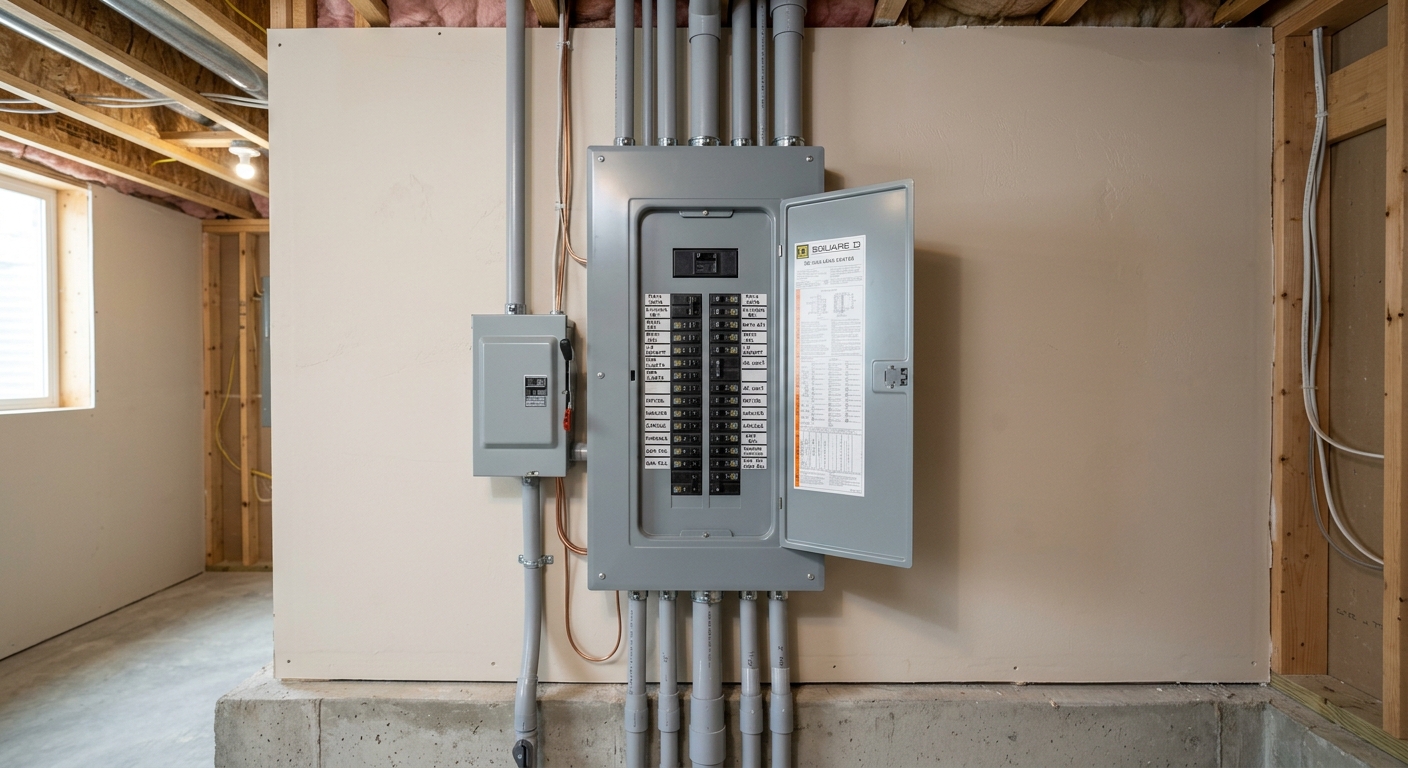
1) Breakers that trip frequently usually indicate overloads, failing components, or circuits that were never sized for today’s usage. If the trips are consistent (especially during heat-pump operation, cooking, or EV charging), plan an urgent inspection. 2) Knob-and-tube wiring present is the big concern: the risk is deterioration of insulation and contact points, not just age. In many cases, it’s a “do it soon” item because insurers and inspectors increasingly look for corrective action. 3) 60A or 100A service is often inadequate for a modern Duncan home running multiple high-demand loads at once—EV charger, heat pump, electric stove, and baseboards. The standard solution is typically a 100A-to-200A service upgrade.
4) Aluminum wiring (pre-1976 construction) isn’t always an immediate emergency, but it does require licensed remediation or approved connectors; letting it sit can create heat/connection issues over time. 5) Insufficient outlets (extension cords everywhere) is a code-and-safety red flag—electrical systems need proper receptacle spacing and dedicated circuits for certain loads. 6) No AFCI/GFCI protection where required often becomes visible at resale or when renovations trigger inspections; correcting it is usually a planned upgrade with an inspection pathway.
Climate and market realities on Vancouver Island affect how often these issues surface: damp crawlspaces and older finish access make troubleshooting slower, and the area’s older housing stock means you’ll often be pricing a combo solution—service capacity plus wiring compliance. For example, if an EV charger plan is driving the change, a 200A service upgrade budget near $3,500–$9,000 can be the difference between a simple add-on and a larger, more disruptive remediation later.
| Warning Sign |
What It Means |
Recommended Action |
Urgency |
Price Band |
| Breakers trip frequently |
Possible overload, loose connections, failing breakers, or undersized/unsafe circuits. |
Inspection and load testing; identify and correct the circuit causing trips. |
Immediate to 2–3 weeks |
$900–$3,500 |
| Knob-and-tube wiring present |
Aging insulation/contact risks and growing insurance/safety concerns. |
Plan K&T removal and replacement of affected branches; consider whole-home rewire if widespread. |
Planned (asap) |
$8,000–$25,000 |
| 60A or 100A panel (inadequate load capacity) |
Service can be close to limits with today’s loads (heat pumps, EVs, stoves). |
Load calculation and typically 100A-to-200A upgrade. |
Planned (before adding loads) |
$3,500–$9,000 |
| Aluminum wiring (pre-1976 construction) |
Terminations may be prone to heat at connections if not remediated correctly. |
Licensed aluminum remediation using approved CO/ALR methods; replace sections where needed. |
Planned (do not ignore) |
$5,000–$14,000 |
| Insufficient outlets — extension cords everywhere |
Over-reliance on temporary power and risk of overheating or improper use. |
Add receptacles and/or dedicated circuits; reduce extension cord dependence. |
Planned (safety first) |
$900–$3,500+ |
| No AFCI or GFCI protection where required |
Increased risk and potential non-compliance that can surface at resale or permitting. |
Upgrade protection devices and circuits to meet current requirements. |
Planned |
$300–$2,500 |
How to choose a electrical work contractor in Duncan
Choosing the right contractor matters in Duncan because a permit-ready, inspection-passing job protects your family, your home insurance position, and your timeline. Start by verifying British Columbia licensing: ask for their BC electrician licence details and confirm the licence on the provincial registry. Next, ask for a certificate of liability insurance showing coverage for the work being performed and the company’s name matching the quote. Finally, confirm worker coverage/clearance for the people on-site (WSIB/WCB coverage). A contractor who can’t provide these documents promptly should not be the one opening your walls.
Then get 2–3 itemised written quotes—separate the labour and materials rather than accepting a single “lump sum.” For panel and service upgrades, ensure the quote includes the load calculation, breaker/panel components, grounding/bonding work, permit handling, and expected inspection steps. Confirm what’s excluded: demolition/patching, disposal, any drywall access, trenching, and whether BC Hydro/utility coordination is included if required. Waste disposal and site cleanup should be explicit.
For warranty, ask for the workmanship warranty length (commonly 1–2 years in the market) and how product warranties apply. Ask if warranties are transferable if you sell the home.
Payment schedules should be conservative: never pay more than 10–15% upfront. Use progress payments tied to milestones and hold back the final amount until the job is complete, tested, and paperwork is provided. Demand a start date and a completion estimate in writing.
- Licence confirmed (BC electrician) and matches the quote
- Liability insurance certificate provided
- Worker coverage/clearance confirmed (WSIB/WCB)
- Itemised labour + materials (no vague “misc.” line items)
- Permit pull and inspection coordination included
- Load calculation included for service upgrades
- Scope exclusions listed (patching, drywall access, disposal)
- EV charger scope includes dedicated breaker/circuit and routing
- Testing/documentation included (labeling, test results where applicable)
- Workmanship warranty stated in writing
- Payment schedule with final holdback
- Start/completion timeline in writing
Red flags I often see with electrical contractors in Duncan include: refusing to list items on the quote (especially permits and inspection responsibility), promising a service upgrade without a load calculation, asking for large upfront payments beyond 10–15%, not providing insurance/licence details, and changing scope verbally after work begins with no written change order.
Frequently asked questions — electrical work in Duncan
What electrical upgrades are required when selling a home in British Columbia?
In British Columbia, what you must do when selling your home isn’t always one single “upgrade list,” because it depends on what’s unsafe, non-compliant, or discovered during inspections/renovations and disclosures. Practically, though, Vancouver Island homes—many built before modern electrical standards—often come up for corrections like adding missing GFCI/AFCI protection where required, addressing unsafe wiring conditions, and upgrading panels that can’t support typical modern loads. If you have knob-and-tube wiring, that’s a major safety and insurance concern and is commonly treated as needing replacement or correction before a sale can proceed smoothly. If your service is undersized (common in older 60A/100A setups), buyers and insurers may push for a capacity upgrade. As a budgeting reference, a typical 100A-to-200A service upgrade often lands in the $3,500–$9,000 band depending on site conditions and scope.
What is a load calculation and why does my electrician need one?
A load calculation estimates how much electrical demand your home will draw under realistic operating conditions. In Duncan and across BC, it’s a core step for service and panel upgrades because your electrician must size the service and distribution so it can handle today’s loads—heat pumps, electric baseboards, EV chargers, hot tubs, and modern kitchen appliances. Without it, you can end up upgrading the panel but still be short on capacity, or you might pay for more than you need. The calculation also supports proper decisions about circuit quantity and breaker sizing. For older Vancouver Island homes (including many Duncan properties with older wiring/panel setups), the load calculation helps determine whether a 200A solution is truly warranted rather than guessed. It’s a key reason quotes vary: the “same panel upgrade” can mean different outcomes once the actual connected load is assessed.
How do I find a licensed electrician in Duncan?
For Duncan, start with the provincial licence verification approach: ask the contractor for their BC electrician licence details (and the company name that will be doing the work) and confirm it using the online registry. Then request a certificate of liability insurance and confirm worker coverage/clearance for the people who will be on-site (WSIB/WCB). A reputable electrician will provide these items without pressure and will be transparent about permitting—especially for service upgrades, new circuits, EV chargers, and rewiring. If the work involves an EV charger or any panel/service changes, ensure the contractor explains how they will handle permits and Technical Safety BC inspections. Avoid contractors who only provide a phone number and a “we’ll take care of it” promise but can’t show proof of licence and insurance.
Can I add a subpanel to my Duncan home?
Yes, adding a subpanel is often feasible in Duncan, but it depends on your existing main panel capacity, wiring condition, grounding/bonding setup, and the permit requirements for your configuration. Subpanels are commonly used to separate loads like a workshop, basement circuits, or higher-demand equipment so the main panel stays organized and properly protected. Because Vancouver Island homes frequently have older panels or older wiring types, your electrician may recommend a load calculation and, if your service is near its limits, a 100A-to-200A service upgrade before installing a subpanel. That’s important for EV and heat-pump households. For costs, the subpanel itself plus breakers, wiring, and permitting can vary widely, and it can combine with other work—sometimes approaching the $3,500–$9,000 band if a service upgrade is required as part of the same project scope.
How much does an electrician cost in Duncan?
Pricing in Duncan is largely driven by the licensed scope (how many circuits, what wiring types, and whether it triggers a service upgrade), plus permitting and inspection steps required under BC rules. Labour rates on Vancouver Island are typically billed by the hour for troubleshooting and labour-heavy wiring, while many contractors quote in project packages for panel/service work and rewiring. As general budgeting, panel/service upgrades commonly fall in the $3,500–$9,000 range once materials, permits, and utility coordination are included, and extensive rewiring can be one of the larger investments, often landing in the $8,000–$25,000 band depending on how much wiring must be removed and replaced. EV charger installations (Level 2, 40–50A) are often quoted in the $1,200–$3,000 range when a suitable circuit path is available. The safest way to narrow your cost is an on-site quote with an itemised scope and a load calculation if service changes are involved.
How much does a panel upgrade cost in Duncan?
For Duncan homes, panel upgrade pricing depends mainly on whether you’re simply replacing a panelboard versus doing a full service-size change (commonly 100A to 200A). In the Vancouver Island and Coast market, a complete 100A-to-200A service upgrade is often quoted in the $3,500–$9,000 range when permitting, materials, and inspection/utility coordination are included. If your home also requires grounding/bonding corrections, significant wiring modifications, or you’re removing older wiring to make the installation safe and code-compliant, the scope can move toward the higher end. If you’re planning an EV charger and heat-pump setup, your electrician will typically run a load calculation first—because sometimes the upgrade is the enabler that makes the charger addition straightforward. Always compare quotes by scope and inclusions, not just by the headline range.