Electrical services and costs in South Arm
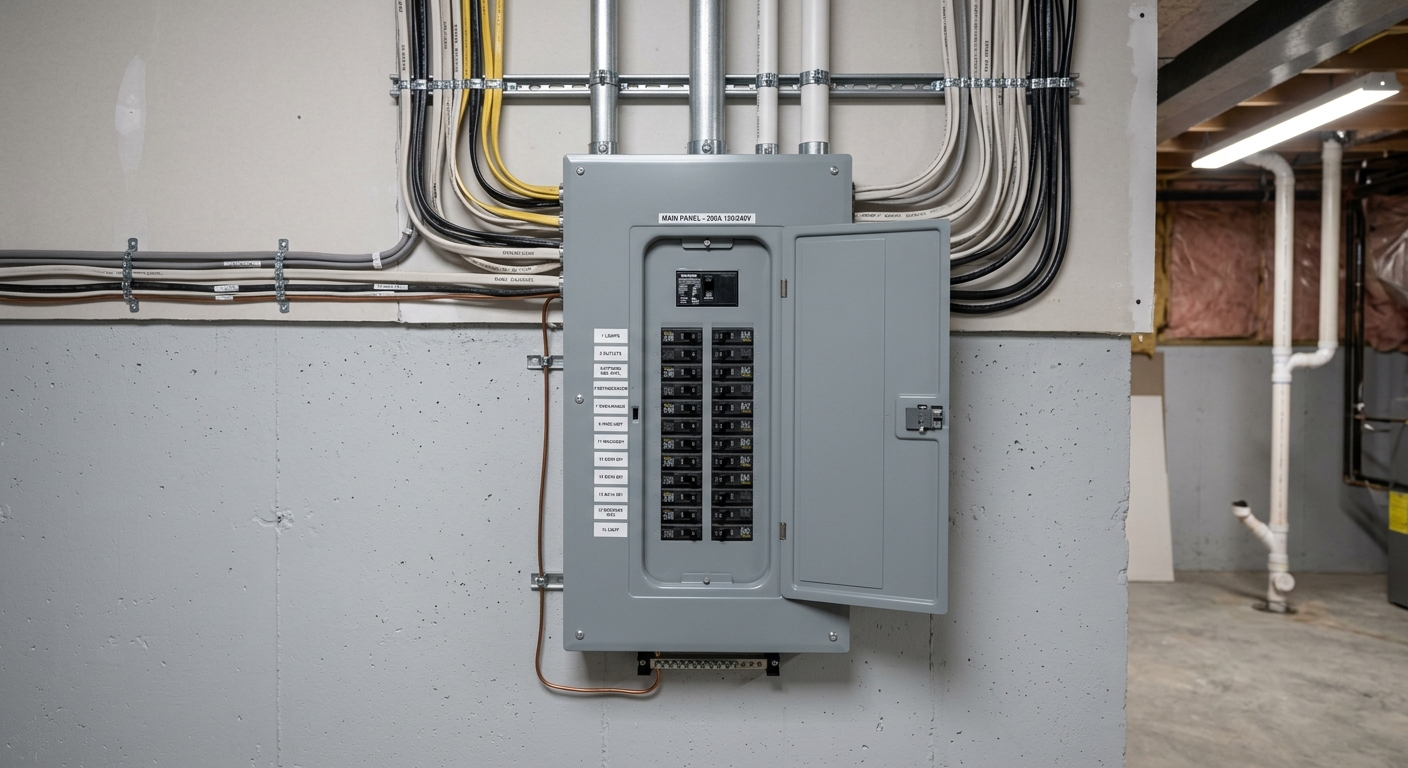
In South Arm, your electrical bill and renovation budget can swing a lot because many homes are older and the work often starts with bringing legacy wiring and undersized services up to today’s safety standards. With a population of 7,503 (Statistics Canada, 2021 Census), the community is big enough for contractor choice, but small enough that schedules can tighten during peak permitting windows across the Lower Mainland–Southwest. Lower Mainland–Southwest housing includes a meaningful stock of pre-1960s and 1970s homes, so it’s common to see knob-and-tube wiring, older 60A or 100A services, and aluminum branch circuits that need licensed remediation. Those are prime candidates for panel upgrades and rewiring—especially if you’re adding electric heat, induction cooking, or an EV charger.
Costs also reflect local market realities. South Arm sits within the broader Lower Mainland–Southwest region where labour, permitting, and access constraints in established neighbourhoods typically push pricing higher than in more rural parts of British Columbia. On top of that, many homes rely heavily on electric baseboard or furnace heat, and EV adoption is increasing the number of Level 2 charger installs—projects that often trigger a service capacity check and sometimes a coordinated BC Hydro service change. If civil work or mast/service coordination is required, you may see additional downtime while utility scheduling is confirmed.
Because of these factors, two neighbours can receive very different quotes for the “same” goal: one may need a panel upgrade only, while another may require knob-and-tube removal or full rewiring for safety and insurability. Use the table below as a realistic starting point for comparing bids in South Arm—then confirm the scope and permitting plan before you sign.
| Service |
Why It's Needed |
Permit Required |
Price Range |
| Panel upgrade — 100A to 200A service |
Adds capacity for modern loads (EV chargers, heat, kitchens) and improves fault-current protection. |
Yes |
$1,800 – $4,500 |
| EV charger installation (Level 2, 40–50A) |
Dedicated circuit and correct breaker/cable sizing for reliable charging and code compliance. |
Yes |
$900 – $2,500 |
| Knob-and-tube wiring removal and replacement |
Removes obsolete wiring method with ageing insulation issues and improves safety/insurance eligibility. |
Yes |
$8,000 – $20,000 |
| Aluminum wiring remediation (CO/ALR connectors) |
Addresses aluminum branch-circuit connections using approved methods (CO/ALR) or section replacement. |
Usually (depends on extent/alterations) |
$2,500 – $7,500 |
| New dedicated circuit (HVAC, appliance, hot tub) |
Prevents overloads by adding capacity and dedicated protection for high-load equipment. |
Yes |
$600 – $2,400 |
| Whole-home rewire (older home, full replacement) |
Restores full wiring system integrity for safety, resale, and modern code requirements. |
Yes |
$15,000 – $40,000 |
Prices are estimates only and vary by project scope, site access and material selection.
What affects the price of electrical work in South Arm
In South Arm and the broader Lower Mainland–Southwest, the same electrical project can cost 30–50% more or less from one quote to another because the underlying electrical condition, access difficulty, and permitting pathway aren’t always obvious at first visit. British Columbia’s labour mix, inspection stages, and utility coordination (when service equipment changes) can also add cost compared with other parts of the province where scheduling and site access are simpler. As a result, a “panel upgrade” bid for one home might include only a change to modern breakers, while another might require a full load calculation, old wiring corrections, and significant circuit repointing.
Housing age is the dominant cost driver. Homes built before 1950 often still show wiring methods that insurance companies increasingly question, which can make knob-and-tube removal far more involved than a simple circuit refresh. Homes from the 1960s–70s often have 60A or 100A panels that are inadequate for today’s combined loads—especially when EV chargers (40–50A), heat pumps, and electric stoves run in the same household. Aluminum wiring common to the 1965–1976 window requires licensed remediation with approved CO/ALR connectors or full replacement, and those connector-based corrections have labour time that buyers don’t always budget for. Meanwhile, EV adoption is driving more Level 2 permit applications, and that increased volume doesn’t eliminate scheduling constraints.
In South Arm, one common price swing comes from access: a side-panel swap with clear attic access can stay near the panel upgrade band (about $1,800 – $4,500), while homes with cramped basements, long cable runs, and multiple safety corrections push work into the higher wiring bands (often within $8,000 – $20,000). Another factor is heat demand: heavy electric baseboard loads increase the chance you’ll need a service capacity check and sometimes a full 200A upgrade rather than a minor breaker change.
| Price Factor |
Why It Matters |
Cost Impact |
| Panel size upgrade — 100A to 200A is the standard minimum today |
Modern homes often need more breaker space and fault protection capacity for EV and heating. |
$1,800 – $4,500 |
| Wiring type — copper vs. aluminum remediation vs. K&T removal |
Aluminum needs approved remediation; knob-and-tube removal can be disruptive. |
$2,500 – $20,000+ |
| Number of new circuits — each adds material and labour time |
More circuits mean more cable, breakers, boxes, and testing time. |
$600 – $2,400+ per circuit (typical) |
| Permit + ESA/TSBC inspection fee — mandatory for all major work |
Permits and inspections are required; they add administrative and scheduling cost. |
$150 – $600+ (project dependent) |
| Labour rate for licensed electricians — journeyman rates in {region} |
Local labour rates and time on site drive pricing, especially with access constraints. |
$120 – $190 per hour (varies by scope) |
| EV charger amperage — 40A vs. 50A circuit affects cable and breaker cost |
Higher amperage requires appropriately sized cable and breaker components. |
$900 – $2,500 (typical total) |
| Emergency or after-hours premium |
Late call-outs increase staffing and can include after-hours service costs. |
$250 – $800+ |
| Load calculation required for service upgrade |
A proper calculation affects whether you can safely stay at a smaller service size. |
$200 – $600+ (when added/required) |
Permits & regulations in British Columbia
In British Columbia, electrical work beyond changing a light bulb must be done by a licensed electrician. Permits are required for panel upgrades, rewiring, new circuits (including EV chargers), and service equipment changes. Permitted work must be inspected and approved by the electrical safety authority in BC—administered through Technical Safety BC. The rules are meant to protect you and your home, and they also matter for insurance and resale: buyers’ lawyers often request proof of permits and inspection completion when significant electrical work was done.
What typically requires a permit: adding or altering circuits (new outlets, dedicated appliance circuits, hot tub wiring), replacing or upgrading a panel, relocating a service, removing/rewiring knob-and-tube wiring, and installing Level 2 EV chargers. What typically does not require a permit: replacing a receptacle with the same type in the same location (only within narrow conditions), swapping like-for-like fixtures, or replacing a breaker with an exact match—though the safest route is to confirm with your contractor because “same like-for-like” is more strict than people think.
For a South Arm homeowner, verify before work starts:
- Licence: ask for the contractor’s BC licence number and confirm it using the provincial registry.
- Insurance: request a certificate of insurance showing liability coverage and the jobsite address where applicable.
- Workers’ coverage: confirm WSBC coverage (this replaces the Ontario WSIB concept).
- Clearance letter: if the contractor provides it, keep it in your records with receipts and permit copies.
Then confirm that the permit will be pulled in your name (or clearly identified for the project) and that the inspection appointment is scheduled as part of the plan—not after the fact.
When your South Arm home needs an electrical upgrade
Electrical upgrades in South Arm aren’t just about convenience—they’re about safety-critical capacity and code compliance, especially in homes that face heavy winter electricity use and evolving loads. Start with the warning signs. (1) Breakers that trip regularly can indicate an overloaded panel, failing breakers, or circuits that have been altered over time. If it happens repeatedly—particularly when running heat or kitchen loads—treat it as urgent and stop using the affected circuits until inspected.
(2) Knob-and-tube wiring is a key concern because aged insulation and contact issues can create fire risk; the priority is safety and insurability, not simply “because it’s old.” (3) A 60A or 100A service is often inadequate in today’s Lower Mainland–Southwest reality when a home adds an EV charger, runs electric baseboard or furnace heat, or combines a heat pump with an induction/electric range. In many cases, moving to a modern 200A upgrade is the standard solution. (4) Aluminum wiring (commonly pre-1976 construction) isn’t always an immediate emergency, but it does require licensed remediation or section replacement using approved methods to address connection issues. (5) Insufficient outlets and “extension-cord living” is a practical hazard; it can also be a sign your circuits are stretched thin and need rebalancing or new dedicated runs. (6) Missing AFCI/GFCI protection where required is a code-compliance issue that often comes up at sale and should be planned before closing—especially if inspection flags were already noted.
In a South Arm home with an undersized 100A panel plus an EV charger request, you might see costs concentrated in the panel upgrade band ($1,800 – $4,500) plus the charger install. If the same home also has knob-and-tube wiring feeding that area, budget can jump toward higher rewiring bands (often $8,000 – $20,000) because removing and replacing wiring is labour-intensive and can require careful path planning through existing finishes.
| Warning Sign |
What It Means |
Recommended Action |
Urgency |
Price Band |
| Breakers trip frequently |
Likely overload, failing components, or improper circuit protection. |
Inspection first; identify culprit circuit and correct capacity/protection. |
Immediate |
$600 – $2,400 |
| Knob-and-tube wiring present |
Obsolete wiring method with insulation contact and reliability concerns. |
Plan removal/replacement and document permits/inspections. |
Urgent/Planned soon |
$8,000 – $20,000 |
| 60A or 100A panel (inadequate load capacity) |
May not safely support modern loads (EV, heat, appliances). |
Load calculation and upgrade to a 200A service if required. |
Planned |
$1,800 – $4,500 |
| Aluminum wiring (pre-1976 construction) |
Connection/termination concerns requiring approved remediation. |
CO/ALR connector work or targeted replacement of affected runs. |
Planned |
$2,500 – $7,500 |
| Insufficient outlets — extension cords everywhere |
Increased risk of overload and damaged cords; circuit capacity may be stretched. |
Add receptacles and consider new dedicated circuits for heavy loads. |
Planned |
$600 – $2,400 |
| No AFCI or GFCI protection where required |
Code compliance gap that can show up during home sale and inspections. |
Upgrade protection devices and make affected circuits compliant. |
Planned |
$300 – $1,200 |
How to choose a electrical work contractor in South Arm
Choosing the right contractor in South Arm starts with verifying credentials the same way every licensed electrician should be prepared to show them. First, licensing: ask for the contractor’s BC licence details and confirm it through the provincial registry. Next, liability insurance: request a certificate of insurance and ensure it covers the contractor and the nature of electrical work. Finally, workers’ coverage: in British Columbia, confirm WSBC coverage (not WSIB). If they can provide a clearance letter or proof of account coverage, that’s a good sign.
Then compare bids properly. Get 2–3 itemised written quotes that separate labour and materials and list major components (panel model, breakers, cable type, connectors, labour hours, testing and disposal). Scope matters: ask whether the permit is included in the price, whether Technical Safety BC inspections are scheduled by them, and whether debris disposal and circuit labelling are included. Avoid quotes that only say “electrical work as required” without explaining what triggers extra cost.
Warranty should be in writing. Ask for the workmanship warranty length (commonly one year or more), and whether product warranties are from the manufacturer and how they’re handled. Ensure you understand the payment schedule: never pay more than 10–15% upfront; hold back a portion until the job is complete, inspected (where required), and tested. Finally, require a start date and completion estimate in writing, because service upgrades and BC Hydro coordination can affect timelines.
- Ask for a site visit before quoting (remote estimates often miss hidden wiring conditions).
- Confirm the exact panel/service equipment being installed (brand/model and amperage).
- Request load calculation documentation if a service upgrade is proposed.
- Confirm whether knob-and-tube/aluminum remediation is included in the scope or listed as a separate option.
- Ask if permits and inspection scheduling are included and who pays the permit fees.
- Ensure disposal/recycling of removed equipment is included (where applicable).
- Check whether AFCI/GFCI requirements will be met for the new/altered circuits.
- Verify test results and commissioning steps are included (energization, voltage/continuity checks, polarity verification).
- Request circuit labelling in the panel after each phase.
- Confirm warranty terms for labour and clarify manufacturer warranty transferability.
- Use an itemised quote with line-by-line parts, labour, and allowances.
- Agree on a payment schedule with a holdback until inspection completion.
In South Arm, common red flags include: refusing to provide a licence number or proof of insurance/WSBC coverage; quoting “flat rate” without a scope review of existing wiring condition; omitting permit/inspection timelines (or claiming they’re “handled later”); pressuring for large upfront payments; and using vague language like “upgrade as needed” without itemising major components and exclusion/inclusion details.
Frequently asked questions — electrical work in South Arm
What is knob-and-tube wiring and should I replace it?
Knob-and-tube (K&T) wiring is an older wiring method where conductors are run with ceramic knobs and tubes for support and separation. In South Arm homes, it often appears in older sections and can be harder to modify because parts of the system may be hidden in walls and ceilings. The main concern is not just “age,” but the way insulation and connections behave over time—issues that can raise fire risk and, in practice, affect insurance eligibility. In British Columbia, you should never treat K&T as something to patch casually; it usually requires a planned removal and replacement strategy through proper permitting and inspection. A contractor will typically assess where K&T is present, then recommend targeted removal (if feasible) or broader replacement depending on what it feeds. If you’re doing a service upgrade, K&T removal may also affect the scope and cost, sometimes pushing projects into higher wiring bands (for example, $8,000 – $20,000 for removal and replacement depending on extent).
Is aluminum wiring safe in older South Arm homes?
Aluminum wiring can be safe when installed and maintained correctly, but the issue historically is the quality of terminations and connections over time. In South Arm, aluminum branch circuits are commonly seen in homes from the 1965–1976 era, where connection problems may develop at outlets, junctions, and panel terminations if not built using modern approved methods. That’s why remediation matters: licensed electricians typically evaluate the condition, then use approved CO/ALR connectors or replace affected sections rather than “tightening and hoping.” The goal is to reduce overheating and improve reliability. It’s rarely a case of “immediately remove everything” unless there’s visible damage or widespread issues; often it’s planned remediation alongside other work (like adding circuits or upgrading to 200A). If your home also needs capacity for EV charging, the electrical scope may combine panel work (commonly $1,800 – $4,500) with aluminum connection corrections, depending on how much is affected.
Do I need a permit for electrical work in British Columbia?
Yes, in British Columbia you generally need a permit for electrical work beyond minor like-for-like changes. In practical terms for South Arm homeowners, permits are typically required for panel upgrades, service equipment changes, rewiring work, new dedicated circuits, and EV charger installations (Level 2). Permitted work must also pass inspection by the provincial electrical safety authority process administered through Technical Safety BC. Small tasks are different: fixture swaps and very limited like-for-like replacements may not require a permit, but the rules can be stricter than people assume, especially when safety devices or circuit wiring is involved. The best approach is to ask your electrician to confirm what category your project falls into before work begins. A reputable contractor will include the permit and inspection steps in the plan and documentation you can use for insurance and resale. If a bid tries to exclude permits or inspections, that’s a major quality and compliance concern.
What are signs of an overloaded electrical panel?
Common signs include breakers that trip frequently, warm or discoloured outlets, buzzing sounds from the panel, lights that dim when appliances start, and recurring nuisance trips when using normal household loads (like space heating plus the kitchen). In South Arm and the Lower Mainland–Southwest, overload symptoms can show up faster because many homes rely on electric heat and because EV charging is adding new continuous demand through Level 2 chargers. A 60A or 100A service may also be a telltale issue if you’re adding modern loads like EV chargers or heat pumps. If you’re experiencing frequent trips, treat it as urgent—stop using the affected circuits until it’s inspected. If you only notice gradual limitations (like needing extension cords or breakers that trip when multiple loads run together), it’s usually a planned upgrade situation: a load calculation and, if required, a move toward a 200A upgrade. Many service upgrades land in the $1,800 – $4,500 band depending on scope and access, but wiring condition and required remediation can change the final budget.
Can I do my own electrical work in British Columbia?
For most homeowners, DIY electrical work is not permitted in British Columbia beyond very narrow exceptions. In practice, the “safe” rule is: if the work involves altering wiring, adding circuits, changing the panel, or modifying safety devices, a licensed electrician must do it and a permit and inspection are required. Changing a bulb or a simple like-for-like fixture may be allowed, but you should not assume any more involved work is acceptable without checking the specific rules and permit requirements. Because South Arm homes often have older wiring methods (including knob-and-tube or aluminum), DIY attempts can create hidden hazards or create compliance issues that are expensive to fix later. Even when someone believes they’re “just replacing a component,” the code requirements and permitted scope can make it a compliance risk. Always ask your electrician what parts are safe for you to handle (like fixture removal/installation) versus what must be done under permit. Using a licensed contractor protects your safety, keeps the work insurable, and ensures it passes the required inspection steps.
How long does a rewiring job take?
Rewiring duration varies significantly in South Arm depending on the home’s construction and whether the electrician is doing targeted replacement or a whole-home rewire. A focused job—like removing obsolete wiring in one section and replacing circuits feeding key rooms—might take days, while whole-home rewires often take longer due to wall/ceiling access, circuit mapping, testing, and restoring finishes. Access constraints in older Lower Mainland–Southwest homes can extend timelines, especially where basements are tight or where wiring paths require careful planning. Permit and inspection scheduling also affects the calendar; crews may rough-in first, then return for completion after inspection sign-off. If knob-and-tube removal is involved, the scope can expand when hidden runs are discovered, which impacts both time and cost. As a rough planning reference, homeowners often budget time in phases: initial assessment, rough-in, inspection, then final terminations and labelling. For pricing, major rewiring commonly aligns with the higher wiring bands (for example, $8,000 – $20,000 for many replacement projects), and timelines usually track the same complexity.