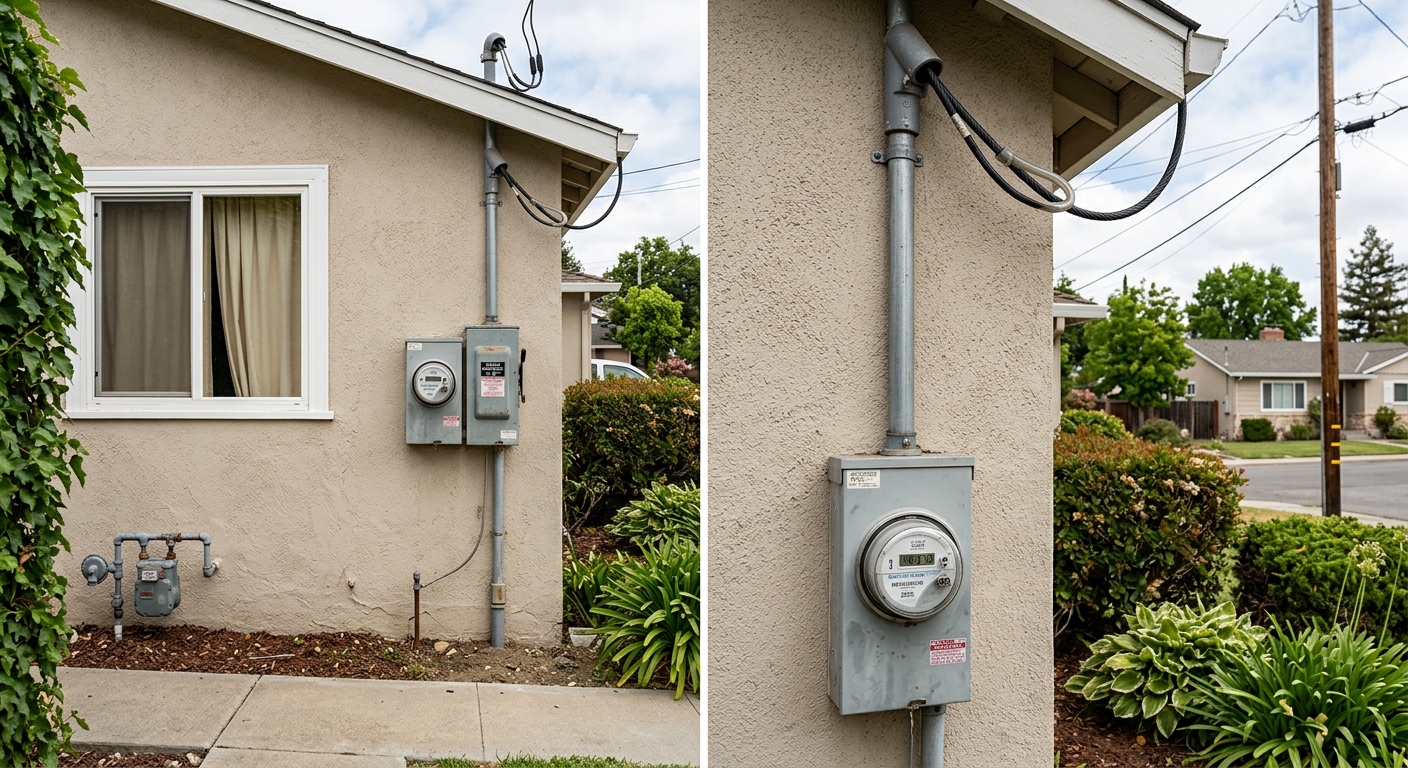
Electrical services and costs in Summerland
In Summerland, electrical work costs are shaped by a mix of older homes and modern power demands. With 50.7% of dwellings built before 1981, it’s common to find wiring types and panel sizes that were never designed for today’s load—especially in communities around neighborhood pockets near Giant’s Head Road where many houses date back to the mid-century boom. For homeowners, that often means planning for panel upgrades (commonly moving from 100A toward 200A), knob-and-tube removal, and—where applicable—aluminum wiring remediation. At the same time, Thompson–Okanagan winters can drive steady base load (heat-pump supplemental heat, electric hot water, and more always-on appliances), which increases the likelihood that a “fine on paper” service still feels tight in real life.
Summerland’s service and labour pricing also reflects a regional travel pattern across the Thompson–Okanagan. Electricians are balancing permit/inspection requirements and coordination with the electrical safety authority, and that cost shows up more clearly when the job involves service work, major rewiring, or EV chargers. EV adoption in nearby Kelowna and Penticton continues to spill over into the broader market as more residents add Level 2 charging—sometimes revealing capacity issues that trigger larger panel work. For projects that touch safety-critical components, budgets aren’t just about parts; they include testing, documentation, and time for inspection readiness.
Below is a practical starting point for the most common upgrades homeowners request, and how permitting typically changes the cost profile before a site visit and load calculation confirm scope.
| Service |
Why It's Needed |
Permit Required |
Price Range |
| Panel upgrade — 100A to 200A service |
Modern loads (heat pumps, EV charging, induction stoves, hot tubs) often exceed an older panel’s capacity and available breaker spaces. |
Yes (major electrical work) |
$2,500 – $6,000 |
| EV charger installation (Level 2, 40–50A) |
Adds a dedicated 240V circuit with correct protection, grounding, and load balance. |
Yes (new dedicated circuit) |
$1,200 – $3,500 |
| Knob-and-tube wiring removal and replacement |
Older K&T systems can have degraded insulation and improper junctions; replacement reduces fire risk and improves insurability. |
Yes (rewiring/major alterations) |
$8,000 – $20,000 |
| Aluminum wiring remediation (CO/ALR connectors) |
Homes with aluminum branch wiring often require licensed remediation at terminations using approved methods to reduce overheating risks. |
Yes (correction/alterations to branch circuit terminations) |
$3,000 – $10,000 |
| New dedicated circuit (HVAC, appliance, hot tub) |
Dedicated circuits reduce nuisance trips and support code-required protection for high-demand equipment. |
Yes (new circuit) |
$500 – $2,800 |
| Whole-home rewire (older home, full replacement) |
When multiple circuits have aging conductors or unsafe components, full replacement restores reliability and supports current safety standards. |
Yes (rewiring) |
$12,000 – $30,000 |
Prices are estimates only and vary by project scope, site access and material selection.
What affects the price of electrical work in Summerland
Even when two quotes look similar on paper, the same electrical scope can vary by roughly 30–50% across the Thompson–Okanagan region and British Columbia. In Summerland, that swing is usually driven by how much hidden wiring work is required (access, attic/basement reach, wall openings), whether the job triggers a permit-heavy service upgrade, and how quickly a licensed electrician can book work during seasonal demand. Housing age is the dominant cost driver: a large share of homes were built before 1981 (Statistics Canada, 2021 Census), and those houses commonly include knob-and-tube wiring, undersized panels, or older aluminum wiring installations that require approved remediation methods.
For example, many 60A or 100A panels installed decades ago can feel “okay” until you add an EV charger or run modern high-load appliances. In practical terms, a load calculation may show that a 200A upgrade is the safer path rather than adding several new breakers to an already constrained panel. Aluminum wiring, more common in mid-century builds, often requires licensed CO/ALR connector remediation at terminations; if workmanship access is limited or there are multiple failure points, full replacement can be more cost-effective than repeated partial fixes.
Local conditions also change the math: homes with finished basements in the Summerland area can require more drywall access, which increases labour even if the electrical parts are straightforward. Conversely, a straightforward new dedicated circuit for HVAC or a 40A Level 2 EV charger in a home with adequate service capacity can land closer to the lower end of typical bands—while a 50A charger that exposes panel space and service constraints can push the project toward panel upgrade pricing like $2,500 – $6,000 plus additional circuit work.
Below are the most common price factors we see during site visits, along with the real-world cost impact behind each.
| Price Factor |
Why It Matters |
Cost Impact |
| Panel size upgrade — 100A to 200A is the standard minimum today |
Insufficient service capacity forces larger bus, additional breakers, and sometimes utility/service coordination. |
$2,500 – $6,000 typically for the service/panel portion |
| Wiring type — copper vs. aluminum remediation vs. K&T removal |
Aluminum requires approved remediation; knob-and-tube replacement is labour-intensive and often more invasive. |
+ $3,000 – $20,000 depending on extent |
| Number of new circuits — each adds material and labour time |
Each circuit may require cable, breakers, outlet/device changes, and testing. |
Commonly + $500 – $2,800 per dedicated circuit |
| Permit + ESA/TSBC inspection fee — mandatory for all major work |
Major work must be permitted and inspected; documentation and test results take time. |
Can add hundreds of dollars to the total, depending on scope |
| Labour rate for licensed electricians — journeyman rates in Thompson–Okanagan |
Travel, seasonal booking, compliance effort, and overhead vary across the region. |
Often the largest variable component beyond materials |
| EV charger amperage — 40A vs. 50A circuit affects cable and breaker cost |
Higher amperage often requires heavier cable, different breaker sizing, and more careful load balancing. |
Usually + $150 – $1,000 for material/protection differences |
| Emergency or after-hours premium |
Nuisance trips or outages can create expedited scheduling needs. |
Can add a noticeable premium above normal labour time |
| Load calculation required for service upgrade |
Accurate calculations prevent under-sizing and reduce rework. |
Typically small as a line item, but prevents costly redesigns |
Permits & regulations in British Columbia
In British Columbia, electrical work beyond changing a light bulb must be done by a licensed electrician. That includes panel upgrades, new circuits (including Level 2 EV charger circuits), rewiring, and any service upgrade. In other words, if the job involves connecting to the panel, altering conductors, adding breakers, or changing how power is supplied, you should expect a permit and inspection. British Columbia permits are processed through Technical Safety BC (and sometimes coordination with local authorities depending on the project), and the work must be brought up to the BC Electrical Code and pass inspection before it can be considered complete.
What typically does NOT require a permit is minor device replacement that does not involve wiring changes—like swapping a non-hardwired lamp, replacing a receptacle with an identical rating only when permitted by code practice and no wiring alterations are required, or changing a light fixture when the wiring is unchanged (still subject to electrical code and safety rules). In real home renovations, the boundary is often blurry—so ask the electrician directly what is permitted under the plan and what will be inspected.
To verify your Summerland contractor, check three things in writing: (1) licence—confirm their electrical contractor licence and electrician name through the relevant provincial licensing registry; (2) liability insurance—request a current certificate of insurance showing coverage appropriate for residential work; and (3) worker coverage—confirm WSBC coverage (WorkSafeBC) rather than the “WSIB” wording used in Ontario. A clearance letter or equivalent proof is often provided upon request. For peace of mind, also ask who will pull the permit and whether they will provide the inspection documents after the job.
When your Summerland home needs an electrical upgrade
Electrical upgrades aren’t just about convenience—especially in Summerland, where older wiring and modern electrification can collide. If breakers trip regularly, that’s often a sign of overloaded circuits or undersized/aging conductors; treat frequent tripping as a safety prompt, not a nuisance you should live with. If you have knob-and-tube wiring, the concern is not only the age—it’s the condition of insulation and the risk posed by compromised or improper connections over time. For many homeowners, that also becomes an insurance problem, so planning replacement early is usually the most cost-effective path.
Panel capacity is another big driver. Homes with 60A or 100A service often feel “fine” until you run an EV charger, heat pump backup, electric stove, and household loads together. In those cases, a 200A upgrade is the common solution because it restores breaker space and capacity margin rather than repeatedly adding circuits to a constrained service. Aluminum wiring (pre-1976 construction) is sometimes not immediately dangerous if the system has been maintained, but it typically requires licensed remediation at terminations to ensure safe heat performance and durability.
Finally, check for code-compliance gaps that can surface during a home sale: insufficient outlets that lead to extension cords everywhere, and missing AFCI/GFCI protection where required. These issues can also affect how smoothly a transaction proceeds, because buyers and inspectors often flag them.
Here’s a realistic decision example: upgrading a single outlet circuit may cost a few hundred to a couple thousand dollars, but if that circuit is repeatedly tripping due to service limitations, a broader panel upgrade can prevent repeated failures. In Summerland/Thompson–Okanagan, panel upgrades commonly fall around $2,500 – $6,000; when the alternative is multiple emergency callouts and repeated component fixes, the upfront upgrade frequently makes more sense.
| Warning Sign |
What It Means |
Recommended Action |
Urgency |
| Breakers trip frequently |
Possible overload, failing breakers, or circuits not designed for current appliance loads. |
Inspection + load check; correct circuit sizing or service capacity if needed. |
Immediate |
$500 – $2,800 (investigation/dedicated corrections) or higher if service work is required |
| Knob-and-tube wiring present |
Degraded insulation and older connection methods can increase risk over time. |
Plan K&T removal/replacement with full circuit updates where required. |
Urgent / planned soon |
$8,000 – $20,000 (typical for removal/replacement scope) |
| 60A or 100A panel (inadequate load capacity) |
Not enough capacity and breaker space for modern loads (EV, induction, heat pumps). |
Load calculation and recommend 200A upgrade if required. |
Planned soon |
$2,500 – $6,000 (panel/service upgrade) |
| Aluminum wiring (pre-1976 construction) |
Requires approved remediation at terminations; overheating risk is linked to connection quality. |
Licensed CO/ALR connector remediation or partial replacement. |
Planned soon |
$3,000 – $10,000 |
| Insufficient outlets — extension cords everywhere |
Overloaded temporary connections and poor safety practices. |
Add receptacles and create code-compliant dedicated circuits where appropriate. |
Planned soon |
$500 – $2,800 per added dedicated circuit |
| No AFCI or GFCI protection where required |
Higher risk of shock and arc faults; can stall sale or raise insurance concerns. |
Add required protection devices or upgrade affected circuits. |
Planned soon (more urgent if safety hazards are present) |
$300 – $3,000 |
How to choose a electrical work contractor in Summerland
Choosing the right electrical contractor in Summerland comes down to verification, clarity, and documentation. First, confirm British Columbia licensing: ask for their licence number and the specific electrician who will attend. Next, check liability insurance—request a certificate of insurance showing the policy is active and suitable for your type of work. For worker coverage, ensure they have current WorkSafeBC coverage (WSBC), not just a general “we’re insured” statement. If anything is unclear, a reputable contractor will provide proof promptly.
Then get 2–3 itemised written quotes rather than a single lump sum. The quote should separate labour from materials, name the breakers/cable/device brands or specifications, and list what’s included for permits, inspections, and testing. Scope details matter: confirm whether the permit pull is included, whether old materials are disposed of, and what repairs are included if walls or ceilings must be opened. Also ask about the disposal process for removed panel components or old wiring segments.
For warranty, request the workmanship warranty length in writing, and note the product/manufacturer warranty terms. Ask whether warranties are transferable to future owners if you sell the home. For payment, never pay more than about 10%–15% upfront; hold back the remainder until the work is complete and tidy, with inspection outcomes documented. Finally, insist on a start date and completion estimate in writing so your schedule isn’t left to guesswork—especially during busy periods.
- Confirm their BC licence number and who will be on-site
- Ask for a certificate of insurance (liability) before work begins
- Verify WorkSafeBC coverage (and request proof if needed)
- Require an itemised quote: labour, materials, permits, disposal
- Ensure the quote states whether load calculations are included for service upgrades
- Ask what’s included for ESA/TSC inspection readiness and testing
- Clarify exclusions: drywall patching, accessibility limitations, hidden wiring conditions
- Confirm device/brand selections for chargers, panels, and safety devices (GFCI/AFCI as applicable)
- Get the permit pulled under their name and confirm you’ll receive inspection paperwork
- Use a payment schedule with a holdback until final completion
- Require a written timeline and workmanship warranty details
- Ask how they handle unexpected conditions found during opening walls or attics
Red flags we commonly see in Summerland include: quotes that omit permits/inspection responsibility, vague scope language (“electrical upgrades as needed” with no circuit/panel details), pressure for large upfront payments, refusal to provide insurance/licence/WorkSafeBC proof, and schedules with no written completion date—especially when service or EV charger work is involved.
Frequently asked questions — electrical work in Summerland
Can I do my own electrical work in British Columbia?
In British Columbia, most electrical work must be performed by a licensed electrician. That includes panel work, adding or modifying circuits, rewiring, and any service upgrade—so DIY is generally not allowed for the work homeowners usually want to do (like new breaker spaces, running new cable to a charger, or correcting wiring faults). Minor tasks are limited, and even then you still have to follow the BC Electrical Code requirements and safety practices. If your goal is to improve a sale, add a receptacle, or install a Level 2 EV charger, plan on hiring a licensed electrician and budgeting for permits and inspection. In Summerland, where many homes are older (Statistics Canada, 2021 Census), DIY on wiring can quickly become a bigger safety and compliance issue than expected.
How long does a rewiring job take?
Rewiring timelines vary widely in Summerland based on how much access is needed (finished walls, attic type, basement layout) and how many circuits must be updated. A partial rewiring project may take days to a couple of weeks, while whole-home rewire projects commonly run longer because the electrician must install circuits systematically, test/label properly, and coordinate permitting/inspection milestones. If your home has knob-and-tube wiring, expect additional time for removal and careful routing of new conductors through existing building cavities. Also factor in permit-ready documentation and inspection scheduling, which can add calendar time even when daily labour progress is steady. Budget-wise, rewiring scopes often align with bands like $8,000 – $20,000 for typical replacement/removal projects, but timeline depends on the full scope uncovered during the work.
Why do my breakers keep tripping?
Frequent breaker trips in British Columbia usually point to one of a few issues: overload (too many devices on one circuit), a faulty breaker, damaged wiring or loose terminations, or—more commonly—circuits not matching how the household is used today (modern appliances, shop equipment, or EV charging). In Summerland homes built decades ago, it’s also not unusual to find wiring conditions that can’t safely handle current loads without remediation. Start by identifying what trips first: one breaker for a room, or multiple breakers at once when certain appliances run. If the breaker trips immediately on reset, or you smell burning/scorching, treat it as urgent. The right fix depends on diagnosis, but the process often involves inspection, load testing, and then correcting circuit sizing or, if capacity is marginal, recommending a service/panel upgrade in the $2,500 – $6,000 range.
How do I compare electrical quotes?
When comparing quotes in Summerland, don’t just look at the total—compare what’s included. Ask for itemised labour and materials, and ensure the quotes list the exact scope: number of circuits, panel rating target (for example, moving to a 200A service where required), charger amperage (40A vs. 50A), and whether load calculations are included. Confirm whether the electrician will pull permits and handle inspection readiness through the provincial process. Also check exclusions: disposal of removed wiring or panel components, drywall patching, and any accessibility constraints. A lower quote that doesn’t include permits or testing can be cheaper until you hit rework. For example, a “charger install” quote that doesn’t mention whether your panel has capacity may later require service work priced more like $2,500 – $6,000 for the panel/service portion.
How long does a panel upgrade take in Summerland?
Typical panel upgrade timelines in Summerland are often measured in a day to a few days, depending on access, cable condition, and how many changes are required (for example, moving from 100A to 200A, adding breaker spaces, and updating safety devices). If the electrician must also address wiring deficiencies, handle aluminum remediation, or coordinate additional circuit work, the schedule can extend. Permitting and inspection steps may add calendar time even after the physical work is complete, because you can’t assume immediate re-energization until inspection is passed. The best way to plan is to ask the contractor for a written timeline with key milestones: permit submission, rough-in/testing (if applicable), inspection date, and final completion. In terms of cost, service/panel upgrade pricing commonly fits bands like $2,500 – $6,000, but your final timeline and total depend on the condition of the existing service and wiring.
What is a GFCI outlet and where is it required in British Columbia?
A GFCI (Ground-Fault Circuit-Interrupter) outlet is a type of receptacle or breaker that quickly shuts off power when it detects an abnormal current that could indicate a shock hazard—especially where water or dampness increases risk. In British Columbia, GFCI protection is required for certain locations and circuit types under the BC Electrical Code, such as receptacles in areas like bathrooms, garages, outdoors, and other damp/wet locations (specific requirements depend on the circuit and installation details). Summerland homeowners with older wiring may find they have older outlets that aren’t protected the way today’s code expects, which can become a safety issue and can also be flagged during home inspections. If you’re upgrading circuits for an EV charger or doing rewiring, a licensed electrician will typically review where GFCI/AFCI protection is needed and include the required devices.