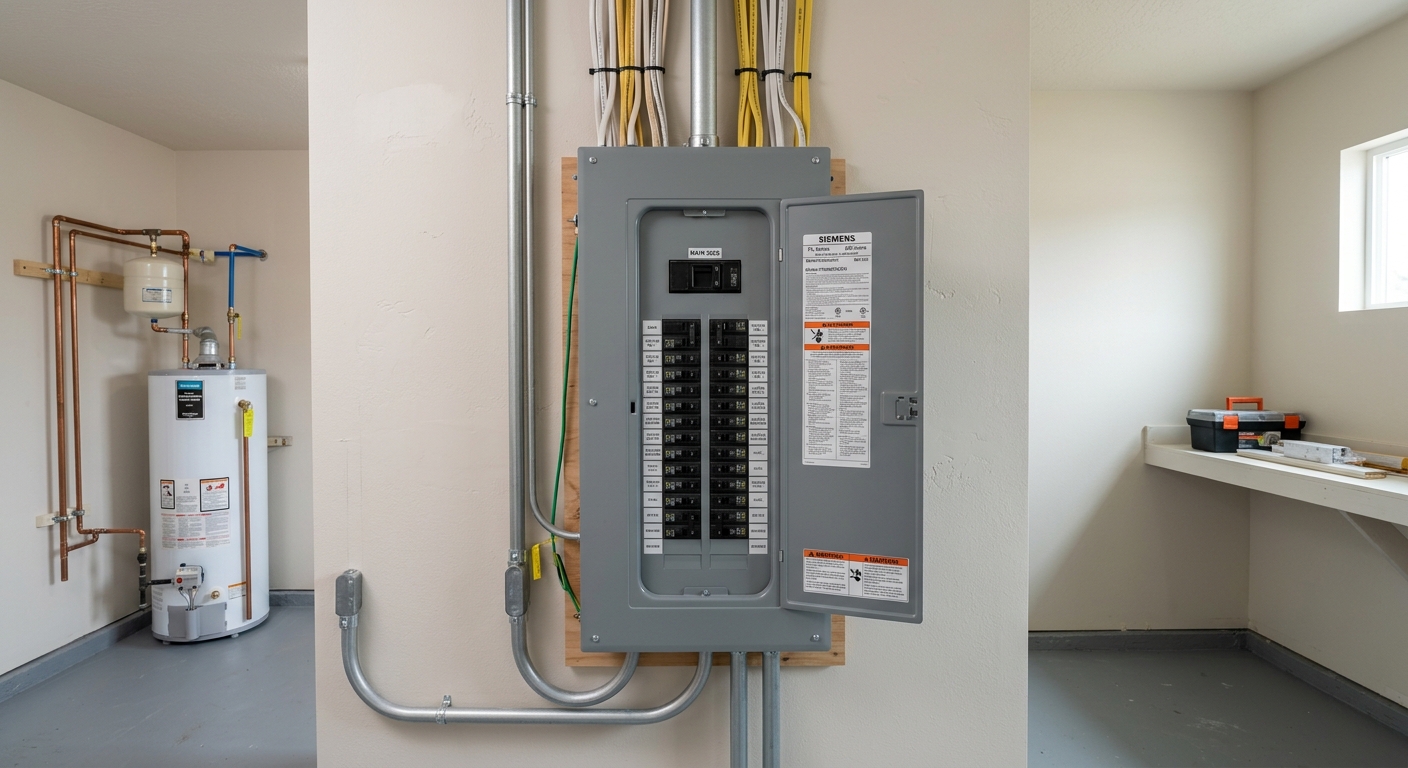
Electrical services and costs in Tofino
Tofino homeowners often need electrical upgrades that go beyond “changing fixtures,” especially when older wiring systems meet modern demand. With 25.9% of homes in the area built before 1981 (Statistics Canada, 2021 Census), you’ll see a lot of pre-modern panel designs and wiring methods that weren’t intended for today’s baseboard loads, heat pumps, and other high-draw equipment. That matters in a coastal community where homes can be in use year-round, and winter heating plus wet-site conditions can stress older circuits and connections faster than many people expect.
On Vancouver Island and the Coast, many houses also pre-date current installation practices. That’s why knob-and-tube removal, aluminum wiring remediation, and 100A-to-200A service upgrades come up frequently during safety reviews and before adding new loads. Limited contractor capacity during busy seasons can slightly affect scheduling and labour costs, while permit coordination and BC Hydro/utility coordination can add time even when the electrical work itself is straightforward.
In Tofino, areas along the main corridor and nearby residential pockets—such as the Chesterman’s/Tofino Resort area zone—tend to have higher turnover of renovations and new load additions (hot tubs, secondary suites, and EV charging), which keeps electrician demand steady. If you’re comparing quotes, it helps to separate what’s being upgraded (service, panel, wiring, or circuits) from what’s only being added (fixtures or small devices). The table below gives realistic cost bands commonly seen for projects at this tier in Tofino and the surrounding Vancouver Island and Coast market.
| Service |
Why It's Needed |
Permit Required |
Price Range |
| Panel upgrade — 100A to 200A service |
Adds capacity for heat pumps, electric ranges, EV charging, and modern receptacle/branch circuit loads; improves safety and breaker compatibility. |
Yes (service upgrade/permitted work under BC Safety Authority/Technical Safety BC) |
$3,500–$9,000 |
| EV charger installation (Level 2, 40–50A) |
Provides faster charging and a proper dedicated circuit; avoids overloading existing breakers and backfeeds. |
Yes (new circuit and charger connection) |
$1,200–$3,000 |
| Knob-and-tube wiring removal and replacement |
Knob-and-tube is not suitable for modern load profiles and can present insulation/connection risk; insurers may require replacement. |
Yes (rewiring/removal requiring inspection) |
$8,000–$25,000 |
| Aluminum wiring remediation (CO/ALR connectors) |
Improves terminations at outlets/switches and reduces overheating risk when aluminum has been installed with non-approved components. |
Yes (major remedial work is typically permitted) |
$3,500–$9,000 |
| New dedicated circuit (HVAC, appliance, hot tub) |
Adds capacity and reduces shared-circuit nuisance trips; supports high inrush loads and proper protection. |
Yes (new branch circuits in most cases) |
$1,800–$4,500 |
| Whole-home rewire (older home, full replacement) |
Brings wiring up to current code and reliability standards; typically the cleanest option when multiple wiring systems are mixed. |
Yes (permitted rewiring + inspection) |
$15,000–$35,000 |
Prices are estimates only and vary by project scope, site access and material selection.
What affects the price of electrical work in Tofino
In Tofino and across Vancouver Island and the Coast, quotes for the “same” electrical task can swing by 30–50% once you include the details—especially wiring condition, panel condition, permit scope, and how many new circuits are actually needed. British Columbia projects also tend to price in the reality of island travel time, permitting/inspection coordination, and the materials that are now required for safe terminations and protection.
The dominant cost driver is the age of the housing stock. For example, homes built before 1981 (25.9% of local housing stock) are more likely to include knob-and-tube and older fuse/early breaker-era setups, where replacement is the practical safety solution rather than “patching.” Homes from mid-century renovations may also have 60A or 100A panels that were fine back then but are inadequate today once EV adoption is added alongside heat pumps, electric stoves, and multiple bathrooms running at the same time.
Aluminum wiring remediation is another frequent driver. Aluminum is common in certain construction eras and usually requires licensed remediation with approved CO/ALR connectors or full replacement where connections can’t be corrected. For EV chargers, demand is climbing: Level 2 installs often require careful load calculations and sometimes a service/panel upgrade first. That’s why you might see a job priced at the low end of a panel band (around $3,500–$9,000) when it truly stays within a 100A-to-200A scope, versus going higher when whole-home rewiring becomes necessary.
Two concrete Tofino examples: (1) if your panel is located in a tight utility space with corrosion from coastal humidity, labour and materials for safe access can add cost; (2) if the wiring already has mixed systems (aluminum plus older cloth-insulated sections), the “minimum” plan becomes a larger rewire scope. Conversely, a cleaner panel area with ample cable routing often keeps costs closer to the tighter range of a service upgrade or new dedicated circuit.
| Price Factor |
Why It Matters |
Cost Impact |
| Panel size upgrade — 100A to 200A is the standard minimum today |
Modern homes commonly require more simultaneous capacity for heating and EV charging. |
$3,500–$9,000 |
| Wiring type — copper vs. aluminum remediation vs. K&T removal |
Aluminum terminations require approved methods; knob-and-tube often requires replacement. |
$3,500–$25,000 |
| Number of new circuits — each adds material and labour time |
Every circuit needs cable, breakers, boxes, and verification testing. |
$1,800–$6,000+ |
| Permit + ESA/TS&BC inspection fee — mandatory for all major work |
Permits/inspections are required for service, rewiring, and charger installs. |
$250–$1,200 |
| Labour rate for licensed electricians — journeyman rates in {region} |
Licensed labour is the main cost; island travel and scheduling affect effective hourly cost. |
$100–$180/hour |
| EV charger amperage — 40A vs. 50A circuit affects cable and breaker cost |
Higher amperage may require larger conductor sizing and breaker/parts upgrades. |
$1,200–$3,000 |
| Emergency or after-hours premium |
Urgent troubleshooting and callouts add overtime risk and scheduling cost. |
$300–$1,000+ |
| Load calculation required for service upgrade |
Accurate load sizing is required to design the panel/service correctly. |
$250–$800 |
Permits & regulations in British Columbia
In British Columbia, ALL electrical work beyond changing a light bulb must be done by a licensed electrician. That includes panel upgrades, new circuits, rewiring, knob-and-tube replacement, aluminum remediation that involves protected connections, and EV charger installations. For these kinds of projects, you’ll need a permit and the work must pass inspection by the province’s electrical safety system (Technical Safety BC). While homeowners may do very limited tasks in some cases, most “DIY electrical” you see advertised online is not acceptable when permits and inspection are required.
What typically DOES require a permit in BC: service upgrades (for example 100A-to-200A), adding new breakers/circuits, any EV Level 2 charger circuit, replacing or relocating a panel, and most rewiring (including complete replacement or partial rewire when conductors are altered). What typically does NOT: simple fixture swaps where the existing wiring method and box are already approved for that fixture and no circuits are changed—though you should still ask your electrician what remains covered under an inspection scope.
To verify a contractor in Tofino, start with the electrician’s BC licence/registration using the provincial registry for licensed individuals or companies (search “Technical Safety BC licensed electrician” and match the name/company). Next, ask for a certificate of insurance showing liability coverage and confirm they have the required workplace coverage (commonly WSBC, as applicable). Finally, ensure the electrician can provide clearance/inspection documentation once permitted work is complete—before BC Hydro/utility steps are finalized.
When your Tofino home needs an electrical upgrade
Electrical upgrades in Tofino aren’t about “updating for style”—they’re usually prompted by safety, nuisance trips, or the inability to add new loads. Coastal dampness, older materials, and an aging housing stock increase the odds you’ll run into wiring or capacity limitations during renovations, especially when heat pumps, hot tubs, or EV chargers are added.
Start with breakers that trip frequently. If breakers trip when you run multiple devices, it can point to an overloaded panel, undersized circuits, or failing breaker/cable connections. This is typically urgent if the tripping happens repeatedly or you notice burning odour, heat discoloration, or sparking. Second, knob-and-tube wiring: the key concern is insulation condition and contact reliability, not just “how old it is.” If K&T is present, plan for replacement—insurers and modern safety requirements often push you toward removal rather than patching.
Third, check your service size. Homes with 60A or 100A service often struggle with modern combinations: EV charger, heat pump demand, and an electric stove can overload older capacity even if everything works “most of the time.” In many cases, a 200A upgrade is the standard solution to avoid constant load balancing. Fourth, aluminum wiring (pre-1976 construction): it may not be immediately dangerous if maintained, but it still needs licensed remediation with correct approved terminations (CO/ALR connectors) to reduce overheating risk. Fifth, insufficient outlets and constant extension cords is a code-compliance and safety red flag—cords are not a substitute for fixed wiring. Finally, missing AFCI/GFCI protection where required can surface during home sales and inspections; treat it as planned work, not cosmetic.
For a dollar reality check: if your service is truly limited, upgrading the service/panel (often in the $3,500–$9,000 band) can be cheaper than repeatedly adding dedicated circuits that still can’t handle combined loads. Conversely, if you only need a single dedicated hot tub circuit, staying in the dedicated-circuit band ($1,800–$4,500) may be justified—provided a load calculation confirms you’re not masking a bigger panel capacity problem.
| Warning Sign |
What It Means |
Recommended Action |
Urgency |
Price Band |
| Breakers trip frequently |
Likely overload, undersized circuits, or failing connections/breakers. |
Schedule load review and inspection; verify panel and circuit condition first. |
Immediate to near-term |
$300–$4,500 |
| Knob-and-tube wiring present |
Older insulation and connection methods not intended for modern loads. |
Plan K&T removal and rewire (often phased if needed). |
Planned but high priority |
$8,000–$25,000 |
| 60A or 100A panel (inadequate load capacity) |
Modern appliances and EV/heat-pump loads may exceed capacity. |
Service upgrade and load calculation; consider 200A as standard. |
Near-term |
$3,500–$9,000 |
| Aluminum wiring (pre-1976 construction) |
May require remediation at terminations to reduce overheating risk. |
Licensed inspection; remediate with CO/ALR connectors or replace sections. |
Near-term |
$3,500–$9,000 |
| Insufficient outlets — extension cords everywhere |
Overreliance on cords increases fire risk and usually indicates missing circuits. |
Add outlets and likely a new dedicated circuit where appropriate. |
Planned |
$1,800–$4,500 |
| No AFCI or GFCI protection where required |
Higher risk for arc faults and shock; can fail sale/inspection. |
Upgrade protection devices and verify compliance by inspection. |
Planned |
$300–$2,500 |
How to choose a electrical work contractor in Tofino
Choosing the right contractor in Tofino is mostly about verification and scope clarity. First, confirm BC licensing/registration for the electrician/company using the provincial licence registry. Then request proof of liability insurance (certificate of insurance) and confirm workplace coverage is in place where applicable (WSBC). Don’t rely on verbal assurances—ask for documents and match the name on the registry.
Next, get 2–3 itemised written quotes. You want a breakdown that separates labour and materials, shows what brand/model of breakers or EV charger components will be used, and lists the exact circuits/panel changes included. Scope wording matters: ask whether permits are included in the price, who is pulling the permit, whether BC Hydro coordination is included (for service upgrades), and whether disposal/dump fees for old panel parts or removed wiring are covered.
For warranty, insist on a workmanship warranty length in writing, and understand product/manufacturer warranty coverage for chargers and electrical components. Payment scheduling should protect you: never pay more than 10%–15% upfront; use a holdback until completion and inspection paperwork is provided. Finally, require a start date and realistic timeline in writing—on Vancouver Island, weather and travel can affect scheduling, so a written estimate reduces delays and misunderstandings.
- Licence/registration number provided before work starts
- Certificate of insurance supplied (liability coverage)
- Workplace coverage confirmed where applicable (WSBC)
- Permit responsibility clearly stated (who pulls it and when)
- Inspection coordination described (what you receive after inspection)
- Itemised quote: labour, materials, and equipment separated
- Scope includes load calculation for service upgrades
- Clear “exclusions” list (no hidden add-ons)
- Disposal and cleanup scope included
- Workmanship warranty term in writing
- Payment schedule capped with holdback at completion
- Completion criteria defined (testing, labeling, photos if applicable)
In Tofino, I’d treat these as red flags: a contractor unwilling to provide licence/insurance documents, quotes that are “lump sum” with no circuit/panel details, refusal to pull permits or discuss inspection steps, promises to do service/EV work without the required paperwork, and a request for large upfront payments with no holdback or written schedule.
Frequently asked questions — electrical work in Tofino
Is aluminum wiring safe in older Tofino homes?
Aluminum wiring isn’t automatically unsafe, but it does require the right installation and modern approved terminations. In older Tofino houses—particularly those built before modern standards—aluminum can present problems at connections if non-approved devices or methods were used. The fix is usually a licensed inspection to identify affected terminations, followed by remediation using approved CO/ALR connectors or replacement of sections where required. If you’re planning an upgrade (like a service/panel change or EV charger addition), it’s also a good time to address aluminum issues so your new breakers and circuits aren’t built on unreliable connection points. Budget-wise, aluminum remediation commonly falls in the $3,500–$9,000 range depending on how many runs and terminations need correction.
Do I need a permit for electrical work in British Columbia?
Yes—most electrical work beyond minor fixture swaps requires a permit in British Columbia, and it must be inspected after the work is complete. In Tofino, this includes panel/service upgrades (such as 100A-to-200A), new circuits, rewiring projects, knob-and-tube removal, and EV charger installations. The permitted scope is inspected under the provincial electrical safety system (Technical Safety BC). A licensed electrician should handle the permit process and provide you with inspection documentation. If someone tells you a permit “isn’t necessary” for a panel upgrade or charger circuit, that’s a serious concern—because BC Hydro and insurers often require proper permit/inspection records for reliability and compliance.
What are signs of an overloaded electrical panel?
Common signs include breakers that trip when multiple loads run at once, lights that dim during heating cycles, and a panel that feels hot to the touch (or shows scorch marks). Another clue—especially in coastal homes where you run heating and appliances year-round—is that problems start after you add new devices like an EV charger, electric range, or hot tub. In older housing stock (25.9% built before 1981), undersized or outdated service capacity can show up faster when modern loads are introduced. If your load calculation indicates you’re out of capacity, a service upgrade is the usual solution, often in the $3,500–$9,000 band for a typical 100A-to-200A upgrade with permitting and coordination.
Can I do my own electrical work in British Columbia?
In British Columbia, you generally can’t do DIY electrical work for anything beyond very limited tasks like simple bulb or basic fixture replacements, and even then it must be safe and compliant with existing wiring. For most meaningful work in Tofino—new circuits, panel/service changes, EV chargers, rewiring, and knob-and-tube/aluminum remediation—work must be performed by a licensed electrician under permit and subject to inspection. Homeowner exceptions are narrow, and attempting work that requires a permit can create compliance and insurance problems later. If you’re unsure what qualifies, ask the electrician to confirm what is and isn’t included before you start, so your plan stays aligned with Technical Safety BC inspection requirements.
How long does a rewiring job take?
Rewiring timelines vary widely based on whether it’s a partial rewire or a whole-home replacement, and on how accessible walls/basements/crawlspaces are in your specific Tofino property. A small targeted circuit/corner-area upgrade might take a day or two, but a full whole-home rewire is commonly a multi-day to multi-week project. Schedule also depends on inspection steps because permitted work must be inspected before certain stages can be closed up. In homes with older wiring systems (including knob-and-tube or mixed aluminum/copper), the electrician may need additional time for safe removal, testing, and proper labeling. For cost context, whole-home rewire work often falls above typical panel/service projects, frequently landing in the higher end bands like the $15,000–$35,000 range when extensive replacement is required.
Why do my breakers keep tripping?
Breaker trips can mean several things: overload (too many loads on one circuit), a failing breaker, a connection problem at a panel or device, or wiring insulation degradation—especially in older homes. In Tofino, recurring trips can also show up after you add loads like heat pumps, an EV charger, or even a hot tub, because the total demand rises faster than the original circuit design. Start by identifying what triggers the trips—specific rooms, the same time of day, or when a particular appliance runs—and avoid repeated resets if you see burning smells or discoloration. A licensed electrician will typically inspect the panel and circuits, perform basic testing, and then recommend either a dedicated circuit addition, a panel/service upgrade (often $3,500–$9,000 for 100A-to-200A), or remediation if aluminum or older wiring methods are involved.