Electrical services and costs in Vanderhoof
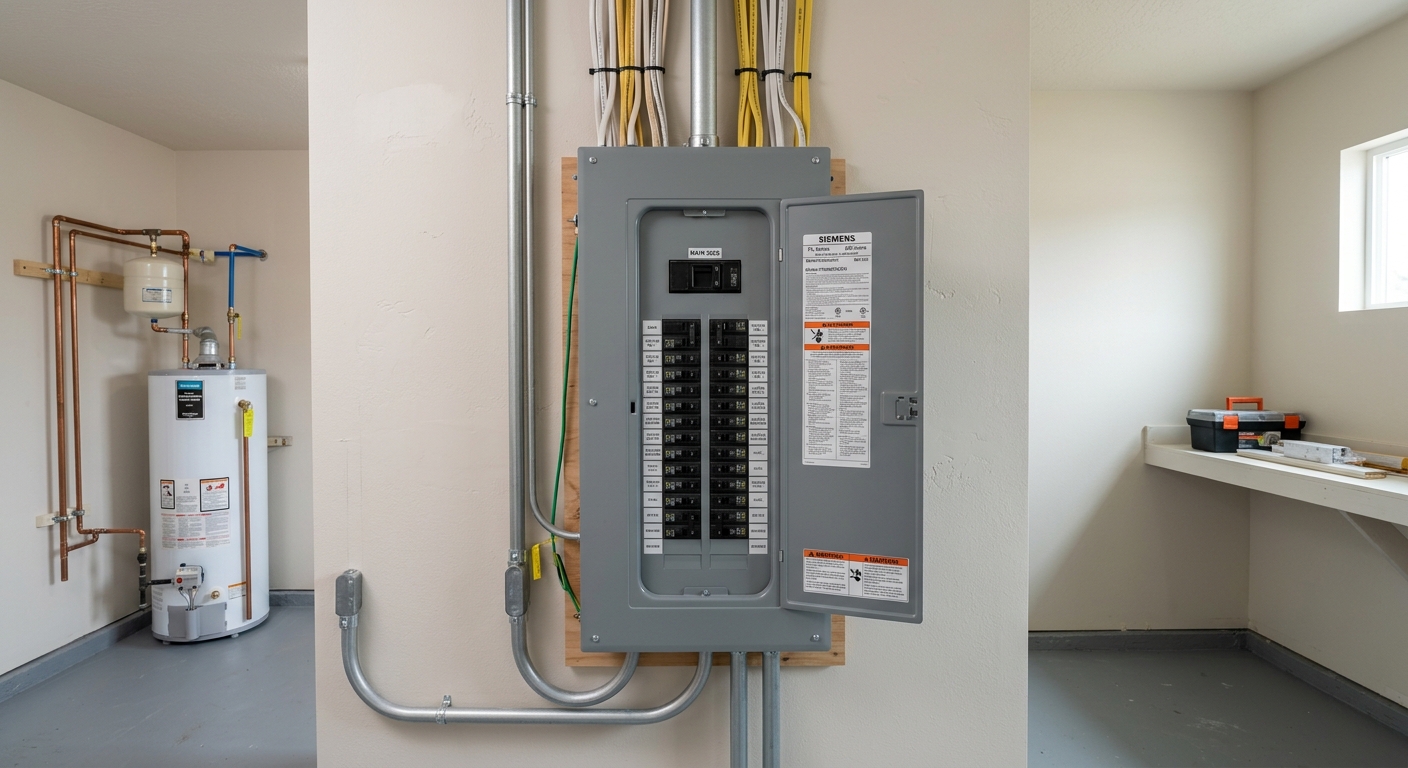
In Vanderhoof, electrical work tends to be a mix of service upgrades and safety-critical rewiring, because many homes were built well before today’s load expectations. With 55.6% of dwellings built before 1981 (Statistics Canada, 2021 Census), you’ll often run into legacy wiring patterns and aging panels that don’t hold up well once residents add modern appliances, electric heating, or EV charging. In the Nechako region, colder winters mean electrical demand isn’t just seasonal—electric baseboards and other electric-heat systems can keep running through stretches of deep cold, so “mild weather” electrical assumptions don’t really apply. Add in that many older services are still around 60–100A, and upgrading to a 200A panel is a routine fix when owners want better capacity and code-compliant protection.
Contractor availability and pricing also reflect remoteness and travel between Vanderhoof and nearby communities, so call-outs for troubleshooting and remediation can be more labour-intensive than in larger centres. Demand is particularly steady in and around the downtown core and the broader Vanderhoof area where older subdivisions cluster and insurance-driven updates are common.
If you’re budgeting, it helps to separate the work into clear categories—panel or service capacity, EV circuits, and wiring type remediation—then compare estimated ranges below to your preferred scope. Use the table as a starting point before you ask for an itemised quote.
| Service |
Why It's Needed |
Permit Required |
Price Range |
| Panel upgrade — 100A to 200A service |
Increased capacity for winter loads (electric heat), larger appliances, and modern protection (AFCI/GFCI where required) |
Yes (typically requires permit and inspection) |
$2,500–$6,000 |
| EV charger installation (Level 2, 40–50A) |
Dedicated circuit and correctly sized breaker/cable to safely charge plus handle winter household demand |
Yes (new circuit and charger setup) |
$1,200–$2,500 |
| Knob-and-tube wiring removal and replacement |
Safety and code compliance—older insulation and junction practices are a major concern for insurance and inspection outcomes |
Yes (rewiring scope) |
$8,000–$18,000 |
| Aluminum wiring remediation (CO/ALR connectors) |
Licensed remediation using approved connector methods (or full replacement) to reduce overheating risk at terminations |
Yes (major wiring work) |
$8,000–$18,000 |
| New dedicated circuit (HVAC, appliance, hot tub) |
Dedicated protection for high-draw equipment; improves reliability and reduces nuisance trips |
Often yes (new circuit/branch wiring) |
$800–$2,200 |
| Whole-home rewire (older home, full replacement) |
Full modernization of wiring, grounding/bonding, and protection devices for current code and sale readiness |
Yes (major rewiring) |
$10,500–$22,000 |
Prices are estimates only and vary by project scope, site access and material selection.
What affects the price of electrical work in Vanderhoof
In Nechako and across British Columbia, it’s common to see quotes for the “same” electrical idea swing by roughly 30–50%. The gap usually comes down to how much older wiring needs remediation, how difficult the routing is through existing walls/ceilings, and whether your job triggers service-size changes with BC Hydro connection-related requirements. When your home’s wiring or service is outdated, electricians often spend extra time assessing concealed conditions before they can safely price materials and labour.
Housing age is the dominant cost driver here. Homes built before mid-century can still include knob-and-tube wiring, and insurers increasingly scrutinize it—meaning contractors often need to plan for removal, not just repairs. Homes from the 1960s–1970s commonly have 60A or 100A panels and may include aluminum wiring; that combination is frequently addressed with both capacity upgrades and licensed aluminum remediation. Those upgrades align with winter reality: when electric heat and modern loads (induction stoves, heat pumps, EV charging) run together, an undersized service can force a move from basic circuit work to a fuller panel/service plan.
EV adoption is also shaping pricing in Vanderhoof. Level 2 charger installs require a dedicated circuit (often 40–50A), and load calculations can affect whether a 200A upgrade is needed first—adding cost, but preventing repeated panel work later. As a rough example, a panel upgrade alone typically lands in the $2,500–$6,000 band, while a wiring-heavy job like knob-and-tube removal or extensive aluminum remediation commonly sits in the $8,000–$18,000 band. If your project is accessible (unfinished basement, clear stud bays), costs can be nearer the low end; if it involves lots of concealed chase work and backtracking for safety, it trends higher.
| Price Factor |
Why It Matters |
Cost Impact |
| Panel size upgrade — 100A to 200A is the standard minimum today |
Corrects capacity for modern winter loads and required protection devices |
Often shifts the job into the $2,500–$6,000 range |
| Wiring type — copper vs. aluminum remediation vs. K&T removal |
Different safety methods, labour time, and approved materials |
Can move costs from “circuit add” into the $8,000–$18,000 band |
| Number of new circuits — each adds material and labour time |
More breakers, cable, terminations, and test/commissioning |
Additive; more circuits usually increases total labour and materials |
| Permit + ESA/TSBC inspection fee — mandatory for all major work |
Regulatory steps ensure code compliance and legal safety |
Generally adds a fixed line item plus scheduling time |
| Labour rate for licensed electricians — journeyman rates in Nechako |
Skilled labour is the biggest driver, especially for remediation |
Time-intensive troubleshooting can noticeably increase cost |
| EV charger amperage — 40A vs. 50A circuit affects cable and breaker cost |
Higher amperage can require larger conductors and specific protection |
Small but real material and labour differences within the EV range |
| Emergency or after-hours premium |
Short-notice work typically requires scheduling priority |
Can add a significant premium to standard daytime pricing |
| Load calculation required for service upgrade |
Confirms whether 200A is sufficient or if additional steps are needed |
Usually modest cost, but it prevents expensive rework later |
Permits & regulations in British Columbia
In British Columbia, ALL electrical work beyond changing a light bulb must be done by a licensed electrician. That includes panel upgrades, new circuits (for example, an EV charger line), rewiring, and service upgrades. DIY electrical is prohibited for most work—there are only narrow homeowner exceptions, and in practical terms, if you’re modifying wiring, breakers, outlets, or the service, you should assume you need an electrician and a permit.
Permits are required for the kinds of work homeowners commonly ask for in Vanderhoof: replacing a panel or upgrading from 100A to 200A, adding dedicated branch circuits for hot tubs or HVAC, removing knob-and-tube or remediating aluminum wiring, and installing Level 2 EV charging. After the work is completed, the permitted job must pass inspection by the provincial electrical safety authority—Technical Safety BC in British Columbia.
To verify your contractor before work starts, do it in this order: (1) Licence: check the electrician or electrical contractor licence through the provincial registry (confirm the trade is valid for your scope). (2) Insurance: request a certificate of liability insurance showing coverage amounts appropriate for residential construction. (3) Workplace coverage: confirm WSBC/WCB coverage if workers are employed. (4) Look for a clearance letter/permit reference on prior jobs when provided. A reputable Vanderhoof contractor should be able to provide these documents quickly, and they should also confirm which permits they will pull for your project.
When your Vanderhoof home needs an electrical upgrade
If you’re seeing issues in your Vanderhoof home, don’t assume they’re cosmetic—electrical problems can be safety-critical, especially in colder months when everything runs longer. Start with frequent breaker trips: if breakers trip regularly, it often points to an overloaded panel, failing breakers, or circuits that were never sized for today’s loads. That’s usually an “investigate promptly” situation, not a wait-and-see problem.
Next, take knob-and-tube wiring seriously. The concern isn’t only age; it’s the condition of insulation, workmanship at junctions, and the likelihood that insurers and inspections will question the safety of leaving it in place. In a home built before 1981—common in Vanderhoof—this is often a major trigger for a broader rewiring plan.
Then check your service size. If you still have a 60A or 100A panel, it may be inadequate once you add an EV charger, heat pump, induction stove, and electric heating running together. In practice, many owners end up with a 200A upgrade as the standard solution to stop capacity-related nuisance trips and to support modern protection devices. For aluminum wiring (more often seen in pre-1976 construction), it’s not necessarily an immediate hazard if it’s been maintained, but it does require licensed remediation—typically approved CO/ALR connectors at terminations or full replacement depending on condition.
Finally, “sale and code” issues matter. Insufficient outlets (extension cords everywhere) and missing AFCI/GFCI protection where required can surface during home sale or inspection. If you’re planning to list, treat these as planned upgrades with an inspection-ready timeline.
For example, if a panel upgrade helps you avoid repeated charger-related changes, spending in the $2,500–$6,000 band can be the cheaper path versus installing EV wiring that later forces additional panel work. But if you have full knob-and-tube removal ahead of you, expect the broader $8,000–$18,000 range for wiring remediation.
| Warning Sign |
What It Means |
Recommended Action |
Urgency |
Price Band |
| Breakers trip frequently |
Possible overload, loose connections, failing breakers, or undersized/incorrect circuits |
Schedule diagnostics; likely panel/circuit audit and possible targeted circuit upgrades |
Immediate (within days) |
$800–$2,200 |
| Knob-and-tube wiring present |
Outdated wiring method with insulation and connection concerns; often flagged by insurers and inspections |
Plan for removal and replacement; may require whole-home rewire depending on extent |
Immediate to planned (depending on access/condition) |
$8,000–$18,000 |
| 60A or 100A panel (inadequate load capacity) |
Not enough headroom for modern loads and winter electric heating |
Load calculation and panel/service upgrade to 200A |
Planned but soon |
$2,500–$6,000 |
| Aluminum wiring (pre-1976 construction) |
Termination overheating risk if connectors weren’t installed correctly |
Licensed remediation using approved CO/ALR methods or selective replacement |
Planned |
$8,000–$18,000 |
| Insufficient outlets — extension cords everywhere |
Improper temporary wiring and increased risk from overloaded cords/outlets |
Add outlets and possibly dedicated circuits for high-use areas |
Planned |
$1,000–$3,000 |
| No AFCI or GFCI protection where required |
Code-compliance gaps that can affect safety and complicate inspection/home sale |
Upgrade receptacles/breakers as required and verify circuit compliance |
Planned |
$800–$2,500 |
How to choose a electrical work contractor in Vanderhoof
Choosing the right electrician in Vanderhoof starts with verification. In British Columbia, confirm the contractor’s electrical licence is valid for the work you’re requesting—don’t rely on verbal assurances. Ask for a current certificate of liability insurance (so you’re protected if something is damaged on your property) and verify workplace coverage (WSBC/WCB) for the crew performing the work. If they can’t produce documentation, that’s a reason to walk away.
Next, request 2–3 itemised written quotes. You want a breakdown separating labour, materials, and any required extras like permit pull, inspection scheduling, and disposal of old components. Avoid vague “lump sum” quotes unless the scope is very clear. Pay attention to what’s excluded: for example, upgrades that require opening walls, cable pathway changes, or replacing damaged components discovered during the job. A good quote will explain assumptions and the decision points.
Warranty matters, too. Look for a workmanship warranty (often covering defects from installation) and understand the difference between the electrician’s workmanship coverage and the manufacturer’s product warranty. If you sell the home, ask whether the workmanship warranty is transferable or how you’ll document it.
Payment schedule should be conservative: never pay more than about 10–15% upfront, and hold back payment until the job is completed, inspected (if required), and cleaned up. Finally, get a start date and completion estimate in writing—timelines in the Nechako region can shift due to inspection scheduling and travel time.
- Verify BC licence/contractor status before signing anything.
- Request a certificate of liability insurance and confirm it covers residential service work.
- Confirm WSBC/WCB coverage for workers doing the electrical work.
- Get itemised quotes (labour + materials), not just a single lump-sum number.
- Clarify whether the electrician pulls permits and schedules inspections.
- Ask if disposal of old panels, wiring, or fixtures is included.
- Confirm how hidden conditions are handled (open walls, unforeseen wiring damage).
- Ensure the quote includes AFCI/GFCI requirements where applicable.
- Ask for a load calculation when upgrading service size or adding EV charging.
- Request a written workmanship warranty length and what it covers.
- Use milestone-based payments with a holdback until completion.
- Confirm timeline and access requirements (parking, entry points, occupancy considerations).
Red flags to watch for in Vanderhoof: quotes that won’t itemise materials or permits, refusal to provide licence/insurance/WSBC details, vague scopes like “we’ll just update what’s needed” without stating assumptions, pushing large upfront deposits, and promising “no inspection needed” for panel changes, new circuits, rewiring, or EV charger installation.
Frequently asked questions — electrical work in Vanderhoof
What is the cost of rewiring a house in Vanderhoof?
Rewiring cost in Vanderhoof depends heavily on wiring type and how much of the home must be opened up. For many older homes in the Nechako area, rewiring ends up in the $8,000–$18,000 band when the job includes substantial replacement of outdated wiring (for example, knob-and-tube removal and full replacement in affected areas). If you’re dealing with an extensive whole-home rewire, the high end is common—especially when service changes and modern protection devices are part of the plan. Because 55.6% of dwellings were built before 1981 (Statistics Canada, 2021 Census), it’s not unusual for homeowners to encounter multiple wiring issues in one project. In British Columbia, rewiring requires permits and an inspection, which also affects scheduling and cost.
What electrical upgrades are required when selling a home in British Columbia?
British Columbia doesn’t require you to “upgrade everything” just because you’re selling, but electrical work that is unsafe or non-compliant can be flagged during disclosure, inspections, or insurance reviews. Common triggers in Vanderhoof include missing or outdated protection (such as AFCI/GFCI where required), unsafe wiring conditions (like deteriorated knob-and-tube), and capacity issues that create ongoing nuisance trips. Some buyers also expect basic functional updates—properly grounded receptacles, safe panel capacity for modern loads, and a code-compliant EV-ready pathway if the home has or will add charging. If major work is needed, it must be done by a licensed electrician with permits and inspection. A 200A service upgrade—typically $2,500–$6,000—can make a home more sale-ready when the current 60A/100A capacity can’t support winter electrical demand plus modern appliances.
What is a load calculation and why does my electrician need one?
A load calculation is a method electricians use to confirm whether your service and panel size can safely handle your connected electrical loads. In Vanderhoof, it’s particularly important because winter heating and other high-use systems can run simultaneously, and older panels (often 60A or 100A) may not have the headroom for today’s appliances plus an EV charger. For example, when you add Level 2 EV charging (often a 40–50A circuit), the electrician may need to verify that the panel and service configuration supports it—sometimes meaning a move to 200A. In British Columbia, service upgrades are permit-driven and inspected, and a load calculation helps the electrician design a code-compliant plan instead of guessing. It also reduces the chance of costly rework if the first panel choice turns out to be undersized.
How do I find a licensed electrician in Vanderhoof?
To find a licensed electrician in Vanderhoof, start by verifying credentials yourself rather than relying only on word-of-mouth. In British Columbia, confirm the electrician or electrical contractor licence using the provincial online registry (search by business/individual name). Then ask for two practical documents: a current certificate of liability insurance and confirmation of WSBC/WCB coverage for workers. When you contact contractors, request an itemised quote and ask whether they will pull the required permits and coordinate Technical Safety BC inspection. A good contractor should be comfortable answering scope questions—like whether a permit is required for your new circuit or panel upgrade—and should provide clear line items for labour, materials, and inspections. If they can’t provide licence and insurance information promptly, that’s a sign to keep looking.
Can I add a subpanel to my Vanderhoof home?
Yes, adding a subpanel is possible in many Vanderhoof homes, but whether it’s the best option depends on your existing service size, panel capacity, and wiring condition. A subpanel can improve organization—more breakers closer to garage/workshop circuits—but it still requires correctly sized feeders, proper grounding/bonding, and usually a permit because it involves new circuits and panel modifications. If your current service is 60A or 100A and you’re adding circuits for winter loads or an EV charger, a subpanel alone may not solve the capacity problem; your electrician may recommend a 200A panel upgrade instead (commonly $2,500–$6,000). In homes with older wiring types, especially aluminum or knob-and-tube, the electrician may also need to remediate portions first for safety and inspection outcomes.
How much does an electrician cost in Vanderhoof?
Electrician pricing in Vanderhoof is usually quoted by job scope rather than a simple “hourly rate,” because permits, inspection timing, labour time, and materials affect the final total. That said, labour and travel within the Nechako region can make remediation work more expensive than in large cities, particularly when older homes require troubleshooting and rewiring. For budgeting, use the typical local bands: a panel upgrade/service work is often in the $2,500–$6,000 range, while wiring-heavy remediation like knob-and-tube removal or aluminum remediation commonly lands in the $8,000–$18,000 band. Level 2 EV charger installs are commonly $1,200–$2,500 depending on circuit amperage and install complexity. For anything major, remember British Columbia requires permits and inspection—so your quote should include those steps and not treat them as optional extras.