Electrical services and costs in Williams Lake
Electrical services in Williams Lake, British Columbia tend to be more site-specific than homeowners expect, because the Cariboo region often deals with older builds and heavier heating loads. With 62.8% of homes in the area built before 1981, it’s common to see aging panels and mixed wiring types that drive up “hidden” labour—wall access, attic work, bonding/grounding corrections, and sometimes utility coordination. Homeowner households make up 60.0% of households, which also means many projects are planned as safety and resale improvements rather than small, quick fixes. In Williams Lake, the inland climate (cold snaps and extended heating seasons) increases demand on baseboard circuits, heat pumps, and kitchen/utility loads, so electrical upgrades often happen sooner than in milder areas.
Costs are also shaped by what contractors can line up locally. In neighbourhoods where older housing stock clusters—such as South Lakeside—panel work, rewiring pockets, and service upgrades are especially in demand, particularly when homeowners add EV charging or new high-draw appliances. That combination can affect timelines, which in turn influences labour estimates and scheduling premiums. If you’re comparing options, it helps to know the typical scope ranges, starting with panel and service upgrades and moving into wiring remediation and new circuit additions.
The table below compares common electrical services you’ll see in Williams Lake and the kinds of expenses that usually come with each.
| Service |
Why It's Needed |
Permit Required |
Price Range |
| Panel upgrade — 100A to 200A service |
Adds capacity for modern loads like heat pumps, electric cooking, and EV charging; improves safety and code compliance. |
Yes (panel/service upgrade; permit + inspection) |
$2,500–$9,000 |
| EV charger installation (Level 2, 40–50A) |
Supports reliable home charging; typically requires a dedicated breaker/circuit and correct load protection. |
Yes (new circuit and charger connection) |
$900–$2,500 |
| Knob-and-tube wiring removal and replacement |
Addresses fire risk and insulation-related failures; replaces obsolete wiring that can also complicate insurance coverage. |
Yes (rewiring and major changes) |
$7,000–$20,000 |
| Aluminum wiring remediation (CO/ALR connectors) |
Ensures safe terminations and reduces overheating risk at devices/splices using approved connectors or replacement methods. |
Yes (wiring alterations/remediation) |
$7,000–$16,000 |
| New dedicated circuit (HVAC, appliance, hot tub) |
Prevents nuisance tripping and improves performance for high-demand equipment. |
Yes (new circuit; permit + inspection) |
$900–$3,500 |
| Whole-home rewire (older home, full replacement) |
Best when wiring is deteriorated or mixed (K&T/aluminum/copper) and you want end-to-end safety and reliability. |
Yes (full rewiring) |
$15,000–$30,000 |
Prices are estimates only and vary by project scope, site access and material selection.
What affects the price of electrical work in Williams Lake
In Williams Lake and across the Cariboo, homeowners can see the “same” electrical request come in 30–50% apart depending on what the contractor finds during the site visit and what must be corrected to pass inspection. The big swing usually isn’t the breaker or fixture—it’s labour time for access, the cost of required components, and whether the work needs a service upgrade or remedial grounding/bonding. In British Columbia, permitting and inspection requirements for major work mean every estimate has to assume an end-to-end compliance path, not just a quick swap.
Here, housing age is the dominant driver. Homes built before 1950 are more likely to involve knob-and-tube wiring, and in many cases insurance timelines and inspection scrutiny make early remediation the safer (and sometimes less reversible) choice. Homes from roughly the 1960s–70s often have 60A or 100A panels that are inadequate for today’s loads—especially when EV charging and electric cooking or induction stoves join the mix. Aluminum wiring is also commonly seen in that era; remediation typically involves approved CO/ALR methods or full replacement depending on conditions and device locations. EV adoption is adding a steady stream of Level 2 charger permit applications, which can affect lead times and scheduling.
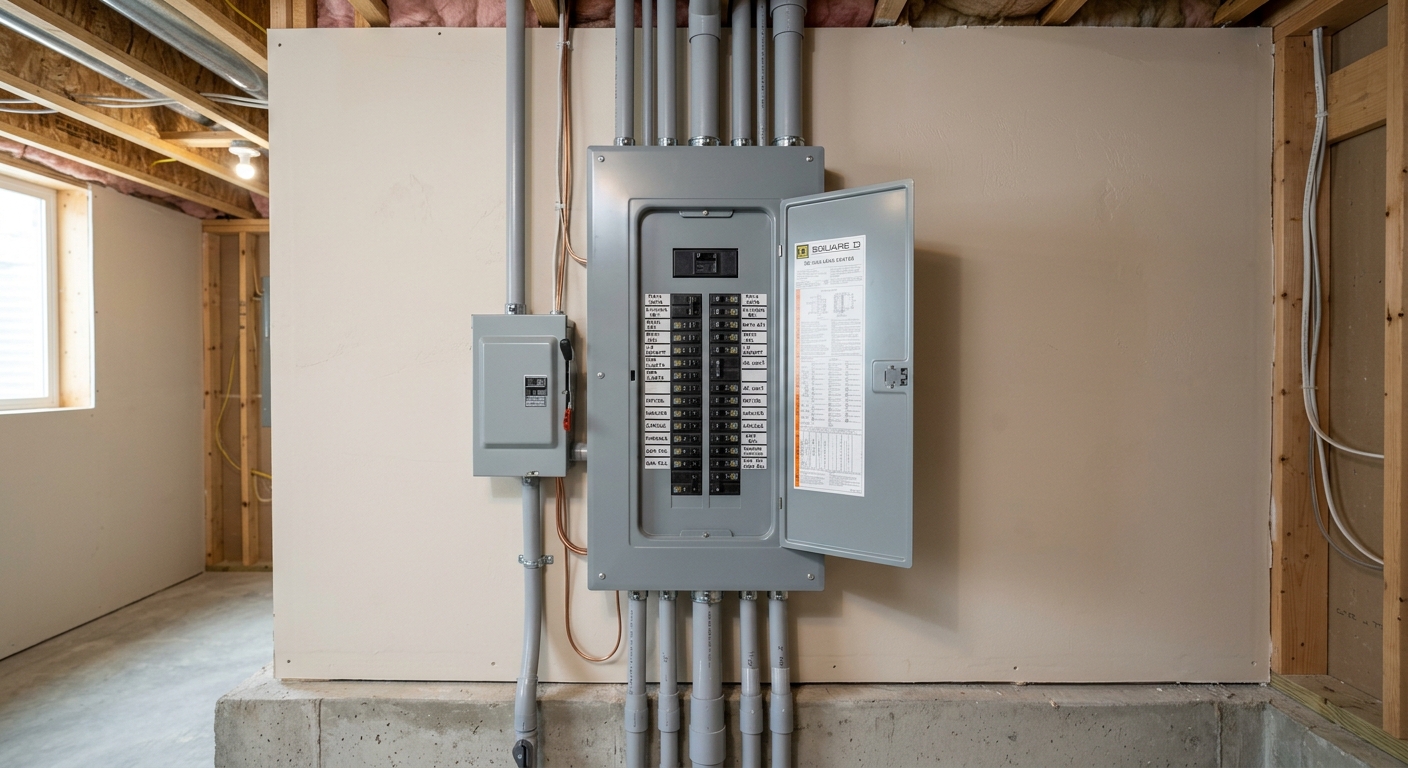
Concrete Williams Lake examples: If the panel is in a tight, finished basement wall with limited access, a 100A-to-200A upgrade that otherwise might sit near the lower end of $2,500–$9,000 often shifts higher due to opening/reinstatement and additional grounding work. Conversely, a dedicated 40A circuit run to an accessible mechanical area can land closer to the $900–$2,500 band for EV charger installs, because cable routing and termination complexity are lower. In short, the colder inland climate increases how quickly electrical systems reach practical limits—so upgrades are both safety-driven and load-driven, with real dollar impacts.
| Price Factor |
Why It Matters |
Cost Impact |
| Panel size upgrade — 100A to 200A is the standard minimum today |
Higher amp service supports modern demand and improves margin for future loads. |
Often shifts the job into the larger part of the $2,500–$9,000 band |
| Wiring type — copper vs. aluminum remediation vs. K&T removal |
Aluminum and knob-and-tube require licensed remediation/replacement, not just “better breakers.” |
Can move costs from mid-range fixes into the $7,000–$20,000 range |
| Number of new circuits — each adds material and labour time |
More circuits means more cable pulls, boxes, breakers, and testing time. |
Each additional circuit commonly adds hundreds to thousands depending on routing |
| Permit + ESA/TSBC inspection fee — mandatory for all major work |
Major electrical changes require permitting and inspection before energizing. |
Typically adds a baseline cost that scales with project complexity |
| Labour rate for licensed electricians — journeyman rates in Cariboo |
Licensed time is the most variable component; older homes often take longer. |
Local billing commonly targets roughly $100–$150/hour, plus minimums |
| EV charger amperage — 40A vs. 50A circuit affects cable and breaker cost |
Higher amperage can require heavier cable and different protection. |
May widen the EV band within $900–$2,500 depending on service size |
| Emergency or after-hours premium |
Urgent callouts cost more due to scheduling and after-hours labour rules. |
Can add a noticeable premium on top of typical pricing |
| Load calculation required for service upgrade |
Ensures the upgraded service matches actual and intended demand. |
May increase quote for engineering/time, but avoids overspending or rejection |
Permits & regulations in British Columbia
In British Columbia, ALL electrical work beyond changing a light bulb must be completed by a licensed electrician. That includes panel upgrades, new circuits, rewiring, EV charger installations, and service upgrades—anything that changes the wiring, circuits, load protection, or service equipment. Permits are generally required for major residential work and the completed work must pass inspection by the provincial electrical safety authority (in B.C., that’s Technical Safety BC). While “DIY” is sometimes discussed online, homeowner electrical exemptions are narrow, and most homeowners still need the permit path and inspection completed by the licensed contractor to ensure the work is safe and legally compliant.
To verify your electrician in Williams Lake, start with the electrician’s business licence and electrician details in the provincial registry. Next, request a current certificate of insurance (liability coverage) showing the contractor is insured for the work they’ll do. Finally, confirm workplace coverage—coverage expectations can differ by contractor structure, but you should ask for proof of WSBC/WCB coverage (or a clear written statement confirming how coverage is handled). A reliable contractor can provide documentation and will typically reference the permit/inspection process upfront.
Step-by-step: (1) get their licence/contractor registration number, (2) confirm insurance certificate dates and scope, (3) confirm WSBC/WCB coverage or equivalent proof, and (4) ensure the permit is pulled for the exact scope (panel/service, new circuits, EV charging, or rewiring) before work begins.
When your Williams Lake home needs an electrical upgrade
Electrical upgrades in Williams Lake are often about safety and reliability, not comfort. Start with the warning signs that usually point to real hazards or code-compliance gaps. (1) Breakers that trip regularly are a common symptom of an overloaded panel, undersized circuits, or wiring faults—especially noticeable in winter when baseboards and heat pumps run together. (2) Knob-and-tube wiring isn’t just “old”; the concern is deteriorating insulation and the way it can interact with modern loads and connections. If knob-and-tube is present, plan for removal/replacement rather than hoping it will “continue to work.” (3) 60A or 100A service can fall short when you add EV charging, induction or electric ranges, and space heating—here, a 200A upgrade is the standard solution because it restores capacity and helps protect against nuisance tripping.
(4) Aluminum wiring (commonly pre-1976) may not be an immediate danger if it’s been maintained well, but it does require licensed remediation at terminations using approved methods. (5) Insufficient outlets—extension cords everywhere—can indicate circuit overload risk and an outlet/circuit design that doesn’t support how you live today. (6) No AFCI or GFCI protection where required is a compliance and shock-risk issue that can surface during home sale inspections.
In Cariboo winters, these problems show up faster because demand stays high for longer. If your breakers trip frequently, treat it as urgent (schedule service soon). If you have knob-and-tube, plan immediate planning for remediation. If you’re dealing with aluminum or an undersized panel, it’s typically planned upgrade, but still time-sensitive—especially if you’re adding an EV or upgrading appliances. For example, if a panel/service upgrade is in the $2,500–$9,000 band, skipping it can cost more later when you can’t support a new charger or the wiring must be opened again for repeated fixes.
| Warning Sign |
What It Means |
Recommended Action |
Urgency |
Price Band |
| Breakers trip frequently |
Possible overload, faulty breaker/wiring, or undersized circuits for current loads. |
Inspection and load assessment; correct circuit issues and consider service upgrade if needed. |
Immediate (schedule soon) |
$900–$9,000 |
| Knob-and-tube wiring present |
Obsolete wiring with insulation risks that can complicate safety and insurance. |
Plan K&T removal/replacement; start with highest-risk areas. |
Immediate planning |
$7,000–$20,000 |
| 60A or 100A panel (inadequate load capacity) |
Modern loads may exceed available capacity, especially with EV and electric heating. |
Service/panel upgrade to 200A with load calculation and permitting. |
Planned upgrade (time-sensitive if adding EV) |
$2,500–$9,000 |
| Aluminum wiring (pre-1976 construction) |
Termination and splice concerns; requires approved remediation or replacement methods. |
Licensed remediation using CO/ALR connectors or selective rewiring. |
Planned upgrade |
$7,000–$16,000 |
| Insufficient outlets — extension cords everywhere |
Circuit strain, safety hazards, and inconvenient (often overloaded) setups. |
Add outlets and dedicated circuits; address GFCI/AFCI requirements where applicable. |
Planned upgrade |
$900–$3,500 |
| No AFCI or GFCI protection where required |
Increased shock risk and reduced protection against certain fault types. |
Upgrade protection devices and verify locations meet code requirements. |
Planned upgrade (address before selling) |
$150–$2,500 |
How to choose a electrical work contractor in Williams Lake
Choosing the right electrical contractor in Williams Lake starts with verification. In British Columbia, confirm the electrician’s licence through the provincial online registry, then ask for a current certificate of liability insurance (with dates and project coverage clearly stated). Next, confirm WSBC/WCB coverage—a reputable contractor will either provide proof of coverage or documentation that explains how coverage is handled for the work crew. Don’t rely on verbal assurances.
Get 2–3 itemised written quotes and insist on a breakdown that separates labour and materials (including cable, breakers, panel components, and any specialty items like CO/ALR connectors or grounding corrections). Scope clarity matters: ask whether the permit pull is included, whether inspection/TSBC fees are covered, and whether disposal and site clean-up are part of the quote or billed separately. For warranties, verify both workmanship (how many years) and what manufacturer warranties cover. If you sell your home, you’ll appreciate documentation that’s transfer-friendly or at least provided in writing.
Payment schedule: for typical residential work, never pay more than about 10–15% upfront. Use a holdback until the job is complete and inspected. Timeline: get a realistic start date and estimated completion window in writing—older homes can require additional openings, and weather can affect access and drying time for wall repairs.
- Confirm licence number and who is doing the work onsite.
- Ask for proof of liability insurance and minimum coverage limits.
- Verify WSBC/WCB coverage (or written exemption/structure proof).
- Require itemised quotes with labour and materials separately.
- Ensure the quote lists permit pull and inspection responsibility.
- Clarify what’s included in panel/service upgrades (bus work, grounding, bonding, testing).
- Ask about disposal/cleanup and who reinstates opened walls/ceilings.
- Confirm whether a load calculation is included for service changes.
- Check EV charger brands/models included (and compatibility).
- Ask about workmanship warranty length and claim process.
- Keep payment milestones tied to inspection milestones and completion.
- Get a written start date and finish date estimate.
In Williams Lake, watch for red flags like vague scope wording (“all labour included”), missing permit/inspection responsibility, refusal to provide insurance or WSBC/WCB proof, a request for large upfront payments, and quotes that don’t address older wiring findings (common with homes built before 1981).
Frequently asked questions — electrical work in Williams Lake
How long does a panel upgrade take in Williams Lake?
In Williams Lake, a typical 100A to 200A panel upgrade often takes a crew about half a day to two days, depending on access and what’s found behind the existing panel. If there’s easy access to the service equipment and the grounding/bonding work is straightforward, many installs can land closer to the shorter end. In older homes (and given that 62.8% of homes are built before 1981), you may also see extra time for opening walls/attics, correcting grounding issues, and coordinating utility-side requirements. Even when the main panel change is quick, the job clock still includes safe de-energizing/energizing steps, testing, permit paperwork, and waiting on inspection scheduling. Pricing commonly sits in the $2,500–$9,000 range because labour time varies by these site realities.
What is a GFCI outlet and where is it required in British Columbia?
A GFCI (Ground-Fault Circuit-Interrupter) outlet is designed to shut power off quickly if it detects an imbalance that can indicate a shock hazard. In British Columbia, GFCI protection is required in specific locations where shock risk is higher—commonly near water sources and in areas like bathrooms, garages (where applicable by configuration), kitchens counters in certain setups, and outdoor receptacles. Exact placement depends on the receptacle type and the room/area layout, so a licensed electrician verifies requirements on the specific circuit and location. If you’re doing renovations or new circuits as part of bringing older wiring up to date, adding GFCI protection is usually part of the compliance work, not an optional extra. If your home sale inspection flags missing protection, addressing it can be a smaller job compared with a full service upgrade, but it still requires proper installation and permitting when circuits are changed.
How do I know if my Williams Lake home has aluminum wiring?
Aluminum wiring is often associated with construction from the mid-1960s through the mid-1970s, which is one reason it’s seen in many Cariboo-area older homes. The most reliable way to confirm is to have an electrician inspect at accessible locations—commonly in the panel, junction boxes, and at receptacles/switches where old conductors terminate. Aluminum conductors can look different (sometimes duller/whiter), but appearances aren’t enough to be certain. A proper check also looks for markings on the conductor and verifies how it’s terminated. If you do have aluminum wiring, it doesn’t always mean you must rewire everything immediately; often remediation involves approved connectors (CO/ALR methods) or replacing specific sections where terminations are unsafe. Your likely budget depends on scope—aluminum remediation can fall in the $7,000–$16,000 range when multiple locations need corrections.
What is the cost of rewiring a house in Williams Lake?
Whole-home rewiring costs in Williams Lake vary heavily because access and wiring conditions determine labour time—especially in homes built before 1981, where you may find older wiring types or mixed systems. As a broad local expectation, wiring & rewiring projects commonly land in the $7,000–$20,000 range, and full replacement can be higher depending on how many rooms/circuits are included and how much wall or ceiling opening is required. If you’re dealing with knob-and-tube removal plus new wiring runs, remediation is usually more involved because obsolete wiring must be replaced rather than “worked around.” A detailed, itemised quote is important so you can compare like-for-like scope, including permit pulls, testing, and disposal. If you’re planning major electrical work alongside heating upgrades (common in Cariboo winters), your electrical quote may also need to align with your load plan to avoid paying twice.
What electrical upgrades are required when selling a home in British Columbia?
British Columbia doesn’t require you to upgrade everything to current code just because you’re selling, but it does mean electrical safety and compliance issues can’t be ignored—especially where wiring or protection devices are unsafe or clearly non-compliant. Practically, many sales trigger a need to address hazards found during inspections: missing GFCI protection in wet/shock-prone areas, absent AFCI/GFCI where required, unsafe receptacle wiring, and service/panel conditions that can’t reliably support the home’s load. In older Cariboo homes, sellers often encounter wiring remediation needs (for example, aluminum remediation or knob-and-tube concerns) and sometimes a panel/service upgrade when the home has modern appliances or a buyer plans EV charging. If your home has an older service, a $2,500–$9,000 panel/service upgrade may be more cost-effective than partial fixes that still leave you with insufficient capacity for today’s loads.
What is a load calculation and why does my electrician need one?
A load calculation estimates your home’s electrical demand—how much power is expected from heating, kitchen appliances, lighting, and any planned additions like an EV charger or heat pump(s). Your electrician needs it for a service upgrade because it supports the decision on whether 100A can be replaced or whether a 200A service is required to meet the actual and future loads safely. It’s also part of doing work correctly for permits and inspection readiness. In inland BC climates like Williams Lake, heating demand can be significant for long stretches of the year, so the real-world load picture differs from milder regions. That’s why electricians often can’t responsibly “guess” the service size. While load calculations add a bit of upfront effort to the quote, they prevent under-sizing—which can lead to repeated breaker trips, expensive rework, and frustration when you add new loads later.