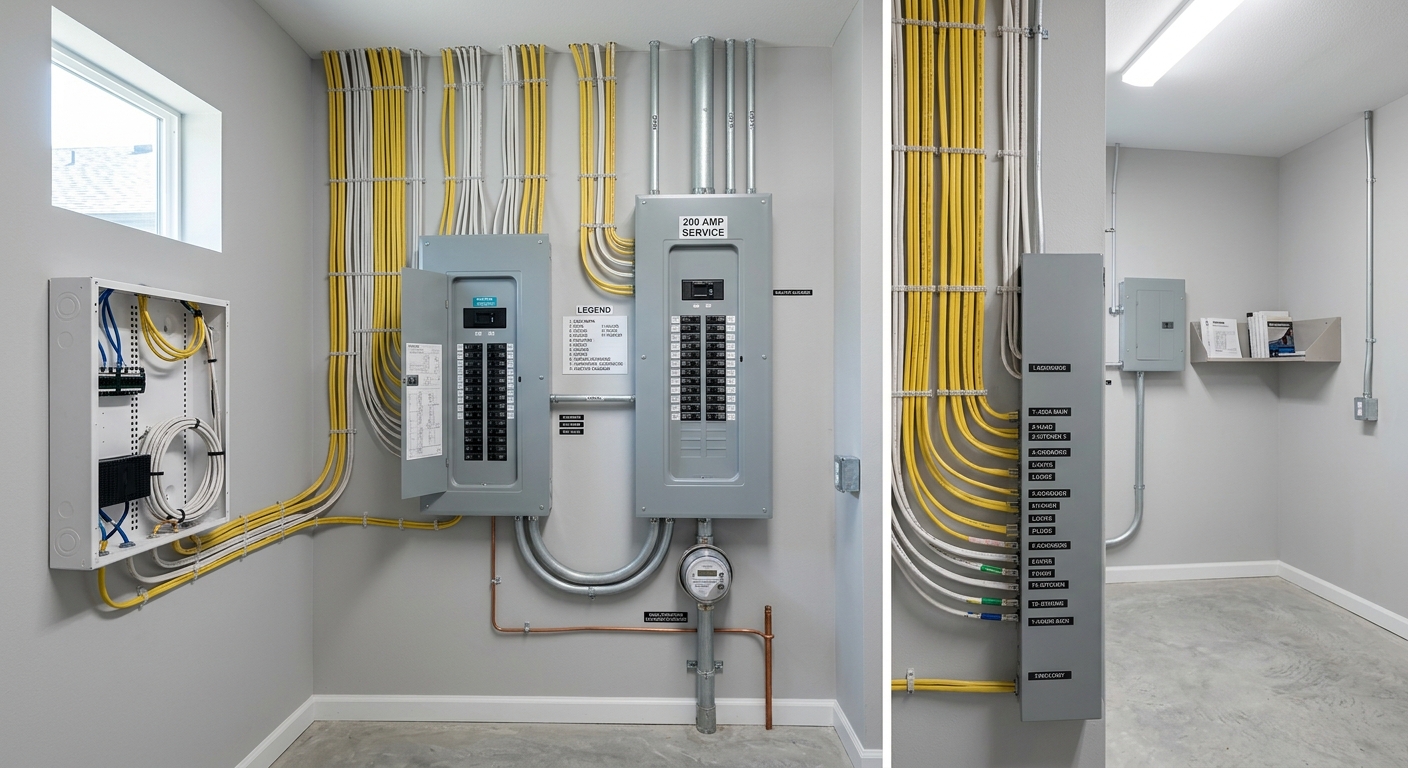
Electrical services and costs in Albert Park/Radisson Heights
Electrical services in Albert Park/Radisson Heights often come down to whether your home can safely handle today’s loads. With a local population of 6,740 (Statistics Canada, 2021 Census), this is a tight enough market that reputable electricians are busy during busy seasons—so planning ahead matters. The bigger driver is usually housing age: many older properties in the Calgary area were wired for lighting and a few receptacles, not for modern appliances, finished basements, EV chargers, and heat pumps. In these neighbourhoods, partial rewires, panel replacements, and knob-and-tube removal are some of the most requested safety upgrades, especially when you’re preparing a home for sale.
Calgary’s climate also plays a role in cost. Cold snaps increase heat-pump and electric heat demand, and that can expose overloaded circuits that were “fine” in milder seasons. Add winter roof access, snow and ice around service mast areas, and the reality that overhead vs. underground utility connections can change site time and coordination. In Albert Park/Radisson Heights, demand is especially high around older pockets of Radisson Heights where homeowners frequently renovate basements and add high-draw loads.
Below is a practical comparison of common jobs and what they typically include, so you can translate a quote into scope and urgency before you start scheduling.
| Service |
Why It's Needed |
Permit Required |
Price Range |
| Panel upgrade — 100A to 200A service |
Modern loads (EV charging, heat pumps/electric heat, induction stoves) often exceed older panel and service capacity. A 200A service is commonly the safe minimum for today’s home electrical use. |
Yes (permit + inspection required) |
$2,500 – $8,000 |
| EV charger installation (Level 2, 40–50A) |
Dedicated circuit and proper breaker sizing reduce nuisance trips and protect wiring from overheating—especially important in winter when charging demand and heating loads overlap. |
Yes (permit + inspection required) |
$900 – $2,500 |
| Knob-and-tube wiring removal and replacement |
Old insulation and wiring methods are not suitable for modern load demands and can be a major insurance concern. Replacement restores code-compliant wiring, grounding/bonding, and breaker protection. |
Yes (major rewiring) |
$4,500 – $12,500 |
| Aluminum wiring remediation (CO/ALR connectors) |
Aluminum branch circuits (often from mid-1960s to mid-1970s construction) require approved remediation to reduce loose/failed connections and heat at terminations. |
Yes (remediation with verification) |
$3,500 – $9,500 |
| New dedicated circuit (HVAC, appliance, hot tub) |
Dedicated circuits prevent overloads and improve reliability—particularly for electric hot tubs and high-draw appliances that can coincide with winter heating loads. |
Yes (new circuits generally require permit) |
$1,200 – $5,500 |
| Whole-home rewire (older home, full replacement) |
When multiple areas have dated wiring (knob-and-tube, unknown aluminum, undersized cable, missing modern safety devices), a full replacement is often the safest and most sale-proof option. |
Yes (major rewiring) |
$8,000 – $15,000 |
Prices are estimates only and vary by project scope, site access and material selection.
What affects the price of electrical work in Albert Park/Radisson Heights
In Albert Park/Radisson Heights and across the Calgary economic region, quotes for the same electrical job can vary by 30–50% because the “same” description often hides different realities: how hard it is to access wiring paths, whether the service must be upgraded to meet a load calculation, and how much testing/repair is required to bring existing wiring up to code. Labour and coordination costs in Alberta are also a meaningful part of the total—licensed work isn’t just cable replacement, it’s inspection-ready work done to the Canadian Electrical Code as adopted in Alberta.
Housing age is the dominant cost driver in this area. Homes built before 1950 are more likely to contain older wiring methods that complicate remediation and can trigger insurance restrictions. Homes from the 1960s–1970s often have 60A or 100A panels that are inadequate for today’s loads such as EV chargers, heat pumps, and induction cooking. In homes built 1965–1976, aluminum wiring is more common, and it needs licensed remediation using approved approaches like CO/ALR connectors—or full replacement if conditions are poor. On top of that, EV adoption is increasing permit applications for Level 2 chargers, and that drives demand for dedicated circuit work and, in some cases, a panel upgrade before the charger can be safely added.
Two local examples show how costs move. First, if your service is overhead but the plan needs an underground utility-side change, the project can jump beyond the typical $2,500 – $8,000 panel/service range. Second, a straightforward panel change with clear access can land closer to the lower end, while knob-and-tube removal with finished walls can push toward the higher band. Even the “simple” difference between a $900 – $2,500 EV charger install at 40A versus 50A can affect breaker and cable sizing and how much load room you need.
| Price Factor |
Why It Matters |
Cost Impact |
| Panel size upgrade — 100A to 200A is the standard minimum today |
Modern households and winter load patterns typically require more service capacity than older homes were designed for. |
$2,500 – $8,000 |
| Wiring type — copper vs. aluminum remediation vs. K&T removal |
Aluminum terminations and knob-and-tube replacement require extra testing, approved materials, and labour time to make terminations safe. |
$3,500 – $12,500 |
| Number of new circuits — each adds material and labour time |
Each circuit brings breaker, cable, junction work, and often structural access (attic/basement/buried runs). |
$1,200 – $5,500 |
| Permit + ESA/TSBC inspection fee — mandatory for all major work |
Major service changes, rewiring, and new circuits require permitting and an inspection, which electricians must coordinate. |
$200 – $700 |
| Labour rate for licensed electricians — journeyman rates in {region} |
Alberta jobsite time, minimum call-out, and licensed supervision affect total cost more than material-only changes. |
$500 – $3,000 |
| EV charger amperage — 40A vs. 50A circuit affects cable and breaker cost |
Higher amperage can require larger cable, different breaker sizing, and more load room in the panel. |
$900 – $2,500 |
| Emergency or after-hours premium |
Scheduling rush work costs more, especially if the panel/service must be shut down and inspected quickly. |
$200 – $1,500 |
| Load calculation required for service upgrade |
To justify and size the service/panel, electricians must perform and document a load calculation based on your appliances and planned additions. |
$150 – $600 |
Permits & regulations in Alberta
In Alberta, ALL electrical work beyond changing a light bulb must be done by a licensed electrician, and most meaningful home electrical upgrades require permits and inspection. That includes panel upgrades (like 100A to 200A), new dedicated circuits (including EV charger circuits), knob-and-tube removal and replacement, aluminum wiring remediation, and whole-home rewiring. Permitted work must be inspected by the provincial electrical safety authority (in Alberta, this is STANDATA). DIY electrical is restricted—homeowners don’t get a broad “do it yourself and skip the permit” option for wiring, breakers, or service changes.
What typically does NOT require a permit is usually limited to very low-risk, like replacing an existing fixture with the same type, or swapping out a like-for-like device where the wiring method is unchanged and the work stays within manufacturer instructions (your electrician can confirm what’s allowable in your case). Any change involving circuits, breakers, outlets (when adding new wiring runs), or the service/panel is the kind of work that triggers permitting and inspection.
To verify a contractor in Albert Park/Radisson Heights, do it step-by-step: (1) confirm the electrician/company licence using the Alberta online licence registry; (2) request a certificate of insurance showing liability coverage for electrical work; (3) ask for WSIB/WCB clearance/coverage proof (so you’re not exposed if a worker is injured on your property); and (4) get a permit number in writing or confirmation that they will pull the permit and schedule inspection before the work begins. A legitimate contractor will provide these documents quickly because permitting and inspection coordination is part of their process.
When your Albert Park/Radisson Heights home needs an electrical upgrade
Electrical upgrades in Albert Park/Radisson Heights are often safety-critical—not cosmetic. Start by looking for warning signs that point to overload, deteriorating connections, or code compliance gaps. First, breakers that trip frequently can mean overloaded circuits or undersized wiring for how you use the home; if trips happen during winter when heating and cooking loads coincide, that’s a strong indicator. Second, knob-and-tube wiring is a bigger issue than age: older insulation can be unsafe, and insurance coverage can be denied or restricted, even if the system “still works.” Third, a 60A or 100A panel can be inadequate in a modern household where EV charging, heat pumps, and electric cooking run together; in most cases, a 200A upgrade is the standard solution.
Fourth, aluminum wiring (commonly seen in pre-1976 construction) isn’t always an immediate emergency, but it does require licensed remediation—especially if you have any history of overheating, crackling at outlets, or loose terminations. Fifth, insufficient outlets and “extension-cord living” is not just inconvenience; it can lead to unsafe load stacking. Finally, missing AFCI/GFCI protection where required can become a code-compliance and sale issue, and it can also reduce shock and arc-fault risks.
Which signs need immediate action vs planned upgrades? Treat frequent breaker trips, any burning smell/scorching at outlets, and evidence of heat damage as immediate. Knob-and-tube and aluminum usually fall under planned upgrades—schedule them as soon as practical to avoid insurance and safety problems. For cost context: if your load situation is already tight, adding an EV charger to a limited 100A service may be cheaper short-term, but it can force a service upgrade later; spending within the $2,500 – $8,000 panel/service band up front can prevent rework and repeat permitting.
| Warning Sign |
What It Means |
Recommended Action |
Urgency |
Price Band |
| Breakers trip frequently |
Often indicates overload, failing components, or circuits not sized for your current usage pattern. |
Electrical load check and circuit diagnostic; may lead to dedicated circuits or panel upgrade. |
Immediate to urgent |
$1,200 – $8,000 |
| Knob-and-tube wiring present |
Outdated wiring method with insulation concerns and often insurance limitations. |
Plan K&T removal/replacement or targeted sections based on inspection findings. |
Planned upgrade (high priority) |
$4,500 – $12,500 |
| 60A or 100A panel (inadequate load capacity) |
May not safely support modern loads, especially during winter heating and EV charging. |
Perform load calculation; upgrade service/panel to 200A if warranted. |
Urgent (before adding big loads) |
$2,500 – $8,000 |
| Aluminum wiring (pre-1976 construction) |
Requires verified remediation to reduce heat at terminations and connections. |
Inspection, connector-based remediation (CO/ALR) or full replacement where needed. |
Planned upgrade |
$3,500 – $9,500 |
| Insufficient outlets — extension cords everywhere |
Indicates you’re likely overloading receptacles and creating unsafe temporary wiring patterns. |
Add receptacles and dedicated circuits where required (kitchen, basement, workshop). |
Urgent (safety/efficiency) |
$1,200 – $5,500 |
| No AFCI or GFCI protection where required |
Increases shock/arc-fault risk and can create issues for resale and compliance. |
Add AFCI/GFCI protection as required; update affected circuits. |
Planned upgrade |
$300 – $2,500 |
How to choose a electrical work contractor in Albert Park/Radisson Heights
Choosing the right electrician in Albert Park/Radisson Heights starts with verification. Confirm the contractor’s Alberta licence (check the provincial online registry for the business and/or individual responsible); ask for a certificate of insurance showing liability coverage (and that it covers work at residential premises); and request proof of WSIB/WCB coverage/clearance so you’re not left holding the risk if a worker is injured on your property. A reputable contractor will provide these without pressure and will include the information in your paperwork trail.
Next, get 2–3 itemised written quotes—ideally with a labour and materials breakdown rather than a single lump sum. The scope should list exactly what’s included (panel components, breakers, cable type, grounding/bonding changes, disposal, and whether drywall patching is included or excluded). Ask whether permits are pulled by the contractor, and confirm inspection coordination is included. If you want an EV charger, ensure the quote clarifies 40A vs 50A and whether the circuit is dedicated and code-compliant.
Warranty matters: ask for the workmanship warranty length, product/manufacturer warranty details, and whether warranties are transferable if you sell the home. For payments, plan to never pay more than 10–15% upfront; hold a final payment until completion and cleanup. Finally, insist on a written timeline with a start date window and completion estimate—Alberta scheduling can shift with inspections, weather, and material availability.
- Licence number and business name match the quote and invoice
- Certificate of insurance provided before work starts
- WSIB/WCB coverage proof or clearance letter available on request
- Itemised quote (labour, materials, permits/inspection coordination)
- Clear exclusions (drywall patching, soffit/ceiling access, trenching/disposal)
- Permit responsibility stated in writing
- Inspection scheduling responsibility stated in writing
- Panel/charger details specified (brand/model and amperage rating)
- Safety steps described (lockout/tagout, shutdown windows, testing)
- Workmanship warranty length stated clearly
- Payment schedule with only small upfront deposit (10–15% max)
- Completion checklist and photos/testing documentation offered
Red flags in Albert Park/Radisson Heights include: refusing to provide licence/insurance/coverage documents, quoting a “panel upgrade” without listing whether it includes grounding/bonding or load calculations, starting work before permits are pulled for service/circuit changes, asking for large upfront payments (well above 15%), and giving vague timelines like “a few days” without an inspection plan.
Frequently asked questions — electrical work in Albert Park/Radisson Heights
How long does a rewiring job take?
Rewiring timelines in Albert Park/Radisson Heights depend heavily on whether it’s a partial section or a whole-home rewire, and how accessible the wiring routes are (attics/basements vs. finished walls). A targeted replacement can take a few days to a week, while whole-home rewires often take longer due to pulling new cable, installing devices, and testing circuits before inspection. If knob-and-tube removal is involved, time increases because old wiring must be verified and removed safely, and some owners choose to open walls in phases. Typical projects usually land in the “weeks, not days” range for full rewires. If you’re comparing quotes, ask whether the quoted timeframe includes inspection testing, documentation, and any reasonable restoration work.
Why do my breakers keep tripping?
Breakers tripping in Alberta most commonly points to overload, a failing breaker, or a circuit that’s been altered over time without proper load planning. In Albert Park/Radisson Heights, winter is often when the problem becomes obvious because heating demand and cooking loads overlap. It can also happen with older wiring where connections are loose or where circuits were never designed for today’s appliances. Sometimes it’s a single circuit issue (like basement rec rooms or a kitchen circuit), and sometimes it’s a service/panel capacity issue that only shows up once you add loads like an EV charger. The right next step is diagnostic testing—don’t just “reset and hope.” A service evaluation may start with an estimate in the lower end of the panel/service range, and a full solution could require work similar to the $2,500 – $8,000 panel upgrade band if capacity is the root cause.
How do I compare electrical quotes?
To compare quotes fairly in Albert Park/Radisson Heights, insist on itemised scope: what exact parts are included, what wiring/cable type is being used, and whether grounding/bonding changes are part of the job. For example, compare whether each quote includes permitting and inspection coordination, and whether they’ve done (or will do) a load calculation for any service upgrade. Quotes can diverge by 30–50% when one contractor assumes “panel change only” while another accounts for additional work like aluminum remediation, circuit redesign, or utility-side coordination. Also check the EV side: ensure the circuit amperage (40A vs. 50A) and whether it’s a dedicated breaker is stated. Finally, compare warranty and payment schedule—reputable electricians will typically offer workmanship warranty and won’t request more than 10–15% upfront. If a quote is much lower than the rest, ask what’s missing.
How long does a panel upgrade take in Albert Park/Radisson Heights?
A panel upgrade usually takes less time than a rewiring because the work is concentrated around the service equipment, but “how long” depends on access, cable routing, and whether a utility-side coordination window is needed. In many typical situations, the electrical labour portion can be completed in a day, with additional time for testing and inspection readiness; however, inspections and scheduling often determine the overall calendar. If the project involves more complex changes—like significant rewiring to meet code, adding new circuits, or dealing with utility-side constraints—expect extra days. A straightforward 100A to 200A service upgrade is commonly in the $2,500 – $8,000 range under normal conditions, but timing can shift when winter conditions affect outdoor access and when inspections need a specific appointment window.
What is a GFCI outlet and where is it required in Alberta?
A GFCI (Ground-Fault Circuit Interrupter) outlet is designed to quickly shut off power when it detects an unsafe ground fault, reducing shock risk—especially in wet areas or where people may contact grounded surfaces. In Alberta, GFCI protection requirements are tied to location and circuit use, such as bathrooms, kitchens (in specific circumstances), garages, basements (depending on configuration), and outdoor receptacles. Many new installations also pair with AFCI protection where required to reduce arc-fault risks. For a homeowner in Albert Park/Radisson Heights, if you’re missing GFCI where you expect it—or you’re adding outlets during renovations—an electrician can evaluate whether your existing outlets are protected and what needs upgrading to match current code requirements. If you’re buying or selling, these device upgrades can also be part of passing electrical observations.
How do I know if my Albert Park/Radisson Heights home has aluminum wiring?
The easiest way is an electrician’s inspection: they can look at receptacle and switch wiring terminations, identify conductor markings, and confirm via photos/testing where needed. Many homes built from the mid-1960s to mid-1970s in the Calgary area have aluminum branch circuits, and the wiring often shows different conductors and labels at devices. If your home has aluminum, you may notice signs like frequent loose connections, warm-to-the-touch receptacle plates, or a history of nuisance issues—though sometimes it’s not obvious until an inspection. When aluminum is present, remediation is typically required using approved approaches (for example, CO/ALR connectors) or replacement where conditions are poor. If you’re getting quotes, ask how they’ll verify the wiring condition and whether your plan matches the typical aluminum remediation band of $3,500 – $9,500 before any connectors are installed.