Electrical services and costs in Elbow Park
Electrical services in Elbow Park, Alberta, tend to be shaped by one big reality: a lot of homes here are older, and older wiring often can’t support today’s electrical lifestyle without updates. Elbow Park’s population is 3,285 people (Statistics Canada, 2021 Census), and like many inner-city Calgary areas, the housing mix includes substantial pre-1980 stock—prime candidates for panel upgrades, knob-and-tube removal, and aluminum branch-circuit remediation. In practical terms, the trade-off homeowners run into is that “working” old wiring may still be unsafe or non-compliant under modern inspection standards and current load expectations.
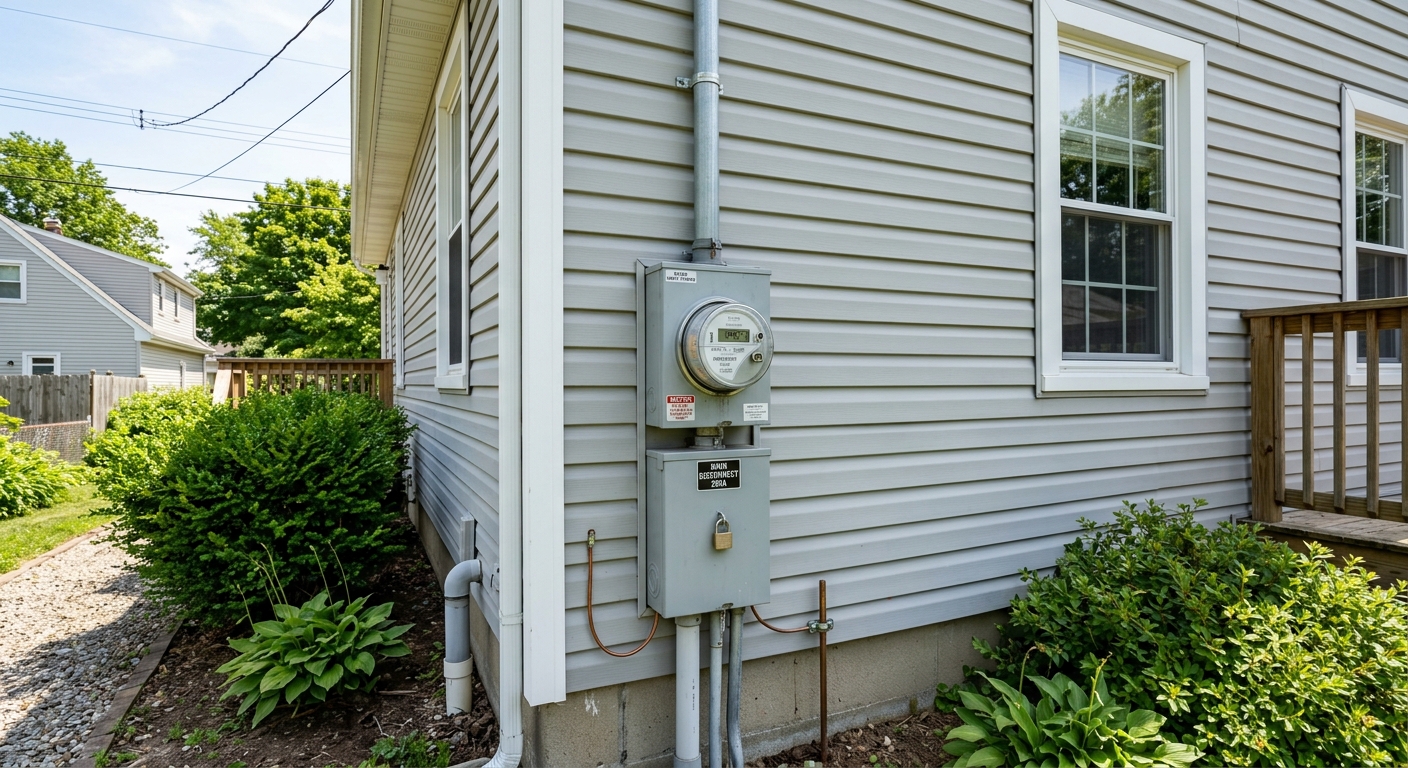
Calgary-area labour and availability also affect pricing. When multiple homes in the same area need similar upgrades—especially around busier seasons for finished basements, EV installations, and service upgrades—contractors typically schedule more efficiently, but demand can still tighten. Climate matters too: Alberta cold snaps drive higher winter heating loads and encourage owners to add heat pumps, electric ranges, and laundry/lifestyle upgrades, pushing panels beyond what the original 60A or 100A design assumed. If your home is in the Marda Loop/Elbow Park corridor, finished basements and vehicle-bay conversions commonly trigger “safety + capacity” work at the same time.
Below are the most common electrical projects and what typically drives the cost, so you can compare apples to apples before you book a site visit.
| Service |
Why It's Needed |
Permit Required |
Price Range |
| Panel upgrade — 100A to 200A service |
More room for modern loads (EV charging, heat pumps, electric cooking, finished basements) and improved safety under Canadian Electrical Code requirements |
Yes, service and panel replacement require an ESA-permitted inspection in Alberta |
$2,500 – $8,000 |
| EV charger installation (Level 2, 40–50A) |
Dedicated, protected circuit for faster charging; load-balancing may be needed if you’re upgrading other services |
Yes, new EV charger circuit typically needs a permit and inspection |
$900 – $2,500 |
| Knob-and-tube wiring removal and replacement |
Knob-and-tube systems often fail modern insulation/heat-aging expectations and can create unacceptable risk at switches, junctions, and splices |
Yes, major wiring replacement is permit-required |
$4,000 – $15,000 |
| Aluminum wiring remediation (CO/ALR connectors) |
Aluminum terminations and branch-circuit behaviour require approved remediation methods (commonly CO/ALR style connectors) or re-splicing under inspection |
Yes, remediation that touches junctions/terminations usually requires a permit and inspection |
$4,000 – $10,000 |
| New dedicated circuit (HVAC, appliance, hot tub) |
Prevents nuisance tripping and reduces overheating risk by giving high-demand loads their own properly protected circuit |
Yes, new circuits generally require permits/inspections in Alberta |
$900 – $4,500 |
| Whole-home rewire (older home, full replacement) |
Best option when wiring is widely degraded, when multiple circuit types are mixed, or when you’re already opening walls for safety and code compliance |
Yes, full rewire is permit-required with inspections throughout the work |
$8,000 – $25,000 |
Prices are estimates only and vary by project scope, site access and material selection.
What affects the price of electrical work in Elbow Park
In Elbow Park and across the Calgary region, two quotes for what looks like the “same” electrical job can easily differ by 30–50%. The usual reasons aren’t just contractor overhead—they’re the realities of housing stock, wiring condition hidden behind drywall, trenching/utility-side coordination, and how much “rework” a crew must do to reach safe, code-compliant terminations. Even when the labour is similar, materials and time swing significantly on older homes.
Housing age is the dominant cost driver. Pre-1950 homes are often associated with knob-and-tube wiring, and some insurance arrangements become harder when risks are identified—so remediation can’t be cosmetic. Homes from the 1960s–70s commonly have 60A or 100A panels that are inadequate for today’s loads (EV chargers, heat pumps, induction stoves), which pushes many projects toward service upgrades. Aluminum wiring also shows up in the 1965–1976 range; it typically requires approved remediation with CO/ALR connectors or full replacement where connections can’t be safely addressed.
EV adoption in Calgary is also increasing permit applications for Level 2 installations. A 40A charger circuit often uses slightly smaller conductor and equipment than a 50A design, and the difference can show up in both cable cost and breaker/termination components. In Elbow Park, two concrete examples that commonly raise cost are: upgrading buried or overhead utility feeds that require extra coordination, and opening walls where wiring is brittle or mixed copper/aluminum. Costs can be lower when panel location is straightforward and you don’t need utility-side involvement—so a typical panel upgrade may land closer to the low end of the $2,500 – $8,000 band, while full wiring work aligns more with the $4,000 – $15,000 wiring band.
| Price Factor |
Why It Matters |
Cost Impact |
| Panel size upgrade — 100A to 200A is the standard minimum today |
Allows modern loads and reduces overheating risk at terminations |
$2,500 – $8,000 |
| Wiring type — copper vs. aluminum remediation vs. K&T removal |
Remediation requires approved methods and/or replacement; removal means more labour and disposal |
$4,000 – $15,000 |
| Number of new circuits — each adds material and labour time |
More circuits mean more breakers, cable runs, boxes, and testing/labeling |
$900 – $4,500 |
| Permit + ESA/TSBC inspection fee — mandatory for all major work |
Inspections are required for permitted electrical work in Alberta |
$200 – $800 |
| Labour rate for licensed electricians — journeyman rates in Calgary |
Older wiring slows crews and increases labour hours per circuit |
$1,200 – $6,000 |
| EV charger amperage — 40A vs. 50A circuit affects cable and breaker cost |
Higher amperage typically requires larger conductors and specific breaker/charging components |
$900 – $2,500 |
| Emergency or after-hours premium |
After-hours scheduling costs and staffing changes |
$300 – $2,000 |
| Load calculation required for service upgrade |
Determines correct service size and ensures the upgrade matches actual demand |
$200 – $600 |
Permits & regulations in Alberta
In Alberta, ALL electrical work beyond changing a light bulb must be completed by a licensed electrician. That includes panel upgrades, rewiring, adding new circuits, replacing breakers, and installing EV charger circuits—essentially any work that connects to or alters fixed wiring. Homeowners in Elbow Park sometimes ask about “small” changes, but in practice, the boundary is tied to whether you’re modifying circuits, devices, or conductors. Many tasks that sound minor—like adding a new outlet in place of an existing receptacle, running new cable, or replacing a breaker—still require proper permits and inspections when they affect the fixed electrical system.
Permits are also required for major work and all permitted electrical work must pass inspection by the electrical safety authority (in Alberta, STANDATA inspections are typically associated with permitted work). DIY electrical is prohibited for most work; homeowner exceptions are narrow and still require compliance, permitting and inspection.
To verify an electrician in Elbow Park, start with the Alberta licence check via the provincial registry (confirm they hold the right category for the work). Next, request a certificate of insurance showing liability coverage (and confirm it covers electrical work on your property). Finally, confirm WSIB/WCB coverage so you’re not exposed if a worker is injured. Ask for a clearance letter or proof of coverage, and keep copies of the licence confirmation and insurance documents with your contract before work begins.
When your Elbow Park home needs an electrical upgrade
Electrical upgrades in Elbow Park are often easier to justify when you can point to safety and capacity signs—not just convenience. Start with breakers that trip frequently. If a breaker pops when you run normal loads, it often indicates an overloaded circuit, a failing breaker, or wiring that can’t safely handle the demand. That’s an “act soon” warning because winter usage patterns in Calgary can push marginal systems harder.
Next, if your home has knob-and-tube wiring, that’s a key concern. The issue isn’t only “age”—it’s insulation condition and how safely connections can be managed at junctions and splices. Knob-and-tube should be addressed through licensed removal/replacement so you’re not relying on degraded conductors.
Older 60A or 100A service is another common driver. With modern loads—EV chargers, heat pumps, electric ranges, and high winter heating demand—those panels can become inadequate. In many homes, a 200A upgrade is the standard solution to restore safe headroom. Aluminum wiring (commonly in pre-1976 construction) may not be immediately dangerous if it’s been maintained, but it does require licensed remediation and inspection to ensure safe terminations (often with CO/ALR connectors or targeted replacement).
Finally, insufficient outlets and missing AFCI/GFCI protection can be a code-compliance and sale-readiness problem. If you see extension cords everywhere or you have no GFCI/AFCI where required, plan an upgrade; if you’re also seeing tripping, overheating, or burning odours, treat it as urgent.
For example, choosing a service/panel upgrade that brings you closer to the $2,500 – $8,000 band can be money well spent when it prevents costly “patch circuit” additions later—whereas trying to add multiple ad-hoc circuits without correcting capacity often lands you back in wiring/breaker replacement costs within the $4,000 – $15,000 range.
| Warning Sign |
What It Means |
Recommended Action |
Urgency |
Price Band |
| Breakers trip frequently |
Possible overload, wrong circuit protection, or deteriorated wiring/connection |
Load check, inspect wiring/terminations, verify breaker compatibility, add circuits only after safety/capacity review |
High (inspect ASAP) |
$900 – $4,500 |
| Knob-and-tube wiring present |
Degraded insulation and unsafe splicing/connection risks under modern standards |
Plan K&T removal and replacement (partial or whole-home depending on extent) |
High (schedule promptly) |
$4,000 – $15,000 |
| 60A or 100A panel (inadequate load capacity) |
Limited headroom for EV charging, heat pumps, and winter loads |
Load calculation and typically upgrade to 200A service |
Medium to high (plan before major additions) |
$2,500 – $8,000 |
| Aluminum wiring (pre-1976 construction) |
Aluminum terminations can loosen/oxidize without approved remediation |
Licensed CO/ALR remediation or targeted rewiring of affected sections |
Medium (prioritise before major load additions) |
$4,000 – $10,000 |
| Insufficient outlets — extension cords everywhere |
Overuse of temporary power increases overheating and trip risks |
Add properly located outlets and dedicated circuits where needed (after inspection) |
Medium |
$900 – $4,500 |
| No AFCI or GFCI protection where required |
Missing arc-fault and ground-fault protection increases shock/fire risk and can block sale compliance |
Upgrade receptacles/breakers to meet requirements for the relevant areas |
Medium (plan for compliance) |
$200 – $2,500 |
How to choose a electrical work contractor in Elbow Park
Choosing the right contractor in Elbow Park starts with verification. First, confirm their Alberta electrical licence category matches the work you’re hiring for. Second, request proof of liability insurance—if there’s a problem on your property, that coverage matters to you. Third, confirm WSIB/WCB (workers’ compensation) coverage; ask for a certificate or clearance documentation so you’re not left holding the bill if a worker is injured on-site. A reputable electrician will provide these documents without hesitation and will include them in their paperwork package.
Next, get 2–3 itemised written quotes. You want a breakdown that separates labour from materials, and it should specify what’s included for cable, breakers, disconnects, receptacles, and disposal. Pay attention to the scope: is permit pulling included? Are inspection scheduling and any required corrections included? Is trenching/hydrovac coordination included if service work requires it, or is that an extra?
Warranty is often overlooked. Ask for the workmanship warranty length (how long the contractor stands behind labour) and confirm whether product/manufacturer warranties apply to devices like panels or EV chargers. Also ask if the warranty is transferable if you sell the home.
For payment schedule, avoid large up-front deposits. A good rule is no more than 10–15% upfront, with a holdback until the job is complete and cleaned up. Finally, get a written start date and a realistic completion estimate. With older Calgary-era homes, “hidden condition” can change timelines, but good contractors plan for that and document changes with you before doing extra work.
- Ask for licence details and confirm the electrician is active under Alberta requirements before booking.
- Request COI (certificate of insurance) showing electrical work coverage.
- Confirm WSIB/WCB coverage and get documentation, not just a verbal assurance.
- Get 2–3 itemised quotes with labour and materials separated (no vague lump sums).
- Ensure permit pulling and inspection coordination are clearly included for major work.
- Confirm what happens if conditions differ once walls/panel are opened (change order process).
- Check disposal/recycling is included for old panels or removed wiring components.
- Ask for specific equipment specs: panel brand/model, breaker type, EV charger model.
- Verify GFCI/AFCI strategy in writing—where devices are added matters for compliance.
- Confirm labelling and panel directory updates will be done to a clean standard.
- Review warranty terms: workmanship length and product warranty transferability.
- Confirm payment schedule: keep 10–15% max upfront and hold the balance until completion.
Red flags I commonly see in Elbow Park include: quotes that won’t list permit/inspection handling, “cheaper” replacements that don’t specify panel/breaker brands, refusal to show insurance/WSIB/WCB proof, pressure to pay the majority up-front, and wording that excludes corrections or testing after discovery of unsafe wiring conditions.
Frequently asked questions — electrical work in Elbow Park
How long does a rewiring job take?
In Elbow Park, rewiring timelines vary mainly by how much of the home needs cable replacement and whether walls can stay closed. A partial rewiring job (for example, a few high-risk circuits plus safety upgrades) can move faster, while whole-home rewires often take longer because of circuit planning, rough-in, inspection points, then finishing and final testing. Typical schedules can range from several days to a few weeks depending on access, the number of floors, and whether you’re also upgrading to a modern panel. Also factor in Alberta permit/inspection scheduling—permitted work must be inspected before proceeding, which can add a few days. If you’re deciding between targeted remediation and full replacement, ask for a written schedule and the inspection hold points so you know when work can’t progress.
Why do my breakers keep tripping?
Breakers that keep tripping in Alberta usually indicate an overload, a short, a ground-fault, or a connection issue at terminations. In older Elbow Park homes, it can be caused by undersized circuits for modern usage—especially in winter when people run more laundry, space/heat sources, and cooking at the same time. Another common cause is wiring condition: loose terminations, aging insulation, or problematic aluminum connections in pre-1976 construction. The fastest path to a good fix is inspection plus load checking, not “reset and hope.” If you’re experiencing repeated trips, treat it as a high-priority safety issue. Depending on what’s found, the solution might be a dedicated circuit, breaker/busbar correction, or—if service headroom is insufficient—a panel upgrade that can fall within the $2,500 – $8,000 band for 100A to 200A work.
How do I compare electrical quotes?
When comparing quotes in Elbow Park, don’t compare only the total price—compare what’s actually included. Ask for an itemised labour + materials breakdown and written scope: what cables are being replaced, which breakers/devices are included, and whether permit pulling and inspection coordination are in the quote. Check whether disposal and cleanup are included, and whether the contractor documents hidden-condition change orders. A realistic quote should include testing and labelling, not just “swap components.” Also compare the specifications: panel model, breaker type, and for EV charging, charger model and amperage. For example, EV charger installs often sit in the $900 – $2,500 band depending on whether the job is a straightforward circuit add or requires service-related adjustments. If one quote is dramatically lower but skips permits, fails to name equipment, or leaves inspection handling vague, it’s usually not apples-to-apples.
How long does a panel upgrade take in Elbow Park?
A typical 100A to 200A panel upgrade in Elbow Park often takes about a day for the electrical work itself once the electrician has verified layout, panel location, and cable routing. However, the overall timeline depends on permit approval and inspection scheduling in Alberta, plus how accessible your existing service and wiring paths are. Older homes can require additional time if the panel location needs adjustments, if there are aluminum termination concerns, or if the service feed needs modifications. Good contractors schedule with ESA-aligned inspection steps so you’re not left waiting mid-project. Expect a portion of the calendar time to be outside the electrician’s control—inspection dates, utility coordination (when applicable), and procurement of the correct panel components. Ask for a written start date, expected inspection window, and the exact sequence: rough-in/installation, first inspection, then final energization and testing.
What is a GFCI outlet and where is it required in Alberta?
A GFCI (ground-fault circuit interrupter) outlet is designed to detect dangerous ground-fault conditions and shut power off quickly, reducing the risk of shock. In Alberta homes, GFCI protection requirements align with the Canadian Electrical Code and depend on where outlets are installed and how the area is classified (for example, kitchens, bathrooms, garages, basements, and outdoor/near-outdoor locations). If your home is older and you’re planning a sale or upgrading, missing GFCI protection can become a compliance issue even if the home “works.” The most important step is a licensed electrician assessing your existing receptacles and protective devices and upgrading to meet current requirements. Pricing for device upgrades varies widely, but smaller compliance work commonly falls in the $200 – $2,500 range depending on how many locations need protection and whether it’s breaker-based or receptacle-based.
How do I know if my Elbow Park home has aluminum wiring?
The sure way is an electrician’s inspection, because homeowners can’t reliably tell by look alone—some aluminum conductors are jacketed and may appear similar to copper. In Elbow Park, aluminum branch wiring is more common in certain build eras (often seen in homes constructed roughly in the mid-1960s through mid-1970s). Signs to look for include: visible conductor markings on accessible conductors, certain types of terminations that look different at outlets/breakers, and a history of “pigtail” repairs. When we inspect, we confirm conductor material by markings and physical/installation details, then evaluate whether remediation is needed using approved methods such as CO/ALR connectors. If aluminum is present, don’t assume it’s automatically unsafe—some installations are properly maintained, while others need licensed correction. Remediation pricing can vary a lot, commonly aligning with the $4,000 – $15,000 wiring-related bands depending on how extensive the problem areas are.