Electrical services and costs in High River
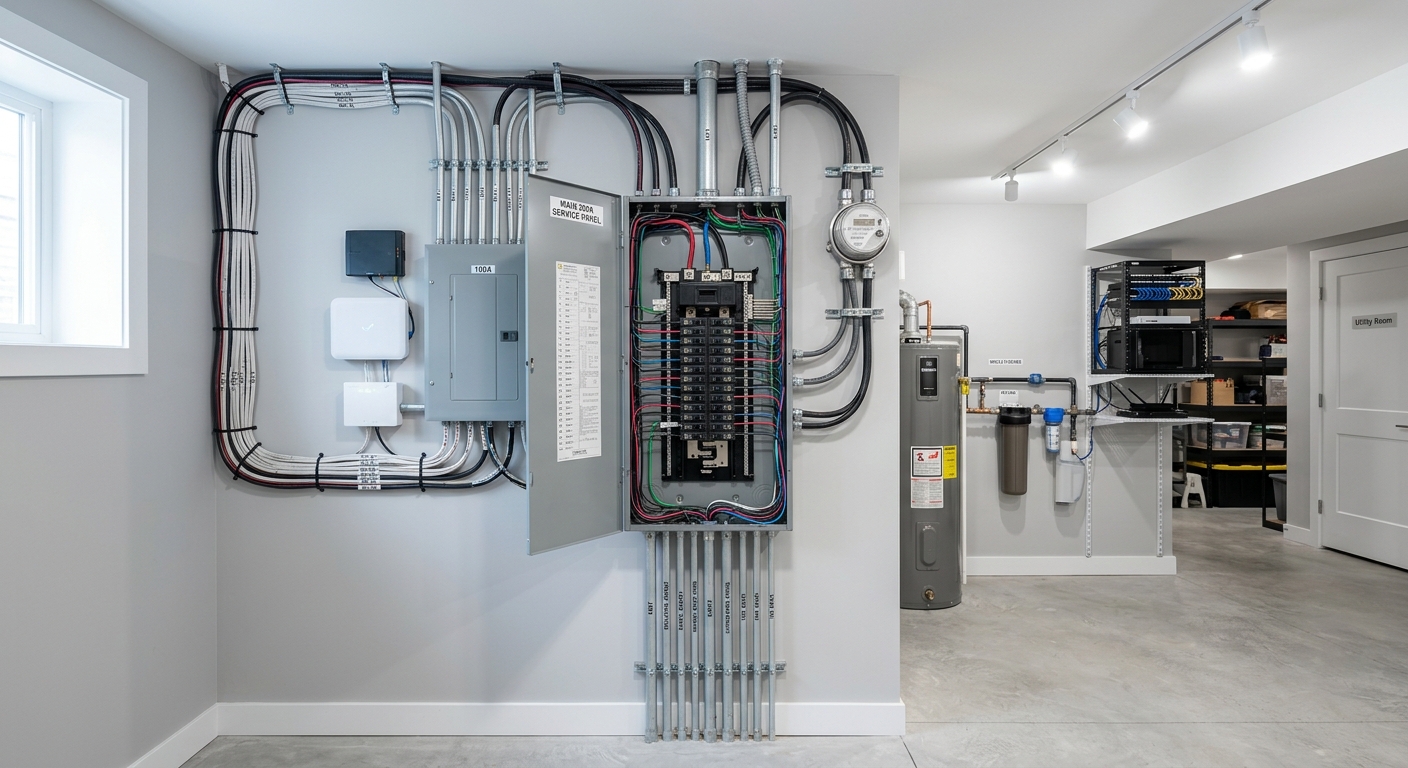
Electrical services in High River usually fall into three buckets: fixing older wiring, upgrading the service/panel for modern loads, and adding circuits for comfort upgrades. With High River’s population at 14,324 (Statistics Canada, 2021 Census) and about 4,365 homeowner households (Statistics Canada, 2021 Census), there’s steady demand for safe, permit-ready work—especially because 23.8% of homes were built before 1981, when knob-and-tube wiring and early service sizing were common. Those older systems are prime candidates for panel upgrades, K&T removal, and aluminum branch-circuit remediation, often during renovations or pre-sale inspections.
Costs in the Calgary economic region swing based on what contractors actually have to touch. In winter, snow loading and site access can slow work, and outage-limiting scheduling matters more when you’re near critical equipment like furnaces, sump pumps, and garage doors. Meanwhile, High River’s mix of established neighbourhoods and newer builds means availability and pricing can vary: newer subdivisions may be quick to service, but older streets can require longer troubleshooting, more selective demolition, and sometimes utility-coordination for underground service changes. In areas such as downtown and older pockets near the river corridor, rewiring and service work tend to be in higher demand because many houses have dated panels and limited capacity for today’s loads.
Below is a practical pricing comparison you can use when reviewing quotes—then we’ll break down what moves the number up or down.
| Service |
Why It's Needed |
Permit Required |
Price Range |
| Panel upgrade — 100A to 200A service |
Modern appliances, finished basements, and growing EV/heat-pump loads exceed older panel capacity and may not meet current code requirements. |
Yes (service upgrade and panel replacement) |
$2,500–$8,000 |
| EV charger installation (Level 2, 40–50A) |
Dedicated circuit supports safe charging; can reduce strain on an undersized panel. |
Yes (new circuit and charger connection) |
$900–$2,500 |
| Knob-and-tube wiring removal and replacement |
Old insulation and unsafe junction methods are a common safety and insurability concern; replacement restores code-compliant wiring. |
Yes (rewiring/removal) |
$4,000–$15,000 |
| Aluminum wiring remediation (CO/ALR connectors) |
Licensed remediation with approved connectors reduces overheating risk at splices/terminations without necessarily requiring full replacement. |
Often yes (depends on scope; typically new/reworked terminations) |
$4,000–$10,000 |
| New dedicated circuit (HVAC, appliance, hot tub) |
Dedicated protection reduces nuisance trips and supports equipment that draws significant amperage. |
Yes (new branch circuits) |
$1,000–$4,500 |
| Whole-home rewire (older home, full replacement) |
When multiple wiring methods are mixed, or K&T/aluminium issues span the home, a full rewire is the cleanest path to reliability and resale readiness. |
Yes (major rewiring) |
$8,000–$15,000 |
Prices are estimates only and vary by project scope, site access and material selection.
What affects the price of electrical work in High River
For the same “type” of job, quotes in Calgary and across Alberta can differ by 30–50% because electrical work isn’t one fixed product—it’s labour-hours, access difficulty, and how much existing wiring must be opened, tested, and corrected to meet the Canadian Electrical Code. In High River, the dominant cost driver is the age of the housing stock. Homes built before the mid-20th century often contain knob-and-tube wiring, and even when it “still works,” insurers and buyers increasingly expect safe, code-compliant replacement. Meanwhile, many houses from the 1960s–70s were built around 60A or 100A services, which can’t reliably support today’s loads like EV charging, heat pumps, induction stoves, and electric dryers at the same time.
Aluminum wiring is another major driver. In homes built 1965–1976, aluminium branch circuits typically require licensed remediation using approved CO/ALR connectors—or full replacement if defects are widespread. That’s why a “connector-only” quote can be cheaper than a rewire, but only after testing confirms what’s actually there. EV adoption is also pushing more permit applications for Level 2 charging, and many homes need panel upgrades in the same visit to avoid an over-capacity situation.
Concrete examples from High River: (1) If your panel is in a tight utility room and we have to remove finished walls to reach new cable routes, your labour climbs quickly—often pushing a basic wiring job toward the upper end of the $4,000–$15,000 band. (2) If your service is already set up for a clean 100A-to-200A load path, panel work can land closer to the lower end of the $2,500–$8,000 range. (3) If trenching/utility-side coordination is needed for underground service changes, costs rise beyond typical panel-only work due to scheduling and site restoration.
| Price Factor |
Why It Matters |
Cost Impact |
| Panel size upgrade — 100A to 200A is the standard minimum today |
Modern load calculations often require 200A to accommodate EV charging and heat sources safely. |
Moves most service projects into roughly the $2,500–$8,000 zone |
| Wiring type — copper vs. aluminum remediation vs. K&T removal |
Different risks mean different scopes: CO/ALR connectors vs. full replacement vs. wholesale rewiring. |
Can swing jobs by several thousand dollars depending on extent |
| Number of new circuits — each adds material and labour time |
Each circuit requires cable, breakers, boxes, terminations, and testing. |
Often adds hundreds to over a thousand per additional circuit |
| Permit + ESA/TSBC inspection fee — mandatory for all major work |
Permitted electrical work must be inspected; contractors also coordinate paperwork. |
Adds mandatory administrative and inspection costs on top of labour |
| Labour rate for licensed electricians — journeyman rates in Calgary/region |
Licensed labour time is the biggest part of most upgrades. |
More troubleshooting or longer access increases total labour charges |
| EV charger amperage — 40A vs. 50A circuit affects cable and breaker cost |
Higher amperage can require heavier conductors and specific breaker/cable combinations. |
Usually increases material/breaker costs within the $900–$2,500 band |
| Emergency or after-hours premium |
Urgent scheduling raises labour and may affect material logistics. |
Commonly adds a premium if work can’t wait for regular scheduling |
| Load calculation required for service upgrade |
Alberta-required load assessments confirm whether 100A can be used or if 200A+ is justified. |
Increases inspection/engineering steps and can prevent rework later |
Permits & regulations in Alberta
In Alberta, electrical work beyond changing a light bulb must be done by a licensed electrician. Permits are required for panel upgrades, service upgrades, rewiring, new circuits (including EV charger installations), and most work that changes conductors, overcurrent protection, or any wiring pathway. Work must also pass inspection by the provincial electrical safety authority in Alberta (typically coordinated through STANDATA processes). DIY electrical is prohibited for the majority of work, and even when homeowners can do limited “preparation” like removing fixtures or organizing access, the licensed electrician is still responsible for the completed connections and compliance.
What usually requires a permit: replacing or upgrading a panel, adding a new breaker/circuit, installing a Level 2 EV charger, modifying existing wiring, and any rewiring that changes the electrical system. What typically does not require a permit: swapping a receptacle or switch when it’s an exact like-for-like replacement (no new wiring pathway, no change to circuit rating), and replacing a fixture where wiring is not altered—though your electrician should confirm the scope before work starts.
To verify a contractor in High River, first check their Alberta licence status (look for the licence record through the provincial registry). Next request a certificate of insurance and confirm electrical contractor liability coverage. Finally, ask for WSIB/WCB coverage documentation and ensure the clearance letter is current. A legitimate contractor will provide these items before scheduling and will build permit/inspection coordination into the quote.
When your High River home needs an electrical upgrade
In High River, electrical upgrades are often about safety and reliability—not “pretty fixes.” A few warning signs can point to an overloaded or outdated system that struggles in real life, especially during cold snaps when homes run harder (heating, fans, and basement pumps). First, breakers that trip frequently usually mean an overloaded panel or an undersized/defective circuit. This is often a safety concern—especially if trips happen when specific appliances run.
Second, knob-and-tube wiring is the big one for older homes. It may function for years, but insulation condition and junction safety are the issues, and buyers/insurers may require removal for coverage. Third, if you have a 60A or 100A service, it can be inadequate for modern combined loads—think an EV charger plus heat pump and electric stove. In those cases, a 200A upgrade is the standard solution to reduce nuisance tripping and improve capacity for today’s code-compliant setup.
Fourth, aluminum wiring (commonly found in pre-1976 homes) isn’t always an immediate “sparks tomorrow” risk, but it does require licensed remediation—often CO/ALR connectors at terminations/splices or selective replacement where defects appear. Fifth, insufficient outlets and extension cords everywhere is more than inconvenience; it’s a practical indicator that the circuit layout won’t support safe load distribution. Finally, if there’s no AFCI/GFCI protection where required, it’s a code-compliance problem that can surface during resale and inspections.
To justify cost: a panel upgrade and dedicated EV circuit can be the right spend when a 100A service forces you into repeated fixes. For example, if adding a Level 2 charger without upgrading lands you in frequent nuisance trips, the cheaper initial option can cost more over time. A properly scoped panel upgrade (often within the $2,500–$8,000 band) plus the EV circuit (commonly $900–$2,500) is often the clean, long-term solution.
| Warning Sign |
What It Means |
Recommended Action |
Urgency |
Price Band |
| Breakers trip frequently |
Overload, faulty breaker, or circuit wiring issues—often worsened by modern loads. |
Troubleshoot load, inspect panel/breakers, consider new circuits or service upgrade if capacity is low. |
Immediate attention if trips are frequent or sparking/burning smells occur |
$1,000–$8,000 |
| Knob-and-tube wiring present |
Outdated wiring method with insulation/junction concerns affecting safety and insurability. |
Plan removal and rewiring of affected areas; often best during renovations or full rewire. |
Planned upgrade (urgent if active hazards or coverage requirements) |
$4,000–$15,000 |
| 60A or 100A panel (inadequate load capacity) |
Doesn’t reliably support EV charging, heat pump systems, and other high-demand appliances together. |
Request a load calculation and typically upgrade to 200A to add safe capacity. |
High priority before adding major loads |
$2,500–$8,000 |
| Aluminum wiring (pre-1976 construction) |
Terminations/splices can overheat if not properly remediated. |
Licensed remediation with approved CO/ALR connectors or targeted replacement where needed. |
Planned upgrade |
$4,000–$10,000 |
| Insufficient outlets — extension cords everywhere |
Unbalanced load distribution and unsafe temporary wiring habits. |
Add receptacles/circuits in logical locations; review total circuit capacity. |
Planned upgrade (address soon to avoid overload risk) |
$1,000–$4,500 |
| No AFCI or GFCI protection where required |
Increased risk from arcing faults and shock hazards; can block resale or trigger inspector corrections. |
Upgrade receptacles/breakers to meet current protection expectations. |
Planned upgrade (prioritise before sale) |
$200–$2,500 |
How to choose a electrical work contractor in High River
Choosing the right electrician in High River starts with proving they’re properly licensed and covered. First, verify the Alberta licence (and the number/type of licence) through the provincial online registry or by asking the contractor to provide their licence information. Next, request proof of liability insurance and confirm the certificate matches the company doing the work. Finally, ask for WSIB/WCB coverage documentation and ensure it’s current—this protects you if a worker is injured on your property.
Then get 2–3 itemised written quotes instead of a lump sum. Ask for a labour-and-materials breakdown, including cable type, breakers/panel model, disposal, and any non-standard parts like grounding upgrades or CO/ALR connectors. Read the scope carefully: confirm whether the permit pull is included, who coordinates inspection, and whether trenching/hydrovac or restoration is part of the price if underground service coordination is needed.
Warranty matters for both workmanship and products. Ask how long the workmanship warranty is (and whether it’s in writing), what manufacturer warranties apply to the panel/charger, and whether those warranties transfer to you if you sell your home. Payment scheduling should be conservative—never pay more than 10–15% upfront, and hold back the remainder until completion and sign-off.
Finally, timeline clarity reduces stress in a busy Calgary-region market. Get a start date and a realistic completion estimate in writing, and confirm any parts lead times.
- Licensed Alberta electrician with a visible, current licence record
- Certificate of insurance matching the contractor’s legal business name
- WSIB/WCB coverage documentation provided before work starts
- Two or three itemised quotes (labour + materials), not only one total
- Explicit scope: which rooms/circuits/panel bays are included
- Permit pull and inspection coordination stated in writing
- Materials listed by specification (panel brand/model, breaker ratings, charger amperage)
- Clear exclusions (e.g., drywall repairs, landscaping restoration, utility-side costs)
- Written workmanship warranty length and what it covers
- Payment schedule cap: 10–15% upfront, holdback until completion
- Estimated timeline with start date and practical completion window
- Photos before/after of opened panels, terminations, and completed work
Red flags in High River include: (1) refusing to pull a permit for a panel/service or new circuit, (2) quoting only a “lump sum” without itemising materials and labour, (3) asking for most payment upfront, (4) vague answers about inspection/ESA/STANDATA processes, and (5) no proof of insurance or WSIB/WCB coverage.
Frequently asked questions — electrical work in High River
What is a load calculation and why does my electrician need one?
A load calculation is a documented method electricians use to determine how much electrical demand your home can safely handle under current code rules. In High River, it’s especially important for older homes with 60A or 100A panels, where today’s lifestyle can exceed what the original service was designed for. If you’re adding a Level 2 EV charger, running an electric stove, or pairing systems like heat pumps and finished basements, the load calculation helps justify whether a 200A upgrade is needed or whether you can stay on the existing service. It also reduces the risk of nuisance trips and prevents costly rework after you’ve already added new circuits. Your contractor should include the calculation in the project documentation for inspection purposes.
How do I find a licensed electrician in High River?
Start by confirming licensing through Alberta’s provincial registry resources and by requesting the electrician’s licence information directly. In High River, you should also ask for proof of liability insurance and WSIB/WCB coverage before work begins—legitimate contractors don’t hesitate. Next, compare itemised quotes from at least two electricians and ask who will pull the permits and coordinate inspection. A good sign is when they explain what parts of your job are permitted (service upgrade, rewiring, new circuits, EV charger circuits) and what isn’t. If you’re doing something like an EV charger installation, you’ll want confirmation that the charger amperage (often a 40A–50A circuit) matches your panel capacity and that permits are included.
Can I add a subpanel to my High River home?
Yes, in many High River homes you can add a subpanel, especially when you want more room for breakers for a finished basement, workshop, or major loads. However, whether it’s the right approach depends on your main panel capacity and grounding/bonding layout. In older homes, the electrician may first perform a load calculation and determine if staying at 100A is safe, or if a move to 200A is required before adding additional breakers. Adding a subpanel is typically permit-required because it involves new circuit routing and changes to how loads are distributed. If you’re planning an EV charger or other high-demand equipment, a subpanel might still need to be supported by a larger service, otherwise you may end up with capacity problems. Always choose an electrician who will verify code compliance and coordinate inspection.
How much does an electrician cost in High River?
Pricing in High River is usually driven by labour time, access conditions, and permit/inspection requirements—not just the number of parts. For perspective, wiring and rewiring projects commonly fall in the $4,000–$15,000 range, depending on whether you’re doing targeted circuit work or removing knob-and-tube. A straightforward EV charger installation is often in the $900–$2,500 band when permits and a dedicated circuit are included. For panel upgrades and service work, you’ll typically see $2,500–$8,000 for many upgrade scenarios under normal conditions. The biggest reason quotes differ by 30–50% across the region is scope clarity—how much wall opening is required, how complex the existing panel/wiring is, and what safety remediation is uncovered once we open up the system.
How much does a panel upgrade cost in High River?
For High River homeowners, a common scenario is upgrading from 100A to 200A to support modern loads. In the Calgary region, panel upgrade/service projects typically run in the $2,500–$8,000 range depending on whether it’s panel-only versus a more involved service work scope, how accessible the wiring is, and whether any grounding or utility-side coordination is required. Older homes built before 1981 (Statistics Canada, 2021 Census) often need more troubleshooting or additional remediation, which can push cost toward the upper end. The best way to dial in the number is a site visit and a load calculation. If your contractor is recommending a panel upgrade without reviewing load and wiring condition, ask for their reasoning and how it will pass inspection.
Do I need to upgrade to a 200A panel?
You may need a 200A panel in High River if your current service is 60A or 100A and your load plan includes modern high-demand items—commonly an EV charger, heat pumps, electric cooking, and additional basement loads. A proper load calculation is the deciding factor, and it’s also the documentation your electrician will rely on for permitted work. If your goal is “just one more circuit,” you might be able to add circuits safely without upgrading—sometimes. But if you’re planning a Level 2 EV charger (often requiring a 40A–50A circuit) and you’re already near capacity, a 200A upgrade is often the safer long-term solution within the $2,500–$8,000 band. If you’re unsure, ask your electrician to map your proposed circuits, confirm panel capacity, and explain what would happen if you don’t upgrade.