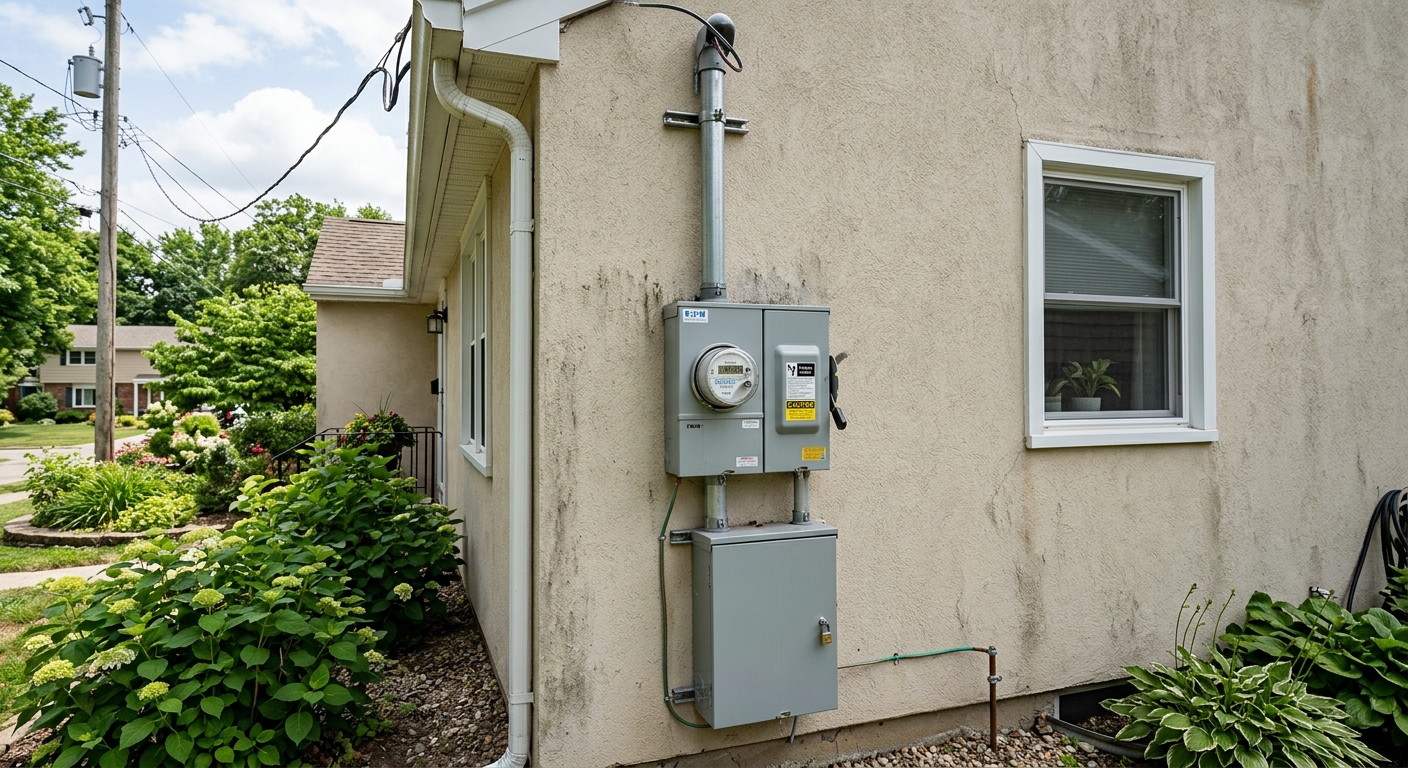
Electrical services and costs in University Heights
Electrical services in University Heights, Alberta, tend to vary a lot by whether you’re dealing with older wiring, smaller services, or a panel that can’t support today’s household loads. With a total population of 2,965 in the area (Statistics Canada, 2021 Census), the neighbourhood market is small enough that contractors often get booked quickly when multiple houses in the same pocket need similar upgrades—especially around the older housing fringes near local established streets. In practical terms, many pre-1980 homes here are prime candidates for panel upgrades, knob-and-tube removal, and aluminum wiring remediation, because older installations weren’t designed for the mix of modern appliances, basement development, and EV charging. Calgary-area winters also matter: extended use of electric baseboards, heat pumps, dehumidifiers, and indoor workshop loads increases demand on circuits and exposes panel limitations sooner.
Calgary’s housing stock creates predictable “clusters” of work. Where you have service sizes around 60A or 100A, it’s common to see clients add an EV Level 2 charger (often 40–50A) plus additional circuits for kitchens, bathrooms, and unfinished-to-finished basement conversions. In those scenarios, a 100A-to-200A service upgrade is typically the cleanest foundation—one reason panel replacement or upgrade projects often land in the low-to-mid thousands under normal conditions. If utility-side involvement is needed (such as coordination for underground service), costs can climb because scheduling, permits, and access requirements increase. For homeowners comparing options, the fastest way to anchor expectations is to look at typical task-based ranges, which we’ve summarized below.
| Service |
Why It's Needed |
Permit Required |
Price Range |
| Panel upgrade — 100A to 200A service |
Provides capacity for modern loads like EV chargers, electric heat top-ups, finished basements, and heat-pump systems. |
Yes (major work) |
$2,500 – $8,000 |
| EV charger installation (Level 2, 40–50A) |
Adds a dedicated charging circuit safely with proper breaker and circuit protection sized to the charger. |
Yes (dedicated circuit/permit) |
$900 – $2,500 |
| Knob-and-tube wiring removal and replacement |
Replaces dated wiring that can be a safety and insurance risk due to degraded insulation and routing with no modern grounding. |
Yes (rewiring) |
$4,000 – $15,000 |
| Aluminum wiring remediation (CO/ALR connectors) |
Improves connection integrity in circuits that use aluminum conductors by installing approved connectors or re-terminations. |
Yes (circuit work) |
$3,500 – $10,000 |
| New dedicated circuit (HVAC, appliance, hot tub) |
Ensures a safe, compliant feed for high-load equipment without overloading existing circuits. |
Yes (new circuits) |
$900 – $3,500 |
| Whole-home rewire (older home, full replacement) |
Modernizes wiring layout, grounding, and protection for a safer system and easier future upgrades. |
Yes (major rewiring) |
$8,000 – $18,000 |
Prices are estimates only and vary by project scope, site access and material selection.
What affects the price of electrical work in University Heights
In University Heights and across the broader Calgary region, it’s not unusual to see quotes for the “same” electrical task swing by 30%–50%. The reason is that Alberta pricing is driven by the realities of field work: how much wiring needs to be moved, how difficult access is inside walls and basements, whether the service must be expanded, and how much coordination is needed for permits and inspections. Housing age is the dominant cost driver. Homes built before 1950 are more likely to contain knob-and-tube wiring that many insurers increasingly won’t cover, pushing homeowners toward removal and rework. Meanwhile, homes from the 1960s–1970s often have smaller 60A or 100A panels that struggle with today’s load mix—EV chargers, induction stoves, heat-pump supplemental heat, and finished-basement outlets.
Aluminum branch circuits, common in homes built roughly between 1965 and 1976, typically require licensed remediation using approved CO/ALR connectors or full replacement. That doesn’t just add materials; it adds labour time because connections must be assessed and executed to code. EV adoption in the Calgary area is also driving a surge in Level 2 charger installations, which means more permit applications and more demand for correctly sized 40A versus 50A circuits. For example, a panel-first approach may land in the $2,500 – $8,000 range, while a single dedicated circuit project may stay closer to $900 – $2,500 when panel capacity is already available. Site conditions shift the number as well: overhead versus underground service work, whether hydrovac/trenching is required for utility-side coordination, and whether the electrician can work from finished access points all affect labour hours.
| Price Factor |
Why It Matters |
Cost Impact |
| Panel size upgrade — 100A to 200A |
Modern loads frequently require additional capacity and breakers; it’s often the minimum for EV-ready homes. |
Typically moves the project into the $2,500 – $8,000 band |
| Wiring type — copper vs. aluminum remediation vs. K&T removal |
Aluminum requires approved CO/ALR methods; knob-and-tube often requires more removals and rewiring. |
Can add thousands depending on circuit count; K&T usually increases labour dramatically |
| Number of new circuits |
Each additional circuit adds materials (cable, conduit, breaker) and time to route and terminate. |
More circuits can push from mid-band into upper-band pricing |
| Permit + ESA/TSBC inspection fee — mandatory for all major work |
Major upgrades require permits and inspection scheduling; documentation time is built into the quote. |
Costs rise for service upgrades and whole-home rewires |
| Labour rate for licensed electricians — journeyman rates in Calgary area |
Travelling, working in basements/walls, and testing/commissioning are billed as labour time. |
Higher complexity increases total labour hours |
| EV charger amperage — 40A vs. 50A circuit affects cable and breaker cost |
Higher amperage may require larger conductors/breaker configuration and affects load calculation. |
50A installations typically cost more than 40A when materials differ |
| Emergency or after-hours premium |
Scheduling and risk increase if a homeowner needs immediate troubleshooting or weekend/after-hours service. |
Often adds a noticeable premium to labour |
| Load calculation required for service upgrade |
Alberta requires proper design and calculations; undersized designs cause rework. |
Well-scoped load calculations reduce change orders; incomplete info increases cost |
Permits & regulations in Alberta
In Alberta, any electrical work beyond changing a light bulb must be performed by a licensed electrician. That includes panel replacements or upgrades, new circuits (including dedicated EV charger circuits), rewiring work, and service upgrades. You should assume a permit is required for anything that changes the fixed electrical system—adding breakers, running new cable, modifying receptacles/switches as part of a circuit extension, or touching the panel/service wiring. The work must then pass inspection by the provincial electrical safety system (often referred to in Alberta practice as the safety authority inspection process). DIY electrical is generally prohibited for most work, and homeowners don’t get broad exemptions—so if someone suggests “no permit required,” ask exactly what scope they mean and whether the change triggers inspection.
To verify a University Heights electrician, start by checking their Alberta licence status through the provincial online registry (and confirm the licence type is appropriate for the work). Next, request a certificate of insurance showing liability coverage and ensure it matches the contractor/business name on the quote. Also ask for WSIB/WCB coverage—licensed contractors carry this for their workers, and a clear clearance letter or proof document should be provided upon request. Finally, confirm the electrician will pull the permit, schedule inspection, and provide documentation at completion. Legitimate contractors build the permitting and inspection coordination into their pricing—so your estimate should clearly reflect that.
When your University Heights home needs an electrical upgrade
In University Heights, the warning signs you’re looking for aren’t cosmetic—they’re safety-critical indicators that your wiring, breakers, or service capacity can’t handle modern usage. First, breakers that trip regularly are often a sign of overload, a failing breaker, or a circuit that’s been expanded beyond its intended design. Second, knob-and-tube wiring is a major concern because insulation contact and degraded materials can create overheating risk; it’s also commonly linked to insurance cancellations, which can force faster action. Third, a 60A or 100A service may be inadequate when you add an EV charger, heat pumps with supplemental heat, and high-demand kitchen appliances in the same billing cycle—then a 200A upgrade is typically the standard solution rather than “adding more breakers” to an undersized system.
Fourth, aluminum wiring (often in pre-1976 construction) isn’t automatically dangerous if it’s been properly maintained, but it requires licensed remediation—especially at connections—using approved CO/ALR methods. Fifth, insufficient outlets and reliance on extension cords everywhere is a code-compliance and fire-risk signal, because it encourages unsafe daisy-chaining and overloaded cords. Sixth, missing AFCI/GFCI protection where required can show up during a home sale inspection, and it’s best handled as a planned upgrade rather than waiting for a transaction to force you.
For urgency: if breakers trip, smell hot odour, or you see scorching/discolouration, act immediately—call for troubleshooting. For planned upgrades, a service upgrade and rewiring can be scheduled around renovation timelines. A practical price example: if your panel is already in decent shape, a single dedicated circuit might fit in the $900 – $2,500 range; but if your service capacity is the bottleneck, doing the same EV circuit after a panel upgrade can place you into the $2,500 – $8,000 band, which is justified because it prevents repeated nuisance tripping and future rework.
| Warning Sign |
What It Means |
Recommended Action |
Urgency |
Price Band |
| Breakers trip frequently |
Likely overload, bad breaker/cable connection, or undersized circuit for current load. |
Electrical load assessment, circuit testing, and panel/circuit upgrades as needed. |
Immediate if frequent during normal use |
$900 – $3,500 |
| Knob-and-tube wiring present |
Dated wiring with risks related to insulation condition and lack of modern safety features. |
Plan staged or full removal and rewiring with proper grounding and protection. |
Planned with priority |
$4,000 – $15,000 |
| 60A or 100A panel (inadequate load capacity) |
Insufficient capacity for today’s heating, kitchen, and EV loads. |
Service upgrade to 200A and perform load calculations for new loads. |
Planned (schedule before adding new high loads) |
$2,500 – $8,000 |
| Aluminum wiring (pre-1976 construction) |
Connections may need remediation due to oxidation/expansion and code-compliant terminations. |
Assess circuits and complete CO/ALR remediation or partial replacement. |
Planned |
$3,500 – $10,000 |
| Insufficient outlets — extension cords everywhere |
Extension cords increase risk of overheating and failures, especially in winter use. |
Add receptacles and circuits where code-compliant and safe routing is possible. |
Planned |
$900 – $3,500 |
| No AFCI or GFCI protection where required |
Increased shock and arc-fault risk; can become a compliance issue during resale. |
Install appropriate AFCI/GFCI protection for affected circuits. |
Planned |
$200 – $2,500 |
How to choose a electrical work contractor in University Heights
Choosing the right contractor in University Heights starts with verifying licensing, insurance, and worker coverage. First, confirm the electrician’s Alberta licence details using the provincial registry. Ask for their certificate of liability insurance and check that it’s active and issued to the same business name that appears on the quote. Then request proof of WSIB/WCB coverage (or a clearance letter/proof document, as applicable)—this matters for worker safety and keeps you from being exposed to claims related to contractor labour.
Next, get 2–3 itemised written quotes rather than a single lump sum. A good quote breaks down labour, materials (panel model, breakers, cable/conduit type), testing/commissioning, and whether permit pulling and inspection coordination are included. Carefully read what’s excluded: drywall patching, disposal, trenching/hydrovac, utility-side coordination, and any upgrades required by a load calculation. Warranty matters too—ask for the workmanship warranty length, product/manufacturer warranty details, and whether it’s transferable to you as the homeowner.
Payment schedule should be conservative. For major work, never pay more than 10%–15% upfront; request a holdback until the job is complete and inspected. Finally, get the start date and an estimated completion timeline in writing, including inspection lead time during busy periods.
- Licence number shown on the quote and matched to the online registry
- Certificate of liability insurance provided before work starts
- WSIB/WCB proof or clearance letter supplied
- Permit pulling responsibility clearly stated
- Inspection scheduling and call-back fees explained
- Itemised labour and materials list (no vague “allowance” only)
- Panel and breaker specifications listed (brand/model and amperage)
- Disposal and debris cleanup included or clearly excluded
- Load calculation and documentation included for service upgrades
- Workmanship warranty length and coverage clarified in writing
- Schedule includes inspection wait time and expected re-visit plan
- Payment terms capped, with holdback until completion
Red flags to watch for in University Heights: quotes that won’t provide licence/insurance/WSIB proof, vague “permit not included” statements for panel/service work, no itemised breakdown for cable/conduit and testing, pressure to pay most of the amount upfront, and promises to skip inspections “to save time.”
Frequently asked questions — electrical work in University Heights
Is aluminum wiring safe in older University Heights homes?
Yes, aluminum wiring can be safe when it’s in good condition and the connections are handled correctly, but it often needs licensed remediation. In University Heights and the wider Calgary area, aluminum branch circuits are commonly seen in homes built in the mid-1960s to 1970s, and the key issue is typically at terminations where oxidation and expansion can lead to overheating if not properly addressed. A licensed electrician can inspect the specific circuits and recommend either re-termination with approved CO/ALR methods or, when needed, partial replacement. If you’re planning an EV charger or adding major loads, it’s also worth doing a capacity check and addressing any aluminum connection concerns first, so you’re not building new demand on problem connections. Remediation projects often fall into the $3,500 – $10,000 range depending on circuit count.
Do I need a permit for electrical work in Alberta?
For most fixed electrical changes in Alberta, yes—you generally need a permit and an inspection. In practice for University Heights homeowners, permits are expected for panel upgrades (including 100A to 200A), rewiring work, adding or modifying circuits, and dedicated installations like a Level 2 EV charger circuit. Minor “like-for-like” replacements (for example, certain fixture swaps) may not trigger the same level of permitting, but once you’re altering the wiring path, breaker allocation, or service capacity, assume permitting is required. The work must be carried out by a licensed electrician and then inspected through the provincial electrical safety process. If you’re comparing quotes, make sure the electrician clearly states permit pulling and inspection coordination—legitimate contractors build those requirements into their pricing.
What are signs of an overloaded electrical panel?
Common signs in Alberta homes include breakers tripping repeatedly during normal activities, lights dimming when appliances start, and warm or discoloured receptacles/switches. In University Heights, the winter load pattern matters too: simultaneous use of electric heat top-ups, heat-pump auxiliary functions, kitchen appliances, and basement development can push older systems beyond capacity. Another indicator is when nuisance trips occur after adding “just one more” appliance or renovating the basement—often it means the load calculation was never updated, or the service size is undersized for current demand. If you’re seeing these symptoms, call for troubleshooting and a load assessment rather than continuing to reset breakers. If capacity is the real issue, a service upgrade can move the project into the $2,500 – $8,000 panel/service range.
Can I do my own electrical work in Alberta?
In Alberta, most electrical work must be done by a licensed electrician. For University Heights homeowners, DIY is generally not permitted for tasks that affect fixed wiring, panels, service connections, or anything that requires a permit and inspection. The permitted scope for homeowners is narrow, and it’s easy to accidentally cross the line into work that needs a licensed contractor. If you want to handle non-electrical parts (like drywall patching after wiring is complete), that’s usually different from doing the wiring itself. If someone offers to “mark it as minor” or avoids permits for panel/service work, that’s a serious concern. For your protection, always confirm the electrician’s licence and ensure permits and inspections are included for any major work. When you compare quotes, the ones that align with permit/inspection requirements are usually the safest bet.
How long does a rewiring job take?
It depends heavily on whether it’s a full whole-home rewire versus targeted section work, plus how accessible walls and ceilings are. In University Heights, older housing layouts and finished basements can add time because routing new cable around existing framing and insulation takes longer. Whole-home rewire timelines often stretch over multiple days to a couple of weeks, while smaller rewiring phases (for example, removing knob-and-tube from specific areas) may be completed faster but still require careful testing and inspection coordination. Weather can indirectly affect scheduling in Alberta because contractors plan around start/inspection availability during the winter season. A good contractor will provide a written start date, estimated completion timeline, and an inspection plan. Pricing for rewiring varies widely; full rewires commonly sit in the $4,000 – $15,000 band and can be higher for very complex, fully finished homes.
Why do my breakers keep tripping?
Breakers trip for a few common reasons: overload (too much load on one circuit), a failing breaker, a damaged cable/connection, or an underlying wiring issue such as a loose termination. In University Heights, winter usage patterns can reveal problems quickly because multiple heaters, dehumidifiers, and kitchen loads run together. If aluminum wiring is present, overheating at a connection can also create intermittent faults that trip breakers. Another reason is that older panels may have circuits that were never designed for modern loads like induction stoves or EV chargers. The safe approach is troubleshooting, not repeated resets. A licensed electrician should verify what circuit trips, check for abnormal resistance/connection issues, and—if the service is undersized—complete a load calculation. If the fix is panel/service capacity and circuit expansion, projects often land in the $2,500 – $8,000 range.