Electrical services and costs in Armstrong
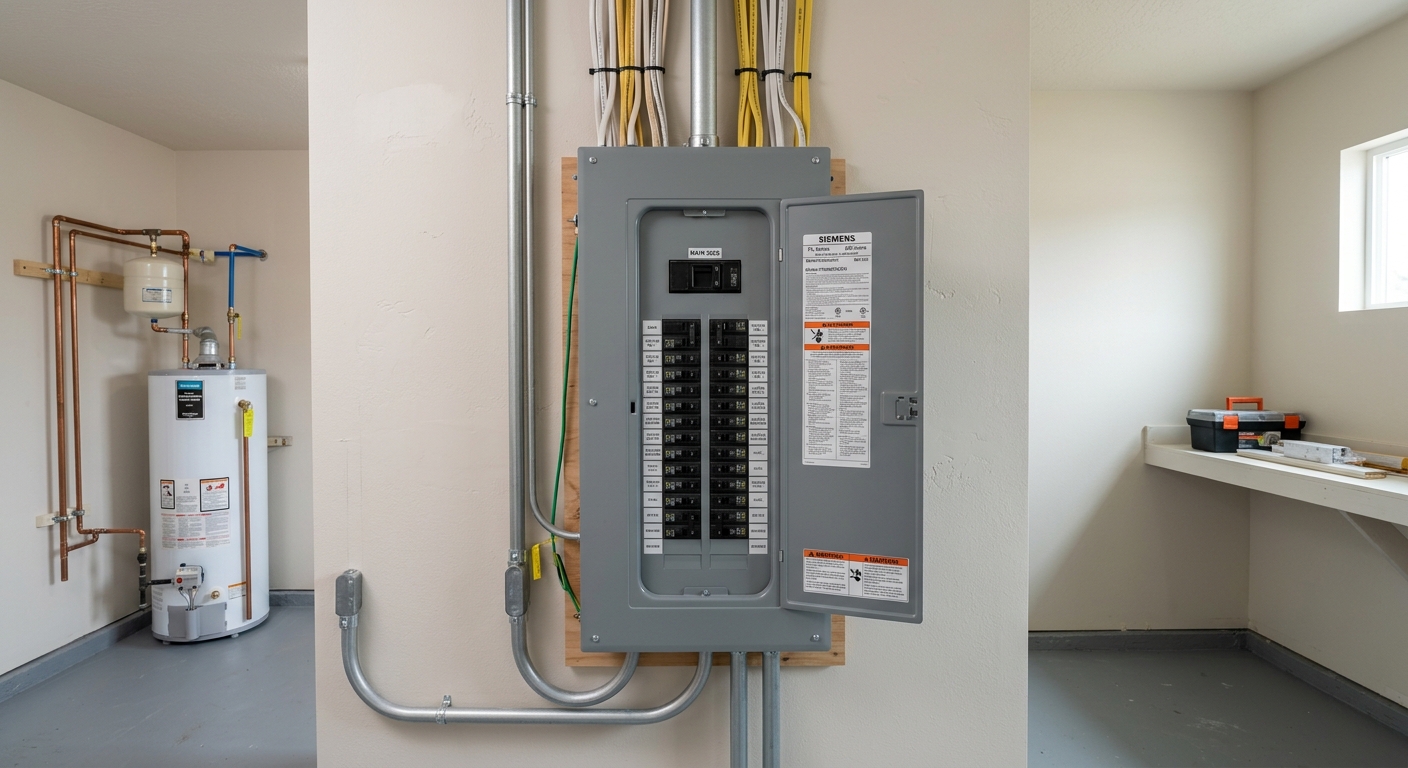
Electrical services in Armstrong, British Columbia, usually come down to one thing: making an older home’s wiring and service capacity catch up to today’s electricity use. With 42.7% of homes in the broader Armstrong area built before 1981 (Statistics Canada, 2021 Census), you’ll commonly see older split-load panels, mixed wiring materials, and in some cases knob-and-tube remnants or aluminum branch wiring that need a careful, code-compliant update. Another practical driver is that Armstrong has 1,850 homeowner households (83.5% owning), which supports steady demand for upgrades that improve safety and resale value.
Thompson–Okanagan pricing is also shaped by seasonal workload and travel distance across a wide service area. Armstrong is in a cold-winter, electric-heat-influenced region where base load can be higher than many coastal communities—especially where heat pumps aren’t the only source of heat. That means electricians often start with a load calculation and then recommend either a 100A to 200A service upgrade or additional circuits so you’re not running everything “through the panel.” You’ll notice the strongest trade demand in older residential pockets around Armstrong’s downtown core and nearby established neighbourhoods, where many homes were never designed for an EV charger, hot tub, or heavy workshop equipment.
Because of those factors, quotes can vary a lot, so it helps to compare apples to apples using the typical service categories below.
| Service |
Why It's Needed |
Permit Required |
Price Range |
| Panel upgrade — 100A to 200A service |
Adds capacity for modern loads (heat pumps/electric ranges/EV chargers) and improves safety devices |
Yes (service upgrade) |
$2,500–$6,000 |
| EV charger installation (Level 2, 40–50A) |
Dedicated 240V charging circuit with appropriate breaker, wiring, and grounding/RCG protection |
Yes (new dedicated circuit + permit for charger wiring) |
$1,200–$3,500 |
| Knob-and-tube wiring removal and replacement |
Replaces aged wiring with current insulation ratings and safer terminations |
Yes (rewiring/removal) |
$8,000–$20,000 |
| Aluminum wiring remediation (CO/ALR connectors) |
Improves connection reliability where aluminum branch wiring is present (approved CO/ALR methods) |
Typically yes (alterations/term work) |
$3,000–$8,000 |
| New dedicated circuit (HVAC, appliance, hot tub) |
Reduces nuisance breaker trips and supports high-demand appliances safely |
Yes (new circuit) |
$900–$3,000 |
| Whole-home rewire (older home, full replacement) |
Full replacement to address multiple circuits/materials and reach modern code protection |
Yes (major rewiring) |
$12,000–$28,000 |
Prices are estimates only and vary by project scope, site access and material selection.
What affects the price of electrical work in Armstrong
In Armstrong and across the Thompson–Okanagan region, the same “type” of electrical job can price out 30–50% differently between quotes because the hidden work is rarely identical. A simple panel swap can become a service upgrade with load calculation, new feeder work, meter/base adjustments, and additional grounding. In the older housing stock that dominates many communities here, the dominant cost driver is age: homes built before 1950 may include knob-and-tube wiring that insurance companies increasingly scrutinize, often pushing you toward removal rather than piecemeal repairs. Meanwhile, homes from the 1960s–70s frequently have 60A or 100A panels that were adequate for limited appliance loads, but today’s homes commonly add EV chargers, heat pumps, induction stoves, and home-office equipment—creating demand for higher service capacity.
Aluminum wiring is another frequent driver. Where aluminum branch wiring (commonly seen in homes from about 1965–1976) is present, licensed remediation typically means approved connectors or a targeted rewire plan—both require time, inspection-ready documentation, and careful workmanship. Regional EV adoption is also pushing up permit applications for 240V Level 2 charger circuits, and when capacity is marginal, that can add a $2,500–$6,000-type panel/service component to what started as a charger-only quote.
Two local examples that commonly raise costs in Armstrong: difficult trenching/long cable runs to detached garages or hot tubs during dry-season scheduling, and finishing work when wiring paths require opening walls in older insulation. Costs can be lower when your attic/basement access is straightforward and the wiring route is short—so the “materials” line on a quote can swing notably even when labour is similar.
| Price Factor |
Why It Matters |
Cost Impact |
| Panel size upgrade — 100A to 200A is the standard minimum today |
More capacity for modern loads and safer, code-compliant protection |
$2,500–$6,000 |
| Wiring type — copper vs. aluminum remediation vs. K&T removal |
Different methods, connectors, and risk controls; K&T typically drives full replacement decisions |
$3,000–$20,000 |
| Number of new circuits — each adds material and labour time |
More breakers, cable runs, junction boxes, and testing |
$900–$3,000 per circuit |
| Permit + ESA/TSBC inspection fee — mandatory for all major work |
Mandatory administrative and inspection steps for permitted electrical changes |
$150–$600 |
| Labour rate for licensed electricians — journeyman rates in {region} |
Travel, seasonal demand, and compliance overhead influence hourly pricing |
$90–$140 per hour equivalent |
| EV charger amperage — 40A vs. 50A circuit affects cable and breaker cost |
Higher amp draw can require larger conductors and different breaker/cable sizing |
$200–$900 difference |
| Emergency or after-hours premium |
Short-notice scheduling and after-hours crews cost more |
$200–$1,000 added |
| Load calculation required for service upgrade |
Determines actual capacity needs; may reveal additional circuit/panel work |
$250–$900 added |
Permits & regulations in British Columbia
In British Columbia, ALL electrical work beyond changing a light bulb must be completed by a licensed electrician. In practice, that includes panel changes, adding or moving outlets, installing new circuits (including dedicated EV charger wiring), rewiring, and any service upgrade. Permits are required for major work such as service/panel upgrades and new circuit installations, and permitted electrical work must be inspected by Technical Safety BC. Most homeowner “DIY” shortcuts are not legally allowed for anything that affects wiring, circuits, breakers, or protection devices.
What typically does NOT require a permit: swapping a like-for-like lamp, replacing a properly rated fixture where you’re only connecting to the existing cord/fixture connections (no new wiring/circuit changes), or replacing a plug-in appliance. What DOES require a permit: new circuits, breaker additions, panel upgrades, any rewire where conductors are replaced, adding GFCI/AFCI where it involves circuit work, and all EV charger hardwiring.
To verify a contractor’s coverage in Armstrong, start by checking their BC licence status through the provincial licensing registry, then request their certificate of insurance (liability insurance) for your job. Ask whether they are registered for WSBC/WCB coverage and confirm they can provide proof (or the correct coverage status) before work begins. Also ask for a copy of the permit number once filed—then you can confirm inspection scheduling aligns with the scope.
When your Armstrong home needs an electrical upgrade
Electrical upgrades aren’t just about adding convenience in Armstrong—they’re often about preventing nuisance failures and reducing shock/fire risk. Start with the warning signs. First, breakers that trip regularly usually point to an overloaded panel, undersized wiring for the load, or improper circuit sharing. If it’s happening during normal use, don’t wait; investigate promptly.
Second, if your home has knob-and-tube wiring, the key concern isn’t only that it’s older—it’s the condition of insulation over time and how safely it can terminate under modern devices. Many homeowners choose replacement rather than patch repairs, especially where insulation-contact issues can’t be reliably verified in concealed spaces.
Third, check your service size. Homes with 60A or 100A panels can become inadequate when you add an EV charger, heat pump systems, and an electric stove all at once. In Thompson–Okanagan, winter base loads can increase the chances of running near capacity, so a $2,500–$6,000-type panel/service upgrade to 200A is often the standard solution when load calculations confirm it.
Fourth, aluminum wiring (commonly seen in older builds in the pre-1976 era) may still function, but it requires licensed remediation—typically approved connector methods—so connections don’t overheat over time. Fifth, insufficient outlets and constant extension cords are a practical safety issue, and they often correlate with the need for additional circuits. Finally, homes missing required arc-fault or ground-fault protection may surface problems during inspection or sale.
Here’s a dollar example: if you’re adding a Level 2 EV charger and the electrician finds your service is undersized, you may face both an EV circuit cost and a service upgrade. Paying for the correct $2,500–$6,000 service update is often cheaper than repeated troubleshooting and failed nuisance trips—especially in a climate where you’re more likely to run heat and kitchen loads together.
| Warning Sign |
What It Means |
Recommended Action |
Urgency |
| Breakers trip frequently |
Possible overload, wiring/connections issue, or incorrect circuit sizing |
Schedule an inspection + load calculation; identify offending circuits |
Immediate |
$900–$3,000 |
| Knob-and-tube wiring present |
Aged wiring with insulation risks and compatibility concerns with modern protection |
Plan removal/replacement of affected circuits; confirm scope |
Planned (often requires staged approach) |
$8,000–$20,000 |
| 60A or 100A panel (inadequate load capacity) |
Limited capacity for EV/heat pumps/modern appliances |
Upgrade to 200A where calculation supports it |
Planned (if not actively failing) / Priority |
$2,500–$6,000 |
| Aluminum wiring (pre-1976 construction) |
Connection heating risk unless properly remediated |
Have licensed remediation performed (approved connector methods) or rewire as needed |
Planned |
$3,000–$8,000 |
| Insufficient outlets — extension cords everywhere |
Overuse of temporary wiring increases trip/shock/heat risk |
Add circuits/outlets (kitchen, basement, workshops) rather than relying on cords |
Planned |
$900–$3,000 |
| No AFCI or GFCI protection where required |
Code-compliance and shock/fire protection gaps |
Upgrade protection devices and update circuits to meet requirements |
Planned / Before sale if selling |
$300–$3,000 |
How to choose a electrical work contractor in Armstrong
Choosing the right contractor starts with verifying credentials the same day you request a quote. In British Columbia, confirm the electrician is licensed in good standing (use the provincial licence registry), then request liability insurance proof and check the coverage documentation they provide for the work on your property. For working crews, ask about WSBC/WCB coverage—good contractors won’t hesitate to provide documentation before they start.
Next, ask for 2–3 itemised written quotes. You want a breakdown that separates labour from materials (wire, breakers, outlets, panels/chargers, connectors), and clearly states what’s included for permits and inspection scheduling. Avoid quotes that only list a single lump sum without listing quantities or the make/model of major components (like the panel or EV charger). Scope clarity matters: ask whether permit pull is included, whether disposal/dust control is included, and whether any drywall patching is part of the price or is extra.
Warranty matters too. Ask for the workmanship warranty length (and what it covers), and confirm how manufacturer warranties apply to specific equipment. For timelines, get an expected start date and completion estimate in writing, especially for service upgrades where inspections can set the pace.
- BC licence number shown on the quote
- Proof of liability insurance provided before site work
- WSBC/WCB coverage confirmation for their workers
- Itemised labour/material breakdown (not a lump sum only)
- Permit pulling included or stated clearly as an add-on
- Inspection timing noted (who books the inspection)
- Component brand/model listed for panels, breakers, and charger hardware
- Disposal and debris handling stated in writing
- Workmanship warranty stated (length + how claims work)
- Payment schedule: keep upfront deposits around 10–15% max
- Holdback until completion and cleanup
- Start date and completion window included
Red flags in Armstrong typically include: quotes that won’t provide a licence/insurance document on request, vague scopes like “we’ll update wiring” with no locations or quantities, asking for most of the money upfront, skipping written inspection/permit details, and refusing to explain whether your job includes a load calculation for a service upgrade.
Frequently asked questions — electrical work in Armstrong
How do I compare electrical quotes?
Start by comparing itemised scope, not just the total. For Armstrong homes, ask whether the electrician has done (or will do) a load calculation if a service upgrade is being considered—especially if you’re adding a Level 2 EV charger or upgrading heating. Make sure each quote specifies the same panel size target (commonly 200A when capacity is marginal) and includes permit/inspection steps. A “cheaper” quote can become more expensive if it excludes conduit/cable runs, grounding work, or required protection devices. Also confirm whether aluminum remediation is included where applicable; homes built before 1981 are common here, so wiring conditions can vary. (Statistics Canada, 2021 Census). Finally, compare warranty terms and the brands/models for major parts so you’re not comparing equipment of different quality.
How long does a panel upgrade take in Armstrong?
Most panel upgrades in Armstrong are completed in a short window on site—often one day—if parts are readily available and access is straightforward. The timeline can extend when additional work is required, such as feeder/grounding upgrades, relocating equipment, or correcting wiring issues discovered during removal. Because permitted electrical work needs inspection by Technical Safety BC, the overall schedule usually includes time for permit filing and booking the inspection. If your project also includes new circuits (for example, an EV-ready circuit or a heat-pump circuit), plan for extra time. As a budgeting anchor, a typical panel/service project often lands in the $2,500–$6,000 band, but the duration depends on how many corrections are uncovered and whether the electrician needs to coordinate access or utility requirements.
What is a GFCI outlet and where is it required in British Columbia?
A GFCI (Ground-Fault Circuit Interrupter) outlet is a device designed to quickly shut off power when it detects an unsafe ground-fault condition—helpful for shock prevention, especially where water is present. In British Columbia, requirements depend on circuit type and locations, but you commonly see GFCI protection expected for receptacles in areas like bathrooms, kitchens (where applicable by circuit layout), garages, basements, and outdoors. When you’re adding circuits or renovating, an electrician will align the protection strategy with the BC Electrical Code and the permitted scope. If your home is older, you may discover missing modern protection during a circuit add or home sale inspection. If that’s the case, upgrading to the required protection is often a relatively targeted job compared to full rewiring, but it must be done correctly and permitted.
How do I know if my Armstrong home has aluminum wiring?
You can’t reliably confirm aluminum wiring just by age, but there are practical checks. First, look in the panel: aluminum branch wiring is often stamped or labelled, and conductors may appear duller than typical copper—though appearance alone isn’t definitive. Many electricians also look for the presence of CO/ALR-style devices or connector types used previously. The safest method is to have a licensed electrician inspect and test conductors where accessible and verify markings on the jacket/insulation. In Armstrong’s older housing stock, aluminum wiring is more likely in pre-1976-era homes, while many properties built before 1981 are candidates for broader electrical evaluation (Statistics Canada, 2021 Census). If aluminum is found, don’t DIY connect or “tighten and hope”—remediation must use approved methods and be permitted where required.
What is the cost of rewiring a house in Armstrong?
Whole-home rewiring costs vary mainly by wiring accessibility (attic/basement access), number of rooms/circuits, and whether a service upgrade is also needed. For Armstrong, a full rewire for an older home typically falls in the $12,000–$28,000 range, because it’s a major permitted project involving conductor replacement, new boxes/devices where needed, and modern protection devices. If your goal is smaller—like removing knob-and-tube from specific areas and replacing those circuits—the range can be lower, but it still commonly sits in the $8,000–$20,000 band depending on how widespread the old wiring is. In many cases, the electrician will recommend a staged plan if you’re addressing safety first and finishing later. The fastest way to get a realistic number is an on-site inspection plus a load calculation if your service is being updated.
What electrical upgrades are required when selling a home in British Columbia?
When selling in British Columbia, the “required” electrical items depend on what’s found during inspections and the terms of the buyer’s request, rather than a single universal upgrade list for every home. That said, older properties—especially those with missing modern protection—often come up for upgrades such as GFCI/AFCI where required by code for the circuits being altered. If your home has knob-and-tube wiring or unsafe/mis-matched wiring materials, inspectors commonly flag it and buyers often require remediation before completion. Service capacity can also be a negotiation point if the electrical system is undersized for modern loads (for example, if an EV charger was installed without proper capacity). Because Armstrong has a significant older housing share (Statistics Canada, 2021 Census), it’s common for sellers to plan upgrades like protection device updates, aluminum remediation, or—when needed—panel upgrades into the $2,500–$6,000 service range to reduce sale delays.