Electrical services and costs in Kitimat
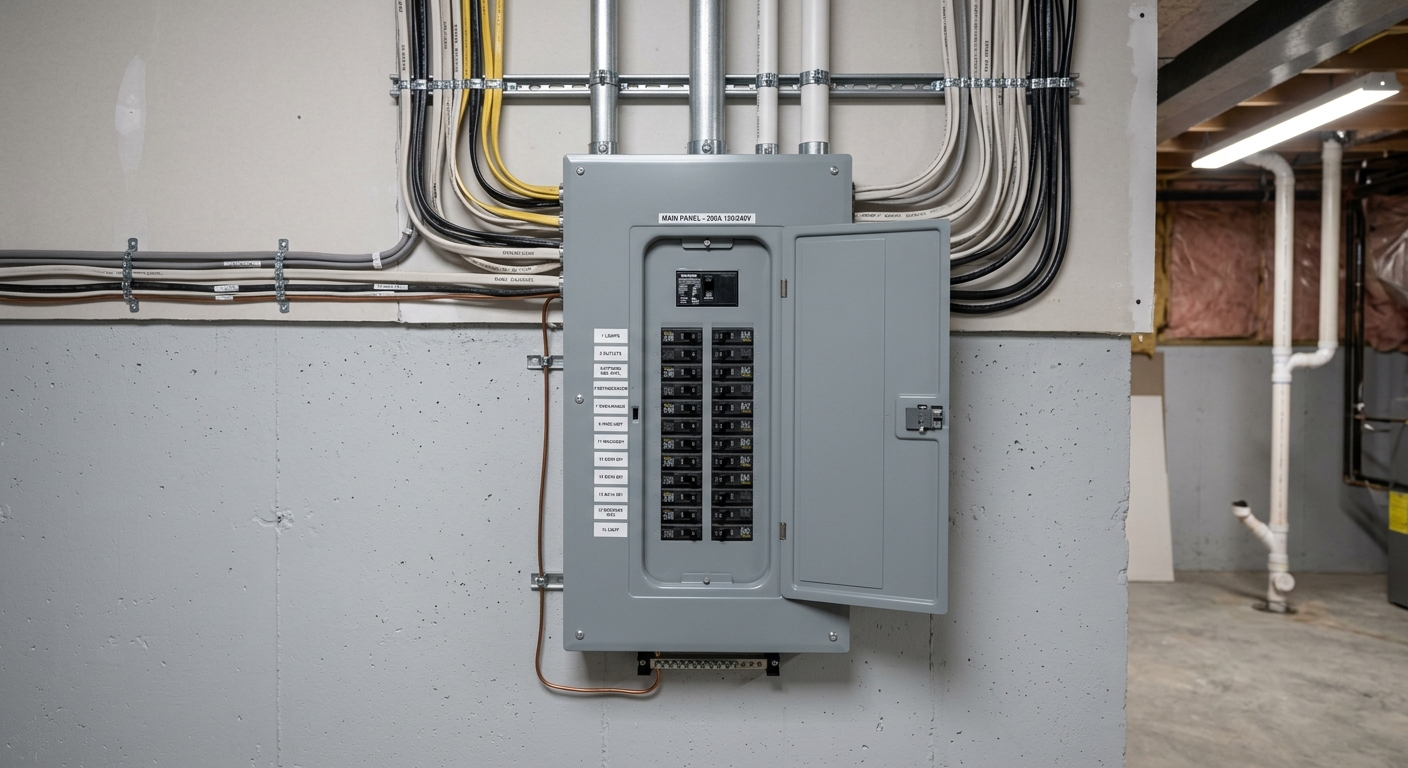
Kitimat homeowners often feel electrical pricing more acutely than other parts of B.C. because the local housing stock is older and service needs keep changing. In 2021, Kitimat had 8,236 residents and about 2,755 homeowner households, and many homes were built well before modern electrical demands—77.9% of dwellings were constructed before 1981. That matters because older wiring types (including knob-and-tube in some properties) and smaller 60A/100A services can’t comfortably support today’s loads like heat pumps, electric ranges, and EV charging. With colder, damp coastal conditions, you also tend to see higher use of electric heat sources and ventilation loads, which increases “real world” demand on panels and circuits.
Costs in the North Coast also reflect market realities: access to qualified labour can be tight, and service upgrades in particular often require coordinated work with meter equipment, grounding/earthing corrections, and permit-ready documentation—not just swapping a breaker. Properties around City Centre/Enbridge Way and along older residential pockets near the downtown core typically draw more service upgrade enquiries, because many homes have older panels and limited space to run updated cabling safely.
Below is a practical price range comparison for the work most commonly requested in Kitimat, and it will help you translate quotes into an apples-to-apples discussion when you call contractors for an estimate.
| Service |
Why It's Needed |
Permit Required |
Price Range |
| Panel upgrade — 100A to 200A service |
Supports modern loads (EV, heat pump, induction/electric cooking) and improves capacity margin. |
Yes (service upgrade and panel change) |
$3,500–$6,000 |
| EV charger installation (Level 2, 40–50A) |
Adds dedicated circuit capacity and safer protected wiring for daily charging. |
Yes (new circuit and equipment install) |
$1,500–$3,000 |
| Knob-and-tube wiring removal and replacement |
Addresses insulation condition and contact risks; replaces with modern insulated cabling and proper termination. |
Yes (rewiring/major corrective work) |
$12,000–$18,000 |
| Aluminum wiring remediation (CO/ALR connectors) |
Improves connection integrity where AL wiring is present to reduce overheating risk at terminations. |
Yes (corrective work on wiring connections) |
$3,000–$7,500 |
| New dedicated circuit (HVAC, appliance, hot tub) |
Reduces nuisance breaker trips and gives equipment its own properly protected wiring path. |
Yes (new circuits) |
$1,200–$4,000 |
| Whole-home rewire (older home, full replacement) |
When multiple wiring types and widespread failing/obsolete components exist, full replacement becomes the safest path. |
Yes (rewiring) |
$14,000–$20,000 |
Prices are estimates only and vary by project scope, site access and material selection.
What affects the price of electrical work in Kitimat
In Kitimat and across the North Coast, two quotes for the “same” electrical task can differ by 30–50% because the hidden scope is often different. A service upgrade may look like “swap a panel,” but once an electrician investigates wiring condition, grounding/earthing, conductor sizing, and available space, the work either stays straightforward or expands into corrective upgrades. That same dynamic plays out with re-wires: replacing a couple of circuits isn’t the same as removing dated wiring types throughout the home.
The dominant cost driver is housing age. In many Kitimat neighbourhoods, older homes were built before modern load profiles, and 77.9% of dwellings predate 1981. Homes from the 1960s–70s frequently have smaller panels like 60A or 100A, which may not leave enough capacity for today’s combined loads (EV charger, heat pump, and electric stove). Aluminum wiring is also more common in that era, and it needs licensed remediation using approved CO/ALR connectors or full replacement—correcting it safely takes time, testing, and proper parts. In parallel, EV adoption is increasing the number of Level 2 installations, and in many cases a panel/service review and load calculation are included, not optional extras.
Local conditions can raise or lower costs quickly. For example: if your panel is in a tight stairwell or the service mast entry is difficult, labour time increases. If your existing wiring is accessible and the grounding is already compliant, the panel upgrade can stay closer to typical band pricing (for instance, about $2,500–$6,000 for many service/panel upgrades). If you’re also dealing with knob-and-tube sections, the job can move into full rewiring ranges (often $8,000–$18,000 depending on extent). Coastal weather and frequent moisture exposure can also make routing and termination more meticulous, especially for exterior conduits and connections.
| Price Factor |
Why It Matters |
Cost Impact |
| Panel size upgrade — 100A to 200A is the standard minimum today |
Ensures enough capacity for modern appliances and charging loads. |
$1,500–$3,000 higher than smaller-only fixes |
| Wiring type — copper vs. aluminum remediation vs. K&T removal |
Different wiring types require different corrective methods and time. |
Al remediation may add $3,000–$7,500; K&T often drives rewiring to $8,000–$18,000 |
| Number of new circuits — each adds material and labour time |
More circuits mean more cable, breakers, labour, and testing. |
Commonly $300–$1,000+ per circuit depending on run length and complexity |
| Permit + ESA/TSBC inspection fee — mandatory for all major work |
Major electrical work must be permitted and inspected. |
$200–$600+ typical all-in allowance |
| Labour rate for licensed electricians — journeyman rates in {region} |
Kitimat labour can price above metro benchmarks due to access and travel. |
Can shift total by 10–25% on labour-heavy jobs |
| EV charger amperage — 40A vs. 50A circuit affects cable and breaker cost |
Higher amperage can require larger cable and breaker specs. |
$100–$400 difference for equipment/cable sizing |
| Emergency or after-hours premium |
Scheduling changes and after-hours rates increase labour cost. |
+15–+40% versus standard scheduling |
| Load calculation required for service upgrade |
Verifies actual demand to size service/panel correctly and pass permitting requirements. |
$200–$500 typical when included |
Permits & regulations in British Columbia
In British Columbia, ALL electrical work beyond changing a light bulb must be carried out by a licensed electrician. That includes panel upgrades, adding new circuits, rewiring, and service changes for new loads—such as Level 2 EV charger installations and any work that affects your service equipment. Permits are required for major electrical work and permitted work must pass inspection by the provincial electrical safety authority under the B.C. system (Technical Safety BC). DIY electrical is prohibited for most work; homeowner exemptions are narrow and don’t cover typical tasks like running new wiring, connecting panels, or modifying a service.
For your Kitimat project, do this step-by-step when you’re verifying a contractor: (1) Ask for their licence number and verify it using the B.C. licence registry; (2) Request a certificate of insurance and confirm it includes liability coverage for electrical contracting; (3) Ask whether they carry the required workplace coverage (WSIB/WCB) if workers are involved, and verify the certificate details match the company name you’re hiring; (4) Confirm they will pull the permit, schedule inspection, and provide you the job documentation upon completion. A reputable electrician will answer these questions quickly, and they’ll usually include permit/inspection coordination in their written scope rather than treating it as an afterthought.
When your Kitimat home needs an electrical upgrade
In Kitimat, some electrical problems are safety-critical rather than cosmetic. Start with the obvious warning signs that your panel, wiring, or protection devices may no longer be doing the job. (1) Breakers that trip regularly: this usually points to overloaded circuits, aging breakers, or circuits that can’t handle modern loads—especially if you’ve added a heat pump, electric stove, or a shop area. (2) Knob-and-tube wiring: the concern isn’t just “it’s old”; it’s insulation condition and contact risks that can trigger insurance refusals and safety concerns, which is why many owners plan corrective work sooner rather than later. (3) 60A or 100A service: with today’s combined usage (EV charging, heat pumps, and kitchen loads), these services often reach capacity, and a 200A upgrade is the standard long-term solution for capacity and future-proofing. (4) Aluminum wiring (commonly seen in pre-1976 construction): it may not be immediately dangerous if maintained, but it requires licensed remediation because connection issues are where problems tend to develop. (5) Insufficient outlets or “extension cord everywhere”: this is often a symptom of poor circuit planning, and it can create overheating and protection gaps.
Code-compliance issues like missing AFCI/GFCI protection (where required) can surface during home sale and are worth addressing during planned upgrades. If you’re getting repeated breaker trips, you should act immediately; if you suspect knob-and-tube or have known aluminum issues, plan remediation quickly. As a dollar example: a targeted panel upgrade and load-based service review can land around $2,500–$6,000, while whole-home rewiring after extensive dated wiring is found can move to $8,000–$18,000 depending on scope—so early investigation often prevents you from “discovering” the big job after you’ve already paid for partial fixes.
| Warning Sign |
What It Means |
Recommended Action |
Urgency |
Price Band |
| Breakers trip frequently |
Possible overload, undersized wiring for the load, or breaker/panel issues. |
Inspection, circuit tracing, and load review; add dedicated circuits if needed. |
Immediate action |
$1,200–$6,000 |
| Knob-and-tube wiring present |
Older wiring type with insulation/contact concerns and elevated risk over time. |
Licensed removal/replacement plan; prioritize highest-use circuits first. |
High priority |
$12,000–$18,000 |
| 60A or 100A panel (inadequate load capacity) |
May not support modern combined loads safely. |
Load calculation and panel/service upgrade to 200A where appropriate. |
High priority |
$2,500–$6,000 |
| Aluminum wiring (pre-1976 construction) |
Connection integrity may degrade; requires approved remediation. |
CO/ALR connector installation/targeted replacement plus testing. |
Planned upgrade (soon) |
$3,000–$7,500 |
| Insufficient outlets — extension cords everywhere |
Too few receptacles or overloaded circuits; safety risk and nuisance tripping. |
Add receptacle circuits and spacing; consider dedicated circuits for heavy loads. |
Planned upgrade |
$1,200–$4,000 |
| No AFCI or GFCI protection where required |
Increased risk of arc-fault and shock hazards; may affect sale compliance. |
Upgrade protection devices and correct circuit requirements per code. |
Planned upgrade |
$200–$800 |
How to choose a electrical work contractor in Kitimat
Start by verifying the contractor’s B.C. licensing and coverage. Ask for their licence number and confirm it on the B.C. electrical licensing registry. Then request a certificate of liability insurance—ensure the certificate matches the legal business name—and ask about workplace coverage (WSIB/WCB) if they use workers. In Kitimat, where travel and access can influence scheduling, a contractor with proper coverage is typically also the one who can handle permit-ready timelines without last-minute delays.
Next, get 2–3 itemised written quotes. You want a breakdown that separates labour versus materials, and it should clearly list what’s included: panel parts, breakers, cabling, grounding/earthing corrections, permits, and disposal of removed materials (if applicable). Confirm whether the permit is pulled by the electrician and whether inspection scheduling is included. Scope clarity matters—excluded work is a common reason quotes drift after the job begins.
Warranty is another deciding factor. Ask for the workmanship warranty length (how long after completion) and whether manufacturer warranties apply to parts like EV chargers, breakers, and panels. Also confirm if those warranties are transferable if you sell the home. Payment schedules should protect you: never pay more than about 10–15% upfront, and use a holdback until the job is complete and inspected. Finally, get a written start date and completion estimate.
- Licence number confirmed in B.C. before you book the work
- Certificate of liability insurance provided
- WSIB/WCB coverage verified if workers are used
- Itemised quote (labour, parts, permits, testing/inspection)
- Explicit “permit included” line item and responsibility for inspection
- Written scope: what’s included/excluded (grounding, cable runs, drywall patching)
- Clear disposal plan for removed breakers/wiring (if applicable)
- Workmanship warranty in writing (not just verbal)
- Manufacturer warranty details and registration process (EV chargers/panels)
- Payment schedule: small deposit, remainder after completion/inspection
- Start date and completion estimate in writing
- Willingness to do a load calculation when upgrading service/panel capacity
Red flags I see in Kitimat contractor searches: they won’t provide licence/insurance paperwork up front, they quote a “one-price” lump sum without explaining allowance for permit and corrective work, they suggest doing permitted service/panel changes without pulling a permit, they ask for most of the money before any work starts, or their scope omits key items like load calculations and grounding corrections.
Frequently asked questions — electrical work in Kitimat
What is the cost of rewiring a house in Kitimat?
In Kitimat, rewiring cost depends heavily on how much of the wiring system must be replaced (and whether it’s isolated sections or a full whole-home rewire). For homes with older wiring types, pricing commonly lands in the $8,000–$18,000 band, while whole-home rewire scenarios tend to be closer to the upper end when access is difficult or when you uncover widespread obsolete wiring. Kitimat’s older housing stock is a real factor—77.9% of dwellings were built before 1981 (Statistics Canada, 2021 Census)—so many projects include extensive corrective work, not just “new cables.” Expect the electrician to include testing, termination replacement, and permit/inspection coordination. If you can, ask for an initial inspection/quote that identifies the wiring types before you commit to a full rewire.
What electrical upgrades are required when selling a home in British Columbia?
When you sell a home in British Columbia, electrical “requirements” are typically addressed through disclosure obligations and, in some cases, through inspection findings—especially if the home’s wiring is unsafe or doesn’t meet minimum electrical safety expectations. Many sellers in Kitimat address common risk areas proactively: missing protection (AFCI/GFCI where required), outdated wiring types (including knob-and-tube), and panels/services that can’t safely support modern loads. Because the permits/inspection system is provincially governed under Technical Safety BC, the most straightforward path is to correct deficiencies with licensed work and keep documentation. If your home has a service or panel upgrade need, budgets often start around $2,500–$6,000 for service/panel upgrades, depending on your existing equipment and grounding condition. A licensed electrician can help you identify what’s likely to come up during a sale-focused review.
What is a load calculation and why does my electrician need one?
A load calculation estimates the electrical demand your home will place on the service and panel at the same time, based on your actual appliances, heating/heat pump loads, lighting, and any added equipment. In Kitimat, where older panels may be undersized for today’s combined loads, a load calculation supports correct sizing and helps your contractor choose the right service capacity (often moving toward 200A when required). It also supports a cleaner permitting/inspection process because the electrician can justify the equipment upgrade with documented results. This is especially relevant if you’re adding an EV charger and a new circuit, since EV charging can change peak demand. The cost of including a load calculation in the quote is often a few hundred dollars, and it can prevent you from paying for an upgrade that still doesn’t have the capacity margin you need.
How do I find a licensed electrician in Kitimat?
To find a licensed electrician in Kitimat, start by asking potential contractors for their B.C. electrical licence details and then verify the licence status using the B.C. licensing registry. Next, request a certificate of liability insurance and confirm it matches the company’s legal name, not just a personal document. If the contractor uses workers, ask for WSIB/WCB coverage documentation and verify it matches the business. When you contact them, tell them what you need—panel upgrade, aluminum remediation, EV charger circuit, or rewiring—and ask for an itemised quote and whether they will pull the permit and coordinate Technical Safety BC inspection. Finally, confirm their warranty terms in writing. A professional contractor won’t mind verification steps; in fact, they should welcome them, because it’s part of doing permitted work correctly in British Columbia.
Can I add a subpanel to my Kitimat home?
Often, yes—but it must be designed and installed as permitted work by a licensed electrician in British Columbia. A subpanel can improve convenience and safety by reducing overcrowded circuits and allowing dedicated breakers for equipment like HVAC, workshops, or EV charger circuits. However, whether it’s straightforward depends on your existing service capacity (for many older Kitimat homes, panels may be 60A or 100A), available space, wiring condition, and grounding requirements. If your service is undersized, adding a subpanel alone may not solve capacity issues; you might still need a service/panel upgrade, commonly budgeting around $2,500–$6,000 for many service/panel upgrade projects. Ask your electrician to include a load calculation and confirm permit/inspection steps before you commit.
How much does an electrician cost in Kitimat?
Electrician pricing in Kitimat varies by scope, travel/access, and how much corrective work is required. For small add-ons like a new dedicated circuit, many homeowners see budgets around $1,200–$4,000, while service/panel upgrade projects commonly fall into the $2,500–$6,000 band depending on panel size, grounding/earthing corrections, and meter/service complexity. EV charger installations in the North Coast frequently land around $1,500–$3,000 for Level 2 (40–50A) setups, especially when a dedicated circuit and permit process are included. For larger rewiring jobs, pricing commonly moves into the $8,000–$18,000 band and can go higher if you encounter extensive dated wiring types. The best way to get an accurate number is an itemised quote that shows labour, materials, permits, and inspection/testing allowances.