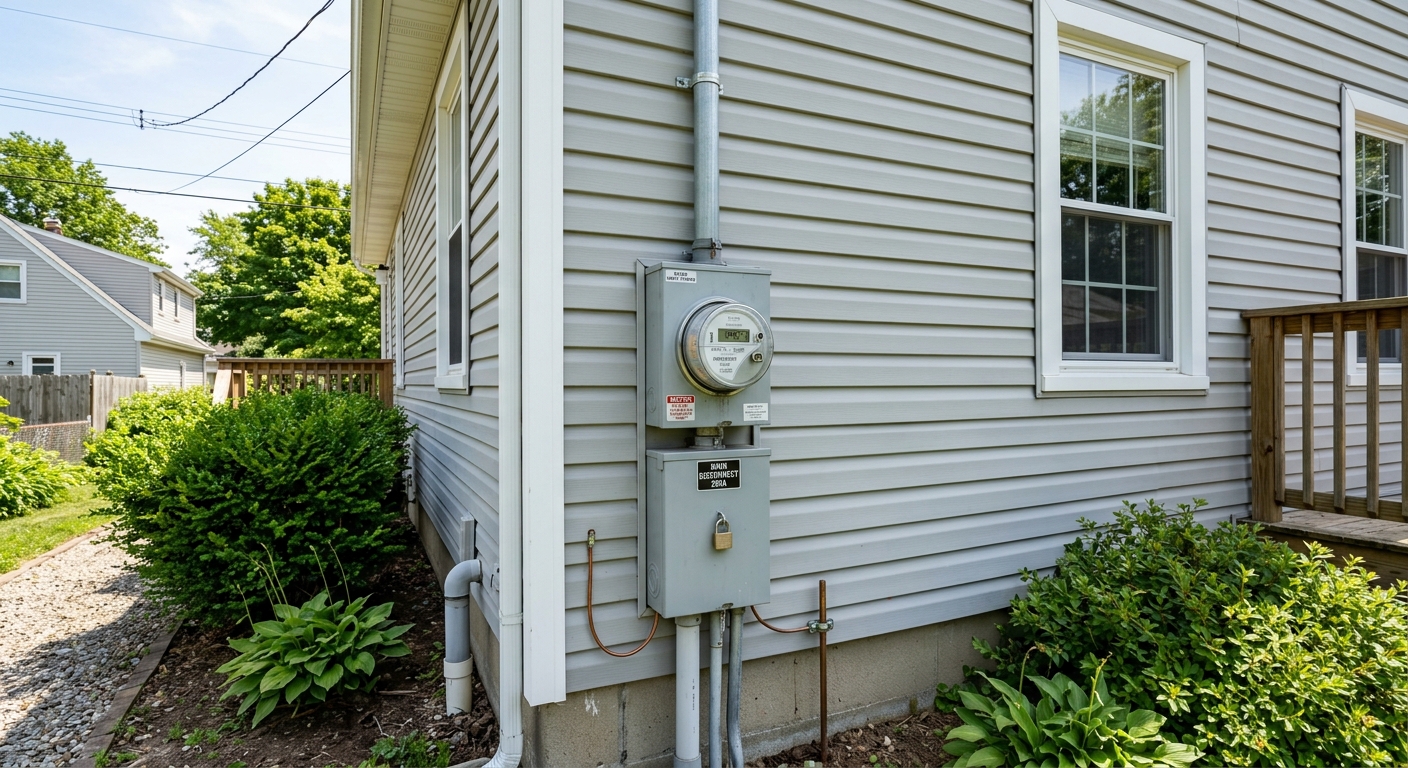
Electrical services and costs in Lions Bay
Lions Bay homeowners often face the same underlying electrical reality: homes here are older, and today’s appliance and vehicle loads simply don’t match the original wiring capacity. With 65.3% of homes built before 1981, many properties are good candidates for panel upgrades, removal of knob-and-tube, and aluminum remediation where applicable. In a community with 445 homeowner households (88.1% owner-occupied), electrical upgrades are frequently planned around resale timelines, renovation budgets, and long-term comfort needs.
In the Lower Mainland–Southwest, pricing is shaped by a mix of tight access in established neighbourhoods and strong labour demand across the region. When crews are scheduling work between Vancouver, Burnaby, Richmond, and the North Shore corridor, electricians may have longer lead times, and that can affect overall job cost. Climate also plays a role: many homes rely heavily on electric baseboard or electric furnace heat, which increases continuous load and pushes panels harder—especially in winter when demand is steady rather than occasional.
Another driver is EV adoption. Level 2 chargers commonly require 40–50A circuits, and in older homes that often triggers a service capacity review. If your existing service is in the 60A–100A range, the path to a safe install usually leads to a 100A to 200A service change. In Lions Bay, this trade demand is especially noticeable around the Bayview / Lions Bay shoreline area, where older housing stock and seasonal occupancy can mean more visible electrical bottlenecks.
Below is a realistic cost comparison to help you align expectations before you request itemised quotes.
| Service |
Why It's Needed |
Permit Required |
Price Range |
| Panel upgrade — 100A to 200A service |
Modern load capacity for electric heat, cooking, EV charging and safer fault protection |
Yes (service change) |
$1,800–$4,500 |
| EV charger installation (Level 2, 40–50A) |
Adds a dedicated, code-compliant circuit and breaker sized for EV charging demands |
Yes (new circuit and charger connection) |
$900–$2,500 |
| Knob-and-tube wiring removal and replacement |
Older wiring method fails modern insulation and safety expectations; insurance and compliance risk |
Yes (rewiring/major replacement) |
$8,000–$20,000 |
| Aluminum wiring remediation (CO/ALR connectors) |
Improves terminations and connections using approved connector methods to reduce overheating risk |
Often (as wiring alterations are made) |
$8,000–$20,000 |
| New dedicated circuit (HVAC, appliance, hot tub) |
Prevents nuisance trips and supports high-draw equipment with proper cable and breaker protection |
Yes (new branch circuit) |
$900–$3,000 |
| Whole-home rewire (older home, full replacement) |
Restores safe, consistent wiring across the home for modern code and reliable performance |
Yes (full rewiring) |
$8,000–$20,000 |
Prices are estimates only and vary by project scope, site access and material selection.
What affects the price of electrical work in Lions Bay
Even when you ask for the same electrical service, quotes across the Lower Mainland–Southwest and the broader province can differ by 30–50%. The biggest reason is scope and required upgrades that become apparent only after an electrician assesses your existing panel, wiring method and calculated load. On top of that, permitting, inspection scheduling, material availability and the electrician’s experience with older service equipment all influence labour time and total cost.
In Lions Bay, the dominant cost driver is housing age. With 65.3% of homes built before 1981, you’re more likely to encounter knob-and-tube wiring or older 60A/100A panels that can’t handle today’s continuous loads. For example, electric baseboard or electric furnace heating adds steady demand in winter, and EV chargers add a significant new circuit load. Homes from the 1960s to 1970s may also have aluminum wiring; remediation with approved CO/ALR connectors or full replacement is typically required by licensed work standards to reduce the risk of overheating at terminations. These projects often land in the broader $8,000–$20,000 range for wiring-heavy scopes, while panel/service work is commonly $1,800–$4,500 depending on service size and access.
Concrete Lions Bay examples that shift price up or down include: (1) whether the electrician must reroute wiring through finished walls (higher labour); (2) whether your existing panel location allows safe breaker and grounding/bonding upgrades without major drywall opening; and (3) whether BC Hydro scheduling and utility coordination is needed when a service/mast update is part of the plan. If your electrician can reuse existing conduit runs and keep access simple, costs may stay closer to the low end of the applicable band; if they uncover undersized feeders or mixed wiring methods, allowances and time increase.
| Price Factor |
Why It Matters |
Cost Impact |
| Panel size upgrade — 100A to 200A is the standard minimum today |
Ensures enough capacity for heat, cooking, and EV charging while meeting code fault protection needs |
$1,800–$4,500 |
| Wiring type — copper vs. aluminum remediation vs. K&T removal |
Aluminum and knob-and-tube require licensed, approved corrective methods; full removal increases labour |
$8,000–$20,000 |
| Number of new circuits — each adds material and labour time |
More circuits means more cable, breakers, routing time, and commissioning/testing |
Commonly adds $900–$3,000 per major new circuit |
| Permit + ESA/TSBC inspection fee — mandatory for all major work |
Major work requires permitted inspection stages; costs are additive and non-optional |
Typically increases project totals by a measurable fixed amount within the bands |
| Labour rate for licensed electricians — journeyman rates in Lower Mainland–Southwest |
Local labour demand, travel time and scheduling affect hourly cost |
Can shift totals by tens of percent on labour-heavy scopes |
| EV charger amperage — 40A vs. 50A circuit affects cable and breaker cost |
Higher amperage may require larger cable/breaker and deeper load planning |
$900–$2,500 (charger + circuit dependent) |
| Emergency or after-hours premium |
Urgency can require expedited scheduling and higher call-out rates |
Often adds a noticeable surcharge beyond standard pricing bands |
| Load calculation required for service upgrade |
Determines correct service size and breaker configuration; protects against undersizing |
May add time before rough-in, but prevents costly rework |
Permits & regulations in British Columbia
In British Columbia, any electrical work beyond changing a light bulb must be done by a licensed electrician, and most projects require permits. If you’re upgrading a panel or making a service change (for example, moving from 100A to 200A), installing a new breaker/circuit, rewiring sections of the home, or adding an EV charger circuit, you should expect a permit and an inspection. In BC, the safety authority administered through Technical Safety BC handles the inspection process for permitted work. DIY electrical is limited—homeowners typically can’t perform the kind of work that alters fixed wiring, panels, or connections that affect safety and compliance.
What typically requires a permit in Lions Bay includes: panel/service upgrades, new branch circuits (including outlets dedicated to hot tubs and HVAC), EV charger installations, knob-and-tube or aluminum remediation that alters wiring/terminations, and whole-home or major rewiring. What often does not require a permit is minor fixture swapping like replacing a lamp, changing a smoke alarm if it’s a plug-in model or direct replacement per manufacturer instructions, or adding a smart bulb—provided no fixed wiring is altered and you stay within the allowed scope.
To verify a contractor, start with the electrician’s licence using the provincial online registry associated with Technical Safety BC, then request a certificate of insurance (liability) showing the work is covered at your address or job name. Ask whether they provide proof of coverage through the appropriate workplace coverage arrangement (commonly referred to as WCB in BC) and keep a copy. Finally, confirm that the scope will be permitted and inspected before work begins; a legitimate contractor will schedule inspections and provide the documentation needed for insurance and resale.
When your Lions Bay home needs an electrical upgrade
Electrical upgrades in Lions Bay are often safety-critical rather than purely convenience. Here are the most common warning signs that should get your attention. First, breakers that trip frequently—especially when running heat, kitchen appliances, or a charger—can indicate an overloaded panel, undersized circuits, or a failing breaker or connection. Second, knob-and-tube wiring presence is a major concern: insulation deterioration and unsafe contact risks are the issue, not just “old wiring.” In many cases, this also affects insurance and can complicate resale.
Third, a 60A or 100A service is often inadequate for modern loads in homes that use electric heat. Pair that with EV charging and today’s cooking loads, and you can see persistent stress on the system. In practice, a 200A upgrade is usually the standard solution to provide safe capacity and room for future upgrades. Fourth, aluminum wiring (commonly in pre-1976 construction) isn’t automatically an emergency, but it does require licensed remediation—typically approved connectors or rewiring—because overheating risk is tied to connection conditions. Fifth, insufficient outlets and reliance on extension cords is a practical hazard and a code-compliance red flag that often leads to new circuit additions. Sixth, missing AFCI/GFCI protection where required can surface during home sale or insurance reviews.
Which signs need immediate action? Frequent tripping that coincides with heat, burning smells, crackling sounds, or visibly loose wiring should be treated as urgent. Knob-and-tube and aluminum typically warrant planned upgrades, but not “put off indefinitely” decisions—especially with winter electric heat loading in the Lower Mainland–Southwest. As a dollar example: a dedicated circuit may be a more modest step (often $900–$3,000) if your panel has capacity, but if your load calculation shows you’re near limits, a panel/service upgrade ($1,800–$4,500) can be the difference between a safe long-term fix and ongoing nuisance issues.
| Warning Sign |
What It Means |
Recommended Action |
Urgency |
Price Band |
| Breakers trip frequently |
Possible overload, undersized circuit, or failing breaker/connection |
Request an inspection and load check; consider circuit balancing or new dedicated circuits |
Immediate (if frequent or smells/heat present) |
$900–$4,500 |
| Knob-and-tube wiring present |
Safety and insurance/compliance risk due to aged insulation methods |
Plan K&T removal and replacement of affected circuits; consider whole-home scope |
Planned upgrade (schedule promptly) |
$8,000–$20,000 |
| 60A or 100A panel (inadequate load capacity) |
Panel likely undersized for EV charging + electric heat + modern appliances |
Load calculation, then upgrade to 200A service if required |
Planned upgrade |
$1,800–$4,500 |
| Aluminum wiring (pre-1976 construction) |
Connection heating risk if terminations weren’t remediated correctly |
Licensed CO/ALR connector remediation or rewiring of problematic runs |
Planned upgrade (don’t ignore) |
$8,000–$20,000 |
| Insufficient outlets — extension cords everywhere |
Overuse of temporary power and tripping risk |
Add new outlets/circuits for high-use areas; tidy loads properly |
Planned upgrade |
$900–$3,000 |
| No AFCI or GFCI protection where required |
Higher shock and fire risk; can cause issues at sale/inspection |
Upgrade protection devices and correct wiring/locations |
Planned upgrade |
$200–$4,500 |
How to choose a electrical work contractor in Lions Bay
Choosing the right contractor matters because older Lions Bay homes often require more than “swap the breaker and move on.” First, verify British Columbia licensing: ask for the electrician’s licence number and confirm it through the provincial registry tied to the electrical safety system (Technical Safety BC). Next, request proof of liability insurance (certificate of insurance) and confirm the policy is active and covers the type of electrical work being performed at your address.
For workplace coverage, ask how they handle coverage through the WCB/coverage arrangements used in BC for their crew. The contractor should be able to provide documentation or confirmation appropriate to your job; if they can’t, that’s a warning sign. Then, get two or three itemised written quotes that separate labour and materials (including breakers, cable, connectors, and any panel accessories), and clearly state what’s excluded.
Read the scope line-by-line: is the permit pull included, are inspections included, and is disposal/drywall allowance part of the quote? Confirm warranty terms for workmanship—how long it is, and whether it’s transferable to future owners if you’re selling. Product/manufacturer warranties should be explained (what parts are covered and for how long). For payment scheduling, avoid paying more than about 10% to 15% upfront; hold back the remainder until the work is complete and verified. Finally, insist on a start date and completion estimate in writing, including inspection scheduling time when a service upgrade or wiring replacement is involved.
- Licence number provided and verifiable online before any work starts
- Certificate of liability insurance for your Lions Bay address
- Written quote with labour vs. materials separated
- Permit pull responsibility stated (and included if the job needs it)
- Inspection handling and timelines explained
- Scope includes any required panel accessories, grounding/bonding changes, and label updates
- Clarify wiring method outcomes (e.g., K&T removal vs. partial remediation)
- Waste disposal and patching expectations specified
- Workmanship warranty length and what it covers
- Confirm product warranty and whether it’s registered or documented for you
- Payment schedule with limited upfront deposit and holdback until completion
- Start/completion dates and an estimate for inspections/BC Hydro coordination if relevant
Red flags in Lions Bay include: quotes that refuse to break down labour and materials, vague statements like “permit included” without detailing inspection steps, requests for large upfront payments, contractors who can’t show licence/insurance documentation, and promises to bypass permits for wiring or panel changes. If you hear any of that, treat it as a stop sign and ask for a revised quote.
Frequently asked questions — electrical work in Lions Bay
What are signs of an overloaded electrical panel?
In Lions Bay and across the Lower Mainland–Southwest, an overloaded panel often shows up as breakers that trip when multiple big loads run together—think electric heat plus cooking, hair dryers, laundry, or an EV charger. Other signs include lights dimming noticeably when large appliances start, persistent nuisance trips on “unrelated” circuits, scorch marks around breakers, or warmth you can feel around the panel cover. Older homes may also show multi-tap or improvised solutions that suggest capacity was handled informally rather than by proper load calculations.
Because Lions Bay has a large share of homes built before 1981, it’s common to find wiring and panel configurations that can’t keep up with today’s usage patterns. A licensed electrician can do a load calculation and, if needed, recommend a service upgrade typically in the $1,800–$4,500 band for a 100A to 200A change. The key is to fix the cause—not just reset breakers repeatedly.
Can I do my own electrical work in British Columbia?
In British Columbia, DIY electrical work is generally not allowed for tasks that involve fixed wiring, panels, or circuits that affect safety. While some very minor activities can be acceptable (like replacing a plug-in fixture or changing a bulb—without touching wiring), homeowners should assume that anything involving new wiring, breaker changes, panel work, service upgrades, or EV charger connections requires a licensed electrician and a permit.
For Lions Bay homeowners, this matters because many properties have older wiring methods and service equipment. Any work related to knob-and-tube removal, aluminum remediation, new circuits, or a panel/service upgrade needs permitted, inspected work to meet BC requirements. An electrician will also provide documentation that helps with insurance and resale.
If you’re unsure whether your task counts as “beyond a light bulb,” ask the contractor to confirm permitting and inspection requirements before work starts. That’s the safest approach in BC, and it prevents complications later.
How long does a rewiring job take?
Rewiring time depends heavily on whether you’re doing a whole-home rewire or targeted circuit replacement, and how much access the electrician has (finished walls, insulation, and attic/basement routing can add days). In Lions Bay, where many homes are older (with 65.3% built before 1981), electricians often find mixed wiring methods and older box conditions that require careful routing and testing.
A partial rewiring (for example, removing knob-and-tube from specific areas and replacing only those circuits) can take significantly less time than a full home replacement. Whole-home rewires are typically planned as multi-day or multi-week projects depending on the number of circuits, drywall/plaster access, and how quickly inspections can be scheduled.
To keep expectations realistic, request a written timeline that includes rough-in, inspection, and final commissioning/testing. As a budgeting benchmark, wiring-heavy scopes commonly fall into the broader $8,000–$20,000 band, which usually correlates with more labour hours and therefore more time on-site.
Why do my breakers keep tripping?
Breakers that keep tripping usually come down to one of three categories: overload, a faulty breaker, or a connection/cabling issue. In Lions Bay, overload is common when electric heat is running and additional high-draw devices are used together—especially if your home has older service capacity (for example, 60A or 100A systems) or older wiring that wasn’t designed around today’s load profile. Knob-and-tube or aluminum wiring can also contribute, particularly where terminations and connections have aged.
Another factor is circuit design. If outlets in one area are fed by a smaller branch circuit than expected, adding a new appliance or charger can push it over the edge. A proper diagnostic includes checking whether the trips happen on the same circuit, what the loads are at the time, and whether there are signs of overheating.
For many homes, the fix is a combination of redistribution plus adding dedicated circuits, and sometimes a service upgrade. If your loads exceed safe capacity, a panel/service change typically fits within the $1,800–$4,500 band for a 100A to 200A upgrade, rather than just resetting and hoping the problem disappears.
How do I compare electrical quotes?
Comparing quotes is easiest when they’re itemised and scoped the same way. Ask each contractor to list labour and materials separately (breakers, cable type, panel accessories, connectors like CO/ALR, and any charger components if applicable) and to explain exactly what wiring methods will be removed or remediated. If one quote is lump-sum and the other is detailed, the detailed one is usually easier to verify and less likely to surprise you during inspection.
Also confirm permitting and inspections are included where required. In BC, major work such as panel/service upgrades, new circuits, rewiring, and EV charger installations generally needs a permit and inspection. Make sure each quote includes permit pull responsibility and any coordination needed for utility scheduling when applicable.
For pricing anchors in Lions Bay: panel/service work is commonly $1,800–$4,500, and wiring-heavy projects often fall in $8,000–$20,000. EV charger installs often land in $900–$2,500 depending on the circuit and panel capacity. If a quote is dramatically below those ranges, ask what’s missing.
How long does a panel upgrade take in Lions Bay?
A panel upgrade timeline depends on the existing panel condition, access (finished walls, tight work area), and whether the work triggers additional service components such as feeder adjustments, grounding/bonding updates, and utility scheduling. In Lions Bay’s older housing stock, it’s common to spend time on verification—checking wiring condition, confirming load calculations, and planning safe breaker layout before power is interrupted.
For most straightforward 100A to 200A panel upgrades, expect a short on-site install period plus time for rough work, testing, and the required inspection steps. Inspections can affect the end date, since permitted work must be signed off before everything is considered complete for compliance and documentation.
To avoid timeline surprises, ask the contractor to provide a written schedule that includes: start date, estimated interruption window (if any), rough-in completion, inspection date targeting, and final energization/testing. If your panel upgrade is part of a bigger service change for EV charging capacity, the total project duration can extend because of utility coordination.