Electrical services and costs in Renfrew Heights
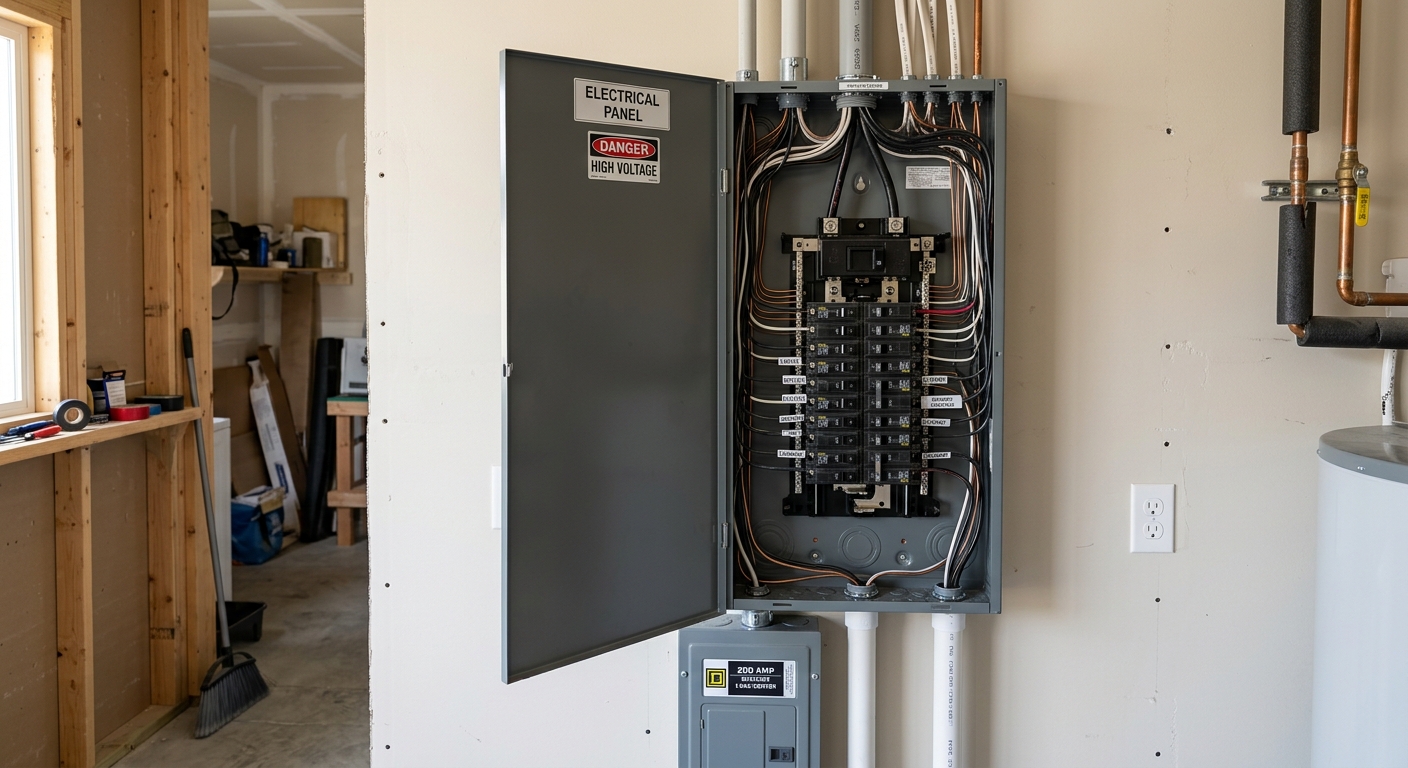
In Renfrew Heights, electrical upgrades are a common part of keeping older homes safe and future-ready. With a population of 20,570 (Statistics Canada, 2021 Census), the area has steady demand for electricians, especially around the older streets close to the Commercial Drive–Renfrew/Fraser corridor where access and service size matter. In the Lower Mainland–Southwest, many residences include pre‑1980 wiring and aging service equipment, so panel and wiring remediation work tends to show up more often than in newer subdivisions. That’s also why shoppers frequently see knob-and-tube and aluminum branch-circuit issues during inspections, and why “simple” repairs often expand into a service capacity plan.
Cost is also shaped by market pressure and the way load growth hits BC homes. Many households now run higher continuous loads (induction, electric ranges, ventilation, heat pumps, and EV charging), and the region’s widespread older housing stock often starts with 60–100A services. In practice, contractors frequently need to bring services up from 60–100A to modern 200A for fault-current compliance and to create room for 40–60A EV circuits. Meanwhile, British Columbia permitting and inspection requirements add mandatory scheduling steps, and Lower Mainland access constraints in tighter lots can raise labour time.
Below is a practical comparison of the most requested services you’ll encounter in Renfrew Heights, including where permits and inspections typically apply.
| Service |
Why It's Needed |
Permit Required |
Price Range |
| Panel upgrade — 100A to 200A service |
Creates safe capacity for modern loads (heat pumps, electric ranges, EV charging) and improves protection for fault-current and breaker coordination. |
Yes (service/panel work) |
$1,800 – $4,500 |
| EV charger installation (Level 2, 40–50A) |
Adds a dedicated, code-compliant circuit for faster charging; often triggers capacity checks or a panel/service upgrade. |
Yes (new circuit/charger, typically) |
$900 – $2,500 |
| Knob-and-tube wiring removal and replacement |
Addresses deteriorated insulation and outdated wiring methods that can affect safety and insurance coverage. |
Yes (rewiring/alterations) |
$8,000 – $20,000 |
| Aluminum wiring remediation (CO/ALR connectors) |
Improves terminations where aluminum branch-circuits are present, reducing overheating risk at devices and splices. |
Yes (cable/termination work) |
$8,000 – $20,000 |
| New dedicated circuit (HVAC, appliance, hot tub) |
Prevents nuisance tripping and supports higher inrush/continuous loads with proper breaker, cable sizing, and protection. |
Yes (new circuit) |
$900 – $2,500 |
| Whole-home rewire (older home, full replacement) |
Best choice when wiring is mixed/aged throughout and you want consistent grounding, modern protection (including required AFCI/GFCI), and safer distribution. |
Yes (full rewiring) |
$8,000 – $20,000 |
Prices are estimates only and vary by project scope, site access and material selection.
What affects the price of electrical work in Renfrew Heights
In Renfrew Heights and across the Lower Mainland–Southwest, two contractors can quote the “same” electrical job and still differ by 30–50%. The reason is usually scope interpretation (how much is being replaced versus repaired), site complexity (panel location, length of cable runs, ceiling/wall access), and how much load-carrying capacity work is triggered once the electrician does the proper safety and load evaluation. In the broader British Columbia market, labour availability and permitting/inspection scheduling also influence cost, particularly in busy urban corridors where access constraints slow down the work.
The dominant cost driver is the age and type of housing stock. Homes built before 1950 may contain knob-and-tube wiring, and insurance companies increasingly scrutinize these systems; replacement isn’t just “patching,” it often means re-routing and upgrading protections across multiple rooms. Homes from the 1960s–70s frequently have 60A or 100A service panels that are inadequate for today’s loads (EV chargers, heat pumps, induction stoves), so you may see service upgrades in the $1,800 – $4,500 band. If you’re dealing with aluminum branch wiring (common in homes built roughly 1965–1976), remediation with approved CO/ALR connectors or full replacement requires licensed workmanship and proper terminations—pushing many projects toward the $8,000 – $20,000 wiring/remediation band.
Two practical examples from local conditions: first, an EV install that seems like a straightforward charger can become a panel upgrade if your existing service can’t support a new 40–50A breaker load safely—where the extra capacity work can be justified quickly. Second, tight finished basements or popcorn ceilings near Renfrew/Fraser-area lots can add labour time, even when the same components are used. The net effect is that the “electrical part” of the quote is only part of the cost—access, permitting steps, and capacity planning drive the rest.
| Price Factor |
Why It Matters |
Cost Impact |
| Panel size upgrade — 100A to 200A is the standard minimum today |
Allows modern appliance loads and EV charging while meeting protection and fault-current requirements. |
$1,800 – $4,500 typical range |
| Wiring type — copper vs. aluminum remediation vs. K&T removal |
Aluminum and knob-and-tube require different approved methods, splicing/termination techniques, and often broader replacement. |
$8,000 – $20,000 common band for extensive work |
| Number of new circuits — each adds material and labour time |
Every added circuit increases cable, breakers, boxes, device changes, and testing/verification time. |
Often moves a job up one “tier” in cost |
| Permit + ESA/TSBC inspection fee — mandatory for all major work |
Inspections are required for panel, service, rewiring, and new circuits; scheduling affects labour planning. |
Adds a fixed baseline and timeline |
| Labour rate for licensed electricians — journeyman rates in region |
Labour complexity (finishes, access, rewiring paths) determines time on site more than parts alone. |
Big driver in final total (often 50%+ of cost) |
| EV charger amperage — 40A vs. 50A circuit affects cable and breaker cost |
Higher amperage can require heavier cable and different breaker/charger configuration. |
Shifts charger project toward upper end of $900 – $2,500 |
| Emergency or after-hours premium |
After-hours dispatch and priority scheduling can require additional crew or expedited timelines. |
Typically adds a noticeable surcharge |
| Load calculation required for service upgrade |
Proper load calculation and documentation influence what size service/panel is approved and installed. |
Can prevent under-sizing and costly rework |
Permits & regulations in British Columbia
In British Columbia, ALL electrical work beyond changing a light bulb must be done by a licensed electrician. Permits are required for panel upgrades, new circuits (including EV charger installations), rewiring, and service equipment changes. Once the electrician completes the permitted scope, the work must pass inspection by the electrical safety authority for the province—Technical Safety BC (or the local authority’s inspection process where applicable). DIY electrical is prohibited for most work; homeowner “exceptions” are narrow and don’t cover activities like altering a panel, adding circuits, or reconnecting service equipment.
What typically DOES require a permit in Renfrew Heights includes: replacing or upgrading a service/panel, adding or rerouting circuit wiring, installing GFCI/AFCI devices as part of code upgrades where circuits are changed, and any EV charger installation that involves new breaker/cable runs. What often DOES NOT require a permit includes: replacing a receptacle cover, swapping a lamp, or replacing a smoke/CO alarm if it’s a like-for-like device with no wiring changes.
To verify your contractor in BC, start with the online licence registry for their electrician(s) and company credentials, then ask for a Certificate of Insurance showing liability coverage. For workers, confirm they carry required workplace coverage (commonly WSBC coverage for employers). Also request a clearance letter where applicable, and keep those documents with your quote and permit paperwork so you have a clear audit trail for insurance and resale.
When your Renfrew Heights home needs an electrical upgrade
In Renfrew Heights, electrical upgrades are usually prompted by safety signals—especially in older homes where wiring methods and service capacity haven’t kept up with today’s load demands. (1) Breakers that trip regularly are often the first clue of an overloaded panel or undersized/aging circuits. (2) Knob-and-tube wiring is a high-priority concern: the main issue is the condition of insulation and connections, not just the age of the house, and insurance can refuse coverage if it remains in place. (3) If you have a 60A or 100A panel, it’s commonly inadequate once you add an EV charger and run modern heat and cooking loads; in the Lower Mainland—where homes often rely on electric baseboard or electric furnace systems plus other appliances—service upgrades are frequently the safer path. In many cases, a 200A upgrade becomes the standard solution rather than repeated breaker additions. (4) Aluminum wiring (often seen in pre-1976 construction) may not be “immediately” dangerous if well-maintained, but it requires licensed remediation and correct termination methods. (5) Insufficient outlets and constant extension cords aren’t just inconvenient; they can lead to overheating risks and code non-compliance. (6) Missing AFCI/GFCI protection (where required) becomes a compliance issue that tends to surface at home sale or during insurance underwriting.
Urgency guidance: if breakers trip, you smell burning, or you see heat/discolouration at outlets/breakers, treat it as urgent. Knob-and-tube and deteriorated wiring are also urgent from a safety and insurability standpoint. Aluminum remediation and service capacity planning are often “planned” upgrades, but they should be scheduled before you add EV charging or major new loads. For example, spending in the $1,800 – $4,500 range on a panel upgrade can be far more economical than installing an EV charger and then discovering you need additional capacity changes later.
| Warning Sign |
What It Means |
Recommended Action |
Urgency |
Price Band |
| Breakers trip frequently |
Often indicates overload, failing components, or circuit faults that can worsen quickly. |
Diagnostic test, load assessment, and targeted circuit/panel corrections. |
Immediate |
$900 – $2,500 to $1,800 – $4,500 |
| Knob-and-tube wiring present |
Outdated wiring method with deteriorated insulation risks and potential insurance issues. |
Remove and replace with modern wiring and required protective devices. |
Urgent (safety/insurability) |
$8,000 – $20,000 |
| 60A or 100A panel (inadequate load capacity) |
Can’t safely manage EV charging and modern appliance/heat loads at the same time. |
Load calculation and upgrade to 200A service/panel when needed. |
Planned (schedule before adding new loads) |
$1,800 – $4,500 |
| Aluminum wiring (pre-1976 construction) |
Terminations can overheat if not handled with approved remediation methods. |
Inspection and remediation with CO/ALR approved connectors or partial/full replacement. |
Planned (but don’t delay once adding EV loads) |
$8,000 – $20,000 |
| Insufficient outlets — extension cords everywhere |
Increases risk of overheating and can indicate incorrect circuit/device distribution. |
Add receptacles and (if necessary) create dedicated circuits for high-use areas. |
Planned / moderate |
$900 – $2,500 |
| No AFCI or GFCI protection where required |
Improper protection for arc-fault and shock hazards; can affect resale and insurance. |
Upgrade protection strategy per code (device-level or circuit-level solutions). |
Planned (schedule with rewiring or upgrades) |
$200 – $800 to $8,000 – $20,000 |
How to choose a electrical work contractor in Renfrew Heights
Start by confirming your contractor in British Columbia is properly licensed and insured. Ask for their BC licence number and company details, then verify the licence through the provincial online registry. Next, request a Certificate of Liability Insurance (and make sure the coverage is current for the project duration). For employment coverage, confirm their workplace coverage (commonly WSBC coverage for employers) and request documentation if they’re staffing the job. This matters because electrical work is permit-based and you don’t want gaps in coverage during inspections or accidents.
Get 2–3 itemised written quotes instead of lump sums. A good quote breaks labour and materials separately (panel/model, breakers, cable type, connectors for aluminum work, AFCI/GFCI protection, disposal fees). Read the scope carefully: does the quote include permit pull and inspection scheduling, and are disposal and drywall patching included (or excluded)? Also ask about any “allowances” for unforeseen conditions.
For warranty, demand two layers: a workmanship warranty (how long they stand behind labour) and the manufacturer warranty on the equipment. Ask if any warranty is transferable if you sell the home. On payment, keep deposits conservative—generally no more than 10–15% upfront—and use a holdback until the permit closeout and final testing are completed. Finally, confirm a realistic start date and completion estimate in writing, with timelines tied to inspection scheduling in the Lower Mainland–Southwest.
- Verify BC electrical licence and company registration before signing.
- Request Certificate of Liability Insurance and confirm project dates are covered.
- Confirm workplace coverage (WSBC) for the workers on site.
- Get itemised quotes (labour vs materials), not a single lump number.
- Ask whether permit pull is included and who schedules inspection(s).
- Confirm what’s excluded (drywall repair, ceiling access, disposal, reinstatement).
- For aluminum wiring, confirm approved CO/ALR connector approach is specified.
- For panel/service work, ask for load calculation and exact panel details.
- Make sure the quote includes testing/commissioning and documentation for inspection.
- Request a workmanship warranty term in writing.
- Keep deposits to 10–15% and hold back on completion of final tests/closeout.
- Obtain a written start/completion timeline, including inspection lead time.
Red flags in Renfrew Heights: a contractor unwilling to pull permits, quotes that omit cable/panel make/models, promises of “no inspection required,” refusal to provide insurance/licence details, and vague wording like “electrical work as needed” without specifying allowances.
Frequently asked questions — electrical work in Renfrew Heights
Why do my breakers keep tripping?
Breakers trip for a few common reasons in Renfrew Heights: an overloaded circuit (too many high-draw devices on one breaker), a failing breaker, or a wiring issue like a loose connection at a device or panel. In older Lower Mainland–Southwest homes, the issue is sometimes tied to aging wiring methods or undersized service capacity—especially if you’ve added loads like an EV charger or electric heating. Another frequent cause is a nuisance trip from incorrect breaker sizing or mixed circuit protection. A licensed electrician will usually start with testing (load and insulation checks), then verify breaker ratings and check terminations. If your service is dated (for example 60A/100A), repeated trips can be a sign the panel can’t handle modern demand safely, and a panel upgrade is often the most reliable fix.
How do I compare electrical quotes?
When comparing quotes in British Columbia for Renfrew Heights, insist on like-for-like scope. Ask each contractor to itemise labour and materials, list the exact panel/charger models, specify cable type and breaker amperage, and state whether permit pull and inspection scheduling are included. Confirm what disposal and reinstatement cover (for example, ceiling/wall access and any patching allowances). Price differences are often justified by access complexity, the extent of wiring changes, and whether a proper load calculation is included for a service upgrade. If one quote sits in the $1,800 – $4,500 range and another is much lower, the key question is whether the low quote is excluding required service capacity work or protective device upgrades. If the scope is unclear, the “cheapest” quote can become the costliest after change orders.
How long does a panel upgrade take in Renfrew Heights?
A panel upgrade time is typically measured in hours on site for the electrician work, but the full project timeline depends on inspections and scheduling under BC requirements. For a straightforward 100A to 200A service/panel upgrade, many jobs fit within a single day of electrical labour, assuming materials are on hand and access is ready. The bigger variable is site readiness: tight panel locations, long cable routes, difficult conduit runs, or a need to correct existing wiring before the inspector will pass the work. In the Lower Mainland–Southwest, inspection availability can add days, so it’s smart to plan around permit processing. If your upgrade is tied to other work—like EV charger planning or partial wiring remediation—expect coordination time. Your electrician should provide a written start date and an inspection-based completion estimate.
What is a GFCI outlet and where is it required in British Columbia?
A GFCI (Ground-Fault Circuit-Interrupter) outlet detects abnormal current paths that can indicate a shock hazard (for example, when current is leaking through a person to ground). In British Columbia homes, GFCI protection is required for specific locations where shock risk is higher—commonly in areas like kitchens for certain receptacles, bathrooms, garages, outdoors, and near sinks, depending on the circuit and installation. If your Renfrew Heights home has older wiring, you may find unprotected receptacles in wet or accessible areas, and adding GFCI devices is often part of a compliance update when circuits are altered. A licensed electrician can confirm which receptacles are required to be GFCI-protected based on the present wiring configuration and whether the existing circuit can be upgraded without major rewiring. Always verify requirements during the permit scope.
How do I know if my Renfrew Heights home has aluminum wiring?
The surest way is an electrician inspection, but you can often spot clues during a visual check. Aluminum branch wiring was common in mid-century construction, especially around the 1960s–70s. Look inside the panel and at receptacle boxes: aluminum conductors often look duller (not copper-coloured), and labels like “Al/Cu” can appear on some terminations. You may also see evidence of approved connectors or pigtails. However, conductors can be mixed, and paint, age, and workmanship differences make visual identification unreliable. A licensed electrician can confirm with proper testing and conductor markings, then determine whether the aluminum requires CO/ALR connector remediation or full replacement. If you’re planning a service upgrade (commonly in the $1,800 – $4,500 band), this is the time to identify and address aluminum concerns so you don’t re-open work later.
What is the cost of rewiring a house in Renfrew Heights?
The cost to rewire a house in Renfrew Heights depends heavily on the home’s size, access conditions (finished basements, plaster walls, tight chases), and whether you’re doing a full replacement or targeted section rewiring. In the Lower Mainland–Southwest market, whole-home rewire and major knob-and-tube or aluminum remediation commonly fall into the $8,000 – $20,000 band. If your project is smaller—like removing knob-and-tube from a limited area or addressing aluminum terminations only—the range can land closer to the lower side, but full replacement typically pushes toward the higher end. Permits and inspections are mandatory for the scope that involves rewiring/new circuits, so a quote should include permit pull, testing, and closeout documentation. For an accurate number, ask for an itemised quote and a written scope that states what rooms and circuits are included and how disposal and reinstatement are handled.