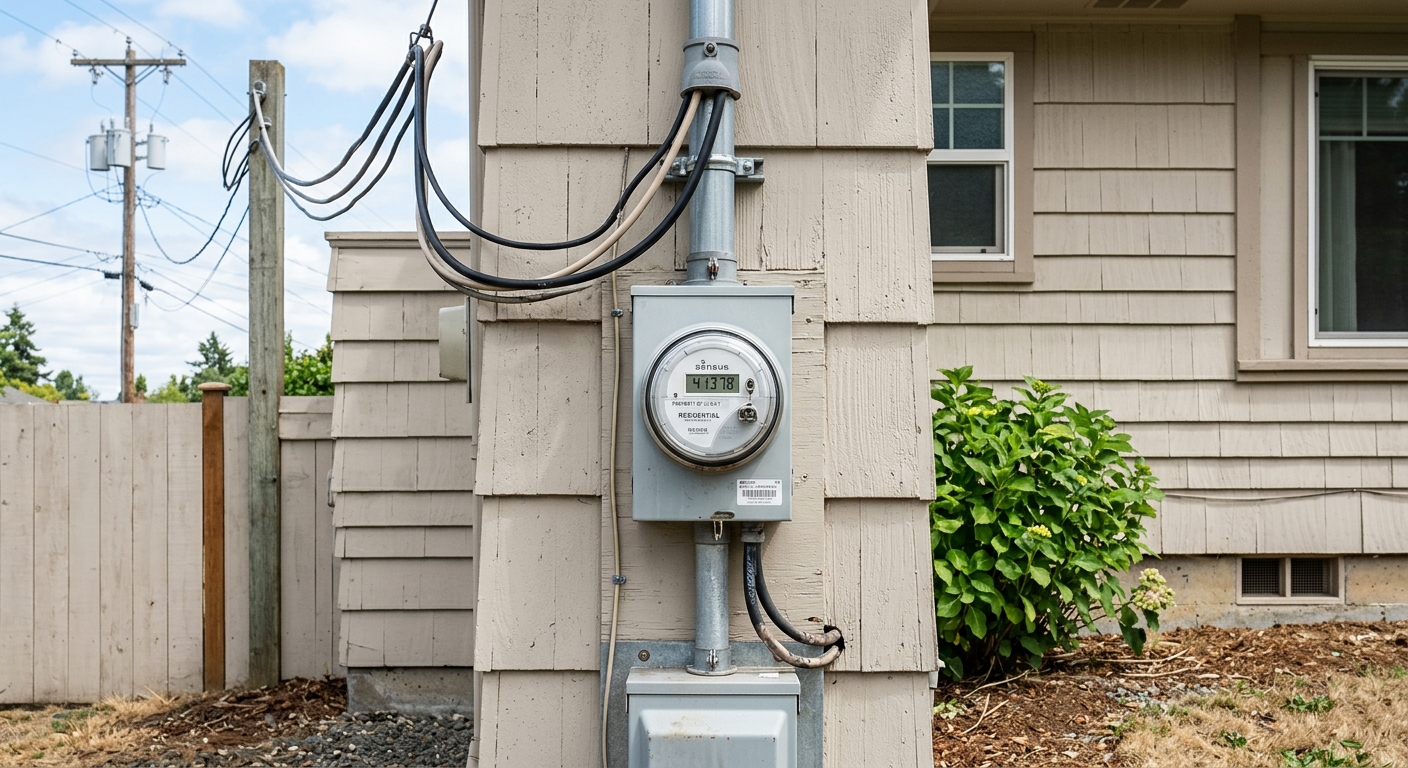
Electrical services and costs in Riley Park
Riley Park, British Columbia is home to a mix of older and mid-century houses, and that directly affects what electrical work owners need and what it costs. With a population of 22,555 (Statistics Canada, 2021 Census), the Lower Mainland–Southwest area has steady demand, especially in neighbourhood pockets with more pre-1980 character homes that often need capacity upgrades and older-wiring remediation. Many electrical projects here start with a practical problem: older service equipment and dated wiring methods struggle to keep up with today’s loads.
In the Lower Mainland–Southwest, costs are shaped by dense urban access constraints, higher permit/inspection throughput, and a high share of homes that were built with smaller electrical infrastructures. Lower Mainland homes commonly face service upgrades moving from 60–100A to modern 200A, and that is particularly relevant when adding EV charging or accommodating electric heat (electric baseboard or electric furnace) on top of everyday loads. You’ll often see knock-on effects in nearby streets around Killarney and the broader Riley Park area—contractors stay busy because many homes are in the same “upgrade window” and replacement of knob-and-tube and aluminum branch circuits is common.
Because of that, two quotes for the same “headline” job can differ a lot in labour hours, material choice, and how much new wiring is needed to complete the work safely to code. Use the table below as a baseline before you compare itemised proposals.
| Service |
Why It's Needed |
Permit Required |
Price Range |
| Panel upgrade — 100A to 200A service |
Modern loads (EV charging, heat pumps/electric heating, kitchen appliances) need more capacity and proper fault protection. |
Yes (service change) |
$1,800–$4,500 |
| EV charger installation (Level 2, 40–50A) |
Adds a dedicated circuit and protects the charger with the correct breaker/cable sizing and grounding. |
Yes (new circuit/charger connection) |
$900–$2,500 |
| Knob-and-tube wiring removal and replacement |
Obsolete wiring method replacement for safety, insurance acceptance, and reliable code-compliant circuiting. |
Yes (rewiring/removal) |
$8,000–$20,000 |
| Aluminum wiring remediation (CO/ALR connectors) |
Aluminum branch circuits require licensed remediation with approved connectors or replacement to reduce heat/corrosion risks. |
Yes (major wiring alteration/remediation) |
$2,500–$7,500 |
| New dedicated circuit (HVAC, appliance, hot tub) |
Adds proper circuit capacity and protection so the new equipment runs safely without nuisance trips. |
Yes (new circuit) |
$900–$2,800 |
| Whole-home rewire (older home, full replacement) |
Full replacement restores consistent breaker protection, correct cable methods, and modern safety requirements across the home. |
Yes (rewiring) |
$15,000–$30,000 |
Prices are estimates only and vary by project scope, site access and material selection.
What affects the price of electrical work in Riley Park
In the Lower Mainland–Southwest, you’ll sometimes see the same electrical project priced 30–50% apart across British Columbia, and the reason is usually not the “brand” of breaker—it’s the site realities and how much new wiring work the job uncovers. Labour availability, how tight the lot/access is, and whether the electrician must coordinate service work with BC Hydro all affect total labour hours. Permits and inspections also add cost, but they’re mandatory for major work under BC safety rules.
For Riley Park specifically, the dominant cost driver is the age and wiring method of the housing stock. Homes built before mid-century can include knob-and-tube sections that need removal and replacement rather than “patching,” especially once insurance and safety expectations rise. Homes from the 1960s–70s often have 60A or 100A panels that are inadequate for today’s simultaneous loads—EV charging, heat pump operation, induction stoves, and large kitchen circuits can push demand beyond what the original design comfortably supports. Aluminum wiring is also common from roughly 1965–1976; remediation requires approved CO/ALR connectors and careful licensed terminations, or full replacement when connectors aren’t sufficient. In the Lower Mainland–Southwest, EV adoption is driving a surge in Level 2 charger permit applications, and that often triggers either additional capacity work or panel upgrades, typically in the $1,800–$4,500 band when service change is necessary, versus charger circuit additions that may land in the $900–$2,500 band when the panel has room.
Local examples that raise cost in Riley Park: (1) harder-than-normal access to crawlspaces and attics during winter rain/freeze-thaw cycles, which can delay safe routing; (2) older buildings with mixed wiring methods (aluminum plus knob-and-tube) where the electrician must open walls/ceilings to reach correct splice/junction points. Costs can be lower when you already have spare breaker slots, clear cable paths, and a straightforward path from panel to the new circuit location.
| Price Factor |
Why It Matters |
Cost Impact |
| Panel size upgrade — 100A to 200A is the standard minimum today |
More capacity plus modern fault protection; may require reworking service equipment/meter base coordination. |
$1,800–$4,500 |
| Wiring type — copper vs. aluminum remediation vs. K&T removal |
Aluminum and knob-and-tube often require licensed remediation or full replacement, not simple add-ons. |
Can shift by $2,500–$20,000 depending on scope |
| Number of new circuits — each adds material and labour time |
Each circuit needs cable, protection, terminations, and testing/commissioning time. |
Typically $900–$2,800 per dedicated circuit |
| Permit + ESA/TSBC inspection fee — mandatory for all major work |
Major work requires permit staging and inspection; planning time is included in quotes. |
Often several hundred dollars to over $1,000 depending on stages |
| Labour rate for licensed electricians — journeyman rates in Lower Mainland–Southwest |
Experienced licensed crews cost more, but they also reduce rework risk and keep timelines realistic. |
Increases with complexity; commonly a $1,000–$3,500 swing |
| EV charger amperage — 40A vs. 50A circuit affects cable and breaker cost |
A 50A circuit typically requires heavier cable/breaker components and can influence panel upgrade decisions. |
Can add roughly $150–$600 in parts/labour |
| Emergency or after-hours premium |
Scheduling and rush labour can carry premiums for safe turnaround. |
Often adds $300–$1,000 |
| Load calculation required for service upgrade |
BC Code compliance uses an electrical load calculation to prove the service size is sufficient. |
Usually modest per-job cost but protects you from failed inspection and rework |
Permits & regulations in British Columbia
In British Columbia, ALL electrical work beyond changing a light bulb must be completed by a licensed electrician. Permits are required for work such as panel upgrades (including service equipment changes), new circuits, rewiring, and service upgrades. That includes EV charger installations when a new 40–50A circuit is involved. Permitted work must then pass inspection by the provincial electrical safety authority—Technical Safety BC. DIY electrical work is prohibited for most tasks, and homeowner “exceptions” are limited and typically don’t extend to service or new circuit work. From a homeowner perspective in Riley Park, the important point is this: even if you can physically connect wires, you generally can’t legally do the permitted work yourself.
What typically requires a permit in BC: breaker/circuit additions, panel or service changes (100A to 200A), adding or replacing wiring in a way that changes circuits, knob-and-tube removal, aluminum remediation that alters terminations, and any EV charger connection that involves a new circuit. What often does not: replacing a like-for-like light fixture where the wiring method and circuit are unchanged, or swapping a receptacle/fixture that a licensed person confirms is safe—still, many homeowners get better results hiring out the whole task for compliance and inspection readiness.
To verify your contractor in Riley Park, start with the electrician’s licence status using the provincial licence lookup (Technical Safety BC). Next, request a certificate of insurance (liability coverage) and ask for proof of coverage acceptable for your project. Finally, confirm their WSIB/WCB clearance or exemption status in writing—don’t rely on verbal assurances. If they can’t provide current documentation, that’s a major red flag before you book.
When your Riley Park home needs an electrical upgrade
Electrical upgrades in Riley Park aren’t just about convenience—they’re often about preventing overheating, nuisance tripping, or failed inspections when you change how you use your home. The warning signs below are safety-critical, not cosmetic. First, if breakers trip frequently, it usually points to an overloaded circuit, a failing breaker, or wiring that can’t handle modern usage patterns. Don’t just “reset and forget.” Second, if your home has knob-and-tube wiring, the issue isn’t only age; it’s the condition and contact with insulation and the safety/insurance implications that come with obsolete wiring methods. Third, a 60A or 100A service can be inadequate for a modern home—especially when you add an EV charger, run heat pumps, and use high-demand appliances together; a 200A upgrade is commonly the standard solution in this region when load calculations call for it.
Fourth, aluminum wiring (often pre-1976 construction) may not be immediately dangerous if properly maintained, but it requires licensed remediation—either approved CO/ALR connectors or replacement—because terminations and connections are where heat/corrosion problems show up. Fifth, insufficient outlets with extension cords everywhere is usually a sign of unsafe improvisation and can also trigger code compliance issues during renovations or sales. Sixth, a lack of AFCI or GFCI protection where required can become a compliance blocker and may force additional work to bring the affected circuits up to current requirements.
Immediate action is warranted for repeated tripping with burning odours, discoloration at outlets, or any evidence of arcing. Planned upgrades are appropriate when you’re upgrading for EV charging, adding heat pump capacity, or preparing for a sale and need code-compliant protection. As a practical example: you might pay less initially for a dedicated EV circuit (often in the $900–$2,500 range) if your panel has capacity, but if your load calculation shows insufficient service, the justified difference is typically the panel/service upgrade band of $1,800–$4,500 to avoid repeated failures and protect against a failed inspection.
| Warning Sign |
What It Means |
Recommended Action |
Urgency |
Price Band |
| Breakers trip frequently |
Overload, undersized circuits, failing breaker, or wiring issues. |
Electrical inspection, circuit evaluation, load analysis, possible panel/circuit fixes. |
Immediate (especially if burning odours or heat is present) |
$900–$2,800 |
| Knob-and-tube wiring present |
Obsolete method with safety and insurance concerns. |
Plan K&T removal and circuit replacement; coordinate with any renovation timeline. |
Planned but time-sensitive |
$8,000–$20,000 |
| 60A or 100A panel (inadequate load capacity) |
Can’t reliably support modern appliances, EV charging, and heating loads. |
Service/panel upgrade to 200A with load calculation and code-compliant layout. |
Planned (but before adding new high-load equipment) |
$1,800–$4,500 |
| Aluminum wiring (pre-1976 construction) |
Requires licensed remediation of terminations and verified connections. |
CO/ALR connector remediation and testing; replace failing runs where needed. |
Planned |
$2,500–$7,500 |
| Insufficient outlets — extension cords everywhere |
Unsafe workaround that increases overload risk and complicates code compliance. |
Add outlets and dedicated circuits as needed; remove unsafe cord usage. |
Planned |
$900–$2,800 |
| No AFCI or GFCI protection where required |
Code-compliance gap; can surface during sale/renovation inspections. |
Upgrade protection devices for affected circuits; correct wiring as required. |
Planned (prior to sale/renovation) |
$200–$1,600 |
How to choose a electrical work contractor in Riley Park
Choosing the right contractor in Riley Park starts with verifying British Columbia licensing and coverage. First, confirm the electrician is licensed by checking their status through the provincial licence lookup (Technical Safety BC). Ask for a certificate of insurance (liability) and confirm they can provide project-specific clearance documentation for WSIB/WCB where applicable. If they can’t show current documents promptly, it’s safer to keep looking—especially for panel upgrades, rewires, and anything involving BC Hydro scheduling.
Next, request 2–3 itemised written quotes. The best proposals separate labour and materials and clearly list what’s included: the breaker/panel components, cable type, grounding and bonding work, drywall opening/patching scope (if included), testing, and the permit/inspection process. Be wary of “all-in” lump sums that don’t explain scope—electrical work often reveals unexpected wiring conditions in older Riley Park homes, so transparency matters.
Read exclusions carefully: is permit pulling included, or will you pay an add-on? Is disposal included for old equipment/wiring? What about reinstatement (ceiling tiles, baseboards, surface conduit)? For warranty, confirm the workmanship warranty length and whether it’s transferable if you sell the home. Product/manufacturer warranties should also be stated separately.
For payment schedule, avoid paying more than 10–15% upfront. Hold back the remainder until the final test reports and cleanup are complete. Get your start date and completion estimate in writing, and ensure the electrician explains inspection timing and how they’ll handle delays.
- Licensed status confirmed in BC before work begins
- Certificate of insurance provided and current
- WSIB/WCB clearance documentation supplied (or exemption, if applicable)
- Itemised quote: labour, materials, permits, and testing separated
- Explicit “permit included?” line item
- Scope includes testing/verification and correction of discovered wiring issues
- Disposal and reinstatement responsibilities clearly stated
- Workmanship warranty length and coverage in writing
- Payment schedule capped at 10–15% upfront, remainder after completion
- Start date and completion timeline written
- Clear plan for access constraints (attics/crawlspaces) and how surprises are handled
- Project photos or documentation offered for older wiring remediation
In Riley Park, red flags include quotes that don’t mention permits/inspections, electricians who won’t verify licence/coverage in writing, lump-sum pricing with no circuit/panel scope details, promises to “bypass” failed wiring without remediation, and delayed paperwork (no COI, no warranty terms, no inspection plan).
Frequently asked questions — electrical work in Riley Park
How do I know if my Riley Park home has aluminum wiring?
Look for panel and receptacle markings and confirm with an electrician. In many British Columbia homes built in the 1965–1976 period, aluminum branch-circuit conductors are still present, and the terminations (especially at older outlets and junction points) may show identifiers on the breaker or device. Sometimes you’ll see markings like “Al/CU” on devices or visible wire labels; if the home has been partially renovated, you may also find mixed copper/aluminum sections. The most reliable method is an inspection of the conductors at the panel and representative outlets, followed by testing for proper connection condition. If aluminum is confirmed, remediation is usually done with approved CO/ALR connectors or replacement of affected runs—done under BC permit/inspection rules.
What is the cost of rewiring a house in Riley Park?
Rewiring cost in Riley Park depends heavily on what wiring method is being removed and how much access is required (attic/crawlspace, wall openings, and whether it’s a full replacement). For many older Lower Mainland–Southwest homes with obsolete wiring methods, whole-home rewire projects often fall into the $15,000–$30,000 band, while targeted rewiring for removal of knob-and-tube sections can be in the $8,000–$20,000 range. If the wiring is only partially problematic, remediation-only approaches (for example aluminum termination remediation) can cost less, but full rewires are often justified when multiple circuit paths are compromised. Your electrician should provide an itemised scope and include testing—because the real driver is circuit count and accessibility, not just the age of the house.
What electrical upgrades are required when selling a home in British Columbia?
There isn’t a single “one list fits all” requirement for every sale in British Columbia, but electrical issues that violate safety or code expectations can become deal-breakers during inspections, especially when buyers request updates to current protection requirements. In practice, common upgrade triggers include outdated wiring methods (like knob-and-tube), lack of required GFCI/AFCI protection on applicable circuits, and inadequate panel/service capacity for the home’s current load. If your panel is still in the 60A–100A range, adding modern loads (EV charging, electric heating, induction cooking) can require a service upgrade to meet today’s expectations; that’s where the $1,800–$4,500 panel/service band comes up often. The key is to have your electrician evaluate safety and compliance, then document what’s been corrected for transferability to buyers and insurers.
What is a load calculation and why does my electrician need one?
A load calculation is how your electrician proves—based on the British Columbia electrical code requirements and your actual appliance/heating/EV usage—that your service size and breaker arrangement are appropriate. When you’re upgrading from a 60A or 100A service toward a modern 200A standard (common in the Lower Mainland–Southwest when adding EV chargers and handling electric heating and heat pumps), the calculation helps confirm you won’t overload the service. It also reduces the risk of failed inspection and “right-sized” surprises during the job. For example, if you want a Level 2 EV charger but the panel has limited capacity, the load calculation may show you need a service/panel upgrade rather than just a new circuit. That’s how your quote stays fair and code-compliant.
How do I find a licensed electrician in Riley Park?
Start with the licence verification. In British Columbia, confirm the electrician’s licence status using the provincial lookup (Technical Safety BC). Then ask for a certificate of insurance and request WSIB/WCB clearance documentation (or the appropriate exemption documentation, if applicable). After that, compare 2–3 itemised quotes and make sure permits and inspections are clearly included for panel upgrades, new circuits, rewiring, and EV charger installations. A good Riley Park contractor will list the exact work scope: what will be changed in the panel, what new circuits are added, what cable and protection devices are included, and how testing will be completed. If the contractor can’t provide licence/insurance details promptly, treat that as a red flag.
Can I add a subpanel to my Riley Park home?
Often yes, but it depends on your existing panel capacity, wiring condition, grounding/bonding, and whether you’re also planning to add new loads like a Level 2 EV charger. In older Lower Mainland–Southwest homes, subpanels may be a smart way to organize circuits—yet if your main service is undersized or your panel is already near its limits, you may still need a service upgrade (commonly into the $1,800–$4,500 band for a 100A to 200A change). A licensed electrician will typically perform a load calculation and review your wiring method (especially if aluminum or obsolete wiring is present). In BC, adding a subpanel generally requires a permit and inspection because it changes the electrical distribution and breaker arrangement. Once permitted and inspected, it can improve safety and future-proofing for renovations.