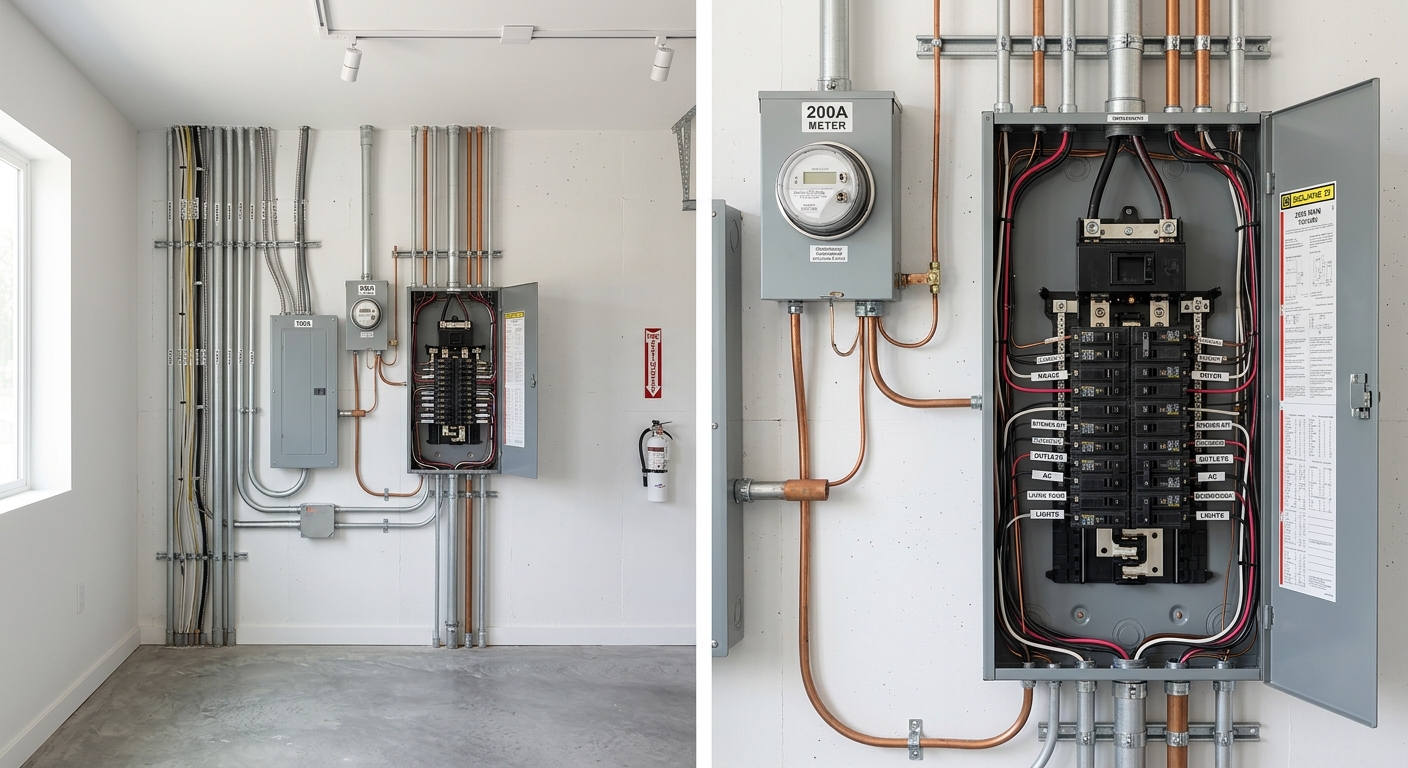
Electrical services and costs in Willingdon Heights
In Willingdon Heights, electrical upgrades are a practical part of keeping an older Lower Mainland home safe and comfortable. With a population of 12,443 (Statistics Canada, 2021 Census), the area sits in the dense Lower Mainland–Southwest market where electricians are busy, and schedules can fill quickly—especially when a job triggers service coordination with BC Hydro. Many homes also reflect earlier building eras: in the wider Lower Mainland, pre-1960s and 1970s housing commonly means you’ll see legacy wiring and undersized services that can struggle with today’s loads. That’s why panel upgrades, knob-and-tube removal, and aluminum branch-circuit remediation are frequent requests.
Lower Mainland costs are shaped by tight access in established neighbourhoods, plus permitting and inspection steps under the provincial electrical safety system. Winter rain and freeze-thaw cycles don’t “cause” electrical problems directly, but they increase the chance that weather-exposed connections, outdoor receptacles, and moisture protection details are overdue—leading to more labour at the time of an upgrade. In Willingdon Heights, demand is especially steady around Boundary Road, where many older homes are being renovated for modern kitchens, EV charging, and electric heating.
If you’re budgeting, the next table is a realistic snapshot of the most common service calls in this area—then your exact scope can shift up or down based on panel condition, wiring type, and how many new circuits you’re adding.
| Service |
Why It's Needed |
Permit Required |
Price Range |
| Panel upgrade — 100A to 200A service |
Provides enough capacity for EV charging, heat pumps/electric furnace loads, and modern kitchen/appliance use while meeting fault-current requirements |
Yes (service equipment change) |
$1,800 – $4,500 |
| EV charger installation (Level 2, 40–50A) |
Adds a dedicated circuit to charge safely and reduces risk of nuisance tripping or overheating |
Yes (new circuit/connection to panel) |
$900 – $2,500 |
| Knob-and-tube wiring removal and replacement |
Legacy insulation and connection methods can be unsafe and often create insurance or resale obstacles; replacement restores reliable, code-compliant wiring |
Yes (rewiring/removal) |
$8,000 – $20,000 |
| Aluminum wiring remediation (CO/ALR connectors) |
Branch-circuit aluminum requires licensed remediation or replacement to address joint overheating risks; approved connectors are used where applicable |
Yes (alteration to wiring/joints) |
$8,000 – $20,000 |
| New dedicated circuit (HVAC, appliance, hot tub) |
Improves safety and performance by separating high-load devices and reducing breaker stress |
Yes (new circuit extension/branch) |
$900 – $2,500 |
| Whole-home rewire (older home, full replacement) |
When many circuits are outdated, damaged, or too costly to remediate piecemeal, full replacement brings the system in line with modern protection and load needs |
Yes (major rewiring) |
$8,000 – $20,000 |
Prices are estimates only and vary by project scope, site access and material selection.
What affects the price of electrical work in Willingdon Heights
In the Lower Mainland–Southwest, two quotes for the “same” electrical job can differ by 30–50% because the scope quietly changes: whether wiring must be opened up, how many circuits are replaced, whether a service upgrade is triggered, and how much coordination is needed for permits and inspections. Across British Columbia, scheduling and inspection workflows also influence labour efficiency—one contractor may plan for BC Hydro/service scheduling time while another may not factor in how long panel and mast work can take.
In Willingdon Heights, the dominant cost driver is housing age and wiring type. Older homes built before 1950 can contain knob-and-tube; many insurance providers are increasingly strict about it, and removing it often turns a “small fix” into full rewiring. Homes built from the 1960s–70s often have 60A or 100A panels that are no longer adequate for today’s loads—particularly electric baseboard or furnace heat, induction stoves, and the surge in EV Level 2 charging (often 40–60A). Aluminum wiring, commonly seen in homes built roughly 1965–1976, usually requires licensed remediation with approved CO/ALR connectors or full replacement when remediation isn’t practical.
Concrete examples: (1) Two EV charger installs may start with the same $900 – $2,500 band, but if your panel is 60A/100A, the price can jump after a load calculation and a service upgrade—often moving into the $1,800 – $4,500 panel/service range. (2) Replacing five outlets can be quick, but if the circuits are aluminum or K&T, labour can expand because safe jointing and approved wiring methods must be used throughout affected runs. (3) If you need to add circuits for new heat or a hot tub, the number of new circuits drives cable, breaker, and testing time, so costs climb faster than homeowners expect.
| Price Factor |
Why It Matters |
Cost Impact |
| Panel size upgrade — 100A to 200A is the standard minimum today |
More breaker slots and capacity for modern loads plus improved fault-current compliance |
$1,800 – $4,500 |
| Wiring type — copper vs. aluminum remediation vs. K&T removal |
Aluminum joints need CO/ALR-approved remediation; knob-and-tube often requires replacement, not patching |
$8,000 – $20,000 |
| Number of new circuits — each adds material and labour time |
Each circuit typically requires breakers, cable, testing, and sometimes additional wall opening |
$900 – $2,500 |
| Permit + ESA/TSBC inspection fee — mandatory for all major work |
Inspections and paperwork are required for service changes, rewiring, and new circuits |
$200 – $800 |
| Labour rate for licensed electricians — journeyman rates in Lower Mainland–Southwest |
Skill level and time on-site reflect complexity: tight access, careful troubleshooting, and code compliance |
$900 – $2,500 |
| EV charger amperage — 40A vs. 50A circuit affects cable and breaker cost |
Higher amperage can require heavier cable and may change breaker/cabling scope |
$900 – $2,500 |
| Emergency or after-hours premium |
Urgency increases labour costs and can change how crews are scheduled |
$200 – $800 |
| Load calculation required for service upgrade |
Your electrician must confirm capacity for today’s appliances, heating, and planned EV charging |
$200 – $800 |
Permits & regulations in British Columbia
In British Columbia, electrical work beyond changing a light bulb must be done by a licensed electrician, and most meaningful upgrades require a permit and inspection. In practice, panel upgrades, service equipment changes, new circuits (including EV charger installs), and rewiring require permits. Work involving knob-and-tube removal, aluminum branch-circuit remediation
DIY electrical is restricted. Homeowners generally cannot perform the kind of wiring alterations that would normally require inspection, and even when a homeowner is doing non-electrical tasks (like removing drywall for access), the wiring and final connections must be completed by a licensed person and covered under permits.
For a contractor working in Willingdon Heights, verify before you sign:
- Licence: confirm the electrician’s licence status through the provincial registry commonly used for verification by consumers and jurisdictions.
- Liability insurance: ask for a current certificate of insurance showing general liability coverage appropriate to the work.
- Clearance/coverage: confirm workers’ coverage documentation for the province’s requirements (commonly WCB coverage) and ask what their process is if you have a site requirement.
- Permit handling: confirm they pull the permit and schedule inspections; you shouldn’t be asked to do this.
Step one is verifying the licence and insurance in writing; step two is confirming that the scope includes permit submission and that the work will pass inspection by the provincial electrical safety authority system (Technical Safety BC).
When your Willingdon Heights home needs an electrical upgrade
Electrical upgrades in Willingdon Heights are often postponed until something fails, but several warning signs are safety-critical. First, breakers that trip frequently usually point to an overloaded circuit or a failing breaker/joint—this needs planned investigation, and if it happens repeatedly with specific appliances running, it can be urgent. Second, knob-and-tube wiring present is a key concern because of insulation condition and connection methods; it’s not just “old,” it can also complicate insurance. Third, a 60A or 100A panel is frequently inadequate for modern Lower Mainland lifestyles—especially when you run electric heating alongside EV charging and high-demand kitchen loads. In those cases, a 200A upgrade is usually the standard long-term solution rather than adding isolated fixes.
Fourth, aluminum wiring (pre-1976 construction) isn’t always an immediate emergency, but it requires licensed remediation—either approved connector-based fixes or replacement—because joint overheating risk depends on installation and maintenance. Fifth, insufficient outlets and extension cords are a practical hazard; they can indicate you’re relying on overload-prone temporary setups. Sixth, no AFCI or GFCI protection where required becomes a code-compliance and resale issue; buyers and insurers often focus on this at transfer time.
Weather and usage patterns matter here: Lower Mainland homes with electric heat and winter appliance load can intensify panel stress. For cost comparisons, it’s common for a homeowner to think they’ll “just add a breaker,” but if your service is undersized, the savings aren’t real—pairing EV charging with a service upgrade often moves you into the $1,800 – $4,500 panel/service band alongside the charger work, rather than repeatedly paying for nuisance fixes.
| Warning Sign |
What It Means |
Recommended Action |
Urgency |
Price Band |
| Breakers trip frequently |
Possible overload, loose connections, or failing components |
Schedule troubleshooting; verify load balance and circuit condition before adding loads |
Planned, unless it happens with heat/sparking |
$900 – $2,500 |
| Knob-and-tube wiring present |
Outdated wiring method with insulation and connection risks |
Plan removal/replacement of K&T circuits; assess whole-home vs. targeted approach |
Immediate planning |
$8,000 – $20,000 |
| 60A or 100A panel (inadequate load capacity) |
Not enough capacity for modern loads and EV charging growth |
Load calculation and service upgrade to 200A |
When adding major loads (EV/heat) — urgent planning |
$1,800 – $4,500 |
| Aluminum wiring (pre-1976 construction) |
Higher sensitivity to joint condition and connection methods |
Licensed aluminum remediation using approved methods or rewire where needed |
Planned upgrade (unless signs of overheating) |
$8,000 – $20,000 |
| Insufficient outlets — extension cords everywhere |
Increased risk of overload and damaged cords |
Add receptacles and dedicated circuits where appropriate |
Planned, but address dangerous setups right away |
$900 – $2,500 |
| No AFCI or GFCI protection where required |
Code compliance gaps for shock and arc-fault risk |
Add/properly protect circuits during upgrades and panel work |
Planned before resale or insurance renewal |
$200 – $800 |
How to choose a electrical work contractor in Willingdon Heights
Choosing the right electrical contractor in Willingdon Heights is mostly about proof and clarity. Start by verifying their British Columbia licensing: ask for their licence number and confirm it through the provincial registry. Next, request a certificate of insurance (liability coverage) and confirm their workers’ coverage documentation (commonly WCB clearance/coverage) so you’re not exposed if a worker is injured on your property.
Then get 2–3 itemised written quotes. A good quote breaks labour and materials line-by-line, shows what’s included (panel parts, breakers, cable, connectors, disposal), and states permit/inspection responsibility. Avoid lump-sum estimates that don’t explain wiring access needs; in older Lower Mainland homes, wall openings and restoration can change the job.
Read exclusions: will they pull the permit? Is it included in the price or billed separately? Who handles re-inspection if adjustments are required? Ask for a workmanship warranty length (how many months/years), product/manufacturer warranty terms, and whether warranties are transferable if you sell the home.
Payment schedule matters: never pay more than about 10–15% upfront, and hold back the remainder until the job is complete and inspected. Finally, insist on a start date and completion estimate in writing—tight access and permitting steps can add time.
- Licence number provided before work begins
- Proof of liability insurance, current date, and coverage amount
- Confirmation of WCB/clearance coverage documentation
- Itemised quote (labour, materials, disposal, restoration)
- Permit and inspection included or clearly stated
- Load calculation included for service upgrades
- Scope notes on EV charger circuit specs (40A vs. 50A)
- Clear wiring method plan for aluminum/knob-and-tube
- Warranty stated for workmanship and key components
- Payment terms in writing with a small upfront deposit
- Timeline with start and practical completion date
- Clean-up and documentation of test results/labels after work
In Willingdon Heights, I consider these red flags: a contractor who won’t provide licensing/insurance evidence; a quote that doesn’t mention permits/inspection responsibility; “one-price-fits-all” service upgrades without a load calculation; demanding large upfront payments; or refusing to put the scope (and warranty) in writing.
Frequently asked questions — electrical work in Willingdon Heights
What is a GFCI outlet and where is it required in British Columbia?
In British Columbia, a GFCI (Ground-Fault Circuit-Interrupter) is a protective device that trips when it senses an unsafe ground-fault condition, helping reduce shock risk. In everyday terms, it’s commonly required for receptacles in locations where water and moisture are present or where shock risk is higher—think bathrooms, kitchens with certain installation details, garages, and outdoor receptacles. What matters most is the specific installation location and how the circuit is wired. When upgrading a panel in Willingdon Heights, many electricians will also verify which circuits need GFCI protection based on current code requirements, especially when adding new circuits or replacing older devices. If your project is part of a service upgrade (often within the $1,800 – $4,500 band), it’s a good time to correct protection gaps rather than patching later.
How do I know if my Willingdon Heights home has aluminum wiring?
Aluminum wiring is most often associated with certain construction eras, especially in homes built around the mid-1960s through the 1970s, and it’s frequently found in branch circuits. The most reliable way to confirm is for a licensed electrician to inspect the conductors at accessible junction boxes, the panel, and visible splices—then perform checks for markings and connector type compatibility. Aluminum conductors typically have printed markings on the insulation and may use connectors that were standard for that era. However, simply seeing a “silver-coloured” conductor isn’t enough; the critical detail is the conductor material and the joint condition. If aluminum is confirmed, remediation is usually done with approved methods (for example, CO/ALR connectors) or, where needed, by replacing affected runs. Because aluminum remediation costs can be significant—often aligning with the $8,000 – $20,000 range depending on scope—getting an on-site identification helps you budget accurately.
What is the cost of rewiring a house in Willingdon Heights?
Rewiring cost in Willingdon Heights depends heavily on how much of the home’s wiring must be replaced versus remediated. If you’re dealing with widespread knob-and-tube wiring or multiple circuits requiring replacement, homeowners typically land in the broader $8,000 – $20,000 range. If only a portion of the home is impacted, or if approved aluminum remediation can address risks without opening up everything, the scope can be lower—but the electrician needs to assess joint conditions, circuit coverage, and access constraints. In the Lower Mainland–Southwest, older housing stock and finished interiors can increase labour because safe rewiring often means carefully opening walls/ceilings, then restoring access areas. Permits and inspections are also part of the cost for major changes. For a clear budget, ask for an itemised quote that separates wiring replacement scope, new circuits, and any service/panel work.
What electrical upgrades are required when selling a home in British Columbia?
British Columbia doesn’t work like a single “one-size” electrical checklist for every sale, but many upgrades show up because they are required for safety and because buyers/insurers frequently flag older, non-compliant, or hazardous electrical conditions. Common triggers include missing required protection (like GFCI/AFCI where applicable), obsolete wiring methods (such as knob-and-tube), and service capacity issues that can’t support normal modern loads. If a home has inadequate panel capacity for today’s appliances or EV readiness, an upgrade may become necessary to pass inspections and satisfy underwriting. In Willingdon Heights and the Lower Mainland, many sellers run into service upgrades when installing EV charging or dealing with undersized 60A/100A equipment—often moving costs into the $1,800 – $4,500 panel/service range when a 200A upgrade is needed. The best approach is to ask your electrician for an inspection-based plan before listing, so repairs are targeted and documented.
What is a load calculation and why does my electrician need one?
A load calculation is a formal check used to confirm that your electrical service and panel can safely supply the connected loads you have—and the loads you plan to add. When you’re considering a panel or service upgrade in British Columbia, a licensed electrician typically needs this calculation so the final design matches the household demand and meets electrical safety requirements. This is especially important in Willingdon Heights where homes may run electric heating, and where EV adoption is increasing demand for Level 2 charging (commonly 40–50A circuits). Without a load calculation, you risk upgrading parts of the system that still don’t have enough capacity, which can lead to nuisance trips, overheated components, or future rework. Load calculations also help justify why a 200A upgrade is sometimes the standard minimum today. As a budgeting example, when the calculation points to an upgrade, homeowners often plan around the $1,800 – $4,500 panel/service band rather than only paying for smaller circuit additions.
How do I find a licensed electrician in Willingdon Heights?
To find a licensed electrician for work in Willingdon Heights, start by asking contractors for their British Columbia licence details before you book. Confirm the licence using the provincial registry process (don’t rely only on company brochures). Next, request proof of liability insurance and confirm workers’ coverage documentation (commonly WCB clearance/coverage) so you’re protected as a homeowner. Then ask for 2–3 itemised quotes with scope details—especially for projects like panel upgrades, rewiring, or EV charger installs, where permits and inspections under the provincial electrical safety system are required. A reputable electrician should tell you upfront whether permits will be pulled, how inspections are handled, and what parts of the job require excavation or access. If someone won’t put the scope in writing or avoids discussing permits and inspection responsibility, that’s a sign to keep looking. For typical budgeting, ask whether your quote aligns with common bands such as $900 – $2,500 for Level 2 EV charger installs or $1,800 – $4,500 for service upgrades.