Electrical services and costs in Bolton
Bolton homeowners often face electrical upgrades sooner than they expect, especially as modern loads—EV chargers, heat pumps, and high-draw kitchen appliances—stack onto older service equipment. Bolton’s population is 26,795 (Statistics Canada, 2021 Census), and that steady household growth is mirrored by ongoing electrical demand in the wider Toronto economic region. The dominant driver is housing age: many area homes pre-date today’s circuit and safety expectations, with plenty of pre-1950 vintage electrical systems that are more likely to include knob-and-tube wiring or undersized, outdated protection. Even when wiring is “working,” the panel and circuit layout can struggle with today’s load profile.
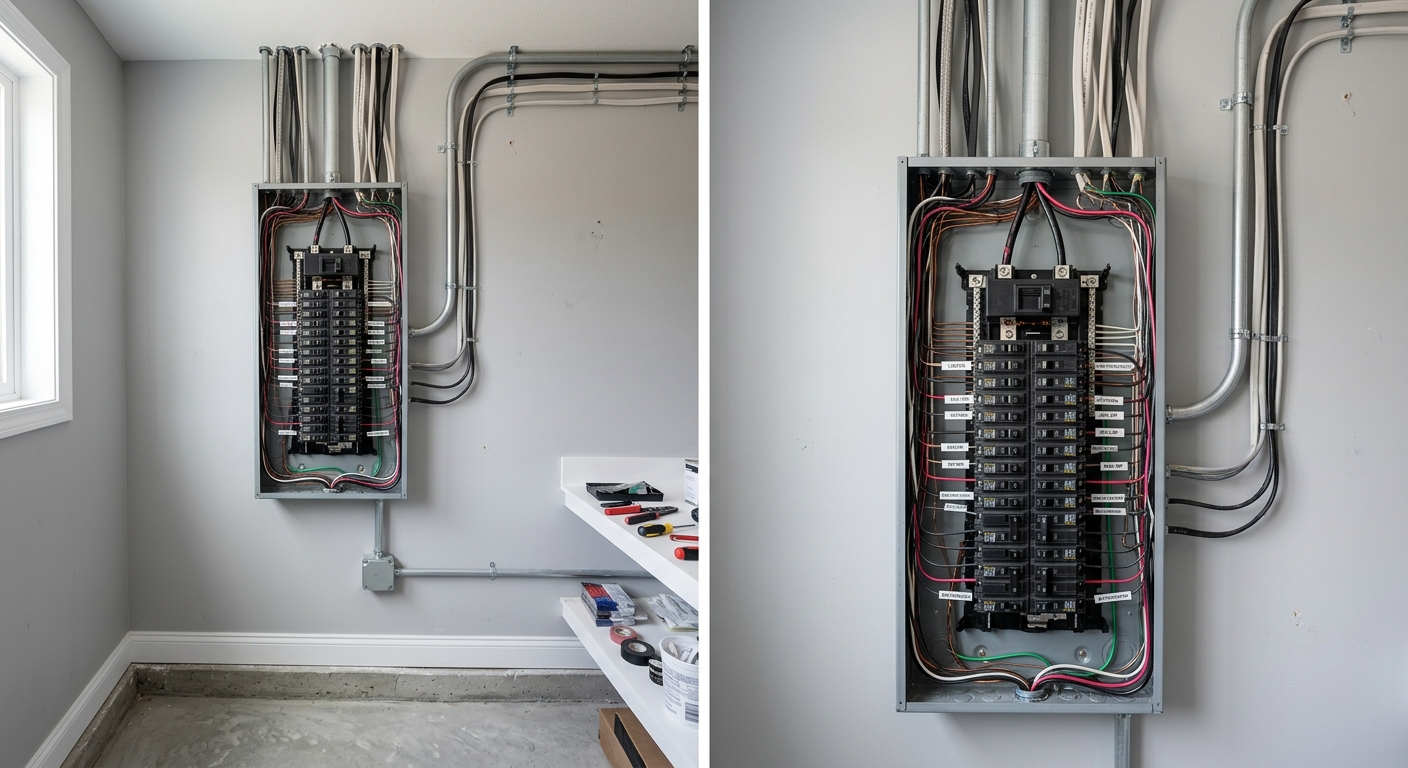
Toronto-area pricing is also shaped by market intensity. Dense older neighbourhoods plus rapid infill/construction means contractors are busy, and materials/permit scheduling gets tighter. In practice, that’s why you’ll commonly see panel work and wiring remediation priced as a combined package: for a 200A-ready service, it’s not unusual to budget about $2,500–$6,000 for a panel/service upgrade and pair it with $3,000–$15,000 for wiring work, depending on how extensive the remediation is. Winter conditions in the GTA add pressure too—less tolerant electrical connections and overloaded circuits show up as warmer panel components or nuisance breaker trips when homes are running constant heating.
In Bolton’s central areas (including around the downtown core), demand is especially high for service upgrades and EV-ready installs, because many homeowners are upgrading kitchens, finishing basements, and adding Level 2 chargers. Use the estimates below as a starting point before you compare quotes—then match the scope to your home’s wiring/panel condition in the comparison table.
| Service |
Why It's Needed |
Permit Required |
Price Range |
| Panel upgrade — 100A to 200A service |
Adds capacity for EV chargers, heat pumps, electric ranges, and more simultaneous household loads; improves breaker safety and compatibility with modern AFCI/GFCI requirements. |
Yes, typically |
$2,500 – $6,000 |
| EV charger installation (Level 2, 40–50A) |
Provides a dedicated, safe circuit sized for reliable charging; reduces shared-load issues and nuisance breaker trips. |
Yes, typically |
$900 – $2,500 |
| Knob-and-tube wiring removal and replacement |
Modern insulation and overload patterns don’t pair well with knob-and-tube; replacement improves safety and insurability. |
Yes, typically |
$7,000 – $15,000 |
| Aluminum wiring remediation (CO/ALR connectors) |
Reduces overheating risk at terminations by using approved connectors and mechanical provisions; avoids premature failures. |
Yes, typically |
$3,000 – $8,000 |
| New dedicated circuit (HVAC, appliance, hot tub) |
Prevents overload on existing circuits and supports high-demand equipment with correct wire sizing and breaker protection. |
Yes, typically |
$500 – $2,000 |
| Whole-home rewire (older home, full replacement) |
For homes with multiple failing circuits, outdated wiring layouts, and end-of-life components; provides a modern, inspection-ready system. |
Yes, typically |
$10,000 – $20,000 |
Prices are estimates only and vary by project scope, site access and material selection.
What affects the price of electrical work in Bolton
In Bolton and across Toronto’s surrounding region, the same “basic” electrical job can land 30–50% apart between quotes because the scope is never identical. A panel upgrade that starts as “change the breakers” quickly becomes “service upgrade plus wiring remediation” when the electrician finds mixed wiring types, missing grounding/bonding, or inadequate circuit capacity for modern loads. Labour availability also matters: Toronto’s density and active construction market keep licensed crews booked, so scheduling and time on site can add cost even when the materials stay similar.
Housing stock age is the dominant cost driver. Pre-1950 systems are more likely to have knob-and-tube wiring, and insurance pressure can force homeowners to address it even if it still powers lights. Mid-century homes often have 60A or 100A panels that don’t meet today’s household load: EV chargers, heat pumps, and induction/electric stoves can push you toward a 200A target. Aluminum branch wiring—commonly associated with construction spans in the 1960s–1970s—typically requires licensed remediation using approved CO/ALR connectors or full replacement. Meanwhile, EV adoption is driving a surge in Level 2 charger permits; that dedicated circuit must be correctly sized and coordinated with your panel’s capacity.
Here are a few concrete Bolton examples that raise costs: (1) longer cable runs from basement/garage to a panel upgrade location, which means more labour and materials; (2) a cramped panel/service area, which can require additional work to maintain safe clearances; (3) after-hours scheduling during peak winter demand when crews are less available. Costs can be lower if your panel is already modern, the existing wiring is copper and in good shape, and the charger can be fed from spare breaker spaces—then you’re closer to the $900–$2,500 EV range and avoid a larger service upgrade. For major capacity work, most homeowners land in the $2,500–$6,000 band for a 200A-ready service, with wiring remediation pushing the total higher when the electrician has to open walls or replace unknown sections.
| Price Factor |
Why It Matters |
Cost Impact |
| Panel size upgrade — 100A to 200A is the standard minimum today |
Corrects undersized service capacity and supports modern breaker/circuit requirements. |
Often the largest cost shift within a service upgrade ($2,500–$6,000 baseline) |
| Wiring type — copper vs. aluminum remediation vs. K&T removal |
Aluminum requires approved terminations/connector work; knob-and-tube often requires replacement. |
Can add thousands depending on extent ($3,000–$15,000+) |
| Number of new circuits — each adds material and labour time |
Each circuit means trenching/fishing, wire/breakers, and inspection-ready labelling. |
More circuits usually increases total by hundreds to thousands |
| Permit + ESA/TSBC inspection fee — mandatory for all major work |
Major electrical work must be permitted and inspected before energization. |
Typically about $200–$500 depending on scope |
| Labour rate for licensed electricians — journeyman rates in Toronto area |
Licensed time onsite affects labour totals more than homeowners expect. |
Often ~90–120 per hour in the region |
| EV charger amperage — 40A vs. 50A circuit affects cable and breaker cost |
Higher amperage requires appropriately sized conductors, breaker, and sometimes panel coordination. |
EV installs often shift within the $900–$2,500 band |
| Emergency or after-hours premium |
Winter service calls and urgent troubleshooting cost more due to scheduling and risk. |
Can add a noticeable surcharge over standard daytime rates |
| Load calculation required for service upgrade |
Verifies your connected load meets code requirements and whether 200A is actually justified. |
May add 1–2 hours of labour, preventing costly rework |
Permits & regulations in Ontario
In Ontario, electrical work beyond changing a light bulb must be done by a licensed electrician. Permits are required for panel upgrades, new circuits (including Level 2 EV chargers), rewiring, and service upgrades, because these changes affect circuit safety and the electrical system as a whole. Once the work is completed, permitted work must pass inspection by the Electrical Safety Authority (ESA) in Ontario before it can be energized or closed out.
What commonly DOES require a permit in Bolton: any work at the service/panel (panel replacement, breaker changes when it involves adding capacity, new main disconnect arrangements), installing new dedicated circuits, adding or relocating outlets/fixtures where new wiring is pulled, and rewiring sections of a home. What typically does NOT require a permit: replacing a like-for-like luminaire (for example, swapping a ceiling light fixture where the wiring connection method is unchanged), or replacing a receptacle with one that is identical and where no new circuits or wiring methods are introduced (your electrician will confirm based on the exact situation).
To verify a contractor in Ontario, start by checking the electrician/contractor licence status through the province’s licensing registry and make sure the work is covered by appropriate liability insurance. Request a clearance/coverage documentation package for WSIB/WCB (where applicable) before the job starts. Ask for a certificate of insurance, confirm the named insured matches the contractor’s legal entity, and keep copies of the permit number and inspection results for your records. This is especially important in older Bolton homes, where the scope often expands when hidden wiring issues are discovered.
When your Bolton home needs an electrical upgrade
Bolton homes typically “ask for help” in ways that show up as safety risks or compliance gaps rather than just inconvenience. Warning sign one: breakers that trip regularly—especially during heating system runs—can indicate an overloaded panel, undersized circuits, or loose terminations that worsen in cold weather. Warning sign two: knob-and-tube wiring present. The key concern isn’t only age; it’s insulation condition and how insurers/inspectors treat it, which can lead to coverage problems and forced remediation.
Warning sign three: a 60A or 100A panel that feels “fine” until you add an EV charger, heat pump, or electric range. In Toronto-area homes with modern loads, a 200A upgrade is commonly the safest long-term solution, because it prevents chronic nuisance trips and keeps future additions realistic. Warning sign four: aluminum wiring (often seen in pre-1976 construction). Aluminum isn’t automatically an emergency if connections are properly maintained, but it does require licensed remediation using approved methods (like CO/ALR connectors) to reduce overheating at terminations. Warning sign five: insufficient outlets—extension cords everywhere—often points to overloaded circuits and hidden risks behind furniture and seasonal plug loads. Warning sign six: missing AFCI/GFCI where required; this can surface during a home sale or insurance review and should be corrected for code compliance.
Which signs are immediate vs planned? Frequent tripping, burning smells, heat discoloration at outlets/panel, or sparking warrants immediate action. Knob-and-tube and unsafe aluminum terminations are usually urgent for safety and insurability. Panel capacity and missing protection are often planned upgrades—though they’re best addressed before you install an EV charger or heat pump, to avoid rework. For a sense of trade-offs: if you only run a temporary EV circuit off an aging panel, you may pay less upfront than a $2,500–$6,000 panel/service upgrade, but you risk capacity shortfalls and expensive changes later when the charger or heating load pushes the system beyond safe limits.
| Warning Sign |
What It Means |
Recommended Action |
Urgency |
Price Band |
| Breakers trip frequently |
Overload, undersized circuits, loose connections, or insufficient panel capacity for current loads. |
Troubleshoot load, review circuit map, correct/resize circuits; consider load calculation and panel upgrade if needed. |
Immediate to scheduled (depends on severity) |
$500 – $6,000 |
| Knob-and-tube wiring present |
Outdated wiring method with concerns about insulation condition and insurability. |
Plan replacement of affected circuits/sections; often paired with panel modernization. |
Urgent (safety/insurance) |
$7,000 – $15,000 |
| 60A or 100A panel (inadequate load capacity) |
Panel may not support EV, heat pump, and electric cooking/heating loads safely. |
Service/panel upgrade to 200A with proper load calculation and circuit planning. |
Planned soon |
$2,500 – $6,000 |
| Aluminum wiring (pre-1976 construction) |
Requires approved remediation at terminations to reduce overheating risk. |
Remediate with CO/ALR connectors or selective replacement; verify grounding/bonding. |
Planned (unless you see heat damage) |
$3,000 – $8,000 |
| Insufficient outlets — extension cords everywhere |
Risk of overloaded circuits and nuisance overheating from temporary power use. |
Add dedicated outlets/circuits; reduce extension-cord reliance; improve outlet placement. |
Planned |
$500 – $2,000 |
| No AFCI or GFCI protection where required |
Higher shock/fire risk and potential compliance issues during inspections or sale conditions. |
Add/update AFCI/GFCI protection as required by code for the affected circuits/locations. |
Planned |
$200 – $2,500 |
How to choose a electrical work contractor in Bolton
Choosing the right electrician matters in Bolton because older wiring types are common and job scope can expand quickly once walls/panels are opened. First, verify Ontario licensing: request the electrician/contractor’s licence number and confirm it through the Ontario licensing registry. Next, ask for proof of liability insurance—current certificate of insurance with the correct legal business name. Also confirm WSIB/WCB coverage where applicable; contractors should be able to provide documentation before work begins.
Get 2–3 itemised written quotes, not just a lump sum. The best quotes break down labour time, material allowances (wire, breakers, connectors, weatherproofing, panels/boxes), and what’s included for permit handling. Read exclusions carefully: is drywall cutting/patching included or excluded? Is wire disposal and debris removal included? Will they pull the ESA permit and schedule inspection, or is that on you? Clarify if any “conditions on site” (like discovering knob-and-tube or open splices) changes the price—your quote should explain how.
For warranty, confirm workmanship warranty length and whether it’s tied to the installation, plus product/manufacturer warranty terms. Ask if the workmanship warranty is transferable to future homeowners if you sell.
Payment schedule should stay reasonable: never pay more than 10–15% upfront, and hold back remaining funds until the job is complete, inspected (when required), and cleaned up. Require a start date and completion estimate in writing—especially important for panel/service work where inspection timing can affect the timeline.
- Licence number provided upfront and verified
- Certificate of insurance includes liability coverage amount
- WSIB/WCB clearance documented before work starts
- Quote is itemised (labour, materials, allowance for fittings)
- Permit pull and inspection responsibilities are explicitly stated
- Scope includes panel upgrades only if truly required (load calculation explained)
- Wiring remediation method specified (CO/ALR connectors vs replacement)
- EV charger quote states circuit amperage (40A vs 50A) and location
- Workmanship warranty stated in writing
- Product warranties listed (panel/EVSE/breakers) and how they’re claimed
- Payment schedule: small deposit, then progress payments, final after inspection
- Schedule includes permitting lead time and inspection booking
Red flags in Bolton: a contractor who won’t provide a licence/insurance/coverage proof; “no permit needed” claims for panel or new circuits; vague quotes with no itemisation for materials/permit work; refusal to include an inspection/ESA close-out; and demands for large upfront payments without a written contract and milestones.
Frequently asked questions — electrical work in Bolton
What is a GFCI outlet and where is it required in Ontario?
A GFCI (Ground-Fault Circuit-Interrupter) outlet is designed to shut off power quickly when it detects leakage current, helping reduce the risk of shock. In Ontario, GFCI protection is required in specific locations and receptacle types, particularly where water and shock risk are higher (for example, areas like bathrooms, kitchens near sinks, basements in many cases, garages, outdoors, and other wet/damp locations). Exact requirements can depend on the type of receptacle and wiring method, so your electrician should confirm based on your circuit and home layout. For Bolton homes, the practical takeaway is: if you’re adding new outlets or finishing a basement, plan on bringing the relevant circuits up to current requirements for safety and inspection readiness.
How do I know if my Bolton home has aluminum wiring?
The easiest clue is the wire marking and how it behaves at the panel and receptacles. Aluminum conductors are often stamped/marked “Al” or “AAC/ACSR” (wording varies) on the cable jackets, and when opened at a receptacle or panel termination they may look duller than typical copper and can be secured with connector/termination hardware designed for aluminum. Another clue is the era of construction—aluminum branch wiring is commonly encountered in homes built in the 1960s–1970s—but age alone isn’t proof. In Bolton, many homeowners discover aluminum during a panel upgrade or when adding an EV circuit. A licensed electrician can identify it reliably during inspection and will recommend CO/ALR connector remediation or selective replacement as needed.
What is the cost of rewiring a house in Bolton?
Rewiring costs vary widely based on whether it’s partial (specific rooms/circuits) or a full whole-home replacement, and how accessible the wiring is. For a realistic Bolton range, whole-home rewire projects often fall in the $10,000–$20,000 band, while targeted rewiring tied to knob-and-tube or severe failures can be lower or higher depending on how much cable is removed and how many circuits must be modernized. If you’re pairing rewiring with capacity improvements, remember that a 100A-to-200A panel/service upgrade commonly starts around $2,500–$6,000, and the total can increase when service relocation, longer runs, or significant remediation is required. A good contractor will itemise labour, materials, and what discoveries change scope, so you can compare bids fairly.
What electrical upgrades are required when selling a home in Ontario?
Ontario doesn’t generally require a homeowner to replace every “old” component just because they’re selling, but it does require that electrical systems be safe and compliant for the work being done, and insurers/real estate transactions often tighten expectations. Common upgrade triggers during sale are missing or outdated protection (like AFCI/GFCI where required), unsafe conditions, and issues discovered during inspection—especially in older homes. In Bolton, sellers often need to address knob-and-tube wiring concerns, or aluminum remediation at terminations, because it can affect insurability and inspection outcomes. If the panel is undersized for today’s loads, it may not fail a “sale inspection” immediately, but it frequently becomes a buyer renegotiation point once an EV charger or heat pump is discussed. The safest approach is to get a licensed assessment early and budget for targeted corrections rather than last-minute surprises.
What is a load calculation and why does my electrician need one?
A load calculation estimates the electrical demand your home will use—based on connected appliances, heating equipment, and planned additions—so your electrician can size the service and distribution correctly. In Ontario, this matters most when you’re upgrading from a 60A or 100A panel toward a 200A setup, or when you’re adding high-demand loads like Level 2 EV charging, heat pumps, electric heating, or a larger kitchen range. Without a proper calculation, a contractor could install a panel that’s technically “working” but still insufficient for modern simultaneous use, which increases the risk of nuisance breaker trips and premature wear. In Bolton’s Toronto-area market, homeowners often want to add EV charging; a load calculation helps justify the $2,500–$6,000 service upgrade budget when it prevents costly rework later.
How do I find a licensed electrician in Bolton?
Start by requesting the contractor’s licence number and verifying it through Ontario’s online licensing registry. Then ask for proof of liability insurance and documentation of WSIB/WCB coverage where applicable—don’t rely on verbal assurances. Next, compare 2–3 itemised quotes that spell out permit responsibility, what wiring remediation method is proposed (copper vs CO/ALR for aluminum vs knob-and-tube removal), and whether they include an ESA inspection close-out where required. For Bolton projects tied to EV charging, confirm the charger amperage (often 40A or 50A) and the circuit location, because that changes materials and breaker cost. A reputable contractor will also explain how winter and load patterns affect troubleshooting and will be comfortable sharing a clear scope that matches Ontario requirements.