Electrical services and costs in East End-Danforth
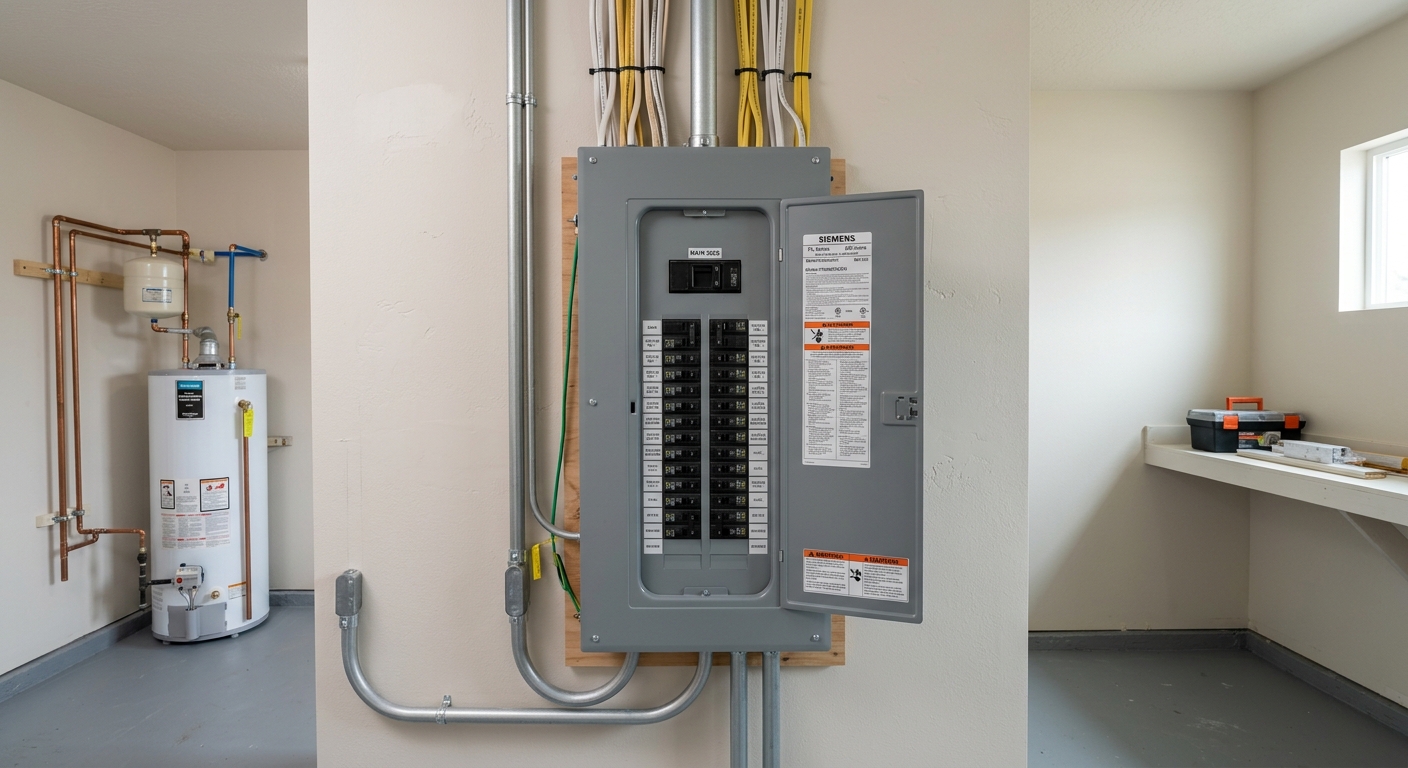
In East End-Danforth, Ontario, electrical service work is a common homeowner task because many houses here are older and the electrical system wasn’t designed for today’s appliance, comfort, and EV loads. Based on the 2021 Census profile, the area’s population is 21,381 (Statistics Canada, 2021 Census), and that steady owner-occupant demand—plus condo and infill activity across Toronto—keeps licensed contractors busy. A large share of the housing stock predates modern load requirements, so you’ll often see knob-and-tube wiring or mid-century wiring that can’t safely handle upgrades without remediation. In many East End-Danforth neighbourhoods, mid-century panels (often 60A or 100A) were adequate for lighting and older appliances, but they struggle once homeowners add heat pumps, electric cooking, basement finishing, and Level 2 EV charging.
Toronto’s market also affects pricing and scheduling: dense streets, limited parking, and older plumbing and ducting routes can increase labour time for panel access and new cable runs. Winter weather matters too—service entrances and attic access are harder when temperatures drop and work areas stay damp, which pushes contractors to plan safer setups and more time on site. If you’re in areas near Danforth Avenue and surrounding residential pockets (including frequent retrofit zones around Main Street–Danforth), you’ll also notice faster turnaround pressure during busy seasons because EV charger installs and A/C/heat-pump tie-ins often coincide with other renovations.
Below is a practical snapshot of typical service packages, so you can compare quotes apples-to-apples before your contractor starts pulling permits and planning the layout.
| Service |
Why It's Needed |
Permit Required |
Price Range |
| Panel upgrade — 100A to 200A service |
Modern loads (EV charger, heat pump, electric stove) often exceed older panel capacity; a 200A service is a standard solution in the GTA. |
Yes (permit + ESA inspection) |
$2,500–$6,000 |
| EV charger installation (Level 2, 40–50A) |
Adds a dedicated, code-compliant circuit and controls to charge reliably at home. |
Yes (permit + ESA inspection) |
$900–$2,500 |
| Knob-and-tube wiring removal and replacement |
Older K&T insulation performance is poor by today’s standards; removal improves safety and often improves insurance insurability. |
Yes (rewiring scope) |
$3,000–$15,000 |
| Aluminum wiring remediation (CO/ALR connectors) |
Aluminum branch wiring may require approved connector remediation to reduce heat-risk at terminations. |
Yes (alteration/remediation) |
$3,000–$10,000 |
| New dedicated circuit (HVAC, appliance, hot tub) |
Prevents nuisance tripping and supports higher-current equipment with correct conductor sizing and protection. |
Yes (new circuit) |
$600–$3,500 |
| Whole-home rewire (older home, full replacement) |
When multiple areas have K&T and/or aluminum, full replacement is the most reliable path to safe, code-compliant distribution. |
Yes (rewiring scope) |
$6,000–$18,000 |
Prices are estimates only and vary by project scope, site access and material selection.
What affects the price of electrical work in East End-Danforth
In East End-Danforth, you can see quotes for the “same” electrical job differ by roughly 30–50% across Toronto and Ontario. The biggest reason is that older housing stock rarely matches on paper: one home may have clear attic and basement cable paths, while another has finished ceilings, knob-and-tube pockets, or undersized conductors that must be replaced once the electrician opens walls. Another driver is Toronto’s ongoing mix of older neighbourhoods and rapid infill/condo growth, which increases demand for licensed crews—especially for panel upgrades, EV charging, and service work paired with renovation permits.
Housing age is typically the dominant cost driver. Homes built before 1950 are more likely to contain knob-and-tube wiring, and in practice that can increase both labour time and the length of inspection/remediation steps; insurance may also refuse coverage for certain unsafe wiring conditions. Homes from the 1960s–70s often have 60A or 100A panels that are inadequate for today’s simultaneous loads (EV chargers, heat pumps, induction or electric cooking, plus basement suites). If you’re also dealing with aluminum branch wiring—common in construction from about 1965–1976—licensed remediation with approved CO/ALR connectors may be required, or you may be pushed toward partial or full replacement depending on the condition and layout. EV adoption is adding another layer: Level 2 charger permit applications have surged, and that often means load calculations and sometimes panel capacity work.
Local conditions can either raise or lower cost. A straightforward 100A-to-200A upgrade in an accessible service location may land near the mid range of the $2,500–$6,000 band, while an upgrade that requires service relocation, trenching, or extensive panel-area remediation can creep toward $6,000 or beyond. Similarly, a dedicated circuit in a home with open basement framing can be modest, but if you need to fish cables through plaster and finished drywall, that labour time is where the higher end of the $3,000–$15,000 wiring/remediation band can be justified.
| Price Factor |
Why It Matters |
Cost Impact |
| Panel size upgrade — 100A to 200A is the standard minimum today |
Modern homes commonly need more bus capacity and breakers for new loads. |
Often $2,500–$6,000 depending on complexity and access |
| Wiring type — copper vs. aluminum remediation vs. K&T removal |
Aluminum and knob-and-tube can require approved remediation or replacement. |
Can shift wiring/remediation from moderate to high ($3,000–$15,000+) |
| Number of new circuits — each adds material and labour time |
Each circuit requires conductors, breaker(s), boxes, and terminations. |
+$400 to $2,000 per added circuit (varies widely) |
| Permit + ESA/TSBC inspection fee — mandatory for all major work |
Major alterations require permits and inspections before energization/close-out. |
Typical $200–$500 total for many scopes |
| Labour rate for licensed electricians — journeyman rates in region |
Skilled troubleshooting and safe installation are time-intensive in older builds. |
Commonly about $90–$120 per hour |
| EV charger amperage — 40A vs. 50A circuit affects cable and breaker cost |
Higher amperage can require larger conductors and specific breaker/charger compatibility. |
Often adds a few hundred dollars to circuit materials/parts |
| Emergency or after-hours premium |
Urgent callouts increase overhead and scheduling constraints. |
Typically +20% to +50% in busy periods |
| Load calculation required for service upgrade |
Confirms your home’s demand and ensures the service size matches code requirements. |
Usually adds time and engineering effort; often still essential for safe sizing |
Permits & regulations in Ontario
In Ontario, ALL electrical work beyond changing a light bulb must be done by a licensed electrician. That includes panel upgrades (like 100A to 200A), adding or modifying circuits, rewiring sections of a home, installing EV chargers, and any change that affects the service or wiring methods. For these major works, a permit is required and the completed work must pass inspection by the Electrical Safety Authority (ESA) before it’s considered compliant.
Typical work that does usually require an ESA permit includes: new dedicated circuits (hot tub, HVAC, kitchen appliances), whole-home or partial rewires, knob-and-tube removal, aluminum wiring remediation when conductors/terminations are altered, and service/panel changes. Work that may not require a permit is limited to minor like replacing a like-for-like fixture where no wiring method changes (for example, swapping an identical lighting fixture where the existing box and wiring configuration remain untouched). However, if you’re unsure, treat it as permit-worthy—inspectors and the ESA process are clear that alterations need proper approvals.
Step-by-step for East End-Danforth homeowners: (1) ask for the electrician’s Ontario licence number and verify it using the province/ESA online licence information; (2) request a certificate of insurance (liability) naming the business and confirming current coverage; (3) confirm WSIB/WCB coverage—licensed contractors should provide proof on request; and (4) insist the quote states that permits will be pulled and inspections booked. If a contractor won’t provide licence and insurance documents, or suggests “no permit needed,” that’s a serious red flag in Ontario.
When your East End-Danforth home needs an electrical upgrade
Electrical upgrades in East End-Danforth are often safety-first, not cosmetic. Start with breaker behaviour: if breakers trip regularly, it can mean an overloaded circuit, failing breakers, or undersized wiring that can’t handle modern load patterns. If trips happen when you run multiple loads—like kitchen appliances plus space heating—it’s usually a sign you need a load-focused assessment and likely new circuits or panel upgrades.
Knob-and-tube wiring is another key concern. The issue isn’t only “it’s old,” it’s that insulation can deteriorate and contact points can become unreliable over time. Even if it still “works,” that’s the wiring insurers and inspectors worry about most, so planned action is often needed—and sometimes faster—especially during renovation.
Panel capacity is also common in Toronto houses: 60A or 100A services can fall behind when you add an EV charger, heat pump, and electric stove together. In practice, homeowners are frequently steered toward a 200A upgrade as the standard solution. For a grounded dollar example: adding a single Level 2 EV charger might be near the $900–$2,500 band, but if your load calculation shows insufficient service capacity, you may be better off budgeting for a panel upgrade that lands in the $2,500–$6,000 band rather than repeatedly adding circuits that still won’t make the whole system safe.
Aluminum wiring (pre-1976 construction) isn’t always immediately dangerous if it has been maintained correctly, but it typically requires licensed remediation (like approved CO/ALR connector work) to reduce heat-risk at connections. Finally, insufficient outlets and missing AFCI/GFCI protection can become a selling issue; they’re not “nice to have” in many locations and can surface during inspections around home sale disclosures.
Immediate action: frequent tripping, burning smells/scorch marks, or evidence of overheating should be treated as urgent. Planned upgrades: knob-and-tube presence, aluminum remediation, and 60A/100A panel limitations should be scheduled promptly so you can coordinate with renovation timelines and avoid repeated wall openings.
| Warning Sign |
What It Means |
Recommended Action |
Urgency |
Price Band |
| Breakers trip frequently |
Overload, failing components, or circuits not sized for current usage. |
Assessment + add circuits and/or address panel/service capacity; replace defective breakers. |
Immediate to urgent |
$600–$3,500 |
| Knob-and-tube wiring present |
Older wiring with insulation/termination concerns; often impacts insurance and compliance. |
Plan K&T removal/replacement in affected zones or whole-home if widespread. |
Planned (schedule promptly) |
$3,000–$15,000 |
| 60A or 100A panel (inadequate load capacity) |
Service likely can’t safely support EV + heat pump + modern appliances concurrently. |
Load calculation then panel upgrade to 200A as needed. |
Planned (before adding major loads) |
$2,500–$6,000 |
| Aluminum wiring (pre-1976 construction) |
Connections may be prone to heat issues without approved remediation. |
Licensed CO/ALR connector remediation and/or targeted replacement of problem runs. |
Planned (not “ignore”) |
$3,000–$10,000 |
| Insufficient outlets — extension cords everywhere |
Increased risk of loose connections and overloaded power strips/circuits. |
Add outlets and dedicated circuits for high-demand rooms/appliances. |
Planned (safety improvement) |
$900–$4,000 |
| No AFCI or GFCI protection where required |
Code-compliance gap; may fail inspection at sale/renovation time. |
Add AFCI/GFCI devices or replace breakers to meet current requirements. |
Planned (priority before sale) |
$200–$2,000 |
How to choose a electrical work contractor in East End-Danforth
Choosing a contractor in East End-Danforth starts with verification. First, confirm the electrician is properly licensed for the work they’re offering—ask for their Ontario licence information and verify it using the provincial/ESA licence lookup tools. Second, request proof of liability insurance and confirm it covers electrical contracting operations. Third, ask for WSIB/WCB clearance or proof of coverage—legitimate contractors can provide this without hesitation.
Then get 2–3 itemised written quotes. You want labour and materials broken out, not a vague lump sum. Review what’s included: will the permit be pulled by the contractor, and are ESA inspection fees included? Is old equipment disposal included, or is there separate bin/haul-away cost? If a panel upgrade is quoted, ask what brand/model breakers and panel components are being used and whether a load calculation is included for the service sizing. Also ask about warranty: workmanship coverage (often a set period), manufacturer warranty on the panel/breakers/charger, and whether warranties are transferable if you sell the home.
For payment, avoid paying large amounts up front. A common homeowner-safe approach is not more than 10–15% upfront; hold back a portion until the job is complete and inspected. Get a start date and completion estimate in writing, including dependencies like inspection scheduling.
- Verify Ontario licence details before signing
- Confirm liability insurance certificate and coverage dates
- Check WSIB/WCB status (request clearance/proof)
- Require itemised pricing: labour, materials, permits/inspection fees
- Ask what’s excluded (sheetrock patching, drywall access, re-painting, cable fishing complexity)
- Confirm permit pull responsibility and ESA inspection booking
- Ensure disposal/haul-away is clearly stated
- Ask for specific panel/charger models and breaker compatibility
- Request a load calculation when upgrading service capacity
- Ask about AFCI/GFCI coverage plan for new/altered circuits
- Agree on payment schedule with a holdback until inspection passes
- Get a written start date and realistic completion timeline
In East End-Danforth, red flags include: “permit optional,” refusal to provide insurance/licence/WSIB documentation, quotes that only list a total without itemised scope, promises of a fixed price despite unknown wiring conditions (like hidden K&T or aluminum runs), and pushing full payment before the ESA inspection is complete.
Frequently asked questions — electrical work in East End-Danforth
What is the cost of rewiring a house in East End-Danforth?
Rewiring costs in East End-Danforth vary mainly with how much of the home has unsafe wiring (knob-and-tube, aluminum, or mixed mid-century systems) and whether walls are finished. For many homeowners, partial rewiring and targeted remediation can start around the $3,000–$15,000 wiring/remediation range, while whole-home rewires commonly land higher when you’re replacing most branches, upgrading protection, and reworking routing. If your rewiring also requires a service/panel change to support modern loads, you may add the $2,500–$6,000 band for a 200A upgrade. Because Toronto homes often have more retrofit demand, labour schedules can affect cost when access is tight or cable runs are longer. Always ask for an inspection-based scope before comparing quotes.
What electrical upgrades are required when selling a home in Ontario?
Ontario doesn’t have a single “must upgrade everything” list for every sale, but when an electrical system is unsafe or doesn’t meet applicable code requirements for altered areas, it can trigger issues during buyer inspection, insurer review, or disclosure concerns. Common upgrade needs for East End-Danforth homes include ensuring proper protection like GFCI/AFCI where required, correcting unsafe wiring conditions (for example, knob-and-tube presence in certain areas), and bringing any modified or newly added circuits up to current standards. If a sale involves a renovation permit or changes to the electrical system, ESA-permitted work must be inspected. If your home has knob-and-tube or problematic aluminum connections, you’ll often be expected to remediate before coverage or inspection concerns escalate—so it’s wise to plan upgrades in advance rather than right before closing.
What is a load calculation and why does my electrician need one?
A load calculation is a method used to estimate how much electricity your home will demand under typical and specified conditions, then verify the electrical service and panel capacity are properly sized. In Ontario, when you’re upgrading service (for example, moving toward a 200A solution) or adding significant new loads like EV charging or electric heating, your electrician may need a load calculation to support the sizing and breaker plan. In East End-Danforth, this matters because many older homes have limited capacity, and modern comfort upgrades can push demand higher than the original design. If you don’t calculate load, you risk repeated circuit additions that still leave you short on service capacity, or you end up paying more later for corrective work. A thorough electrician will also use the calculation to keep your plan ESA-inspection friendly.
How do I find a licensed electrician in East End-Danforth?
Start by asking prospective contractors for their Ontario licence information and verifying it using the provincial/ESA licence tools. Then request a certificate of insurance (liability) and confirm WSIB/WCB coverage—legitimate electrical contractors can provide these documents quickly. For your East End-Danforth project, also ask whether they pull permits for the work you’re planning (panel upgrades, rewiring, new circuits, and EV chargers require permits and ESA inspection). Next, compare 2–3 written, itemised quotes so you can see labour and materials clearly, and confirm the warranty and inspection process. Finally, check their references for similar jobs—particularly service upgrades and older-home remediation like aluminum or knob-and-tube removal. If they won’t verify licence/insurance/coverage, keep looking.
Can I add a subpanel to my East End-Danforth home?
Often yes, but it depends on your existing panel capacity, wiring condition, and where the subpanel is being installed. In many East End-Danforth homes, the decision is tied to whether you already have enough service (commonly 200A support) and whether your current panel and service conductors can handle additional feeders and breakers safely. A permit is typically required because a subpanel changes distribution and affects circuit protection. If your home has aluminum wiring or older K&T sections, you may also need remediation before you can add new feeders to stay within safe connection practices. In cost terms, a subpanel can be relatively modest if you have accessible routing, but if it triggers a service upgrade, you may be moving into the $2,500–$6,000 panel/service band. Your electrician should do a load check and recommend the best layout.
How much does an electrician cost in East End-Danforth?
Licensed electricians in the Toronto economic region commonly bill around $90–$120 per hour, depending on the contractor and how complex the job is. That hourly rate matters most when work involves troubleshooting, rerouting cables through older walls, or remediation where the wiring conditions aren’t visible until the electrician opens access points. Many homeowners also compare contractor quotes based on the full project price bands rather than time alone—for example, a typical EV charger installation can land in the $900–$2,500 range, while panel/service upgrades often run about $2,500–$6,000 for 100A to 200A solutions. Permit and ESA inspection fees are also mandatory for major work and commonly fall in the $200–$500 range depending on scope. For the most accurate estimate, request an itemised quote and ask what’s included for permitting, disposal, and inspection scheduling.