Electrical services and costs in Huron East
Electrical services in Huron East often start with a simple reality: much of the housing stock is older, and that affects everything from wiring condition to how quickly a job can be priced. In Huron East, about 72.1% of homes were built before 1981, which makes older panel designs and aged wiring—sometimes even knob-and-tube—much more likely than in newer Ontario neighbourhoods. At the same time, homeowner households are strongly concentrated in owner-occupied properties (78.4%), so upgrade work is commonly tied to insurance requirements, renovations, and adding modern loads.
In the Stratford–Bruce Peninsula region, costs are shaped by rural service patterns and electrification. Winter access and longer travel distances can raise labour time, and contractors may spend extra hours on site routing through finished walls, especially when wiring has been patched over decades. Many homes also need a coordinated approach: a service-panel upgrade is frequently paired with re-wiring because older circuits aren’t laid out for today’s demand.
For example, in areas like Brussels and nearby rural properties along the surrounding road networks, electricians often see a mix of older services, limited circuit capacity, and increased requests for dedicated outlets for electric heat, heat pumps, and EV chargers. As electrification continues, Level 2 charging is showing up more often, which can add 40–60A of new load considerations and influence whether a 100A or 200A service makes sense. Below is a quick cost comparison to help you line up your expectations before you request itemised quotes.
| Service |
Why It's Needed |
Permit Required |
Price Range |
| Panel upgrade — 100A to 200A service |
Modern loads (EV charging, heat pumps, induction ranges) often exceed older panel capacity and breaker layouts. |
Yes (service upgrade) |
$2,500–$5,000 |
| EV charger installation (Level 2, 40–50A) |
Adds a dedicated, safe charging circuit and reduces reliance on extension cords. |
Yes (new circuit and charger connection) |
$1,200–$2,800 |
| Knob-and-tube wiring removal and replacement |
Insurance and code compliance concerns; aged insulation can fail and is generally not acceptable for new safety standards. |
Yes (major rewiring/removal) |
$8,000–$20,000 |
| Aluminum wiring remediation (CO/ALR connectors) |
Improves connection reliability where aluminum conductors are present and uses approved mitigation where suitable. |
Yes (alteration to wiring/circuits) |
$3,500–$8,500 |
| New dedicated circuit (HVAC, appliance, hot tub) |
Supports high-load equipment with proper protection and avoids nuisance tripping or overloading. |
Yes (new circuit) |
$650–$2,000 |
| Whole-home rewire (older home, full replacement) |
Restores safe wiring throughout, improves outlet coverage, and updates protection (including AFCI/GFCI where required). |
Yes (rewiring) |
$12,000–$28,000 |
Prices are estimates only and vary by project scope, site access and material selection.
What affects the price of electrical work in Huron East
In Huron East, quotes for the same electrical job can vary by roughly 30–50% across the Stratford–Bruce Peninsula region and broader Ontario because the “same” description often hides major differences in wiring condition, access, and electrical scope. The dominant cost driver is usually the age of the housing stock. With many homes dating to before 1981 (72.1% in the local profile), it’s common to encounter undersized service capacity, obsolete breaker panels, and wiring types that require more labour to make safe. If your home has knob-and-tube, or patchwork additions over old circuits, insurance and code expectations push projects toward full replacement rather than piecemeal changes.
Aluminum wiring is another factor. In homes commonly built during the mid-1970s era and before, remediation may be required using approved CO/ALR connectors—or a full replacement if connections or insulation conditions are poor. Meanwhile, homes from the 1960s–70s often start with 60A or 100A services that were fine for lighting and basic appliances, but not for modern loads such as EV charging, heat pumps, and induction cooking. In those cases, a service upgrade in the $2,500–$5,000 band is frequently the necessary foundation, and then wiring work follows.
EV adoption is also changing the workload. Level 2 charger installs (40–50A circuits) can trigger load calculations and sometimes a panel upgrade, so the permit scope expands beyond “just installing a charger.” A concrete example: if a 40A charger can’t be accommodated safely on an older panel, you may spend more upfront on a $2,500–$5,000 service upgrade, but you avoid repeated visits and emergency fixes later. Conversely, if your panel is already modern and has spare capacity, an EV charger project may stay close to the $1,200–$2,800 range.
| Price Factor |
Why It Matters |
Cost Impact |
| Panel size upgrade — 100A to 200A is the standard minimum today |
Higher service capacity and room for modern breaker spacing prevents overload and supports future growth. |
Often adds $2,500–$5,000 depending on meter/panel location and wiring condition. |
| Wiring type — copper vs. aluminum remediation vs. K&T removal |
Aluminum work requires mitigation and approved methods; knob-and-tube removal is labour-intensive. |
Can shift total labour-materials by several thousands (e.g., from $3,500–$8,500 remediation to $8,000–$20,000 removal/replacement scopes). |
| Number of new circuits — each adds material and labour time |
Every circuit typically means breakers, cable, connections, testing, and additional time in-wall. |
Each circuit can add roughly hundreds to a couple thousand depending on distance and finishing. |
| Permit + ESA/TSBC inspection fee — mandatory for all major work |
Major work requires a permit and inspection; fees apply regardless of whether you “upgrade” or “add.” |
Usually adds a few hundred dollars to the overall project cost. |
| Labour rate for licensed electricians — journeyman rates in {region} |
Licensed time is the biggest driver on older homes with difficult access and patchwork wiring. |
At regional rates of $90–$140 per hour (labour), time increases directly increase the estimate. |
| EV charger amperage — 40A vs. 50A circuit affects cable and breaker cost |
Higher amperage circuits require appropriately sized conductors and breakers, plus load calculation considerations. |
Can move EV installs within the $1,200–$2,800 range depending on parts and whether a service upgrade is needed. |
| Emergency or after-hours premium |
Diagnosing faults and restoring power outside normal scheduling costs more. |
Typically adds a noticeable premium; it can be the difference between “planned work” and higher-rate dispatch. |
| Load calculation required for service upgrade |
A proper load calculation ensures the new service size and breaker layout is sized for your actual electrical demand. |
Usually adds design time and documentation, but can prevent expensive rework. |
Permits & regulations in Ontario
In Ontario, ALL electrical work beyond changing a light bulb must be done by a licensed electrician. That includes tasks such as installing or replacing a panel, adding new circuits, rewiring portions of a home, replacing outlets/switches as part of a circuit change, and installing EV chargers. For major work—especially panel/service upgrades, new circuit additions, rewiring, and any EV charger circuit—an ESA (Electrical Safety Authority) permit is required, and the finished work must be inspected before you can assume it’s safe and compliant.
DIY electrical is extremely limited in Ontario. Even if a homeowner is handy, the critical part is that permitted alterations to wiring, components, and protective devices are regulated. Typically, homeowners can handle non-electrical tasks like removing drywall access panels (if advised by the electrician), painting, or installing fixtures only after the electrical rough-in is complete—however, fixture energization and wiring connections are electrician-led and covered by the permit/inspection process.
To verify a contractor in Huron East, start by confirming their Ontario electrician licence details through the ESA/permit context (and ask them for their licence number for your records). Next, request a certificate of insurance showing liability coverage and confirm they carry WSIB/WCB coverage where applicable for their workers. Finally, ensure they provide you with an ESA permit number (or permit submission confirmation) and will include the inspection in their scope. If they can’t produce paperwork or won’t commit to permitting and inspection, that’s a major warning sign.
When your Huron East home needs an electrical upgrade
Electrical upgrades in Huron East are often driven by safety signals, not just convenience. Start with breakers that trip regularly: frequent tripping usually points to overloaded circuits, failing breakers, or wiring that can’t handle modern loads. If you notice this alongside hot outlets, buzzing, or burning smells, treat it as urgent.
Knob-and-tube wiring is the big red flag when present. The issue is not only its age—it’s the condition and how aged insulation behaves over time, especially through Ontario’s temperature swings and freeze-thaw cycles that can stress older connections. This is typically a planned upgrade with careful scheduling, but if you see damaged conductors or overheating at junctions, you may need faster action.
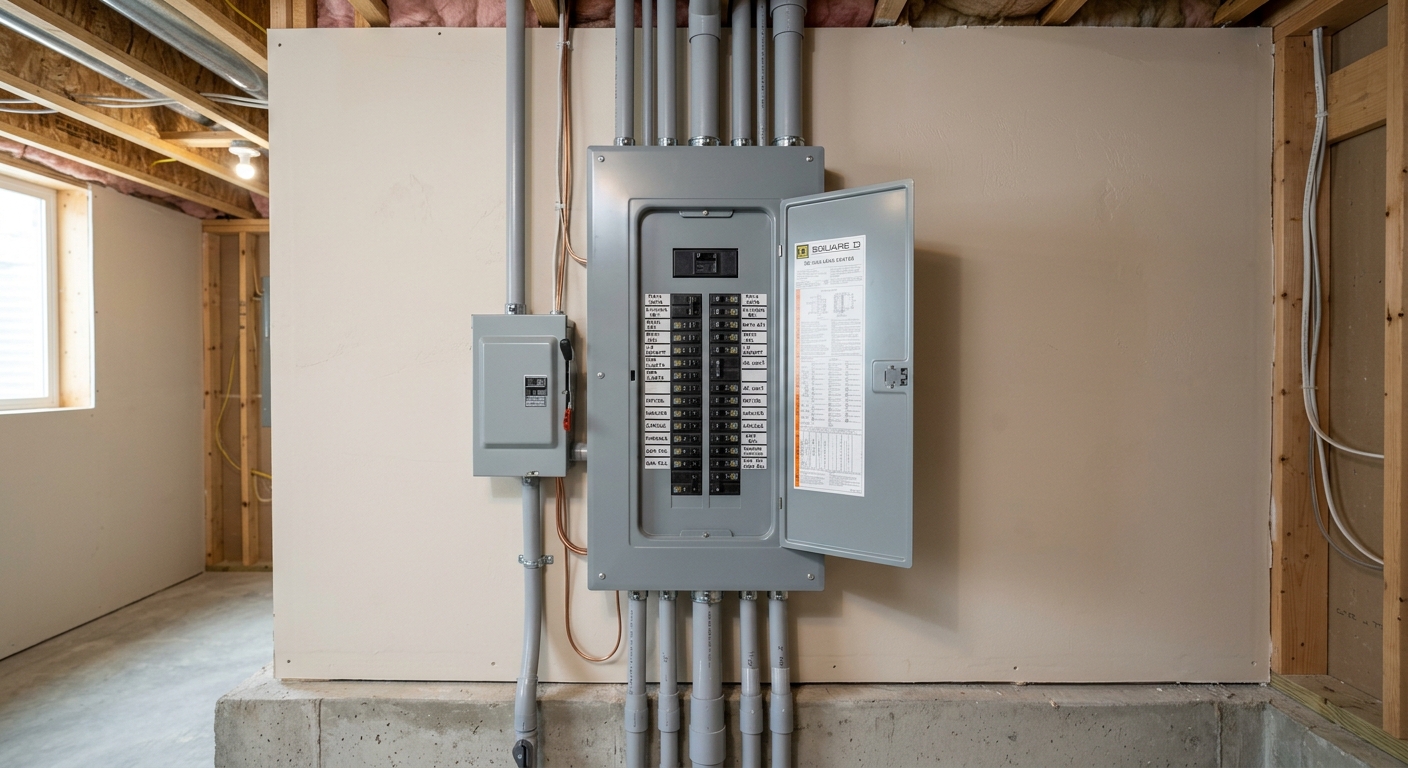
Service capacity matters just as much. Homes with 60A or 100A panels often struggle when you add an EV charger, heat pump systems, and modern kitchen appliances. In the Stratford–Bruce Peninsula market, that’s why many homeowners end up choosing a 200A upgrade as the standard solution, and why panel upgrades commonly sit in the $2,500–$5,000 band before new circuits are added. Aluminum wiring (commonly found in pre-1976 construction) may not be immediately dangerous if connections are properly maintained, but it still requires licensed assessment and remediation methods like approved CO/ALR connections—or replacement where necessary.
Finally, pay attention to code-compliance gaps. Insufficient outlets and extension cords everywhere are a practical hazard, while missing AFCI/GFCI protection can affect home sale compliance and safety. In many cases, you can justify upgrading the “foundation” (panel/circuits) first—then add lighting or outlets later—rather than repeatedly opening walls for small fixes.
| Warning Sign |
What It Means |
Recommended Action |
Urgency |
Price Band |
| Breakers trip frequently |
Commonly indicates overloading, faulty breakers, or unstable connections on undersized circuits. |
Inspection and troubleshooting; add circuits or rebalance loads after testing. |
High (arrange ASAP) |
$650–$2,000 |
| Knob-and-tube wiring present |
Aged insulation and connection methods may not meet today’s safety expectations and insurance requirements. |
Removal and replacement plan; prioritize the most degraded sections and junction areas. |
High (plan promptly) |
$8,000–$20,000 |
| 60A or 100A panel (inadequate load capacity) |
Modern demand can exceed service limits and available breaker space. |
Perform load calculation and upgrade to 200A where needed. |
Medium to High |
$2,500–$5,000 |
| Aluminum wiring (pre-1976 construction) |
Connections can be more prone to oxidation/looseness without approved mitigation. |
Licensed assessment; use CO/ALR connectors where appropriate or replace affected runs. |
Medium |
$3,500–$8,500 |
| Insufficient outlets — extension cords everywhere |
Often leads to nuisance overloading and creates trip/shock hazards. |
Add receptacles and/or dedicated circuits; upgrade protection where required. |
Medium |
$650–$2,000 |
| No AFCI or GFCI protection where required |
Increases shock and fire risk in susceptible locations; may complicate sale/safety compliance. |
Upgrade receptacles/breakers and add required protection as part of an inspection. |
Medium |
$200–$800 |
How to choose a electrical work contractor in Huron East
Choosing a contractor in Huron East is about more than picking the lowest hourly rate. Start with licensing: ask for the Ontario licence details that match the work being performed and confirm they pull ESA permits for any permitted scope (panel/service upgrades, new circuits, rewiring, and EV charger installs). Next, verify insurance. Request a current certificate of liability insurance, and confirm the contractor has WSIB/WCB coverage for their workers (not “somebody’s subcontractor” details you can’t verify).
Then request 2–3 itemised written quotes. You want a breakdown that separates labour and materials and describes what’s included: permit pull, troubleshooting time, cable routing (especially through finished walls), and disposal/cleanup. Avoid “lump sum” only quotes if they don’t list what panel parts, breakers, and cables are planned. Ask whether the electrician will complete the ESA inspection and provide documentation for your records.
Warranty matters. Ask for the workmanship warranty length and confirm whether it’s tied to the original owner or can be transferred if you sell. Also review product/manufacturer warranties on key components like EV chargers and breakers. For payment, plan to never pay more than 10–15% upfront; hold back a portion until the job is complete and inspected.
Finally, require a written timeline: start date, estimated completion, and what triggers delays (like weather access, utility coordination, or drywall patching schedules).
- Licence number and permit responsibilities clearly stated in writing
- Certificate of insurance provided before work begins
- Proof of WSIB/WCB coverage for workers
- ESA permit pull included in the scope for major work
- Itemised quote with labour hours and materials listed separately
- Clarify what’s included for testing, commissioning, and final inspection
- Written load calculation plan for service upgrades
- Specify cable routing approach through finished walls (and restoration expectations)
- Confirm disposal/box-out and debris cleanup are included
- Workmanship warranty length in the contract
- Payment schedule with 10–15% maximum deposit and a final holdback
- Start and completion dates (or weather-dependent milestones) in writing
Red flags seen in the Huron East market include: contractors who refuse to pull ESA permits, quotes that omit labour hours and materials, “cash only” deals with no documentation, vague warranty wording, and promises to “bypass inspection” to save time.
Frequently asked questions — electrical work in Huron East
What electrical upgrades are required when selling a home in Ontario?
In Ontario, selling a home commonly triggers electrical review because insurance or home inspectors may flag safety concerns, and electrical work must still meet Ontario requirements. While Ontario doesn’t create a single, universal “must upgrade everything” list for every sale, upgrades are typically required when the home has unsafe or non-compliant components—like damaged knob-and-tube wiring, missing required protection, or a panel/service that can’t support the dwelling safely. In Huron East, with many homes built before 1981, the most frequent sale-related issues involve old wiring types and undersized services. A licensed electrician may recommend a panel upgrade (often $2,500–$5,000 for a 100A to 200A service) or targeted remediation to address safety and compliance. Any permitted work should be inspected through ESA so you have documentation for buyers and insurers. (Statistics Canada, 2021 Census)
What is a load calculation and why does my electrician need one?
A load calculation is an engineering-style assessment that determines whether your current service size and breaker configuration can safely handle the electrical demand of your home. In practice, electricians in Ontario do this more often when you’re planning a service upgrade, adding high-demand equipment, or installing a Level 2 EV charger that requires a dedicated circuit. For many Huron East homes, the starting point is older service capacity and a wiring layout that wasn’t designed for today’s electrified loads. That’s why a load calculation helps confirm whether you can stay on 100A or if you should plan for a 200A upgrade. It also supports correct breaker sizing and circuit planning so you don’t end up with nuisance trips. If your total demand is close, the load calculation can justify the additional cost of a panel upgrade in the $2,500–$5,000 range rather than creating repeated fixes later.
How do I find a licensed electrician in Huron East?
Start with licence and permit verification rather than just looking for reviews. Ask the contractor for their Ontario electrical licence details and confirm they will pull the required ESA permit for the work—panel upgrades, new circuits, rewiring, and EV charger installation always fall into permitted, inspected categories. In Huron East, you can also request proof of liability insurance and WSIB/WCB coverage for workers before anyone opens walls or touches your panel. A reputable electrician will provide paperwork, quote breakdowns, and a clear scope that includes testing and final inspection documentation. If a contractor can’t provide their licence details or won’t commit to permitting/inspection, that’s a major concern. For context, many local homes are owner-occupied (78.4% owner households, Statistics Canada 2021 Census), so homeowners in the area often prioritize documentation when planning projects like re-wiring or service upgrades.
Can I add a subpanel to my Huron East home?
Yes, adding a subpanel is possible in Ontario, but it must be designed and installed by a licensed electrician with proper permitting and inspection. A subpanel is commonly used when you need more circuit space—such as adding EV charging, upgrading outlets for renovations, or separating loads like electric heat circuits from the main panel. Whether it’s a straightforward add or part of a larger service upgrade depends on your existing panel capacity and the results of a load calculation. In older Huron East homes (72.1% built before 1981), limited breaker space and aged wiring can mean you may need panel upgrades first, not just a subpanel. Typical subpanel-related projects can be priced within the broader “new circuits plus possible service changes” range; if your project requires major panel work, costs often move toward the $2,500–$5,000 panel upgrade band. Your electrician should include ESA permit steps and inspection timing in the written quote.
How much does an electrician cost in Huron East?
In Huron East and the Stratford–Bruce Peninsula region, journeyman labour is commonly quoted around $90–$140 per hour, with rural travel and winter access sometimes increasing effective time on site. Your total cost isn’t only the hourly rate—it’s how many hours are needed to test, troubleshoot, remove/route wiring through finished walls, and restore the area. That’s why two homeowners can see very different totals for “the same” job: an older home may take longer because wiring is hidden behind patchwork additions, and insulation conditions may require replacement rather than reuse. For budgeting, use the common price bands: a dedicated new circuit might start around the $650–$2,000 range, while a panel/service upgrade often lands in $2,500–$5,000. Permits and inspections are mandatory for major work and are added to the overall project cost.
How much does a panel upgrade cost in Huron East?
For Huron East homeowners, a typical panel upgrade moving from 100A to 200A usually falls in the $2,500–$5,000 range. The final number depends on specifics like whether the meter base location changes, the condition of the existing service wiring, accessibility to the panel area, and how much related work is required to make everything compliant and safe. In many Stratford–Bruce Peninsula homes built before 1981 (72.1% in the local profile), electricians often find limited space, older breaker arrangements, or wiring that influences the overall scope. If your panel upgrade is paired with rewiring or EV charging, the total project budget rises because you’re not only changing the panel—you’re updating circuits and often adding new conductors. Always ask for an itemised quote that separates labour and materials and confirms the ESA permit and inspection are included.