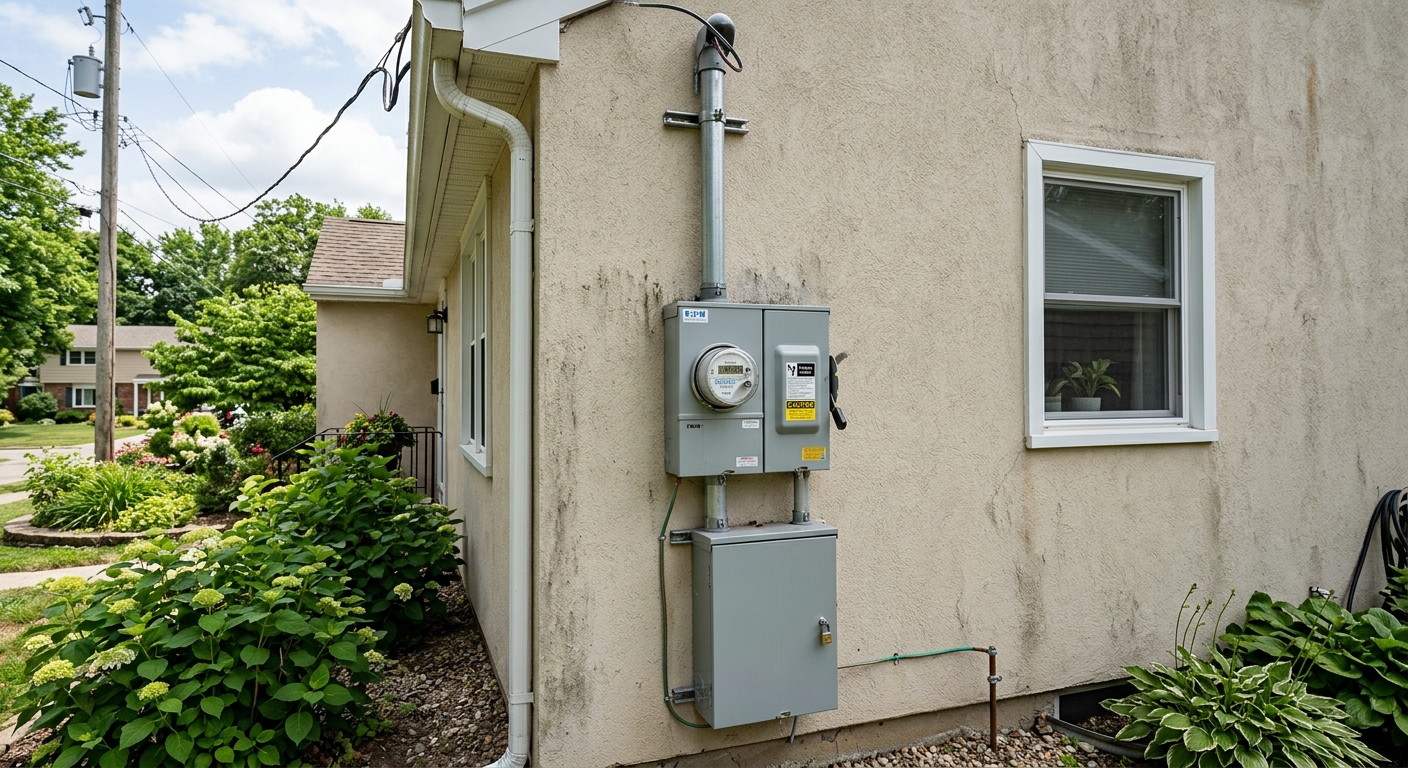
Electrical services and costs in Roncesvalles
Roncesvalles is an established, tree-lined Toronto neighbourhood where many homes were built long before today’s appliance, EV, and heating expectations. With a population of 14,974 in 2021 (Statistics Canada, 2021 Census), there’s steady demand for service upgrades and electrical remediation—especially around Roncesvalles Village where renovations, home staging, and property turnovers are common. In this area, you’ll often see older wiring types such as knob-and-tube or mid-century aluminum branch wiring, both of which can struggle with modern loads and can create insurance and code compliance issues.
Toronto’s housing mix also drives pricing: dense street parking, narrow lots, and basement finishing are frequent in Roncesvalles, which means extra time for access, cable routing, and drywall restoration. Meanwhile, infill and condo-adjacent development keeps licensed electricians in high demand across the broader Toronto economic region, so scheduling can be tighter than in smaller towns. Add the new load drivers—heat pumps, electric heating top-ups, and Level 2 EV chargers—and you’ll find that many projects pair wiring changes with a 100A-to-200A panel and service upgrade. That pairing is often the safest path when current capacity is limited or when conductors are aged, undersized, or not compatible with today’s protection requirements.
If you’re planning work near the Roncesvalles transit corridor or along major side streets with mature trees and constrained access, it’s worth budgeting for the labour and restoration realities that come with this part of Toronto. Next, use the table below to compare the most common electrical services and what usually triggers permits and inspection.
| Service |
Why It's Needed |
Permit Required |
Price Range |
| Panel upgrade — 100A to 200A service |
Increases capacity for EV chargers, heat pumps, modern kitchen loads, and additional circuits while improving circuit protection and wiring compatibility. |
Yes (permit and ESA inspection) |
$2,500 – $6,000 |
| EV charger installation (Level 2, 40–50A) |
Adds a dedicated, code-compliant circuit for faster residential charging; many homes need a panel/service capacity check first. |
Yes (permit and ESA inspection) |
$900 – $2,500 |
| Knob-and-tube wiring removal and replacement |
Older insulation and wiring methods don’t meet modern safety expectations; removal reduces fire risk and often resolves insurance concerns. |
Yes (permit and ESA inspection) |
$5,000 – $15,000 |
| Aluminum wiring remediation (CO/ALR connectors) |
Licensed remediation or replacement is needed to address loose connections and compatibility issues; connectors must be approved for the wiring type. |
Yes (typically permit depending on scope; remediation often triggers inspection) |
$3,000 – $8,500 |
| New dedicated circuit (HVAC, appliance, hot tub) |
Ensures appliances and heating equipment have the correct conductor size, breaker rating, and protection (often AFCI/GFCI where required). |
Yes (permit for new circuits) |
$350 – $2,500 |
| Whole-home rewire (older home, full replacement) |
Replaces aging wiring end-to-end so the home can safely support today’s loads with proper grounding, protection devices, and panel capacity. |
Yes (permit and ESA inspection) |
$8,000 – $20,000 |
Prices are estimates only and vary by project scope, site access and material selection.
What affects the price of electrical work in Roncesvalles
In Toronto and across Ontario, quotes for the “same” electrical job can differ by 30–50% because the hidden work varies: how far cables must travel, whether the panel needs a service upgrade, what wiring type is behind the walls, and how much patching/restoration is required. In Roncesvalles specifically, older housing stock is common, and that’s often the dominant cost driver—older homes may have wiring systems that need remediation before any new circuits can be added safely.
Housing age matters in dollars. Homes built before 1950 are more likely to include knob-and-tube wiring, which can be a deal-breaker for safety reviews and sometimes leads to insurance limitations. Mid-century homes from the 1965–1976 period often contain aluminum branch wiring; in practice, remediation uses approved CO/ALR connectors or requires targeted conductor replacement, and that labour isn’t as simple as “swap the breaker.” On the panel side, many houses still have 60A or 100A services that can’t comfortably handle today’s load mix—EV chargers, heat pumps, induction stoves, and multiple bathroom kitchen circuits at once. When you’re moving from a limited service to a 200A capable setup, pricing frequently aligns with the typical panel upgrade band of about $2,500–$6,000, but complex fixes can push higher if wiring replacement or service relocation is necessary. If you’re doing knob-and-tube removal or full rewire, budgets often land in the $3,000–$15,000 range (and beyond for whole-home work) depending on how much of the dwelling must be opened and rewired.
Local examples that raise costs in Roncesvalles include: buried or difficult-to-access service entry runs, mature trees/yard constraints that complicate trenching, and older electrical rooms with limited clearance. Cost can be lower when you already have a modern panel with adequate space and the wiring path is short—so the same “new circuit” might be far cheaper than a job that requires multiple wall openings. The EV surge is also real: many homeowners want 40–50A Level 2 chargers, and the additional load often triggers load calculations and sometimes an upgrade first.
| Price Factor |
Why It Matters |
Cost Impact |
| Panel size upgrade — 100A to 200A is the standard minimum today |
Modern homes often exceed 100A when adding EV charging and heat pumps; a bigger service improves safety margin and circuit capacity. |
$2,500 – $6,000 typical (can exceed for complex builds) |
| Wiring type — copper vs. aluminum remediation vs. K&T removal |
Aluminum remediation requires approved connectors and careful terminations; knob-and-tube removal is labour-intensive and often invasive. |
$3,000 – $15,000 depending on scope |
| Number of new circuits — each adds material and labour time |
Each circuit adds wire, breakers, labour hours, and sometimes new panel sections or AFCI/GFCI devices. |
Commonly $350 – $2,500 per circuit for typical runs |
| Permit + ESA/TSBC inspection fee — mandatory for all major work |
Major work requires a permit and inspection; these fees are not optional and vary with scope. |
Typically $200 – $500 depending on permit/inspection scope |
| Labour rate for licensed electricians — journeyman rates in {region} |
Toronto’s contractor availability and job complexity affect hourly billing; large openings, additional crews, and restoration time increase hours. |
Often about $90 – $120 per hour |
| EV charger amperage — 40A vs. 50A circuit affects cable and breaker cost |
A 50A circuit typically uses larger conductors and may require different protection components than a 40A design. |
May shift EV installs within $900 – $2,500 |
| Emergency or after-hours premium |
Service calls outside standard hours cost more due to scheduling, truck roll, and labour premium. |
Can add $200 – $600 depending on urgency and call-out |
| Load calculation required for service upgrade |
Ensures the new service/panel rating matches real equipment loads; it’s frequently required when adding EV charging or electric heating/heat pumps. |
Often adds $250 – $700 in engineering/administration time |
Permits & regulations in Ontario
In Ontario, ALL electrical work beyond changing a light bulb must be done by a licensed electrician. That includes work such as installing or replacing a panel, adding new circuits (including dedicated EV charger circuits), rewiring, replacing receptacles and switches when part of a larger alteration, and any service upgrade or relocation. For these types of projects, you’ll need a permit and then an inspection: permitted work must pass inspection by the Electrical Safety Authority (ESA) in Ontario before it’s considered compliant.
What typically does not require a permit is simple like-for-like replacement—e.g., swapping a non-faulty light fixture for another fixture of similar type, or replacing a bulb—provided no wiring changes are involved. As soon as the work involves adding circuits, modifying the panel, changing the conductor routing, or altering the service, you should expect a permit and inspection.
To verify your contractor in Roncesvalles, do it in this order: (1) ask for their Ontario licence number and confirm it via the provincial registry site for licensed electrical contractors; (2) request a certificate of insurance showing liability coverage and ensure it’s current; (3) confirm WSIB/WCB coverage so you’re protected if a worker is injured on-site; (4) get the permit and inspection details in writing before work begins. A good contractor will provide documentation without hesitation, and they’ll clearly describe what will be inspected and when.
When your Roncesvalles home needs an electrical upgrade
Your Roncesvalles electrical system usually gives warning signs before it fails. The big ones are safety-critical, not just “annoying.” First, breakers that trip frequently—especially when you run multiple appliances—often mean an overloaded circuit, an undersized conductor, or a failing breaker. Second, if you have knob-and-tube wiring, the concern isn’t only age; the insulation condition and contact points are safety issues, and insurance scrutiny is common for homes with this wiring. Third, 60A or 100A service can be inadequate for modern heat and cooking setups; when you add an EV charger and heat pumps (common across Toronto’s climate zone), you may quickly exceed what your panel and service can handle safely. In those cases, a 200A upgrade is typically the practical standard solution.
Fourth, aluminum wiring (often pre-1976 construction) may not be immediately dangerous if it’s in good condition, but it does require licensed remediation—most commonly approved connectors or targeted replacement—because loose or incompatible connections can overheat. Fifth, insufficient outlets or relying on extension cords is a code and safety problem, and it can also push homeowners into unsafe load behaviour. Sixth, missing AFCI/GFCI protection where required can surface during sale inspections; it’s a compliance issue that can force upgrades at the worst possible time.
Timing matters: frequent tripping and any signs of scorching/burning smell are immediate issues. Knob-and-tube or aluminum remediation can often be planned, but I’d treat them as “priorities” rather than “someday.” If you’re comparing options, note this: a single new dedicated circuit might be in the $350–$2,500 band, but if the same addition triggers a panel upgrade, the total often shifts into the $2,500–$6,000 panel/service range because the real fix is capacity and safety—not just adding outlets. In Roncesvalles, where older wiring paths are longer and access can be tougher, planning for the underlying system is usually what prevents repeat call-outs.
| Warning Sign |
What It Means |
Recommended Action |
Urgency |
Price Band |
| Breakers trip frequently |
Overload, undersized circuits, or breaker/panel issues—often worsened when heat equipment and kitchen loads run together. |
Electrical load check, inspect panel/breakers, identify overloaded circuits, add capacity where needed. |
Immediate to urgent |
$350 – $2,500 |
| Knob-and-tube wiring present |
Aging wiring method with insulation/contact concerns; can also affect insurance acceptance. |
Plan K&T removal/replacement and correct grounding/protection as required. |
Urgent (plan remediation soon) |
$5,000 – $15,000 |
| 60A or 100A panel (inadequate load capacity) |
Limited capacity for modern loads like EV charging, heat pumps, and electric cooking. |
Load calculation and upgrade to a 200A service where appropriate. |
Planned upgrade (or sooner if you add major loads) |
$2,500 – $6,000 |
| Aluminum wiring (pre-1976 construction) |
Connection overheating risk if not properly remediated with approved methods. |
Licensed remediation with CO/ALR connectors or targeted conductor replacement. |
Planned, but prioritized |
$3,000 – $8,500 |
| Insufficient outlets — extension cords everywhere |
Encourages unsafe overloading and can hide overloaded or undersized circuits. |
Add receptacles/circuits and address circuit sharing and protection. |
Urgent for safety |
$350 – $2,500 |
| No AFCI or GFCI protection where required |
Higher shock and arc-fault risk and potential compliance failures during sale/inspection. |
Upgrade protection devices as required for the rooms/circuits in your home. |
Planned (immediately before sale if possible) |
$200 – $2,000 |
How to choose a electrical work contractor in Roncesvalles
Choosing the right electrician in Roncesvalles comes down to licensing, documentation, and clarity of scope. First, verify their Ontario electrical contractor licence number (ask for it and confirm it through the provincial registry). Next, request a certificate of liability insurance—make sure coverage is active and the company name matches the licence. Then confirm WSIB/WCB coverage so you’re not left holding the risk if a worker is injured. If you can’t get these items up front, that’s your first signal to walk away.
Get 2–3 written, itemised quotes. You want a labour + materials breakdown and line items for things like breakers, cable/conduit, labour hours, minor supplies, disposal/dust control, and any patching/restoration exclusions. Ask whether permit fees and the ESA inspection are included (or if they’re separate)—and confirm whether the contractor pulls the permit or you do.
Warranty matters: ask for the workmanship warranty length, whether the manufacturer warranty on devices (panel components, breakers, charger hardware) is separate, and if any warranties are transferable to the next homeowner. For payment, a safe approach is to keep upfront costs around 10–15% and use a holdback until the job is complete and inspected. Finally, insist on a written timeline with a start date, planned completion date, and what happens if materials are delayed.
- Licence number provided and verifiable in Ontario
- Certificate of liability insurance on request
- WSIB/WCB clearance/coverage confirmed
- Itemised quote (labour, materials, permits/inspection handling)
- Scope includes exclusions in writing (e.g., drywall repair limits)
- Permit responsibility and inspection timing confirmed
- Disposal of old breakers/wiring stated
- Workmanship warranty length stated in the contract
- Product/manufacturer warranty terms included
- Payment schedule capped at 10–15% deposit
- Clear start date and completion estimate
- House access plan for Roncesvalles street parking/narrow driveways
Red flags in Roncesvalles: “no permit needed” for panel or new circuits, refusal to provide licence/WSIB documentation, vague lump-sum pricing with no scope line items, pushing large deposits (beyond 10–15%), or promising an impossible timeline without listing material lead times.
Frequently asked questions — electrical work in Roncesvalles
How do I find a licensed electrician in Roncesvalles?
Start by confirming the electrician is licensed in Ontario and that their company licence/registration can be verified through the provincial registry. Then ask for a certificate of liability insurance and proof of WSIB/WCB coverage before you schedule anything. For Roncesvalles specifically, it helps to ask local contractors how they handle access constraints (street parking, narrow side yards, and older wiring runs hidden in finished basements). You can also request sample invoices or a written scope for a similar job—panel upgrades and EV installs are common in Toronto, so reputable firms can show comparable work. If a contractor won’t provide licence or insurance details, or insists on doing permit-required work without paperwork, that’s a serious concern under Ontario rules overseen by ESA inspections.
Can I add a subpanel to my Roncesvalles home?
Yes, adding a subpanel is often possible, but it depends on your existing service size (commonly 60A/100A in older Roncesvalles homes), panel space, and whether the current wiring can safely support the new distribution. Subpanels typically come with the need for proper bonding/grounding and correct feeder sizing, and that’s usually permit-and-inspection territory in Ontario. If you’re also adding major loads—like an EV charger or heat pump circuits—you may need a load calculation and possibly a 200A service upgrade, which is commonly budgeted in the $2,500–$6,000 band for many panel/service upgrades. A licensed electrician can evaluate your current panel capacity and wiring condition before recommending subpanel placement.
How much does an electrician cost in Roncesvalles?
In Roncesvalles and the broader Toronto region, licensed contractors commonly bill around $90–$120 per hour for journeyman labour, depending on the type of work and complexity. Your total cost depends heavily on access and how much wall/ceiling opening is required—especially in older neighbourhoods with knob-and-tube or aluminum wiring remediation needs. Permit fees and ESA inspection costs also factor in for major projects, and those are typically in the $200–$500 range depending on scope. For simple tasks like troubleshooting or a basic dedicated circuit run, costs can land lower, but if the job reveals wiring issues or requires a service/panel upgrade, the project often moves into the panel upgrade ($2,500–$6,000) or rewire/remediation bands. The safest way to estimate is a clear, itemised quote after an initial inspection.
How much does a panel upgrade cost in Roncesvalles?
Panel upgrade pricing in Roncesvalles commonly falls around $2,500–$6,000 when you’re upgrading from a 100A service to a 200A service and the wiring/service entry conditions are straightforward. Costs can increase if the electrician has to relocate the service equipment, address problematic old wiring, add grounding upgrades, or open more of the home than expected for safe installation. In a neighbourhood with older housing stock, you may also see aluminium or knob-and-tube wiring requiring remediation before the new panel can be safely commissioned—this pushes projects higher than “just a panel swap.” If your contractor expects a straightforward upgrade with minimal demolition, the mid-range is more likely; if it becomes a combined service + wiring remediation project, budgeting closer to the upper end (or beyond) is prudent.
Do I need to upgrade to a 200A panel?
You may, depending on your current service size and planned loads. In many Roncesvalles homes with older 60A or 100A services, adding a Level 2 EV charger, heat pumps, and modern kitchen appliances can put you beyond what the existing capacity comfortably supports. Ontario electricians typically recommend load calculations when you’re doing service/panel work, and the results determine whether 200A makes sense. Upgrading to 200A is often the standard solution because it provides safer headroom and reduces the need for repeated circuit work later. If you only want one new circuit, you might not need a service upgrade; but if the electrician’s assessment shows limited capacity, the 200A route aligns with the typical $2,500–$6,000 panel/service band. Your electrician should explain the calculation, not just the recommendation.
How much does an EV charger installation cost in Roncesvalles?
For a typical Level 2 home charger installation in Roncesvalles (about a 40–50A circuit), you’ll commonly see pricing around $900–$2,500 depending on cable runs, mounting location, breaker/panel compatibility, and whether a permit and inspection are required (they are). If your existing panel can’t accommodate the new dedicated circuit, the charger price may be part of a larger project that includes a panel upgrade—often within the $2,500–$6,000 band for many 100A-to-200A upgrades. Homes with older wiring types or limited service capacity can cost more because the electrician may need load calculations, additional circuit work, or remediation before the charger can be safely commissioned. Ask for an itemised quote that clearly separates charger hardware from labour and electrical work.