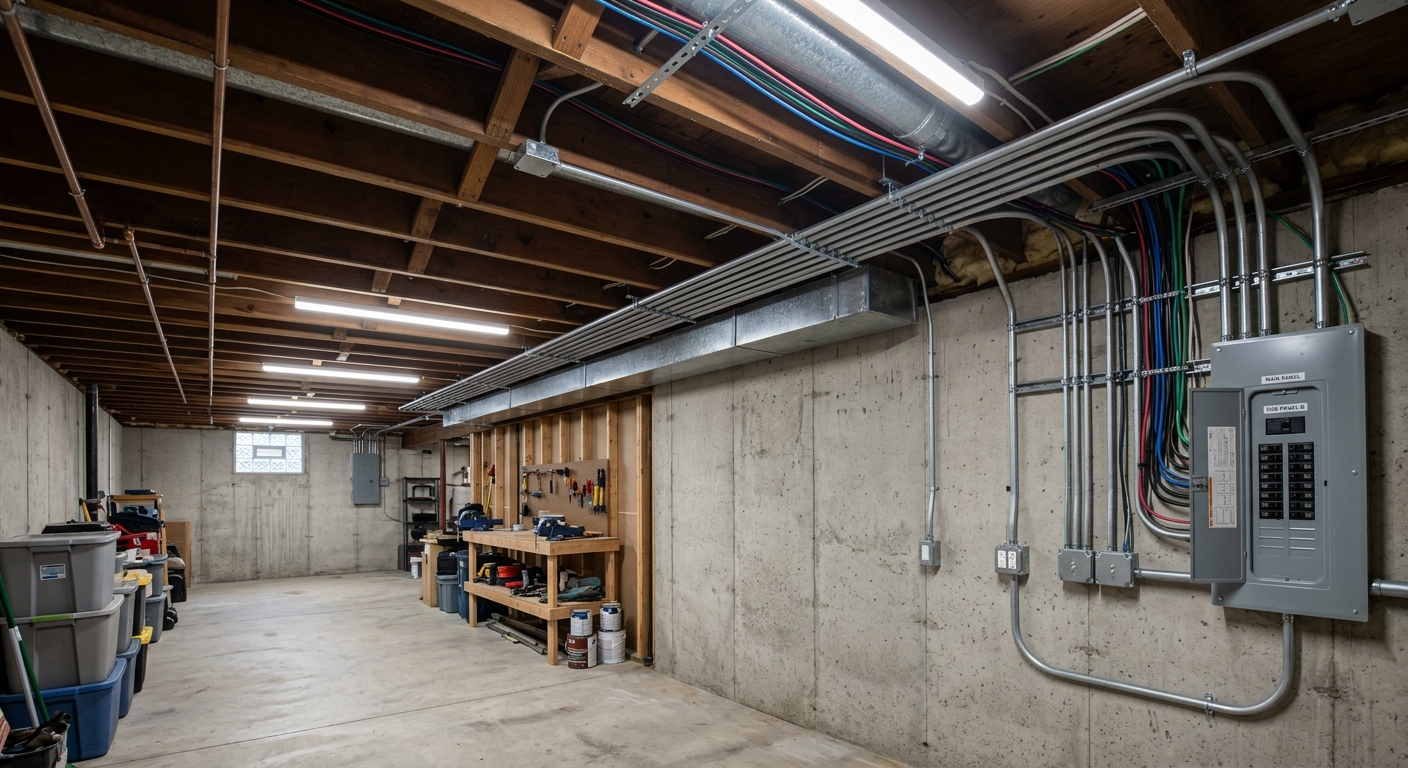
Electrical services and costs in West Humber-Clairville
Electrical work in West Humber-Clairville is shaped by a mix of older housing stock and ongoing infill, and that shows up in callouts for service upgrades, aging wiring, and higher-demand circuits. In the 2021 Census, West Humber-Clairville has a population of 33,312 (Statistics Canada, 2021 Census). With many homes in the Toronto area dating to pre-1980 construction, contractors regularly encounter knob-and-tube or mid-century aluminum branch wiring that can struggle with today’s appliance and electronics loads.
Toronto’s market also drives pricing: demand is high for licensed electricians, and projects often need coordination for permits, inspections, and material availability across the surrounding GTA (Mississauga, Brampton, Markham, Vaughan). Winter conditions can further add complexity—attics, basements, and crawlspaces are colder and more humid, and scheduling around storms can slow inspection windows. In older neighbourhoods near the Humber River corridor and the West Humber-Clairville transit area, homeowners frequently add heat pumps, finish basements, install EV charging, or convert space for rentals, which increases electrical load and pushes many homes toward a 100A-to-200A upgrade path.
The sections below outline what typically triggers each major service and how permit requirements and labour time affect total cost. Use the table as a practical starting point before requesting itemised quotes.
| Service |
Why It’s Needed |
Permit Required |
Price Range |
| Panel upgrade — 100A to 200A service |
Improves capacity for modern loads like EV chargers, heat pumps, electric cooking, and expanded basement circuits. |
Yes (permit + ESA inspection in Ontario) |
$2,500 – $6,000 |
| EV charger installation (Level 2, 40–50A) |
Supports reliable daily charging; typically requires dedicated breaker, wiring, and sometimes a service/panel capacity check. |
Yes (charger + new circuit typically requires permit/inspection) |
$900 – $2,500 |
| Knob-and-tube wiring removal and replacement |
K&T is difficult to verify for safe insulation condition over time; replacement reduces fire risk and improves code compliance. |
Yes (rewiring scope requires permits/inspections) |
$3,500 – $15,000 |
| Aluminum wiring remediation (CO/ALR connectors) |
Prevents overheating at terminations using approved methods (CO/ALR) or full replacement where connectors can’t be safely applied. |
Yes (remediation on branch circuits typically requires permit/inspection) |
$2,500 – $7,500 |
| New dedicated circuit (HVAC, appliance, hot tub) |
Adds capacity and correct protection for high-load equipment, avoiding nuisance trips and worn connectors. |
Yes (new circuits generally require a permit) |
$500 – $3,500 |
| Whole-home rewire (older home, full replacement) |
Best option when wiring is aged throughout or mixed materials can’t be safely maintained; reduces recurring issues. |
Yes (major rewiring requires permits/inspections) |
$7,500 – $20,000 |
Prices are estimates only and vary by project scope, site access and material selection.
What affects the price of electrical work in West Humber-Clairville
In Toronto and the wider Ontario market, it’s common to see quotes for the “same” electrical task vary by 30–50%. The difference usually comes down to labour hours, wiring complexity, panel/service capacity work, and whether the contractor must do significant remediation (instead of a quick repair). Even when the end result is similar, older wiring types can turn a straightforward install into a code-compliant rebuild.
In West Humber-Clairville, the dominant cost driver is the age and type of housing wiring. Homes built before 1950 may still contain knob-and-tube; if insulation is compromised or circuits can’t be verified for safe continuation, contractors often recommend replacement rather than patching. Homes from the 1960s to the 1970s commonly have 60A or 100A panels that don’t have room for modern loads—EV charging, heat pumps, and induction cooking can push demand beyond what a smaller service can safely support. Aluminum wiring is also a recurring issue in many homes from about 1965–1976; it requires licensed remediation using approved CO/ALR methods or full replacement when safe terminations can’t be achieved.
Local EV adoption is contributing to a surge in Level 2 charger permits, and the amperage matters: a 40A circuit is usually less costly than a 50A run because of breaker and cable sizing. In practice, a typical panel/service upgrade in the GTA often lands in the $2,500–$6,000 band, while full wiring replacement can move into the $7,500–$20,000 range depending on how much of the home must be reworked. Access conditions in older neighbourhoods—tight crawlspaces, finished basements, or routed wiring behind low-clearance drywall—can add hours. Conversely, homes with clear wiring pathways and an already-upgraded 200A panel often keep costs closer to the lower end of the panel upgrade band.
| Price Factor |
Why It Matters |
Cost Impact |
| Panel size upgrade — 100A to 200A is the standard minimum today |
More capacity reduces the risk of nuisance trips and supports modern appliances and A/C/heat pump loads. |
Often shifts the job into the $2,500–$6,000 range (and higher for complex relocations). |
| Wiring type — copper vs. aluminum remediation vs. K&T removal |
Approved remediation takes labour and materials; knob-and-tube often requires replacement instead of repair. |
Can increase costs by thousands; whole-home work commonly rises into $7,500–$20,000. |
| Number of new circuits — each adds material and labour time |
Each circuit requires wiring, breaker, testing, and often wall access/patching. |
More circuits can add a few hundred to over a thousand per added circuit depending on distances and finishes. |
| Permit + ESA/TSBC inspection fee — mandatory for all major work |
Major electrical work requires ESA permitting/inspection in Ontario; fees cover administrative and inspection costs. |
Typically adds about $200–$500 to the total depending on scope. |
| Labour rate for licensed electricians — journeyman rates in {region} |
Toronto-area rates reflect skilled labour availability and compliance work (testing, documentation, inspection readiness). |
Labour is commonly one of the biggest drivers; bids can differ by 30%+. |
| EV charger amperage — 40A vs. 50A circuit affects cable and breaker cost |
Higher amperage typically requires heavier conductors and a different breaker configuration. |
Often shifts EV install pricing toward the upper end of the $900–$2,500 band. |
| Emergency or after-hours premium |
Scheduling urgency and after-hours coordination can increase labour costs. |
Can add a noticeable surcharge (often several hundred dollars) depending on timing and access. |
| Load calculation required for service upgrade |
New service sizing requires documented load calculations and correct breaker/panel configuration. |
May add time and testing; helps prevent under-sizing that later forces costly changes. |
Permits & regulations in Ontario
In Ontario, all electrical work beyond changing a light bulb must be completed by a licensed electrician, and many jobs require permits before work starts. This includes panel upgrades (like moving from 100A to 200A), new circuits (such as for an EV charger, hot tub, or major HVAC equipment), rewiring projects, and service upgrades. Permitted work must be inspected by the Electrical Safety Authority (ESA) before it’s considered compliant. DIY electrical is prohibited for most work; homeowner “exceptions” are narrow and usually limited to tasks that don’t involve wiring, altering circuits, or making connections that affect protection and safety.
To verify a contractor in West Humber-Clairville, start by confirming the electrician and company are properly licensed, then verify proof of coverage. Step-by-step: (1) Ask for the contractor’s licence details and check them via the ESA-related public registry/verification tools used in Ontario; don’t rely only on a business card. (2) Request a certificate of insurance for general liability and, for many contractors, proof of appropriate coverage relevant to electrical work. (3) Confirm WSIB clearance (or coverage status) in Ontario—this is especially important because it protects you if a worker is injured on your property. (4) Before scheduling work, ask whether they will pull the ESA permit and handle the inspection booking; reputable contractors will typically coordinate permits as part of the scope.
If you’re adding circuits or doing a panel/service change, insist on the permit and inspection plan in writing—no “we’ll deal with it later” language.
When your West Humber-Clairville home needs an electrical upgrade
Several warning signs in West Humber-Clairville point to safety-critical electrical issues—not just cosmetic problems. The first is breakers that trip frequently. That often indicates an overloaded circuit, failing connections, or an undersized/incorrect circuit design; if it’s happening repeatedly, it needs prompt assessment. Second, knob-and-tube wiring is a key concern. The issue isn’t only age—it’s that old insulation condition and contact reliability can deteriorate, and insurance coverage can become a problem when K&T remains in service. Third, a 60A or 100A service can be inadequate for today’s combined loads: EV chargers, heat pumps, electric stove/oven, and basement additions can push demand beyond what a smaller panel can support safely. In most cases, upgrading to 200A is the standard solution.
Fourth, aluminum wiring (common in pre-1976 construction) is not automatically “dangerous” if maintained, but it does require licensed remediation—especially at terminations—using approved CO/ALR connectors or replacement where necessary. Fifth, insufficient outlets and extension cords everywhere signal a design problem and can lead to overheating risks when loads are consolidated. Sixth, missing AFCI/GFCI protection (where required by current code) is often discovered at home sale or during upgrades; it becomes a compliance priority rather than a mere convenience fix.
In Toronto’s seasonally cold climate, panel/breaker temperatures and basement humidity can amplify connection issues, so planned work is often better than repeated “reset and forget.” For example, if you’re adding a Level 2 EV charger and you discover the panel is undersized, the incremental cost of a full panel upgrade (often $2,500–$6,000) can prevent future rewiring and rework later—versus installing a charger on an already constrained system.
| Warning Sign |
What It Means |
Recommended Action |
Urgency |
Price Band |
| Breakers trip frequently |
Often overload, failing breaker/connection, or circuits not sized correctly for modern use. |
Schedule an inspection and troubleshoot circuit loading; add dedicated circuits or upgrade panel capacity if needed. |
Immediate (or within days) |
$500 – $3,500 |
| Knob-and-tube wiring present |
Aging insulated conductors with increased risk and common insurance concerns. |
Plan K&T removal and replacement; scope depends on whether it’s localized or throughout the home. |
Immediate assessment (plan replacement) |
$3,500 – $15,000 |
| 60A or 100A panel (inadequate load capacity) |
Limited capacity for EV charging, heat pumps, and modern kitchen/laundry loads. |
Load calculation and typically upgrade to 200A service. |
Within months |
$2,500 – $6,000 |
| Aluminum wiring (pre-1976 construction) |
Termination and connection risks if not remediated properly. |
Remediate with approved CO/ALR connectors or replace affected runs when required. |
Planned upgrade (not emergency) |
$2,500 – $7,500 |
| Insufficient outlets — extension cords everywhere |
Convenience workarounds that can overload single circuits and create tripping/overheating risks. |
Add receptacles on appropriate circuits; address any overloaded/misaligned circuits. |
Planned upgrade |
$500 – $2,500 |
| No AFCI or GFCI protection where required |
Code non-compliance and increased risk in common fault conditions. |
Add or upgrade protective devices and correct circuit protection as part of an inspection. |
Within 1–3 months (or before sale) |
$800 – $3,500 |
How to choose a electrical work contractor in West Humber-Clairville
Choosing the right contractor in West Humber-Clairville comes down to three core checks: Ontario licensing, liability coverage, and WSIB/WCB compliance. Start by asking for the electrician/company licence number and confirming it in Ontario through the appropriate provincial verification process. Next, request proof of insurance (certificate of insurance) so you’re not left holding the cost if property damage occurs. Finally, confirm WSIB clearance or coverage status for the contractor doing the work—this is a key Ontario requirement that protects homeowners and workers.
When you request quotes, insist on 2–3 itemised written estimates, not a single lump sum. The best quotes break down labour hours, materials (panel components, breakers, conductors, connectors), permit/inspection handling, and any drywall patching or disposal costs. Read the scope carefully: does the price include permit pulling, ESA/inspection coordination, and test reports? If removal of old wiring is required (like K&T), ask how disposal and waste handling are handled.
Look for a workmanship warranty and confirm the length and what’s covered. Also clarify product/manufacturer warranties and whether they transfer to you as the homeowner. Payment schedules matter—never pay more than 10–15% upfront. Use a holdback until the job is complete and inspected. In writing, get a start date and an expected completion window, since Toronto-area inspection timelines can affect final sign-off.
- Licence number provided up front (and verified)
- Certificate of insurance requested and current
- WSIB clearance/coverage status confirmed
- Permit pulling included where required (panel upgrades, new circuits, EV chargers)
- Itemised quote with labour + materials, not just labour
- Clear description of what’s excluded (patching, disposal, material upgrades)
- Workmanship warranty stated in writing
- Manufacturer warranty details and registration process explained
- No large upfront deposits (aim for 10–15%) and a holdback policy
- Testing and inspection readiness plan stated (test results, labels, documentation)
- Schedule and completion estimate in writing
- Communication plan for inspection scheduling and any field changes
Common red flags in the West Humber-Clairville area include quoting “no permit needed” for panel work or new circuits, refusing to provide licence/insurance/WSIB documentation, offering only a verbal scope, demanding large upfront payments, and not discussing warranty or inspection coordination.
Frequently asked questions — electrical work in West Humber-Clairville
How do I know if my West Humber-Clairville home has aluminum wiring?
In West Humber-Clairville, aluminum wiring is most commonly associated with homes built around the mid-1960s through the mid-1970s, but you shouldn’t rely on year alone. The quickest home check is at the panel and accessible junction points: aluminum branch conductors are often a dull, grey colour (not always), and breakers/terminals may look different from typical copper-only setups. The more reliable route is an electrician inspection: they can check torque/termination condition and look for approved connectors or signs of overheating. If your home has aluminum, it often requires remediation using approved methods such as CO/ALR connectors or, in some cases, replacement of affected runs before adding new high-load devices. During a service upgrade, load calculations and safe terminations are especially important.
What is the cost of rewiring a house in West Humber-Clairville?
Rewiring costs in West Humber-Clairville vary widely based on how much of the home must be replaced, finishing complexity (drywall access), and wiring type (knob-and-tube, aluminum, or mixed). For a full home rewire in an older house, budgeting typically starts in the $7,500–$20,000 range. If the scope is more limited—like localized K&T removal or targeted replacement—pricing can be lower, commonly moving into the $3,500–$15,000 band depending on the number of rooms and circuits affected. If your rewiring is paired with a panel/service upgrade to support modern loads (often $2,500–$6,000 for a 100A-to-200A upgrade), the combined project can be more efficient than doing everything separately later.
What electrical upgrades are required when selling a home in Ontario?
Ontario doesn’t require a “standard upgrade list” for every sale the way a renovation checklist might suggest, but electrical safety and code compliance are still central. What typically matters is whether the home’s electrical system is safe, adequately protected, and compliant with current requirements, especially when defects are found during sale preparations or inspections. Common upgrade triggers include missing or outdated protective devices (like GFCI/AFCI where required), unsafe wiring conditions, and service/panel capacity problems that affect safety and functionality. If your system includes knob-and-tube or unresolved aluminum termination issues, buyers and insurers often push for remediation before closing. In many Toronto-area transactions, homeowners also upgrade to a 200A service to support modern loads and reduce future risk of repeated nuisance trips and overloading.
What is a load calculation and why does my electrician need one?
A load calculation is a formal method to determine whether your existing service size can safely handle your home’s connected electrical loads—now and with planned additions. For many West Humber-Clairville homes, electricians run a load calculation before recommending a 100A-to-200A service upgrade, especially when you’re adding high-demand equipment like an EV charger (often a 40–50A Level 2 circuit), a heat pump, or electric cooking. The calculation helps prevent an under-sized service that can lead to nuisance breaker trips or overstressed components. It also supports proper permitting and inspection documentation in Ontario. When done correctly, it’s one of the reasons a quote becomes clearer: you’ll know whether a full panel/service upgrade is necessary (often $2,500–$6,000 in this market) or if the safer path is smaller circuit additions.
How do I find a licensed electrician in West Humber-Clairville?
Start by requesting the contractor’s licence information and verifying it using Ontario’s licence verification resources for electricians/contractors. Don’t rely solely on advertising—ask for the licence number and confirm it before signing. Next, ask for a certificate of insurance and confirm WSIB clearance/coverage status. In Ontario, reputable contractors will also explain how they handle ESA permitting and inspection for your specific job (panel upgrades, rewiring, and new circuits typically require permits). For West Humber-Clairville homeowners, it’s smart to request itemised quotes so you can compare labour hours, materials, permit handling, and any disposal or patching. If a contractor says permits aren’t needed for major work, that’s a serious concern—permit/inspection compliance is part of what makes the installation safe and insurable.
Can I add a subpanel to my West Humber-Clairville home?
Yes, adding a subpanel can be a good option when you need more circuit capacity or you want to distribute loads more efficiently—commonly for finished basements, workshops, or separating circuits for EV charging and HVAC. However, whether you can add one safely depends on your current panel/service size, wiring condition, and the existing panel’s capacity. In homes with older wiring or aluminum issues, the electrician may recommend remediation first (especially at terminations) to ensure safe connections before adding new breakers. Often, homeowners discover they also need a service upgrade to 200A when the subpanel is part of a larger load plan; panel/service upgrades in this area typically range from $2,500–$6,000 for a straightforward 100A-to-200A change. Subpanel work generally requires a permit and ESA inspection in Ontario.