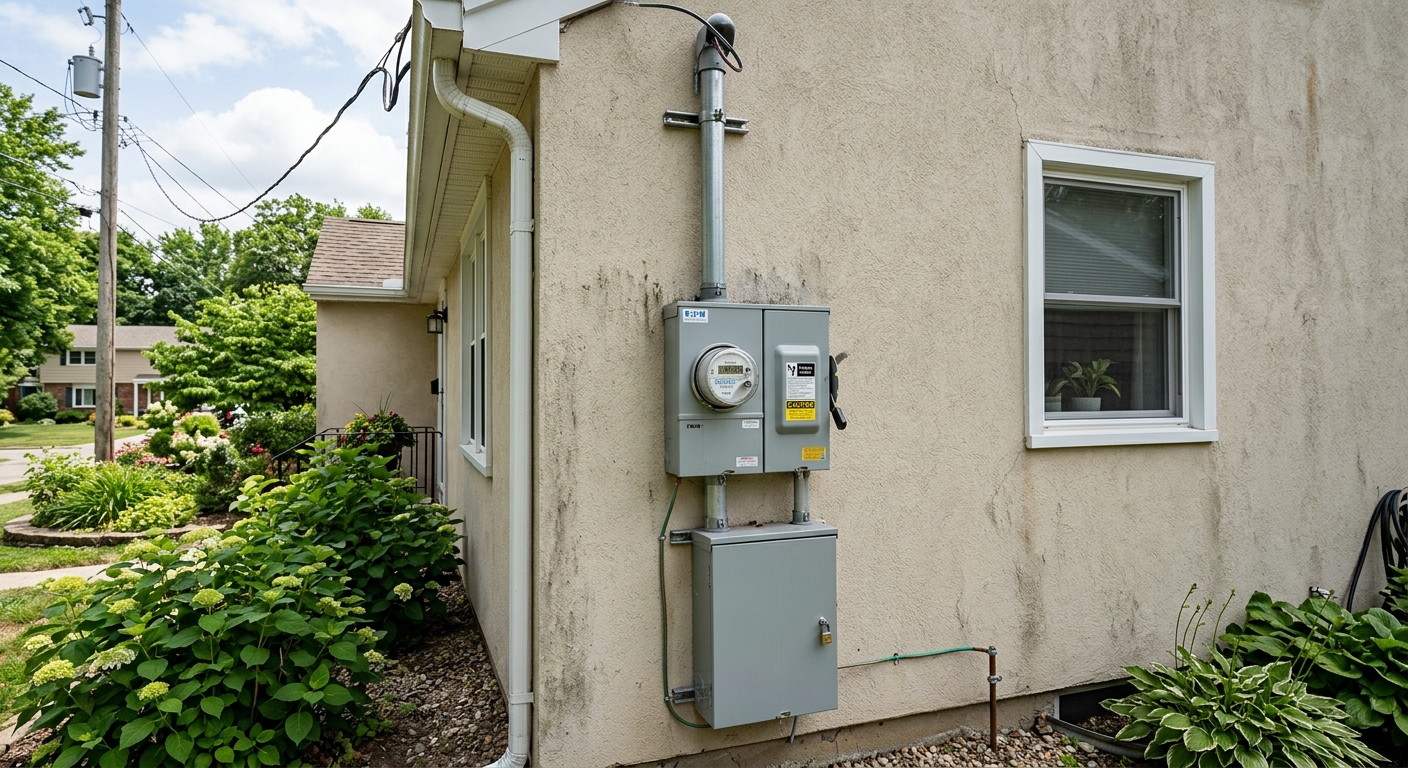
Electrical services and costs in Newton
In Newton, electrical upgrades are a common part of keeping older homes safe and service-capable for today’s loads. Newton’s housing mix includes a large share of older housing stock, and across the Lower Mainland–Southwest the work is often concentrated in older neighbourhood blocks where panel capacity, wiring method, and safety devices were designed for a much lighter electrical lifestyle. With a population of 159,390 (Statistics Canada, 2021 Census), contractor availability is generally good, but scheduling can still tighten around peak permit windows and multi-unit access constraints.
Cost is heavily shaped by the Lower Mainland–Southwest market: dense urban lots, tight service/meter areas, and frequent coordination with BC Hydro for service or mast changes. Rain and coastal humidity can also increase the importance of correct exterior terminations, proper bonding/grounding, and weather-rated equipment, especially when older services are being refreshed. In areas such as Newton (near the historic village core and along major arterial corridors like 72nd Avenue and Fraser Highway), many pre-1970s homes are prime candidates for knob-and-tube removal, aluminum remediation, and service upgrades.
Most homeowners feel the biggest decision pressure when they’re planning an EV charger or adding electric heating. A modern load may require raising service capacity from 60–100A to a 200A system, and that’s where permits, inspections, and labour time quickly become the difference between a “small fix” and a compliant, durable rebuild. Use the estimates below as a starting point for your budget, then compare scopes carefully in your quotes.
| Service |
Why It's Needed |
Permit Required |
Price Range |
| Panel upgrade — 100A to 200A service |
Provides headroom for EV charging, modern kitchen loads, and heat equipment while meeting today’s safety expectations. |
Yes (service/panel change and inspection) |
$2,500–$4,200 |
| EV charger installation (Level 2, 40–50A) |
Dedicated circuit and proper breaker wiring for reliable charging and correct overcurrent protection. |
Yes (new circuit/connection to panel) |
$1,100–$2,300 |
| Knob-and-tube wiring removal and replacement |
Old wiring methods can be difficult to safely re-use; homeowners often replace to address insurance and safety concerns. |
Yes (rewire/removal work) |
$10,500–$19,500 |
| Aluminum wiring remediation (CO/ALR connectors) |
Where aluminum branch wiring is present, approved connectors and terminations reduce overheating risk at connections. |
Yes (major wiring alterations) |
$4,200–$9,000 |
| New dedicated circuit (HVAC, appliance, hot tub) |
Adds capacity and prevents nuisance tripping when a specific high-load appliance needs a dedicated supply. |
Yes (new circuit) |
$1,300–$3,200 |
| Whole-home rewire (older home, full replacement) |
Full replacement of branch circuits and safety devices for homes with widespread obsolete wiring and/or undersized services. |
Yes (extensive rewiring) |
$15,500–$29,000 |
Prices are estimates only and vary by project scope, site access and material selection.
What affects the price of electrical work in Newton
In the Lower Mainland–Southwest, two quotes for the “same” electrical job can differ by 30–50% because the work is often driven by what’s hidden behind walls: existing wiring type, panel condition, cable routes, grounding/bonding quality, and how much load calculation work is required before approvals. Those variables are also what separate a straightforward $1,800–$4,500 panel/service upgrade from a project that escalates into a full rewire or a service reconfiguration. Across British Columbia, labour and inspection workflow costs vary, and urban access constraints in the Newton area can add time—especially when the meter location, service mast routing, or crawlspace access is tight.
Housing age is usually the dominant cost driver. Homes built before 1950 may contain knob-and-tube wiring, and insurance can become a barrier if it remains. Many homes from the 1960s–70s also arrive with 60A or 100A panels that are inadequate for modern loads such as EV charging, heat pumps, and induction stoves. Aluminum wiring is another common issue in the 1965–1976 construction era; remediation typically requires licensed work and approved CO/ALR connectors—otherwise a full replacement is often the safer path.
Local market demand is also a factor: EV adoption is pushing more Level 2 charger permits than in prior years. In Newton, a 40A vs. 50A circuit changes cable and breaker sizing and can affect whether you need to upgrade the service first. For example, if your panel is already near capacity, upgrading service (often closer to the higher end of the $1,800–$4,500 band) can be cheaper overall than adding multiple “band-aid” circuits that later force another return visit. Conversely, if your panel is modern and there’s clear access, a dedicated EV circuit may stay closer to the lower end of the typical charger band.
| Price Factor |
Why It Matters |
Cost Impact |
| Panel size upgrade — 100A to 200A is the standard minimum today |
More capacity reduces load shedding and supports EV/heat loads without repeated changes. |
$1,800–$4,500 |
| Wiring type — copper vs. aluminum remediation vs. K&T removal |
Obsolete wiring requires re-termination or removal; approved connectors and thorough testing add time. |
$2,500–$20,000 |
| Number of new circuits — each adds material and labour time |
Breakers, wire, routing, and labour scale with each additional circuit. |
$500–$3,200 per circuit |
| Permit + ESA/TSBC inspection fee — mandatory for all major work |
Major changes require permits and inspections; staged work can require multiple trips. |
$200–$900 |
| Labour rate for licensed electricians — journeyman rates in Lower Mainland–Southwest |
Licensed labour and code-compliant workmanship are time-intensive for older homes. |
$700–$3,500 |
| EV charger amperage — 40A vs. 50A circuit affects cable and breaker cost |
Higher amperage generally uses larger conductors and appropriately sized breakers. |
$100–$600 |
| Emergency or after-hours premium |
Urgent attendance can require scheduling changes and overtime labour. |
$150–$600 |
| Load calculation required for service upgrade |
Accurate load calculations affect equipment sizing and what approvals/updates are needed. |
$100–$450 |
Permits & regulations in British Columbia
In British Columbia, ALL electrical work beyond changing a light bulb must be performed by a licensed electrician. For homeowners in Newton, the key practical rule is that permits are required for most changes that affect circuits, panels, or service equipment—this includes panel upgrades, adding new circuits (like a Level 2 EV charger), rewiring, and service equipment upgrades. Once the work is permitted, it must pass inspection by the provincial electrical safety authority (in BC, that’s overseen under Technical Safety BC requirements).
DIY electrical is generally prohibited for work such as pulling new circuits through walls/attics, altering the main panel, replacing breakers for a new circuit, or modifying service conductors. Safe, homeowner-typical tasks are limited to things like replacing existing fixtures where the connection method is unchanged and there’s no wiring modification—still, if you’re uncertain, ask your electrician before you start. For permitting, your electrician should handle the application and ensure the scope matches the permit.
To verify a contractor in Newton step-by-step: (1) confirm their BC electrician licence using the provincial registry search (look for the correct individual and licence status); (2) request a certificate of insurance and ensure liability coverage is current and shows they can work at residential sites; (3) confirm workplace coverage (WSIB/WCB coverage if they have workers—ask for the documentation they provide); (4) ask for their permit/inspection process in writing and keep a copy of the permit number and inspection sign-off.
When your Newton home needs an electrical upgrade
In Newton, the warning signs that matter aren’t just “inconvenient”—they’re safety-critical indicators that your electrical system may not be keeping up with modern demand. Start with the most common: breakers that trip frequently. That often signals an overloaded panel, a failing breaker, or undersized/incorrect circuits. If the trips are persistent, they should be treated as an urgent safety check.
Next, knob-and-tube wiring: don’t think of this as merely “old.” The concern is outdated wiring construction and insulation conditions, which can complicate insurance coverage and safe long-term use. If knob-and-tube is present, plan replacement as a high-priority upgrade, especially before any major renovations.
Service capacity is another major trigger. A 60A or 100A service may be inadequate for a modern Newton home running electric stove loads plus heat pumps or baseboard/electric furnace equipment—and then adding an EV charger. In these cases, a 200A upgrade is commonly the clean, compliant solution rather than adding multiple new circuits without headroom.
Aluminum wiring (often seen in pre-1976 construction) is frequently workable but typically requires licensed remediation—especially at terminations—rather than “do nothing.” Finally, insufficient outlets and lack of AFCI/GFCI protection can show up at home-sale inspections. Extension cords everywhere is a practical warning, but the code-compliance gap is a planned upgrade priority.
Here’s a dollars-and-logic example: if adding an EV charger forces repeat circuit upgrades, it can cost more than one coordinated plan. Many homeowners find that budgeting toward a panel/service change (often within the $1,800–$4,500 band for the service component) prevents later rework and keeps the charger install straightforward.
| Warning Sign |
What It Means |
Recommended Action |
Urgency |
Price Band |
| Breakers trip frequently |
Possible overload, damaged breaker, or incorrect wiring size. |
Inspection + load check; repair or redistribute circuits; address panel capacity. |
Immediate safety check |
$500–$4,500 |
| Knob-and-tube wiring present |
Obsolete wiring method with insulation/connection concerns; may affect insurance and resale. |
Plan removal/replacement and verify required safety devices. |
High priority |
$10,500–$29,000 |
| 60A or 100A panel (inadequate load capacity) |
Likely can’t support EV charging and modern appliances/heat without nuisance trips or non-compliance. |
Load calculation + panel/service upgrade to 200A as needed. |
Planned upgrade (sooner is better) |
$1,800–$4,500 |
| Aluminum wiring (pre-1976 construction) |
Connection heating risk if not properly remediated at terminations. |
Licensed remediation (approved connectors) or targeted replacement. |
Planned upgrade |
$4,200–$9,000 |
| Insufficient outlets — extension cords everywhere |
Sign of undersupplied circuits and higher risk of overheating from daisy-chaining. |
Add outlets with dedicated circuits where required; upgrade AFCI/GFCI protection. |
Planned upgrade |
$1,300–$3,200 |
| No AFCI or GFCI protection where required |
Increased shock/fire risk and potential resale/inspection failures. |
Upgrade breakers or install required protection devices per code. |
Planned upgrade |
$500–$2,500 |
How to choose a electrical work contractor in Newton
Choosing the right electrician in Newton starts with licensing and coverage. In British Columbia, verify the contractor’s licence details for the individual or firm doing the work using the provincial registry. Then ask for proof of liability insurance—your property protection depends on this if anything is damaged. If they have employees, confirm their WSIB/WCB coverage (ask what they provide as proof). A reputable contractor should hand you this information without pressure and include it in a written proposal.
Next, get 2–3 itemised written quotes. “Lump sum” is where scope gaps hide. You want labour and materials broken out, including wire/cable, breakers, connectors (especially for CO/ALR aluminum work), disposal, and any special parts. Carefully read the exclusions: is permit pulling included? Is re-inspection cost included if the inspector flags something? Are drywall repairs or patching included, or are they separate?
Warranty matters too. Ask for workmanship warranty length (for example, how long they stand behind installation), and whether the manufacturer warranty is covered and transferable. For payment, never pay more than 10–15% upfront; a holdback until completion is a common, fair practice. Get a timeline in writing: a start date, estimated duration, and what conditions (like BC Hydro scheduling for service changes) could shift the start.
- Licensed BC electrician shown on the quote, not just a company name
- Proof of current liability insurance provided before work starts
- WSIB/WCB coverage confirmation if the contractor has workers
- Itemised breakdown: labour, materials, and disposal listed separately
- Permit pulling and inspection handling stated clearly in scope
- Site access assumptions stated (crawlspace, attic entry, panel location)
- EV charger details confirmed (40A vs. 50A, circuit routing plan, charger compatibility)
- Load calculation mentioned for service upgrades
- Clear statement on whether old wiring removal is included (K&T or aluminum work)
- Weather-rated exterior work included for service/mast or outdoor components
- Warranty length and terms documented in writing
- Payment schedule with a completion holdback (not heavy upfront)
Red flags I see in Newton: no written scope, quotes that omit permits/inspection handling, refusing to provide insurance/licence details, “too-good-to-be-true” pricing that doesn’t match the required work (especially for panel or rewiring), and forcing large upfront payments or cash-only deposits.
Frequently asked questions — electrical work in Newton
Do I need to upgrade to a 200A panel?
If you’re planning an EV charger, adding electric heating load, or modernizing kitchen/laundry circuits, a 200A panel is often the standard answer in Newton. A service upgrade isn’t automatic, though—your electrician should start with a load calculation and review your existing panel (age, breaker layout, and wiring condition). Many homes in the Lower Mainland–Southwest still have 60A or 100A services, which can struggle once you combine a Level 2 charger with today’s appliances. When that’s the case, upgrading service can keep you from nuisance tripping and reduce the odds of needing further expensive changes later. As a budgeting reference, panel/service upgrades are commonly in the $1,800–$4,500 range for the work itself, but the exact outcome depends on what BC Hydro and the inspector require for your specific setup.
How much does an EV charger installation cost in Newton?
In Newton, Level 2 EV charger installations typically depend on whether you already have spare capacity in the panel and whether a new circuit run is straightforward. When the panel is modern and service capacity is adequate, many installations land in the EV charger band of $900–$2,500. If your home’s service is older (for example, limited capacity) or if the charger needs a more involved routing and breaker work, the quote can move toward the higher end. Also note that permit and inspection requirements are part of the process in British Columbia, so the electrician should include those steps rather than treating them as an add-on. If your project triggers a service upgrade, your total budget may also include work comparable to the $1,800–$4,500 service/panel range.
What is knob-and-tube wiring and should I replace it?
Knob-and-tube wiring is an older wiring method common in earlier homes, where conductors are run and supported by porcelain knobs and insulated “tubes.” The issue isn’t just that it’s old—it’s that this construction method doesn’t age the same way as modern wiring, and insulation/contact conditions can become unsafe. In British Columbia, leaving obsolete wiring in place often complicates safety assessments and can affect insurance and resale expectations. If you have knob-and-tube, I generally recommend replacing it as part of a planned upgrade, particularly before you add major loads like EV charging or heat equipment. Your scope might be targeted (where it’s limited) or whole-home depending on how widespread it is. Budgets for knob-and-tube removal and replacement often sit in a broader band, commonly around $8,000–$20,000 for wiring-focused projects, and higher for whole-home rewires.
Is aluminum wiring safe in older Newton homes?
Aluminum wiring can be safe when it’s installed and terminated correctly, but older aluminum branch circuits were sometimes subject to connection issues that can lead to overheating at terminations over time. In Newton homes built in the 1965–1976 era, you’ll often see aluminum wiring that needs licensed remediation rather than immediate replacement. The typical fix involves approved connectors and proper re-termination (often CO/ALR solutions where applicable), plus verification testing by the electrician. If aluminum wiring is combined with poor workmanship, inaccessible damaged sections, or widespread problems, a larger replacement scope may be recommended. The usual homeowner takeaway: aluminum isn’t automatically “unsafe,” but it should be assessed and addressed by a licensed electrician. For budgeting, aluminum remediation projects commonly fall into the $4,200–$9,000 range depending on the amount of wiring and number of connections.
Do I need a permit for electrical work in British Columbia?
Yes—most electrical work in British Columbia that alters circuits, equipment, or service capacity requires a permit and inspection. This includes panel upgrades, adding new circuits (like wiring for a Level 2 EV charger), rewiring work, and service equipment changes. Your electrician should pull the permit and arrange the inspection through the provincial electrical safety framework used in BC (Technical Safety BC oversight). In Newton, it’s also important because permits and inspections protect you for insurance and resale: the workmanship should be code-compliant and documented. Simple tasks like replacing an existing fixture (where no wiring changes are needed) are the exception, but once you’re touching breakers, adding circuits, or modifying wiring methods, you should assume a permit is required.
What are signs of an overloaded electrical panel?
Signs of a panel that’s overloaded or nearing its practical capacity include breakers that trip regularly (especially when running multiple high-load items), frequent “nuisance” shutdowns, and dimming lights when loads start up. Another indicator is that the home relies on extension cords or makeshift plug-in solutions for tasks like heaters or kitchen appliances—this often points to insufficient circuit distribution and capacity. In older Newton homes with electric baseboard or electric furnace heat, the load profile can be demanding during colder periods, and adding an EV charger can push the system over the edge. If you’re seeing trips or you plan to add new major loads, don’t wait for a failure. For many homes, addressing the root cause is either adding properly sized circuits or doing a service/panel upgrade; panel/service upgrades commonly fall in the $1,800–$4,500 range for the upgrade work itself depending on conditions.