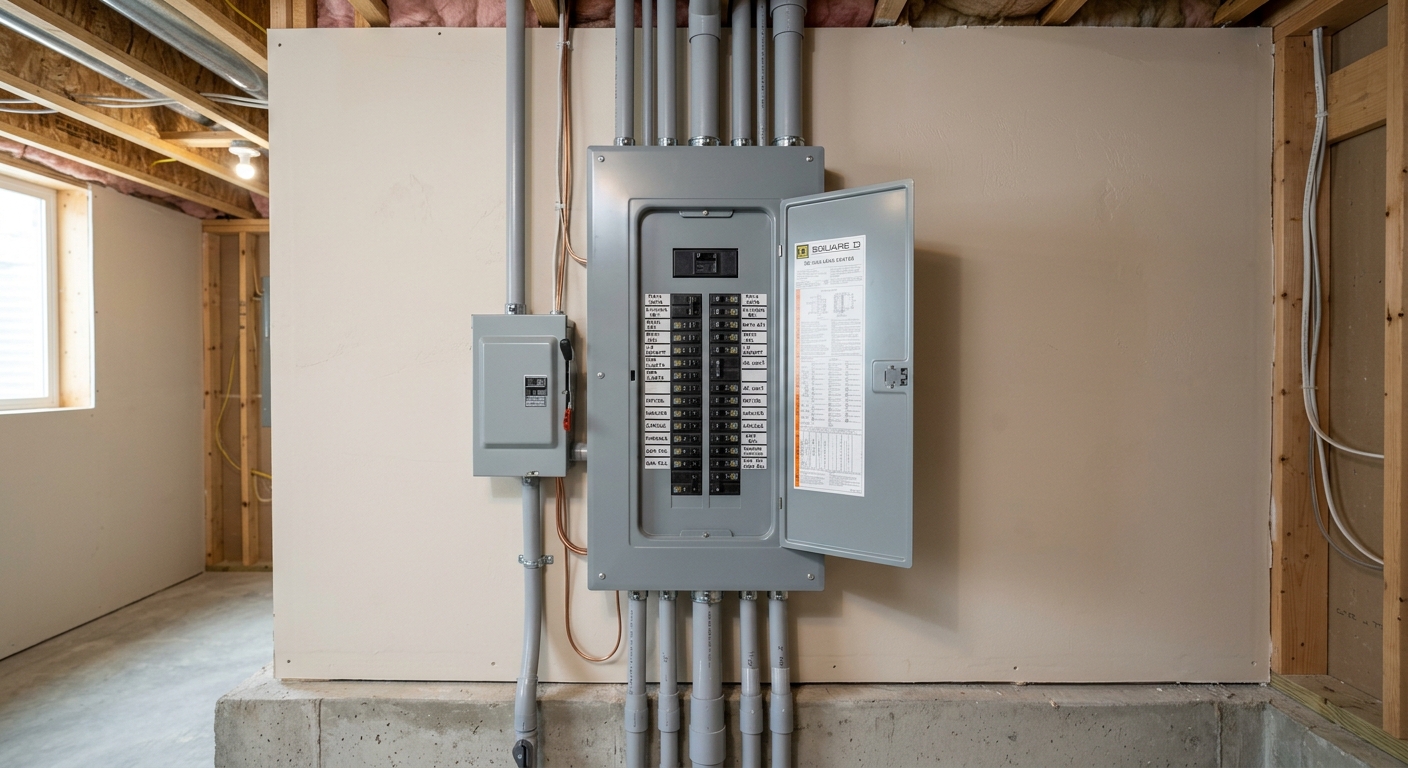
Electrical services and costs in Manitouwadge
In Manitouwadge, electrical work costs are shaped by both your home’s age and how much modernization is needed to meet today’s loads. With 64.7% of local homes built before 1981, many properties fall into the “legacy wiring” zone where electricians commonly address knob-and-tube or older aluminum installations before they’ll safely support newer demand. Manitouwadge also has 730 homeowner households (79.3% of households own), so upgrades are often planned as you add comfort and capacity—like replacing electric heating elements, updating cooking appliances, or wiring outbuildings.
In the Northwest, colder stretches and higher usage of electric heating can push circuits closer to their limits for longer periods. That matters for load calculations, breaker sizing, and how quickly insulation or connections degrade in older wiring. On top of that, contractor availability can tighten during peak seasons, especially when multiple homes in the surrounding area are simultaneously moving from older service sizes to modern panels to support added equipment. Locations like the Manitouwadge town area (near the core residential streets) tend to see steady demand for service and panel upgrades because many houses are older and the customer base is concentrated—so scheduling and inspection coordination can affect timelines and final pricing.
Because of those factors, quotes can span a wide range, and the table below shows typical service categories and what they usually include, so you can compare apples to apples before calling for a site visit.
| Service |
Why It's Needed |
Permit Required |
Price Range |
| Panel upgrade — 100A to 200A service |
Modern homes add continuous loads (heat, ranges, EV charging), and many older 60A/100A setups can’t support them safely. |
Yes (service change; ESA permit and inspection) |
$1,800–$6,500 |
| EV charger installation (Level 2, 40–50A) |
Dedicated supply reduces nuisance tripping and supports reliable charging; 40A vs 50A impacts cable/breaker selection. |
Yes (new circuit for EV charger) |
$1,000–$2,400 |
| Knob-and-tube wiring removal and replacement |
Legacy insulation and connection methods can fail over time; many insurance carriers require removal for coverage. |
Yes (rewire/remediation; ESA inspection) |
$4,200–$10,300 |
| Aluminum wiring remediation (CO/ALR connectors) |
Approved connectors (CO/ALR) and inspection of terminations address heat risk on aluminum branch circuits. |
Usually yes (major alterations and testing; ESA inspection) |
$3,850–$7,800 |
| New dedicated circuit (HVAC, appliance, hot tub) |
Dedicated circuits improve safety and performance for high-load appliances and reduce cross-load issues. |
Yes (new circuit) |
$950–$3,200 |
| Whole-home rewire (older home, full replacement) |
A full replacement is often the most reliable path when multiple wiring methods coexist or outlet/switch circuits are widely undersized. |
Yes (rewire; ESA inspection) |
$6,200–$12,000 |
Prices are estimates only and vary by project scope, site access and material selection.
What affects the price of electrical work in Manitouwadge
In Manitouwadge and across Ontario’s Northwest, it’s common to see the “same” electrical upgrade priced 30–50% differently from one contractor to another, even when the end goal looks identical. A big reason is that the dominant cost driver is your housing stock: with 64.7% of homes built before 1981, many jobs begin as “panel upgrade,” but quickly expand to include knob-and-tube removal, aluminum branch-circuit correction, and grounding improvements to bring the work fully up to code. When insurers or inspection concerns trigger a broader scope, the labour and materials shift significantly—so the final bill can land closer to the wiring/rewiring bands rather than the smaller service upgrade band.
Two other market realities matter here. First, older homes from the 1960s–70s often have 60A or 100A panels that struggle once you add continuous loads like EV charging or heat pumps; that’s where electricians typically move you toward a 100A-to-200A upgrade. Second, the Northwest’s electric-heat usage means circuits run longer and at higher duty cycles in winter, making loose terminations and ageing cable more likely to require additional correction and testing. You’ll also see aluminum remediation costs rise when there are many affected runs, because approved connectors (CO/ALR) and verification take real time.
Concrete examples from Manitouwadge: a 200A service upgrade in an accessible basement with clear panel location usually lands near the lower end of the $1,800–$6,500 band, while the same upgrade becomes more expensive when conduit routing, grounding changes, or utility coordination require more labour and schedule time. Similarly, a localized aluminum issue corrected with CO/ALR connectors may stay in the $3,850–$7,800 range, but a home with mixed legacy wiring can push a full replacement toward the higher end.
| Price Factor |
Why It Matters |
Cost Impact |
| Panel size upgrade — 100A to 200A is the standard minimum today |
Higher capacity requires larger gear, bus rating, and often updated service components. |
$1,800–$6,500 |
| Wiring type — copper vs. aluminum remediation vs. K&T removal |
Aluminum and knob-and-tube require specific remediation/testing methods or full replacement. |
$3,850–$10,300 |
| Number of new circuits — each adds material and labour time |
Each circuit means cable, breaker space planning, terminations, and testing. |
$950–$3,200 (per circuit varies) |
| Permit + ESA/TSBC inspection fee — mandatory for all major work |
Permitting and required inspections are built into the job cost. |
$200–$600 |
| Labour rate for licensed electricians — journeyman rates in {region} |
Northern travel time, job-site conditions, and coordination affect labour hours. |
$150–$300 per hour (typical) |
| EV charger amperage — 40A vs. 50A circuit affects cable and breaker cost |
Higher amperage can require larger cable and different protective devices. |
$200–$500 |
| Emergency or after-hours premium |
Time-sensitive callouts increase overhead and can reduce scheduling flexibility. |
$150–$600 |
| Load calculation required for service upgrade |
Inspectors and safe design often require verified calculations before approving changes. |
$200–$500 |
Permits & regulations in Ontario
In Ontario, ALL electrical work beyond changing a light bulb must be completed by a licensed electrician. Permits are required for panel upgrades, new circuits (including EV charger circuits), rewiring, and service upgrades—because these changes affect the electrical system’s capacity and protection, and they must pass inspection. Work that typically does not need a permit is limited to like-for-like replacements such as swapping a fixture or replacing a receptacle with a verified like-for-like device, provided the electrician determines it’s safe and does not involve altering wiring methods, circuit configurations, or the panel.
Ontario inspections are overseen through the ESA (Electrical Safety Authority). The permitted electrician will pull the ESA permit, complete the work to the Ontario Electrical Code requirements, and schedule or coordinate inspection as required.
To verify a contractor in Manitouwadge step-by-step: (1) check their Ontario licence using the public licence registry tied to the ESA/Licensing info; (2) request a certificate of insurance (liability) naming the homeowner and confirming coverage limits; (3) confirm their WSIB/WCB coverage (or provide proof of exemption if they qualify—most working contractors will provide standard documentation); and (4) ask whether they will handle the ESA permit and inspection paperwork for your scope. A clear contract should state what permits are included, the inspection responsibility, and the warranty terms before any work starts.
When your Manitouwadge home needs an electrical upgrade
Electrical upgrades aren’t just about convenience—they’re about safety, reliability, and keeping your electrical system able to handle modern loads in Manitouwadge’s Northwest climate. Here are the warning signs that usually mean it’s time to address more than cosmetic issues.
(1) Breakers that trip regularly: frequent trips often point to an overloaded panel, undersized circuits, or failing breakers—not a “mystery” problem you should ignore. (2) Knob-and-tube wiring: the concern is not only age; older insulation and contact integrity can lead to overheating, and insurance coverage can be impacted if it’s left in service. (3) 60A or 100A service: if you run an EV charger, heat pump, electric range, and resistive heating at the same time, your system may be near its practical limit; in many cases, a 200A upgrade is the standard solution. (4) Aluminum wiring (often seen in pre-1976 construction): it can be safe when properly remediated, but it needs licensed correction and approved connections. (5) Insufficient outlets or “extension cords everywhere”: this is a load-management red flag and can push high current through devices not designed for the task. (6) No AFCI/GFCI protection where required: this is a code-compliance and shock/fire-safety issue that may surface during a home sale or inspection.
What’s immediate vs planned? If you have repeated nuisance tripping, burning smells, discoloration at outlets, or sparking at the panel, treat it as urgent. If you’re simply upgrading capacity for an EV charger or heat pump, plan ahead with a load calculation and a panel plan. For example, choosing a full panel path near the $1,800–$6,500 band can cost less than repeatedly repairing overloaded breakers and circuits—especially in older homes where winter heating usage amplifies load strain.
| Warning Sign |
What It Means |
Recommended Action |
Urgency |
Price Band |
| Breakers trip frequently |
Possible overload, undersized wiring, loose connections, or breaker issues. |
Panel inspection + load assessment; add circuits or correct wiring as needed. |
High (often urgent if frequent) |
$950–$3,200 |
| Knob-and-tube wiring present |
Legacy insulation/contact conditions that can become unsafe and may affect insurance. |
K&T removal and replacement (partial or full based on findings). |
High |
$4,200–$10,300 |
| 60A or 100A panel (inadequate load capacity) |
Not enough capacity for modern continuous loads in a winter-heavy home. |
Upgrade to 200A with proper service rework and load calculation. |
Medium to High |
$1,800–$6,500 |
| Aluminum wiring (pre-1976 construction) |
Potential connection heating if not remediated with approved methods. |
Aluminum remediation with CO/ALR connectors and thorough testing. |
Medium |
$3,850–$7,800 |
| Insufficient outlets — extension cords everywhere |
Likely overloaded portable devices and unsafe plugging practices. |
Add receptacles/circuits and correct placement/loading. |
Medium |
$950–$3,200 |
| No AFCI or GFCI protection where required |
Higher risk of arc faults or shock; may be flagged during inspection or sale. |
Add/upgrade protective devices to match code requirements. |
Medium |
$130–$500 |
How to choose a electrical work contractor in Manitouwadge
Start with licensing and coverage. In Ontario, verify the electrician’s licence through the provincial licensing information associated with electrical work, and ensure the contractor is authorized to do the specific job you’re planning (like service upgrades and new circuits). Next, ask for liability insurance and confirm the certificate is current and covers residential electrical work. Then verify WSIB/WCB coverage: request documentation before work begins and keep it with your contract records.
For pricing, get 2–3 itemised written quotes rather than a lump sum. You want a breakdown that lists labour hours, materials (panel gear, breakers, cable, connectors), testing/diagnostics, and the permit/inspection handling. Ask what’s excluded: for example, is utility coordination included if the service change needs supply adjustments, and is disposal or waste removal included if walls must be opened? Also confirm whether the electrician will provide load calculations for a service upgrade—this is often part of a proper 200A plan in older Northwest homes.
Warranty matters too: request the workmanship warranty length, and ask whether manufacturer warranties transfer with the property or are tied to the original purchaser. Payment schedules should stay conservative—never more than 10–15% upfront. If the contractor asks for large deposits, that’s a red flag. Finally, get a written start date and completion estimate, and confirm scheduling for ESA inspection.
- Licence number shown on the quote and consistent on invoices
- Liability insurance certificate provided before booking
- WSIB/WCB coverage confirmed with documentation
- Itemised scope: labour, materials, testing, permits/inspection
- Clear “what’s included/excluded” (patching, disposal, utility coordination)
- Load calculation included for panel/service changes
- Inspection coordination described (ESA permit handling responsibility)
- Workmanship warranty stated in writing
- Manufacturer warranty details listed for key components
- Payment plan includes holdback until completion and inspection
- Time estimate tied to inspection scheduling, not just “when possible”
- Signed contract/permit documents aligned with the quoted scope
Red flags to watch for in Manitouwadge: a contractor who won’t provide a permit/inspection plan, missing itemised pricing, insisting on large upfront payments, vague wording like “we’ll deal with the wiring as needed” without a change-order process, or reluctance to show licence and insurance documents before starting.
Frequently asked questions — electrical work in Manitouwadge
Do I need a permit for electrical work in Ontario?
In Ontario, most electrical work beyond very limited like-for-like changes requires permits and inspection. Panel upgrades (including moving from 100A to 200A), new dedicated circuits (such as for an EV charger), rewiring, and service changes all require an ESA permit and must be inspected by the Electrical Safety Authority. Even if the job “looks simple” in Manitouwadge, adding circuits or altering the panel schedule generally triggers permitting because it affects protection, capacity, and safety. A good estimator should also include permit/inspection handling in the quote and clearly state which components are included—so you don’t end up paying for rework if the scope expands.
As a reference point, many EV charger installs in the region land in the $1,000–$2,400 band and still require a permit because it’s a new 40A–50A circuit, not just a plug-in device.
What are signs of an overloaded electrical panel?
Overload symptoms can be subtle at first, which is why Manitouwadge homeowners should watch for repeat patterns. Common signs include breakers that trip regularly when you run multiple loads, dimming lights when appliances start, outlets that feel warm, and a panel that’s getting noisy (buzzing) or showing discolouration. In colder months, overload issues can become more frequent due to longer electric heating run times. An older 60A or 100A panel is especially likely to be near capacity once you add modern loads like heat pumps or EV charging.
If you see nuisance tripping or warmth near breakers, don’t “reset and forget.” It’s safer to schedule an inspection and ask for a load calculation. If the load can’t be managed with circuit additions alone, a 100A-to-200A service path—often priced around $1,800–$6,500—is frequently the practical solution.
Can I do my own electrical work in Ontario?
In Ontario, DIY electrical work is heavily restricted. Beyond changing a bulb or certain very limited replacements, the safe expectation is that you should hire a licensed electrician for electrical work that involves wiring, new circuits, panel work, or anything that changes how the system is protected. Work that requires permits—like new circuits, rewiring, panel upgrades, and service changes—must be completed by a licensed professional.
If you’re in Manitouwadge and thinking about “minor” improvements, confirm first with the electrician whether the task affects circuits, breakers, or wiring methods. Even if you personally do wiring labour, it still needs to be permitted and inspected, and you’ll need a licensed contractor to take responsibility for code compliance. To protect yourself, always verify the contractor’s Ontario licence and ask how the ESA permit is handled.
How long does a rewiring job take?
Rewiring timelines vary a lot in older Manitouwadge homes because access, wall/ceiling finishes, and how extensive the legacy wiring is will determine labour hours. A whole-home rewire can involve more than just pulling wire—it often includes removing knob-and-tube sections, correcting aluminum terminations, adding modern protection, and testing each circuit. In practice, crews sometimes complete partial rewires faster (for example, focusing on the kitchen/bath circuits first), but a full replacement typically takes longer due to the scope.
Scheduling is also influenced by ESA inspection timing and material availability. If you’re budgeting, it helps to think in terms of both scope and access. Whole-home rewires in this price tier commonly fall around $6,200–$12,000, but the timeframe can stretch depending on how much the home needs opened up and brought into code compliance.
Why do my breakers keep tripping?
Breakers that keep tripping usually mean the system is detecting a fault or being overloaded. In Manitouwadge homes, this can be caused by undersized circuits feeding multiple heaters/appliances, loose or failing connections in older wiring, aged breakers, or insulation issues. If you also have aluminum wiring, overheating at terminations can worsen the problem, and it’s not something to troubleshoot casually without proper testing. If knob-and-tube wiring is present, the issue can also involve legacy insulation and contact reliability.
Because tripping patterns can point to different causes, the right move is an electrician inspection plus a load review. Depending on findings, the solution could be as small as redistributing loads and adding a dedicated circuit—or, if the panel/service can’t support modern usage, moving to a service upgrade path often in the $1,800–$6,500 range.
How do I compare electrical quotes?
When comparing quotes in Ontario for a Manitouwadge home, treat “apples to apples” as your rule. Ask for an itemised breakdown: labour hours, materials, testing/diagnostics, permit handling, and any required load calculations. Confirm whether the electrician is pulling an ESA permit for the work and what inspection responsibility is included. Quotes that don’t clearly state what’s included—like disposal of debris, wall patching expectations, or how legacy wiring (knob-and-tube or aluminum) will be handled—often shift costs later through change orders.
Also check payment terms: never pay more than about 10–15% upfront, and expect a holdback until the job is complete and inspected. Finally, verify their Ontario licence, liability insurance, and WSIB/WCB coverage before you compare final numbers. For reference, a typical panel/service upgrade is commonly in the $1,800–$6,500 range, while EV charger installs are often around $1,000–$2,400—but only an itemised scope will tell you why one quote is higher.