Electrical services and costs in Niagara-on-the-Lake
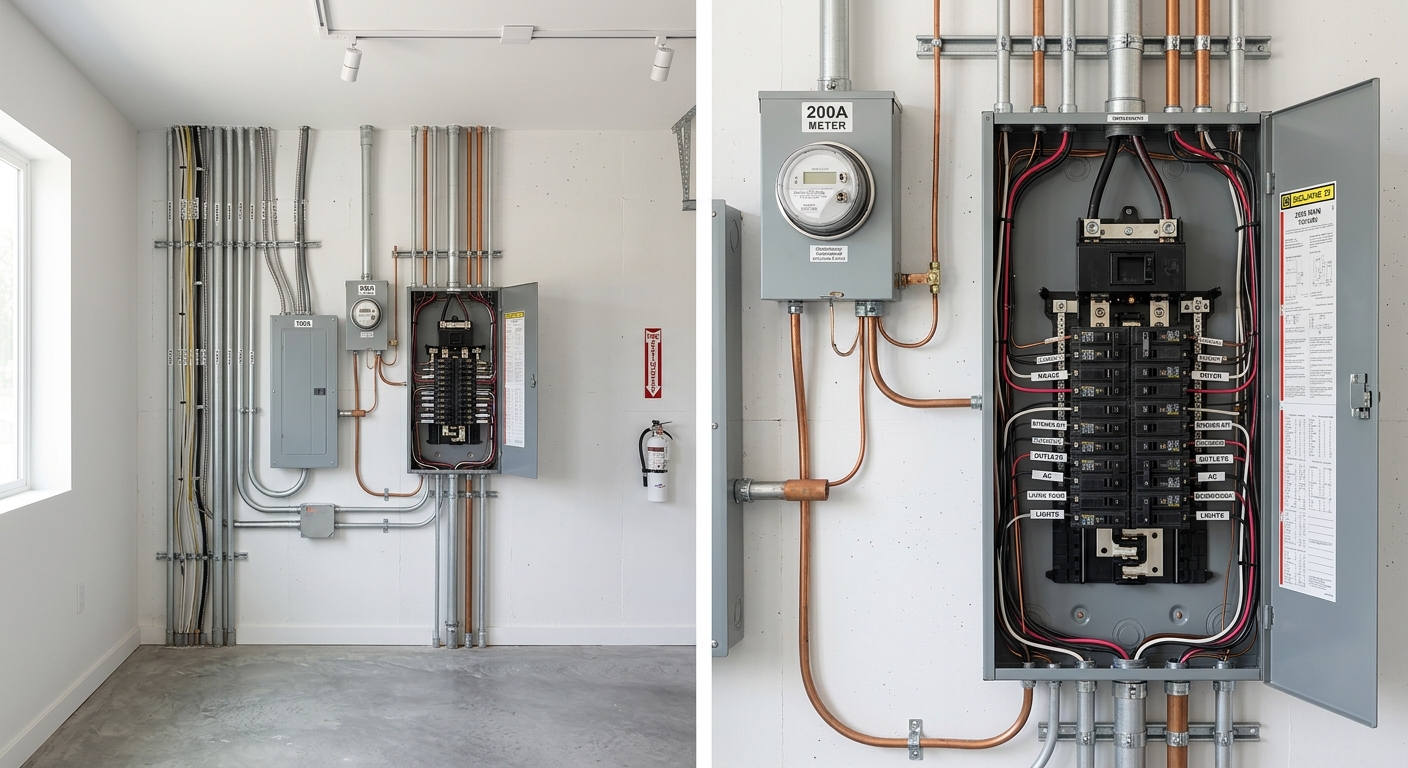
Electrical services in Niagara-on-the-Lake are shaped by a housing mix that’s older than the provincial average, with many properties built long before modern electrical standards. In fact, 38.1% of homes were built before 1981 (Statistics Canada, 2021 Census), and that matters because older basements and main panels are often the first bottlenecks when you add today’s loads like EV chargers, heat pumps, and electric cooking. With Niagara-on-the-Lake’s large share of single-detached homes (79.2% of dwellings), whole-home electrical upgrades tend to involve long cable runs, more time in crawlspaces and older service mast locations, and careful load planning.
On the Hamilton–Niagara Peninsula market, contractors are commonly booked for pre-1970 rewires, knob-and-tube removal, and service upgrades from 60A/100A to 200A. Winter weather and “shoulder-season” renovations also push demand: when basements are opened for finished rec rooms or new electric baseboard, the same schedule window can include panel work, dedicated circuits, and ESA inspections. That seasonal clustering can affect availability, which is one reason you may see quote variation even when the scope sounds similar.
In Niagara-on-the-Lake, areas like the heritage core and surrounding neighbourhoods where many homes were built mid-century often see higher demand for panel replacements and wiring remediation work. If you’re planning an EV-ready garage, a finished basement, or an older-service upgrade, it’s helpful to compare typical cost bands side-by-side before you get an itemized quote.
| Service |
Why It's Needed |
Permit Required |
Price Range |
| Panel upgrade — 100A to 200A service |
Adds capacity for modern loads and improves safety; often required before adding EV chargers or upgrading heating/cooking. |
Yes (ESA permit and inspection) |
$1,800–$4,500 |
| EV charger installation (Level 2, 40–50A) |
Provides proper dedicated power and load management for EV charging at home. |
Yes (ESA permit and inspection) |
$1,000–$3,500 |
| Knob-and-tube wiring removal and replacement |
Replaces aging wiring with safer modern wiring practices and improves insurability and reliability. |
Yes (major rewiring requires permits) |
$8,000–$20,000 |
| Aluminum wiring remediation (CO/ALR connectors) |
Improves connection safety using approved techniques where full replacement isn’t immediately required. |
Usually yes for remediation/alterations (confirm with contractor) |
$2,500–$7,500 |
| New dedicated circuit (HVAC, appliance, hot tub) |
Reduces overheating risk and prevents nuisance tripping by giving high-load equipment its own circuit. |
Yes (permit typically required for new circuits) |
$650–$2,800 |
| Whole-home rewire (older home, full replacement) |
Replaces multiple outdated wiring systems and brings the home closer to current code expectations. |
Yes (full rewiring requires permits and inspections) |
$12,000–$28,000 |
Prices are estimates only and vary by project scope, site access and material selection.
What affects the price of electrical work in Niagara-on-the-Lake
In Niagara-on-the-Lake and across the Hamilton–Niagara Peninsula, you can see quotes for the same electrical job swing by 30% to 50%—and the reason is usually not “luck,” it’s load conditions, wiring realities, and how much demolition you need to make the work safe and code-compliant. The single biggest cost driver is the age of the housing stock. For homes built before 1950, knob-and-tube wiring may still be present, and insurance companies increasingly scrutinize it. Homes built in the 1960s and 1970s often have 60A or 100A services that struggle with today’s simultaneous loads (EV chargers, heat pumps, induction stoves), which is why a service upgrade from 100A to 200A commonly lands in the province’s panel upgrade/service band.
Aluminum wiring, seen in many homes built around 1965 to 1976, adds cost because it requires licensed remediation using approved CO/ALR connector methods or full replacement where condition or workmanship risk is too high. Separately, EV adoption across the region is driving a surge in Level 2 charger installs, and those projects can require both a dedicated circuit and, sometimes, a panel capacity upgrade—pushing costs beyond a simple “charger-only” expectation.
Concrete examples from local jobs: (1) finishing a basement in an older house may require careful routing through existing framing; if drywall is already open, the same rewire portion can cost substantially less. (2) A panel upgrade on a stucco exterior or with hard-to-access service equipment can add labour and parts. (3) If you’re adding electric heating and an EV charger at the same time, the load calculation may force a larger panel scope; that’s where you might see $1,800–$4,500 panel/service work become the gateway to further wiring and dedicated circuits.
| Price Factor |
Why It Matters |
Cost Impact |
| Panel size upgrade — 100A to 200A is the standard minimum today |
Modern loads require more capacity and better protection/space in the panel. |
Often moves the job into a $1,800–$4,500 band |
| Wiring type — copper vs. aluminum remediation vs. K&T removal |
Aluminum and knob-and-tube require approved methods, more inspection attention, and sometimes full replacement. |
Can add thousands; K&T removal can push toward $8,000–$20,000 |
| Number of new circuits — each adds material and labour time |
More breakers, cable, terminations, and testing increase labour and materials. |
Commonly increases cost by a few hundred to over a thousand per circuit |
| Permit + ESA/TSBC inspection fee — mandatory for all major work |
Major electrical alterations must be permitted and inspected before service is finalized. |
Fixed administrative cost plus scheduling time |
| Labour rate for licensed electricians — journeyman rates in Hamilton–Niagara |
Local rates reflect demand, travel time between sites, and specialized residential experience. |
Labour swings can drive 30%+ differences in quotes |
| EV charger amperage — 40A vs. 50A circuit affects cable and breaker cost |
Higher amperage typically uses larger conductors and may require more panel capacity. |
May add $200–$700 depending on panel and routing |
| Emergency or after-hours premium |
Urgent troubleshooting and night/weekend scheduling increases overhead and staffing. |
Can add 15% to 30% for expedited work |
| Load calculation required for service upgrade |
ESA/utility expectations and safe design rely on accurate load calculations for the new service plan. |
Usually a small line item, but it can change how much work is required |
Permits & regulations in Ontario
In Ontario, ALL electrical work beyond changing a light bulb must be completed by a licensed electrician. That includes panel upgrades, new circuits, rewiring, and service changes—plus EV charger installations and most work that alters how your home is protected and supplied. Permits are mandatory for these types of “major” jobs, and the work must pass inspection by the Electrical Safety Authority (ESA) before the utility will finalize a service change. Ontario also prohibits DIY for most electrical work; the homeowner role is limited and does not replace the need for permits, inspections, and licensed workmanship.
Typical work that DOES require a permit in Ontario: panel replacements or upgrades (including 100A to 200A), installing new breakers/circuits (hot tub circuits, HVAC circuits, EV circuits), adding or moving receptacles in a way that changes circuit capacity, whole-home rewiring, and knob-and-tube removal. Typical work that typically DOES NOT require a permit: replacing a like-for-like fixture, swapping a standard lamp, or changing a single approved receptacle device where the wiring method and circuit remain unchanged (confirm the exact scope with your electrician).
To verify your contractor for Niagara-on-the-Lake: start by checking the Ontario licence on the ESA electrician/contractor registry (the contractor should provide their licence number). Then request a certificate of insurance showing liability coverage and confirm WSIB/WCB coverage where applicable for the contractor and any subcontractors. Before work begins, ask what documentation they will submit for the ESA permit and what you should expect at inspection day—clear paperwork is a strong sign the job is being done properly.
When your Niagara-on-the-Lake home needs an electrical upgrade
In Niagara-on-the-Lake, the warning signs that you need electrical upgrades are usually safety-critical—not cosmetic. First, breakers that trip regularly (especially during normal use) often point to an overloaded circuit, a failing connection, or an undersized circuit relative to how you’re using the home now. That’s not something to “reset and move on” because it can indicate loose wiring, overheating, or a load mismatch.
Second, if you still have knob-and-tube wiring, the concern is not just the wiring’s age—it’s the insulation condition and how it’s contacted and connected after decades in service. Even if it hasn’t failed yet, many insurers and buyers scrutinize it, and it’s commonly addressed during basement finishing or renovation projects. Third, a 60A or 100A service can be inadequate for a modern Niagara home running an EV charger, heat pump, and electric stove together—especially during cold snaps when heating demand rises. For these cases, a 200A upgrade is the standard solution because it supports correct protection and future expansion.
Fourth, aluminum wiring (often pre-1976 construction) may not be immediately dangerous if it’s been maintained, but it still needs licensed remediation because of connection heating risk and the need for approved CO/ALR methods. Fifth, insufficient outlets—extension cords everywhere—usually indicates inadequate circuit planning. Finally, missing AFCI/GFCI protection where required is a code-compliance issue that can surface during sale inspections.
As a cost reality check: if your panel is already near capacity, “just adding an EV charger” can be the expensive way to do it. Often, spending within the $1,800–$4,500 panel/service band to reach proper capacity is justified because it prevents repeated callouts and limits further wiring rework later. If you’re doing major electrical changes, pairing them with insulation upgrades and finished-basement routing can reduce total disruption, even when the upfront scope is larger.
| Warning Sign |
What It Means |
Recommended Action |
Urgency |
Price Band |
| Breakers trip frequently |
Possible overloaded circuits, loose connections, or failing breakers. |
Call for troubleshooting; perform load check and safety inspection; upgrade circuits if needed. |
Immediate |
$650–$2,800 |
| Knob-and-tube wiring present |
Older wiring system with insulation and connection concerns; often an insurability and safety issue. |
Plan phased or whole-home replacement during renovation if feasible. |
Planned but soon |
$8,000–$20,000 |
| 60A or 100A panel (inadequate load capacity) |
Limited capacity for modern loads and additional circuits. |
Upgrade to 200A and perform load calculation; add dedicated circuits where required. |
Planned (before adding major loads) |
$1,800–$4,500 |
| Aluminum wiring (pre-1976 construction) |
Connection heating risk unless remediated with approved methods. |
Have joints and terminations evaluated; remediate with CO/ALR connectors or replace sections. |
Planned |
$2,500–$7,500 |
| Insufficient outlets — extension cords everywhere |
Overuse of temporary power and higher risk of damage/overheating. |
Add receptacles and, if needed, new dedicated circuits for high-use rooms/appliances. |
Planned |
$650–$2,800 |
| No AFCI or GFCI protection where required |
Higher risk of arc faults and shock hazards; can be flagged during sale. |
Upgrade protective devices and update circuits to meet applicable requirements. |
Planned |
$300–$1,600 |
How to choose a electrical work contractor in Niagara-on-the-Lake
Choosing the right electrical contractor in Niagara-on-the-Lake starts with verification. Ask for their Ontario electrical licence number and check it through Ontario’s licensing registry (ESA). Next, request a certificate of insurance with liability coverage that’s current and specific to the contractor doing the work. For many projects, you should also confirm WSIB/WCB coverage (or the contractor’s applicable exemption documentation) so you’re not left responsible if a worker is injured on site. A reputable contractor won’t hesitate to provide paperwork before you sign anything.
Get 2–3 itemised written quotes, not just a single lump sum. The best quotes break labour and materials into sections (panel equipment, breakers, cable, conduit/parts, testing, troubleshooting, and cleanup). Read the scope carefully: will the permit pull be included, who supplies and disposes of any old breakers/panel components, and what surfaces/restorations are included if access requires cutting drywall? Also confirm warranty terms—workmanship warranty length, what manufacturer warranties cover (and whether they’re transferable), and what happens if ESA inspection requires rework.
Payment schedule matters: never pay more than 10% to 15% upfront. Hold back the balance until the job is complete, tested, and documented. Finally, insist on a written timeline with a start date and completion estimate, including inspection scheduling lead time.
- Licence number provided and verifiable in Ontario (ESA)
- Current liability insurance certificate for the contractor
- WSIB/WCB coverage confirmed for the crew
- Itemised quote: labour, materials, testing, disposal/cleanup
- Clear scope: what’s included and what’s excluded (and why)
- Permit pull responsibility stated (ESA permit required for major work)
- ESA inspection booking process explained
- Workmanship warranty documented in writing
- Manufacturer warranty details included (model numbers where possible)
- Payment terms: ≤10% to 15% upfront, holdback at completion
- Estimated timeline and who to contact if delays occur
- Site access and routing plan for older Niagara-on-the-Lake homes (basement framing, service mast location)
Red flags in Niagara-on-the-Lake include contractors who won’t provide licence/insurance paperwork, quotes that aren’t itemised (or don’t mention permits/ESA inspection), promises of “no permit needed” for panel or new-circuit work, vague warranty terms, and requests for large upfront payments with no signed scope.
Frequently asked questions — electrical work in Niagara-on-the-Lake
How much does an EV charger installation cost in Niagara-on-the-Lake?
In Niagara-on-the-Lake, a typical Level 2 EV charger installation (around a 40–50A circuit) often falls in the $1,000–$3,500 band. Your final price depends on whether your panel has spare capacity for the new breaker, how far the cable must be run, and whether you also need a panel upgrade. If your home is older and you’re at or near capacity, you may need a 100A to 200A service upgrade, which commonly lands in the $1,800–$4,500 range. Because EV charger installs are permit-required in Ontario, ESA inspection scheduling can also affect timing, but it’s part of why the final connection is reliable and safe.
What is knob-and-tube wiring and should I replace it?
Knob-and-tube wiring is an older internal wiring method used in many homes built decades ago. The issue isn’t just “age,” it’s how the insulation and connections behave after many years—especially where wiring has been disturbed or insulation has contacted surrounding materials. In Ontario, if you’re planning renovations (like basement finishing) or you’re having safety/insurance concerns, knob-and-tube removal is often recommended because it brings the electrical system closer to modern safety expectations. Rewiring costs vary widely, but knob-and-tube removal and replacement commonly falls into the $8,000–$20,000 range depending on how much of the home needs replacement. If you’re unsure, ask your electrician to do a visible and voltage/condition assessment before you decide on phased versus whole-home replacement.
Is aluminum wiring safe in older Niagara-on-the-Lake homes?
Aluminum wiring can be safe when properly maintained and when connections are made using approved methods, but it does require attention. In many Niagara-on-the-Lake homes built around the mid-1960s to mid-1970s, aluminum conductors were used, and over time certain connection types can overheat if they’re not remediated correctly. Ontario electricians will typically evaluate the condition of terminations and then recommend remediation using approved CO/ALR connectors, or replacement where the risks are higher. Remediation projects often land in the $2,500–$7,500 range, depending on how many locations need correction. If you’re also updating your panel to add new loads (like EV charging), it’s usually efficient to address aluminum issues during the same permit scope.
Do I need a permit for electrical work in Ontario?
Yes for most electrical work beyond like-for-like fixture swaps. In Ontario, panel upgrades, new circuits (including EV charger circuits), rewiring, and service upgrades require an ESA permit and must pass ESA inspection before the work can be considered complete for safety and utility requirements. DIY electrical is restricted for most work; homeowners generally can’t replace breakers, rewire circuits, or make service changes themselves. If a contractor tells you a permit isn’t needed for panel replacement or a new EV circuit, that’s a major concern. When you hire a licensed Niagara-on-the-Lake electrician, confirm the permit plan in writing—permit pull responsibility, inspection expectations, and what documentation you’ll receive at the end.
What are signs of an overloaded electrical panel?
Common signs in Ontario homes (including Niagara-on-the-Lake) include breakers that trip frequently during normal activities, lights dimming when appliances start, warm or discoloured outlets/switches, and a constant need to use extension cords instead of adding proper outlets/circuits. An overloaded or undersized panel often becomes obvious when you add modern loads—heat pumps, electric ranges, EV chargers, hot tubs, or baseboard heating—particularly during cold stretches when demand rises. If you’re running into these issues, the recommended next step is troubleshooting plus a load calculation and safety inspection. Many service issues end up requiring a panel upgrade from 100A to 200A, which commonly falls within the $1,800–$4,500 band, especially when the home needs additional capacity for dedicated circuits.
Can I do my own electrical work in Ontario?
For most electrical work in Ontario, no—DIY is restricted, and the safe, legal approach is to hire a licensed electrician. Even if you’re comfortable with basic home repairs, you generally can’t do permitted work such as new circuits, panel upgrades, rewiring, or EV charger installations. Ontario’s Electrical Safety Authority (ESA) oversees permits and inspections for the work that changes your home’s wiring protection and supply. There are narrow exceptions for certain low-risk activities (like replacing a like-for-like fixture), but anything involving wiring changes, breakers, or service equipment should be treated as licensed-only. For Niagara-on-the-Lake, if you’re planning an upgrade due to older wiring (like knob-and-tube) or adding EV charging, you’ll want permits and inspection anyway—so starting with a licensed contractor is usually the fastest route to a compliant, insurable result.