Electrical services and costs in Highland Creek
Highland Creek, Ontario sits in the Toronto economic region, and that mix of established neighbourhoods plus infill has a real effect on electrical demand and pricing. In the community, many homes are older—Toronto-area housing stock includes a meaningful number of pre-1970 builds, and those are often prime candidates for panel upgrades and wiring remediation (Statistics Canada, 2021 Census). Highland Creek’s population was 12,494 in 2021, which keeps local contractor availability fairly stable, but it also means crews get booked quickly when multiple nearby projects hit at the same time (Statistics Canada, 2021 Census).
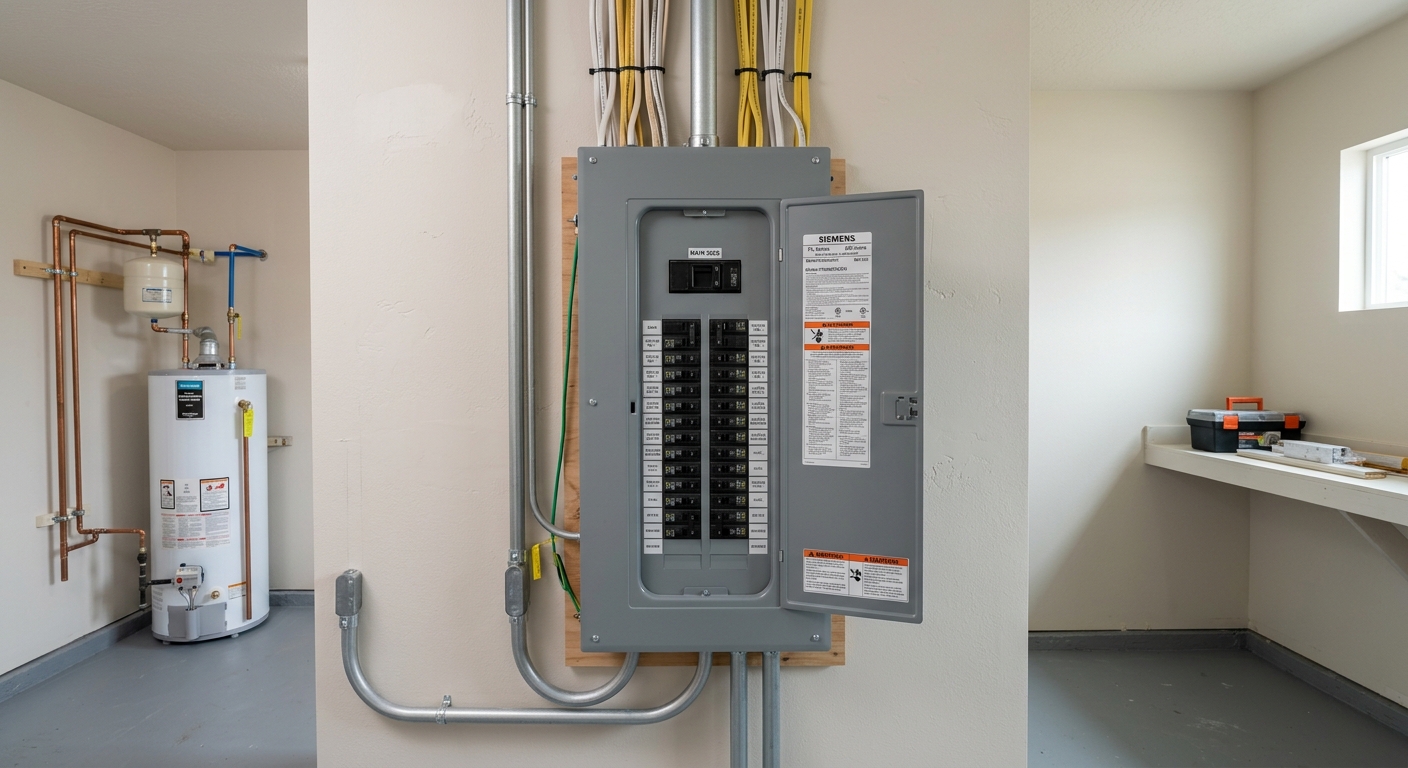
Costs are also shaped by how Ontario homes use power in winter. Cold snaps increase heating loads, and Toronto-area households are increasingly adding heat pumps, induction stoves, EV chargers, and home office/entertainment electronics. When your electrical system is already near its limits, upgrading from a 60A or 100A panel to a modern 200A service is frequently paired with new circuits and, in older homes, full or partial rewiring. In practice across the GTA, full or partial rewiring is commonly bundled with 100A-to-200A panel and service upgrades, especially when finishing basements or adding rental suites.
In Highland Creek—particularly around the established residential pockets near Kingston Road and Meadowvale Road—homeowners often need service upgrades because EV adoption and air-conditioning/heat-pump installs add steady, high-demand loads year-round. Use the ranges below as a practical starting point before you compare detailed quotes.
| Service |
Why It's Needed |
Permit Required |
Price Range |
| Panel upgrade — 100A to 200A service |
More capacity for modern loads (EV charging, heat pumps, electric cooking) and safer breaker distribution |
Yes (permit + inspection) |
$2,500 – $6,000 |
| EV charger installation (Level 2, 40–50A) |
Dedicated circuit and correct breaker/cabling for consistent charging and code compliance |
Yes (permit + inspection) |
$900 – $2,500 |
| Knob-and-tube wiring removal and replacement |
Knob-and-tube wiring is outdated and typically not considered safe for today’s load profiles; replacement restores proper insulation and protection |
Yes (permit + inspection) |
$3,000 – $15,000 |
| Aluminum wiring remediation (CO/ALR connectors) |
Aluminum branch wiring requires approved terminations; proper CO/ALR methods reduce overheating and failure risk |
Yes (permit + inspection) |
$3,500 – $10,500 |
| New dedicated circuit (HVAC, appliance, hot tub) |
Prevents nuisance trips and nuisance overloads by separating high-draw loads |
Yes (permit + inspection) |
$600 – $2,200 |
| Whole-home rewire (older home, full replacement) |
When circuits are unsafe, overloaded, or patched over decades, a full rewire restores safe layout, grounding, and modern protection devices |
Yes (permit + inspection) |
$7,000 – $20,000 |
Prices are estimates only and vary by project scope, site access and material selection.
What affects the price of electrical work in Highland Creek
In Highland Creek and across Toronto, homeowners often see quotes for the “same” electrical upgrade that vary by 30–50%. The difference usually comes down to the existing wiring condition, how much of the system must be brought up to current Ontario Electrical Code requirements, and whether the job includes service work, panel changes, or remediation. In older GTA housing, it’s common to uncover hidden issues only after the contractor opens walls or the panel—so two electricians may quote the same visible scope but price the unseen risk differently.
The dominant cost driver is housing age. Pre-1950 homes can have knob-and-tube wiring, and that wiring type is increasingly problematic for insurance and safety expectations. Homes from the 1960s–70s often have 60A or 100A panels that are simply undersized for today’s load mix: EV chargers, heat pumps, induction stoves, and more “always-on” electronics. Aluminum wiring is also a common factor in homes built roughly 1965–1976; aluminum terminations must be handled with licensed remediation using approved CO/ALR connectors, or the affected wiring sections may need replacement. EV adoption is the newest surge point—Level 2 charger permits and dedicated 40–50A circuits are now frequent requests, which pushes up labour availability during peak seasons.
Concrete examples from Highland Creek: (1) If your panel is a cramped retrofit in a finished basement, labour time increases because of removal and rework, pushing a panel/service upgrade toward the upper end of the $2,500 – $6,000 band. (2) If the wiring needs CO/ALR remediation across multiple branch circuits, the job can move closer to the mid-to-high $3,000 – $15,000 wiring band. (3) In winter, scheduling can shift because installers coordinate with other trades on full rewire or service upgrades, impacting the timeline (and sometimes the crew layout costs) even when the electrical labour hours are similar.
| Price Factor |
Why It Matters |
Cost Impact |
| Panel size upgrade — 100A to 200A is the standard minimum today |
New capacity, updated breaker layout, and often updated service equipment |
Typically $2,500 – $6,000 depending on complexity |
| Wiring type — copper vs. aluminum remediation vs. K&T removal |
Different testing, terminations, and removal/replacement requirements |
Can shift a project from a few thousand dollars into the $3,000 – $15,000 wiring range |
| Number of new circuits — each adds material and labour time |
More cables, breakers, labour hours, and wall/floor access |
Commonly adds hundreds to low-thousands per circuit |
| Permit + ESA/TSBC inspection fee — mandatory for all major work |
Major work requires permits and inspection to confirm code compliance |
Typically a few hundred dollars within the 200–500 range depending on scope |
| Labour rate for licensed electricians — journeyman rates in Toronto area |
Man-hours are the biggest portion of cost for service/panel and rewiring |
Regionally often around $90 – $120/hour for licensed contractors |
| EV charger amperage — 40A vs. 50A circuit affects cable and breaker cost |
Higher amperage may require heavier conductor/breaker selection |
Usually moves within the $900 – $2,500 EV band |
| Emergency or after-hours premium |
Scheduling and risk increase when work is done outside standard hours |
Often adds a noticeable uplift to labour and dispatch |
| Load calculation required for service upgrade |
Determines whether 150A/200A (or more) is appropriate for present and planned loads |
Can add a small fee but prevents costly undersizing |
Permits & regulations in Ontario
In Ontario, electrical work is tightly regulated for safety. In general, ALL electrical work beyond changing a light bulb must be done by a licensed electrician, and most “real” projects require a permit before work begins. This includes panel upgrades (100A to 200A), new circuits (including dedicated circuits for appliances and hot tubs), rewiring, service upgrades, and EV charger installations. Your permitted work also must pass inspection by the Electrical Safety Authority (ESA) or the applicable local building process that coordinates inspections through ESA.
DIY electrical is prohibited for most work. Even if you’re experienced, Ontario’s rules are built around licensing, inspection, and verified connection quality—issues like overheating at terminations, proper grounding, and correct breaker/cable sizing aren’t things you can safely “guess” from a finished look.
Step-by-step, here’s how a Highland Creek homeowner can verify a contractor:
- Check their Ontario licence using the electrician/contractor registry on the ESA website (or have them provide their licence number and firm name).
- Request proof of liability insurance and confirm the certificate of insurance includes electrical contractor coverage.
- Confirm WSIB/WCB coverage for workers (ask for documentation; a solid contractor can provide it quickly).
- Ask whether the permit will be pulled by the electrician/contractor (most reputable contractors do this as part of the scope).
- Before starting, get the scope in writing: what’s included, what isn’t, and when the inspection will be scheduled.
When your Highland Creek home needs an electrical upgrade
Electrical issues aren’t just inconvenient in Highland Creek—they can become safety-critical, especially during Ontario winters when heavy heating demand can coincide with EV charging, heat pumps operating, and kitchen/laundry loads. Here are five warning signs to watch for, and which ones need immediate action versus planned upgrades.
(1) Breakers that trip regularly: this usually indicates an overloaded panel or an undersized/incorrectly wired circuit. If you’re repeatedly resetting breakers, schedule a service call promptly. (2) Knob-and-tube wiring: the concern is insulation breakdown and contact risk, not just “age.” If you have K&T still in service, plan removal quickly—also because it can affect insurance coverage. (3) A 60A or 100A service: many Highland Creek homes with older service capacity can feel fine until you add EV charging or new major appliances. For a modern load mix (EV charger + heat pump + electric stove), a 200A upgrade is the standard solution. (4) Aluminum wiring (common in many pre-1976 homes): it isn’t always immediately dangerous if maintained, but it does require licensed remediation using approved CO/ALR connections or replacement of affected runs. (5) Insufficient outlets and missing AFCI/GFCI protection: this is often a code-compliance and safety issue that can surface during a sale and should be addressed before listing.
As a pricing example, homeowners sometimes ask whether they can “just add a circuit” for an EV. If your existing panel is undersized or has wiring problems, that shortcut can lead to repeated overloads—and the safer long-term path is often a service/panel upgrade within the $2,500 – $6,000 band paired with a Level 2 charger install in the $900 – $2,500 band.
| Warning Sign |
What It Means |
Recommended Action |
Urgency |
Price Band |
| Breakers trip frequently |
Overload, incorrect circuit sizing, failing components, or a panel that can’t handle current loads |
Have the electrician inspect the panel, load balance, and circuit wiring; add dedicated circuits if feasible |
Immediate or within 1–2 weeks |
$600 – $2,200 |
| Knob-and-tube wiring present |
Outdated wiring method with higher risk from aging insulation and connection issues |
Plan removal and replacement; consider coordinated rewiring with panel/service upgrades |
Urgent (plan promptly) |
$3,000 – $15,000 |
| 60A or 100A panel (inadequate load capacity) |
Limited capacity for EV chargers, heat pumps, electric cooking, and modern household demand |
Load calculation and upgrade to 200A service/panel when appropriate |
Planned upgrade (book early) |
$2,500 – $6,000 |
| Aluminum wiring (pre-1976 construction) |
Termination/connection risks if not properly remediated |
Test, then remediate with CO/ALR connectors or replace affected sections |
Planned (do not ignore) |
$3,500 – $10,500 |
| Insufficient outlets — extension cords everywhere |
High risk from overloading circuits using temporary power and poor distribution |
Add receptacles and circuits with safe placement; address outlet protection (GFCI where required) |
Planned (but sooner if heavy loads) |
$600 – $2,500 |
| No AFCI or GFCI protection where required |
Missing modern shock/fire prevention features for certain home locations and circuit types |
Upgrade breakers/receptacles to required protection based on circuit and location |
Planned (often before sale) |
$200 – $3,000 |
How to choose a electrical work contractor in Highland Creek
Choosing the right contractor matters as much as price. Start by verifying Ontario licensing: ask for the electrician’s licence number and company name, then confirm it via the ESA online registry. Next, request proof of liability insurance (so you’re not left holding the bag for property damage) and confirm WSIB/WCB coverage for their workers. A contractor who handles these checks smoothly is usually a safer bet on both schedule and workmanship.
Then get 2–3 itemised written quotes. Look for a breakdown of labour and materials, not a lump-sum “package,” and ask what the electrician includes for permits, inspection scheduling, disposal, and any testing required for knob-and-tube or aluminum remediation. A quality quote will clearly describe what will happen if they discover additional wiring defects during opening up walls.
Warranty is another differentiator. Ask for the workmanship warranty length and whether manufacturer warranties apply to parts like breakers and EV chargers. Also confirm whether warranties are transferable if you sell your home. For payment, never pay more than 10–15% upfront; hold back until the job is complete and inspected.
Finally, require a written timeline with a start date and completion estimate—especially in Highland Creek, where service upgrades and rewire projects often involve coordinated access with other trades.
- Licence number and firm name listed on the quote and invoice
- Liability insurance certificate provided before work begins
- WSIB/WCB clearance provided (ask for documentation)
- Permit responsibility stated clearly (who pulls it and when)
- Inspection included in the scope (and who attends/coordinates)
- Labour hours and materials listed separately
- Clear exclusions: drywall patching, surface finishing, landscaping restoration, or wire fishing
- Disposal included (or disposal fees disclosed)
- Testing method described for aluminum/K&T areas (where applicable)
- Workmanship warranty stated in writing
- Product/manufacturer warranty details stated (part numbers if possible)
- Payment schedule with a final holdback after inspection completion
Red flags I commonly see in Highland Creek include: missing licence numbers on paperwork, refusing to pull the ESA permit, vague scope (“we’ll fix what’s wrong”), no proof of WSIB/WCB coverage, and payment demands that exceed 10–15% upfront without a signed schedule.
Frequently asked questions — electrical work in Highland Creek
How long does a panel upgrade take in Highland Creek?
Most panel upgrades in Highland Creek take about one full day to complete the electrical portion, but the total timeline is often longer because of inspection scheduling through Ontario’s ESA process. If the existing wiring is straightforward and the work is a direct like-for-like change, you may see quicker turnaround. However, older homes around Highland Creek may require additional work like load calculations, breaker layout changes, service reconfiguration, or minor remediation (especially if aluminum terminations or older materials are present). As a planning benchmark, a typical upgrade in the $2,500 – $6,000 band often needs time for permit paperwork and inspection booking after installation, not just the installation day. Your contractor should provide both a start date and an estimated inspection date.
What is a GFCI outlet and where is it required in Ontario?
A GFCI (Ground-Fault Circuit-Interrupter) outlet quickly shuts off power when it detects a difference between incoming and outgoing current, reducing the risk of shock. In Ontario homes, GFCI protection is required in specific locations where moisture or outdoor exposure increases shock risk—commonly kitchens near sinks, bathrooms, garages, unfinished basements, laundry areas, and outdoors, depending on the exact circuit and location. If you’re seeing “no protection” warnings during an inspection or at sale time, it’s often because GFCI requirements weren’t met when the home was originally wired. In practice, adding GFCI devices or upgrading breakers typically costs less than a service upgrade, but it should be done by a licensed electrician with correct circuit routing. If you’re doing a larger project anyway (like a panel upgrade), it’s smart to bundle GFCI/AFCI updates into the permit scope.
How do I know if my Highland Creek home has aluminum wiring?
Aluminum wiring is most common in homes built roughly 1965–1976, but the only reliable way to confirm is with an electrician’s inspection and conductor identification. In Highland Creek, the electrician may look in accessible areas like panel interiors, basement junctions, attic/unfinished spaces, and sometimes receptacle boxes. Aluminum conductors are often marked, and the contractor can confirm by examining insulation markings and conductor characteristics. If you can safely access your panel, don’t assume—have the electrician test and verify because aluminum terminations must be handled correctly. If aluminum branch wiring is present, remediation usually involves approved CO/ALR connectors or replacement of affected wiring runs. That type of work commonly falls into the $3,500 – $10,500 range depending on how much wiring is impacted and how many terminations need correction.
What is the cost of rewiring a house in Highland Creek?
Rewiring costs depend heavily on how many circuits and how much of the house needs replacement. For older homes in the Toronto area, a full or “whole-home” rewire is usually required when wiring methods are unsafe, patched extensively, or no longer compatible with modern code requirements. In the Highland Creek market, wiring projects commonly start around the $3,000 – $15,000 band for partial rewires and can climb higher for full replacement when access is difficult (finished basements, plaster walls, or extensive fishing). Whole-home replacement often lands in the higher end of pricing due to labour time, testing, and materials volume. To get an accurate number, ask for an itemised quote that separates discovery/testing from replacement work and clarifies what’s included for permits and inspection.
What electrical upgrades are required when selling a home in Ontario?
Ontario doesn’t impose one universal “must upgrade everything” list for every sale, but electrical items that affect safety and compliance are often required or strongly expected during transactions. If the home has knob-and-tube wiring still in service, outdated protections, or missing GFCI where required, those issues can become sale obstacles after a home inspection. Similarly, if wiring conditions are unsafe (overheating at terminations, unsafe panels, or aluminum wiring without proper remediation), buyers and inspectors often require corrective work before closing or as a condition. In Highland Creek, where many homes are older, these sales-driven upgrades frequently include: panel upgrades to support modern loads, GFCI/AFCI updates, and aluminum remediation using CO/ALR methods. If your home’s service capacity is undersized for current lifestyle loads (like EVs and heat pumps), buyers may also ask for a load calculation and service/panel upgrade. The safest way to plan is to have an electrician perform a pre-sale assessment and provide a permit-ready scope.
What is a load calculation and why does my electrician need one?
A load calculation is a formal method used to estimate electrical demand for your home based on connected appliances, heating type, lighting, receptacle circuits, and any planned additions like a Level 2 EV charger. In Highland Creek and across Ontario, it matters because a panel/service upgrade must be sized correctly for current and future load—not just “what fits” physically. For example, homes with EV charging (often a 40–50A dedicated circuit) and heat pumps can quickly exceed older panel capacity. That’s why you’ll often see load calculations paired with a move to a 200A service, especially when the existing system is 60A or 100A. It helps prevent costly undersizing problems like nuisance tripping, overheating, and repeated troubleshooting. Expect this to be part of a proper permit scope for service changes; your contractor should explain the calculation results and how they justify the chosen panel size.