Electrical services and costs in Brockville
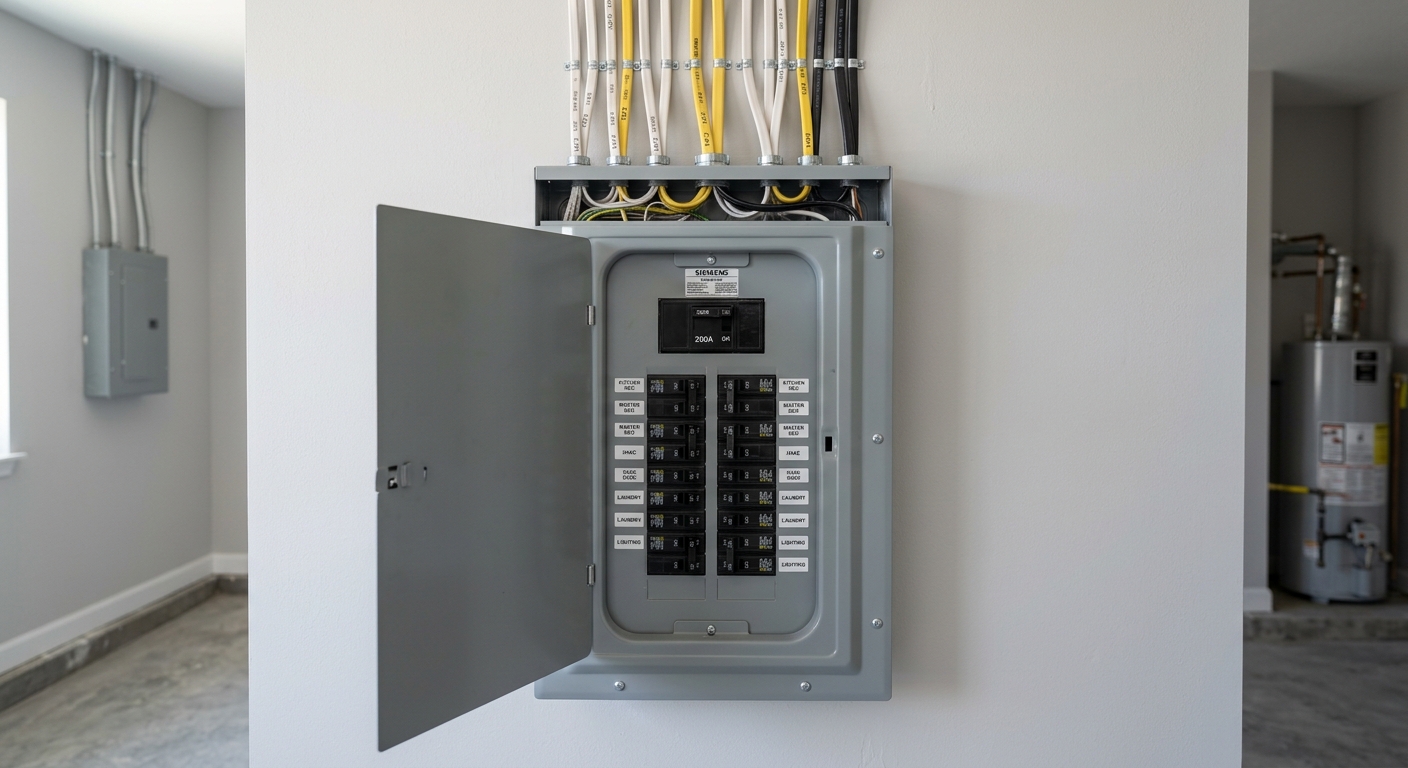
Brockville homeowners often feel the cost difference most when they update an older home—especially because so much of the housing stock is dated. With 71.6% of homes built before 1981 (Statistics Canada, 2021 Census), it’s common to see aging wiring, older fuse/breaker arrangements, and capacity that doesn’t match today’s loads. In a market like Kingston–Pembroke, where 57.1% of households own their homes (Statistics Canada, 2021 Census), planned upgrades—panel changes, EV-ready circuits, and whole-home rewires—are steady, and that directly affects both demand and scheduling.
Costs in Brockville are also shaped by the region’s service mix. We routinely replace knob-and-tube wiring and remediate aluminum branch wiring (often seen in mid-1960s to mid-1970s homes). Cold-weather demands matter too: longer heating seasons can increase baseboard/electrical backup use, and sudden load spikes (space heaters, hot tubs, workshops) add pressure to panels that were originally sized for much lower electricity consumption.
Contractor availability can tighten when multiple homes in the same older neighbourhood are scheduled for service upgrades. Around downtown Brockville and in established areas with a large share of older housing stock, you’ll typically see more panel upgrades and wiring remediation requests, plus more EV circuit installs as Level 2 chargers become the norm for commuters.
Below is a practical snapshot of common electrical services and what drives the pricing. Use it as a starting point for comparing quotes before you book site visits.
| Service |
Why It's Needed |
Permit Required |
Price Range |
| Panel upgrade — 100A to 200A service |
Modern homes add loads (heat pumps/backup heat, EV charging, induction or electric ranges). A 60A–100A setup can become undersized and unsafe under Ontario Electrical Safety Code requirements. |
Yes (service change) |
$2,500 – $4,500 |
| EV charger installation (Level 2, 40–50A) |
Dedicated, properly protected circuit to support reliable charging and to avoid nuisance trips or overheating on shared circuits. |
Yes (new dedicated circuit/permit) |
$1,200 – $2,800 |
| Knob-and-tube wiring removal and replacement |
Knob-and-tube wiring is aging and not designed for today’s load profiles; insulation deterioration increases risk and insurers may restrict or refuse coverage. |
Yes (major wiring work) |
$6,000 – $20,000 |
| Aluminum wiring remediation (CO/ALR connectors) |
Approved connectors and inspection are needed for aluminium branch wiring to reduce overheating risk at terminations. |
Yes (depending on scope—often for remediation and changes) |
$6,000 – $20,000 |
| New dedicated circuit (HVAC, appliance, hot tub) |
Dedicated protection and correct wire/breaker sizing improves safety and reduces failures caused by undersized shared circuits. |
Yes (new circuit) |
$1,000 – $3,500 |
| Whole-home rewire (older home, full replacement) |
When multiple rooms show mixed wiring, open junctions, and obsolete components, a full replacement brings the system up to current code and supports sale/insurability. |
Yes (rewiring) |
$6,000 – $20,000 |
Prices are estimates only and vary by project scope, site access and material selection.
What affects the price of electrical work in Brockville
In Brockville and across the Kingston–Pembroke region, two quotes for the same “simple” job can differ by 30% to 50% because the underlying electrical realities vary: access to the service area, how much wiring is already in place, and how the electrician must meet today’s Ontario Electrical Safety Code requirements. In practice, material choices and the time required for troubleshooting can make a big difference—especially in older homes.
The dominant cost driver is the age of the housing stock. Brockville’s pre-1981 inventory means you’ll frequently see older wiring types and capacity constraints. Homes built before about 1950 can have knob-and-tube wiring, where insurance and code expectations push homeowners toward replacement rather than patching. Homes from the 1960s–1970s often have 60A or 100A panels that struggle with today’s loads—EV chargers, heat pumps and their backup heat strategies, induction stoves, and new laundry/dishwasher cycles. Aluminum wiring is another frequent factor; where aluminium branch wiring exists, remediation typically requires licensed work using approved connectors (CO/ALR) or partial/full rewiring.
EV adoption is creating another cost pressure point: Level 2 charger permit applications and dedicated circuit installs. Depending on whether you’re going with a 40A vs. 50A circuit, the cable and breaker/bus bar interface details can change, affecting price and sometimes triggering a panel capacity review.
Concrete examples from Brockville: an upgrade where the panel location is easy and cable routing is straightforward can stay near the mid-range of the $2,500 – $4,500 panel upgrade band, while a service change that requires extensive rework through finished walls can climb toward the top of the $6,000 – $20,000 wiring-related band. Similarly, a CO/ALR connector remediation limited to accessible terminations can be less than a full rewire when insulation replacement is required.
| Price Factor |
Why It Matters |
Cost Impact |
| Panel size upgrade — 100A to 200A is the standard minimum today |
New loads require safe capacity and code-compliant protection. |
$2,500 – $4,500 typical |
| Wiring type — copper vs. aluminum remediation vs. K&T removal |
Different wiring types require different approved methods and labour time. |
$6,000 – $20,000 possible for major replacement/remediation |
| Number of new circuits — each adds material and labour time |
Every added circuit needs cable, protection, labelling, and testing. |
Often increases total by hundreds to thousands per circuit |
| Permit + ESA/TSBC inspection fee — mandatory for all major work |
Ontario requires ESA-permitted work and inspection for services and new circuits. |
Adds a fixed permitting/inspection cost component |
| Labour rate for licensed electricians — journeyman rates in Kingston–Pembroke |
Time on-site and complexity drive total labour billed at regional rates. |
$90 – $130/hour labour component (typical band) |
| EV charger amperage — 40A vs. 50A circuit affects cable and breaker cost |
Higher amperage circuits can require different conductor sizing and breaker costs. |
May shift pricing within the EV band |
| Emergency or after-hours premium |
Scheduling and risk controls are higher when work must be done quickly. |
Often increases quote by a noticeable margin |
| Load calculation required for service upgrade |
Service size changes must be supported by calculations that account for real loads. |
More paperwork/testing can add labour time |
Permits & regulations in Ontario
In Ontario, virtually any electrical work beyond changing a light bulb must be completed by a licensed electrician. Permits are required for major work such as panel upgrades, service changes, rewiring, and new circuits—including EV charger installations. All permitted work must pass inspection by the provincial electrical safety authority, which is the Electrical Safety Authority (ESA) in Ontario.
DIY electrical is restricted: homeowners generally cannot legally perform work that requires permits or inspection (for example, connecting or altering a service, replacing a panel, installing new breakers and circuits, or touching wiring within the distribution equipment). Some small replacements may be exempt depending on circumstances, but the safest approach—especially in Brockville’s older housing stock—is to assume permit rules apply to anything that changes circuits, protection devices, or wiring paths.
To protect yourself, verify three things before signing: the electrician’s Ontario licence, their liability coverage, and WSIB/WCB coverage. Here’s the practical checklist: (1) search the electrician/company on the Ontario licensing registry/verification tools and confirm the licence is active; (2) request a current certificate of insurance naming you (or confirming you’re protected as the client under the policy); (3) ask for confirmation of WSIB clearance (or WCB coverage as applicable) and keep the document on file; (4) confirm the permit will be filed for the exact scope and that ESA inspection is included where required. A legitimate contractor will share these documents without pressure.
When your Brockville home needs an electrical upgrade
Brockville homes often look “fine” until winter heating demands and modern appliances stack up on the same circuits. The warning signs below are safety-critical, not cosmetic. First, breakers that trip frequently typically indicate overload, a failing breaker, or undersized wiring—especially when baseboard heat, kettles/toasters, and other high-draw loads run together. If breakers trip repeatedly, plan to stop guessing and book a service capacity and circuit evaluation.
Second, if you see knob-and-tube wiring, the concern isn’t only age. Deteriorating insulation and poor compatibility with today’s insulation levels increase risk, and insurance may cancel or refuse coverage. That’s usually a planned upgrade with priority, not a “wait and see.”
Third, 60A or 100A services can be inadequate when you add an EV charger, heat pump strategy, electric range, and hot tub. In many Brockville homes, the standard solution is a panel/service upgrade toward 200A to safely handle future loads.
Fourth, aluminum wiring in pre-1976 constructions isn’t always an immediate fire hazard if terminations were maintained, but it requires licensed remediation (often CO/ALR connectors) and proper testing. Fifth, if you’re using extension cords because there aren’t enough outlets, that’s a code and safety concern—especially when winter power tools or holiday lighting are involved. Sixth, missing AFCI/GFCI protection can be a code-compliance issue that becomes obvious during home sale or inspection.
To show where pricing makes sense: if your load review suggests you need a 200A upgrade, quotes in the $2,500 – $4,500 panel upgrade band can be justified versus repeatedly replacing tripped breakers and burnt connectors. Conversely, a short “add an outlet” job without fixing circuit capacity may feel cheaper today, but it often costs more long-term.
| Warning Sign |
What It Means |
Recommended Action |
Urgency |
Price Band |
| Breakers trip frequently |
Possible overload, wiring problems, or failing components under peak winter loads. |
Have an electrician inspect the affected circuits and do a load/capacity check. |
Immediate / same week |
$1,000 – $3,500 |
| Knob-and-tube wiring present |
Obsolete wiring with insulation deterioration risk and potential insurability concerns. |
Plan removal and replacement or full rewire depending on extent. |
High priority (planned) |
$6,000 – $20,000 |
| 60A or 100A panel (inadequate load capacity) |
Not enough headroom for modern appliances, EV charging, and winter electrical demand. |
Service/panel upgrade with load calculation; add AFCI/GFCI as required. |
High priority |
$2,500 – $4,500 |
| Aluminum wiring (pre-1976 construction) |
Termination points may overheat if not properly remediated. |
Licensed inspection and connector remediation (CO/ALR) or replacement where needed. |
Planned (but don’t ignore) |
$6,000 – $20,000 |
| Insufficient outlets — extension cords everywhere |
Creates overheating risk, especially with space heaters and tools. |
Add outlets and likely add/redistribute circuits (not just “power-strip” fixes). |
Planned / prevent escalation |
$1,000 – $3,500 |
| No AFCI or GFCI protection where required |
Greater risk of arcing and shock; may be flagged during inspections and sales. |
Add AFCI/GFCI protection to required circuits and update any non-compliant devices. |
Planned |
$200 – $800 |
How to choose a electrical work contractor in Brockville
Start by confirming the contractor is properly licensed in Ontario and is set up to protect you financially. Ask for (1) their current Ontario electrician/company licence details, (2) a certificate of insurance showing liability coverage, and (3) proof of WSIB/WCB coverage (and request a clearance letter if they provide one). In Brockville’s older-home market, you want someone who routinely handles service upgrades, knob-and-tube removal, and EV charger circuits—not only “small outlet” work.
Next, request 2–3 itemised written quotes with a labour + materials breakdown. A good quote separates cable, breakers, panel components, labour hours, and any specialty items (like CO/ALR connectors, AFCI/GFCI devices, conduit, and disposal). Pay attention to exclusions: is permit filing included, is ESA inspection included, and is removal/disposal of old materials part of the scope? For service work, a “cheap” lump-sum quote that doesn’t include permits often gets expensive fast at the end.
Also compare warranty terms. You should receive a clear workmanship warranty (and understand the manufacturer warranty for parts). If you sell the home, ask whether warranties are transferable or documented for future proof. Use a reasonable payment schedule: never pay more than 10% to 15% upfront, and hold back a portion until the job is complete and cleaned up.
Finally, get a start date and completion estimate in writing. For EV charger installs and panel upgrades, timing matters because ESA scheduling and parts availability can affect lead times.
- Request itemised labour and materials (no “mystery lump sum”).
- Confirm permits and ESA inspection are included for service changes/new circuits.
- Ask how they handle older wiring discoveries (hidden K&T/aluminum junctions).
- Verify insurance certificate is current before work starts.
- Confirm WSIB/WCB clearance documents for contractor staff.
- Check workmanship warranty length and what it covers.
- Confirm manufacturer warranties for key components (panel, breakers, EV devices).
- Ask whether old wiring/material disposal is included.
- Ensure AFCI/GFCI requirements are considered in the scope where applicable.
- Get a detailed timeline: start date, inspection date expectations, completion date.
- Request photos/notes of the existing condition and final test results.
- Use payment milestones tied to defined completion steps (rough-in, trim, testing, inspection pass).
Red flags in Brockville: contractors who won’t provide their licence/insurance/WSIB proof, quotes that omit ESA permit/inspection, promises of “no inspection needed,” vague scopes like “replace wiring” without describing extent, and requests for large upfront payments or cash-only arrangements.
Frequently asked questions — electrical work in Brockville
How much does an EV charger installation cost in Brockville?
In Brockville, a typical Level 2 EV charger installation (40–50A dedicated circuit) often lands in the $1,200 – $2,800 range, depending on wiring runs, panel capacity, and whether your service needs an upgrade. Many older homes here were built with limited capacity, so you may also need a load calculation and possibly a panel change—commonly $2,500 – $4,500—if your existing service can’t support the new charger alongside winter heating and other loads. ESA permits are required for the new circuit and inspection, and legitimate quotes should include ESA-related fees. If your panel is tight or the routing goes through finished space, expect the upper end of the range; easier access usually keeps costs closer to the lower end.
What is knob-and-tube wiring and should I replace it?
Knob-and-tube wiring is an older wiring method commonly found in older Brockville houses. It uses porcelain knobs/tubes to hold conductors and insulation that can deteriorate over time. The risk isn’t only “how old it is”—it’s how the insulation performs after decades of heat exposure, vibration, and moisture changes. From a practical homeowner standpoint, knob-and-tube often becomes an insurance problem, and it’s difficult to safely extend or combine with modern circuits to current code expectations. The best approach depends on the extent: some partial areas may be manageable, but often removal and replacement is recommended—especially if it’s feeding multiple rooms or junctions. Because this kind of work is major wiring, you’ll need permits and ESA inspection in Ontario.
Is aluminum wiring safe in older Brockville homes?
Aluminum branch wiring can be safe when properly installed and when terminations are remediated using approved methods (commonly CO/ALR connectors) and tested. In Brockville and the Kingston–Pembroke region, aluminium was used in many homes built in the 1960s through the mid-1970s era, so you’ll see it during service upgrades and sale inspections. If your aluminium is in good condition with sound terminations and the right connectors, you may not need a full rewire right away—but it does usually require a licensed electrician to inspect, identify affected terminations, and complete remediation to current expectations. If the aluminium wiring has failing connections or is mixed improperly with other materials, full replacement may be required. Ontario permits typically apply when remediation involves protected circuit changes or new terminations.
Do I need a permit for electrical work in Ontario?
Yes—Ontario permits are typically required for any electrical work that goes beyond very minor replacements. In practice, panel upgrades and service changes, rewiring, and new circuits (including EV charger circuits) all require permits and ESA inspection. You generally should not DIY permitted work because homeowner exemptions are narrow, and unpermitted work may be refused during inspection or complicate insurance claims. Before the electrician starts, ask what permits will be filed for your specific scope and whether ESA inspection is included. For Brockville homeowners, this is especially important because many older homes require more than “just adding a device”—the work often touches wiring paths, protection devices, or service capacity.
What are signs of an overloaded electrical panel?
In Brockville, common signs of an overloaded panel include breakers that trip under typical winter use, flickering lights when large loads start, frequent nuisance trips on specific circuits, and the need to run high-draw items on extension cords. Overload can also show up when you add modern appliances, a heat-pump backup strategy, or an EV charger and notice increased tripping or warm breaker/switch areas. If your home still has a 60A or older 100A service, it may simply be undersized for today’s loads—especially with electric heating patterns and EV charging. The right fix is usually a load calculation and, where needed, a service/panel upgrade. Many upgrades in the $2,500 – $4,500 band address this by increasing safe capacity and adding required modern protections.
Can I do my own electrical work in Ontario?
Ontario strongly restricts DIY electrical work. While homeowners can sometimes do very limited tasks that do not involve permitted work (and never for service connections or new circuits), most work that affects wiring, protection, panels, or any requirement for inspection must be done by a licensed electrician. For Brockville homeowners in older homes, the “scope creep” risk is real: once walls are opened, the job can turn into K&T removal, aluminum remediation, or circuit rewiring—work that requires permits and ESA inspection. If you’re unsure whether something is permit-required, ask the electrician to review the scope first. If a contractor is suggesting you DIY anything that changes wiring or circuits to avoid a permit, that’s a major concern and likely not compliant with Ontario safety rules.