Electrical services and costs in Morningside
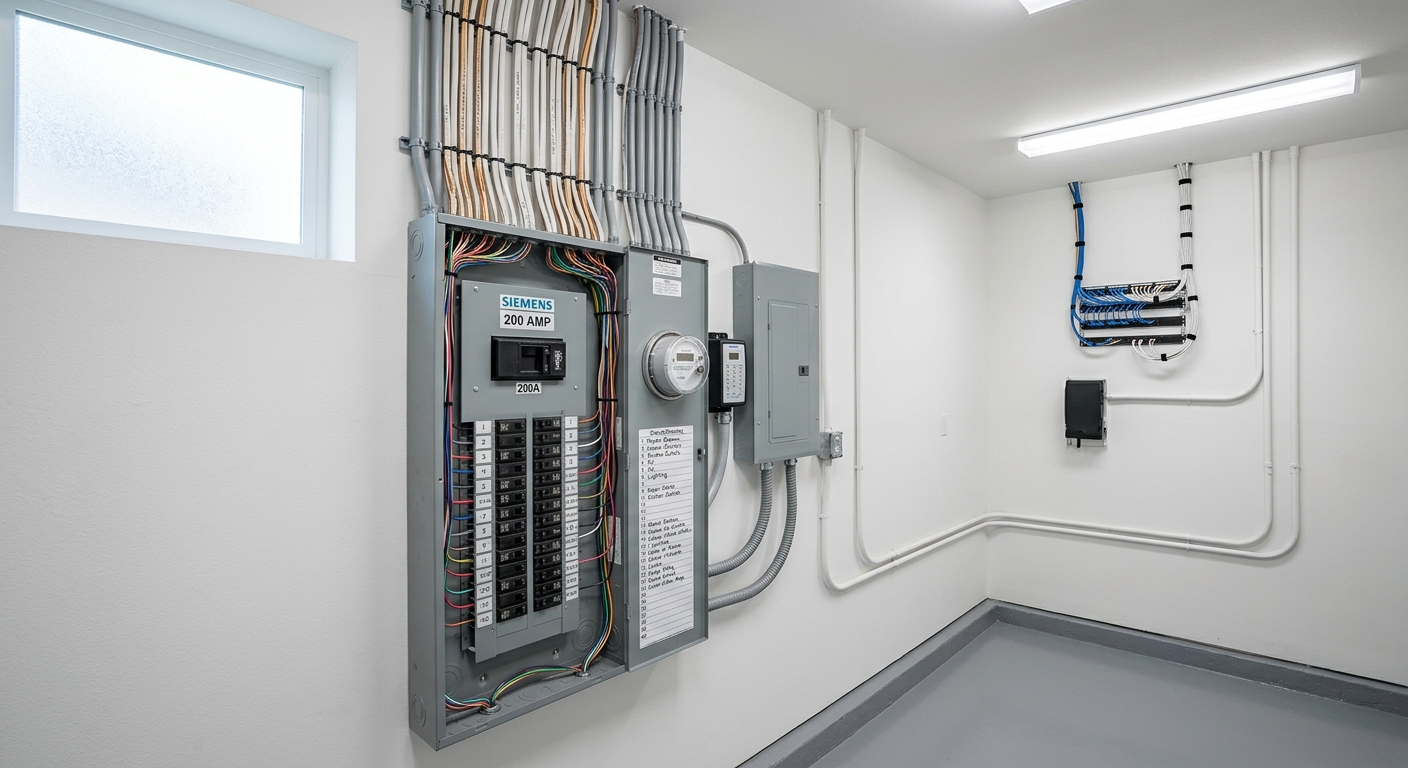
Morningside is a fast-changing part of the Toronto market, so homeowners there often need upgrades to keep up with modern appliances, EV charging, and heat pumps. With Morningside’s population at 17,455 (Statistics Canada, 2021 Census), you’ll see steady contractor demand—but pricing still reflects how many older homes are being updated, not just how many homes exist. In this part of the GTA, many neighbourhoods contain pre-1970 wiring and older panels, so panel and wiring work is commonly paired: removing knob-and-tube, remediating mid-century aluminum branch wiring, and moving to a 100A-to-200A service when loads grow. Toronto’s mix of mature streetscapes and infill construction also matters for cost: access constraints, longer cable runs in finished basements, and the need to coordinate permits and inspections can add labour time even when the electrical scope is straightforward.
Another local factor is how quickly household loads are changing. EV adoption and Level 2 charger installs are increasingly common, and many homes need new dedicated circuits plus, in some cases, a service upgrade. You’ll also notice higher demand around older pockets of Morningside where many houses are still heated with older systems and have limited panel capacity—especially near the older residential stretches along the Morningside/Port Union corridor where renovations and additions are frequent. If you’re comparing bids, start with the scope basics and then confirm site conditions; from there, use the typical cost ranges below as a baseline for planning.
| Service |
Why It's Needed |
Permit Required |
Price Range |
| Panel upgrade — 100A to 200A service |
To safely handle modern loads such as EV charging, heat pumps, induction/electric cooking, and finished-basement renovations |
Yes (permit + ESA inspection for permitted electrical work in Ontario) |
$2,500–$6,000 |
| EV charger installation (Level 2, 40–50A) |
Adds a dedicated circuit and correctly rated breaker/cabling so the charger can operate reliably |
Yes (new circuit and any service-panel modifications) |
$900–$2,500 |
| Knob-and-tube wiring removal and replacement |
Older insulation materials degrade and are high risk; replacement improves safety and insurability |
Yes (rewiring and significant system changes) |
$3,000–$15,000 |
| Aluminum wiring remediation (CO/ALR connectors) |
Older aluminum branch wiring can require approved connector work or replacement of affected portions for safe terminations |
Yes (remediation of wiring terminations and electrical system modifications) |
$3,000–$10,000 |
| New dedicated circuit (HVAC, appliance, hot tub) |
Prevents nuisance trips and supports equipment that needs its own breaker and properly sized conductor |
Typically yes (adding new circuits usually requires a permit) |
$800–$2,500 |
| Whole-home rewire (older home, full replacement) |
When multiple rooms/zones have aging wiring, covers extensive safety and code-compliance gaps |
Yes (significant rewiring requires permits and inspection) |
$6,000–$15,000 |
Prices are estimates only and vary by project scope, site access and material selection.
What affects the price of electrical work in Morningside
In Morningside and across the Toronto economic region, the same “headline” job—like upgrading a panel or adding a charger—can land 30–50% apart because quotes depend on what’s hidden: how the wiring is routed, how much panel/service work is needed, and whether the contractor must correct old defects. Pricing variability is also shaped by permit/inspection timing and labour availability in a dense market where older neighbourhoods still coexist with new condo and infill demand. Many pre‑1970 homes in the GTA have knob-and-tube or older wiring patterns that don’t play nicely with today’s continuous loads (A/C compressors, EV chargers, heat pump systems, and electronics). That’s why an “EV charger add-on” can turn into a service upgrade + load calculation + extra circuits.
Housing age is the dominant cost driver. Homes built before 1950 may include knob-and-tube wiring that can trigger stricter safety expectations during updates, and insurance requirements often push homeowners toward removal rather than patching. Homes from roughly the 1960s–70s may have older panels—sometimes 60A or 100A—that don’t leave headroom for modern loads. Aluminum branch wiring is also commonly encountered in that era, and remediation must be done using approved methods such as CO/ALR connectors or replacement of affected sections. EV adoption is actively driving permit applications for Level 2 chargers, and a 40A circuit versus a 50A circuit affects conductor and breaker selection.
In practice, you can see cost swings in Morningside. For example: finishing work behind drywall may increase wiring & rewire costs; trenching or relocating service equipment can push panel upgrade work toward the upper end of the $2,500–$6,000 band; and a straightforward charger install may stay near $900–$2,500 when the existing panel has capacity. If a load calculation shows you need more service capacity, that added engineering plus the extra materials typically explains the jump more than “labour rate” alone.
| Price Factor |
Why It Matters |
Cost Impact |
| Panel size upgrade — 100A to 200A is the standard minimum today |
New breaker spaces, updated service equipment, and safe distribution for modern appliances |
$1,500–$4,500 (often the biggest line item) |
| Wiring type — copper vs. aluminum remediation vs. K&T removal |
Remediation uses licensed methods and approved components; knob-and-tube removal is typically the most disruptive |
$1,000–$10,000+ |
| Number of new circuits — each adds material and labour time |
Each circuit requires wiring, breaker, boxes, and testing; more circuits also consume panel capacity |
$300–$1,500 per circuit (typical spread) |
| Permit + ESA/TSBC inspection fee — mandatory for all major work |
Major electrical work must be permitted and inspected; administrative steps add cost even when labour is the same |
$200–$500+ |
| Labour rate for licensed electricians — journeyman rates in GTA |
Skilled time increases with access complexity (attics/basements, retrofit routes, finished spaces) |
About $90–$120/hour labour contribution |
| EV charger amperage — 40A vs. 50A circuit affects cable and breaker cost |
Higher amperage can require heavier conductors and compatible breakers/feeder components |
$150–$600 difference (project-dependent) |
| Emergency or after-hours premium |
Scheduling and response costs add overhead for urgent troubleshooting or repairs |
+$100–$300+ |
| Load calculation required for service upgrade |
Determines whether 200A (or more) is needed based on connected loads and future additions |
$150–$500 (plus potential service change if capacity is insufficient) |
Permits & regulations in Ontario
In Ontario, electrical safety rules are strict: ALL electrical work beyond changing a light bulb must be performed by a licensed electrician. That includes panel upgrades, new circuits, rewiring, service upgrades, and installing an EV charger (because it generally requires adding a breaker/circuit and connecting to the panel/service). Permits are also typically required for major work, and permitted electrical work must pass inspection by the electrical safety authority—ESA in Ontario—before it can be energized and considered compliant.
Homeowners sometimes ask what they can do themselves in Morningside. In most cases, DIY electrical is prohibited because it affects safety and code compliance. The narrow exceptions are usually limited to non-electrical tasks (for example, painting around fixtures) or very limited activities that do not involve wiring, connection to circuits, or modifications that would trigger permitting. If there’s any doubt, the safe approach is to hire the licensed contractor and keep the homeowner role to pre-approved prep and documentation.
Step-by-step, you can verify an Ontario contractor before work starts: (1) confirm their licence number and status using the ESA/appropriate Ontario registry; (2) request a current certificate of insurance showing liability coverage; (3) ask whether they carry WSIB/WCB coverage (or provide proof of coverage/exemption as applicable); (4) ensure the quote clearly states permit pulling responsibility; and (5) confirm the electrician will schedule inspection after rough-in and before final energization. These checks protect you from delays, failed inspections, and workmanship disputes.
When your Morningside home needs an electrical upgrade
Electrical upgrades in Morningside are usually not about aesthetics—they’re about safety, capacity, and meeting modern code expectations that show up during inspection, financing, or home sales. Start with the most common warning: (1) breakers that trip regularly. Frequent trips often point to overload, a failing breaker, or circuits feeding loads they weren’t meant for. (2) If you see knob-and-tube wiring, treat it seriously. The key concern is deteriorating insulation and contact reliability—not just “how old it is.” In Ontario, older wiring patterns are a frequent blocker to insurability and safe long-term use, so you typically plan removal rather than casual patching.
(3) A 60A or 100A panel can be inadequate for a modern Toronto-area home, especially when you add an EV charger, heat pump equipment, electric cooking, and a finished basement. In many cases, a 200A upgrade is the standard solution that creates headroom and reduces nuisance breaker events. (4) Aluminum wiring (often in pre-1976 construction) isn’t always immediately dangerous if maintained, but it usually requires licensed remediation—commonly connector upgrades using approved methods—especially at terminations. (5) Insufficient outlets and reliance on extension cords signals overloaded receptacle circuits and poor distribution, and (6) missing AFCI/GFCI protection where required can become an issue at the time of sale or inspection.
Urgency matters. Knob-and-tube, repeated nuisance tripping, or any burning/sparking smell needs prompt action. Panel capacity and missing protection are often “planned” upgrades, but you should schedule them before adding major loads. For example, spending toward a panel upgrade in the $2,500–$6,000 band can be justified if it prevents expensive rewiring scattered circuits later and allows a charger install around $900–$2,500 without constant overloading. In a climate with hot, humid summers and cold winters, load-heavy equipment runs longer, which makes undersized capacity more likely to cause problems.
| Warning Sign |
What It Means |
Recommended Action |
Urgency |
Price Band |
| Breakers trip frequently |
Overload, undersized circuits, failing breaker, or improper load distribution |
Troubleshoot load sources, check panel capacity, and add/redistribute circuits |
Immediate to urgent |
$800–$2,500 |
| Knob-and-tube wiring present |
Aging insulation and high safety risk; often affects insurance and compliance during updates |
Plan K&T removal and replacement (partial or whole-home based on condition) |
Urgent (plan promptly) |
$3,000–$15,000 |
| 60A or 100A panel (inadequate load capacity) |
Modern loads can exceed safe capacity or leave no breaker room for upgrades |
Load calculation, then upgrade to 200A service if required |
Planned (before adding loads) |
$2,500–$6,000 |
| Aluminum wiring (pre-1976 construction) |
Potential termination issues and connector compatibility requirements |
Inspect and remediate with approved CO/ALR connectors or replacement where needed |
Planned (based on inspection) |
$3,000–$10,000 |
| Insufficient outlets — extension cords everywhere |
Overloaded receptacle circuits and trip risk; poor distribution for appliances |
Add receptacles/circuits; avoid “band-aid” extension cord use |
Urgent (for safety) |
$800–$2,500 |
| No AFCI or GFCI protection where required |
Code-compliance gap; higher risk of arc faults and shock hazards |
Upgrade to AFCI/GFCI protection where code requires (breakers or receptacles) |
Planned (often triggered by sale/inspection) |
$200–$1,800 |
How to choose a electrical work contractor in Morningside
Choosing a licensed electrical contractor in Morningside is mostly about verification and clarity. First, confirm Ontario licensing: ask for their licence number and check it with the Ontario electrical safety registry (or ESA-linked verification). Next, request proof of liability insurance—this protects you if something is damaged or an accident occurs. For work under contractor responsibility, ask about WSIB/WCB coverage as well; you want documented coverage rather than a verbal assurance.
Then get 2–3 itemised written quotes. The quote should separate labour, materials, permit/inspection steps, and any disposal or remediation costs. Avoid “one number” pricing unless it explicitly states what is included and what is excluded (for example: Is trenching included? Is breaker/panel disposal included? Who pulls the ESA permit?). A proper scope should also specify whether a load calculation will be performed for service changes and whether any existing wiring defects will be addressed.
Warranty matters too: ask for the workmanship warranty length and whether it covers the full installation, as well as the manufacturer warranty for panels, breakers, and chargers. Confirm if warranties are transferable if you sell the home. For payment, avoid paying more than 10–15% upfront; a common approach is to pay in milestones and keep a holdback until completion and cleanup.
Finally, timelines should be in writing: proposed start date, estimated completion time, and when permits/inspections will occur—especially important in Toronto-area scheduling.
- Verify the electrician’s Ontario licence number before signing anything
- Confirm liability insurance certificate is current and matches the scope
- Ask for WSIB/WCB coverage proof or exemption documentation
- Get itemised quotes: labour + materials + permit/inspection fees + disposal
- Ensure permit pulling responsibility is clearly stated (you don’t want delays)
- Ask if ESA inspection fees are included or billed separately
- Confirm load calculation is included when upgrading to 200A service
- Review wiring plan options for finished basements (how drywall access is handled)
- Confirm EV charger model, breaker size, and cable routing method
- Ask about AFCI/GFCI requirements and whether they’ll be added during the upgrade
- Confirm workmanship warranty and manufacturer warranty details in writing
- Payment schedule: no large upfront deposits; keep holdback until completion
Red flags to watch for in Morningside: vague scopes that don’t mention permits/inspection; quoting a service upgrade without acknowledging load calculations; refusing to provide licence/insurance/WSIB documentation; pushing high deposits (beyond 10–15%); or only offering a lump sum without a breakdown of materials, labour, and remediation/disposal.
Frequently asked questions — electrical work in Morningside
What is a GFCI outlet and where is it required in Ontario?
A GFCI (Ground-Fault Circuit Interrupter) outlet protects people by tripping the circuit when it detects leakage to ground, which is especially important in wet or high-risk areas. In Ontario homes, GFCI protection is required for specific locations under the Ontario Electrical Code—commonly including bathrooms (including vanity areas), kitchens depending on layout, garages, and outdoor receptacles. Practically in Morningside, this comes up at sale or inspection time when older homes have traditional receptacles but no GFCI protection. If your electrician is updating receptacles, they’ll typically recommend replacing standard outlets with GFCI receptacles or installing GFCI protection via breakers. Costs vary, but a modest upgrade often fits within the $200–$5,000 overall lighting/fixture-to-small-upgrade planning range depending on how many devices and circuit changes are involved.
How do I know if my Morningside home has aluminum wiring?
You can often identify aluminum wiring by the marking on the cable insulation or jacket—many aluminum branch cables are labeled “Al” or similar. That said, the safest way is to have a licensed electrician inspect at accessible junctions: panel terminations, junction boxes, and any receptacle or switch boxes where the conductor is visible. In Toronto-area homes from the 1960s–70s (and often pre-1976), aluminum branch wiring is relatively common, and it may be present even if the home looks “modern” on the surface. If aluminum is suspected, the electrician will check connector types and termination condition; remediation may include approved CO/ALR connectors, or replacement of problem sections. In many real Morningside projects, this is one of the reasons quotes land higher than expected because proper remediation isn’t “optional patching”—it has to be done to code-compliant methods.
What is the cost of rewiring a house in Morningside?
Rewiring cost depends on how much of the wiring system needs replacement, the home’s size, access (finished basements vs. open stud walls), and whether you’re doing a full-home rewire or targeted replacement of older sections. In the Toronto market, whole-home rewire jobs in older houses commonly fall in the $6,000–$15,000 range when significant wall/ceiling access and extended cabling are required. If your scope is more focused—such as removing knob-and-tube in specific areas or replacing only certain runs—costs can still be substantial, commonly within $3,000–$15,000 depending on reach and demolition. Many homeowners also pair rewiring with a panel/service upgrade (commonly $2,500–$6,000) to safely support EV charging, heat pumps, and modern circuits. Your electrician’s walkthrough and load context usually determine which band you’ll actually land in.
What electrical upgrades are required when selling a home in Ontario?
Ontario rules and buyer/inspector expectations often drive upgrades, even when there’s no “automatic” requirement to renovate everything. Common electrical upgrade requests on sale are safety and compliance-related items: ensuring GFCI protection where required, addressing missing bonding/grounding concerns, updating unsafe or outdated wiring, and correcting panel capacity/space issues that prevent safe installation of modern devices. Homes with knob-and-tube or problematic aluminum wiring often face strong scrutiny because continued safe use and insurability can be difficult. Also, if a buyer’s inspection highlights nuisance breaker tripping, overloaded circuits, or the absence of required protection devices, you may be asked to upgrade before closing. In Morningside, these upgrades frequently come up alongside panel capacity planning—especially if the home is expected to support modern loads like EV charging and heat pump equipment. Your best next step is a licensed electrician’s inspection and a written deficiency list tied to the Ontario Electrical Code.
What is a load calculation and why does my electrician need one?
A load calculation estimates the total electrical demand your home can require, based on connected loads and how Ontario code permits sizing of service equipment. Electricians do it to confirm whether your current service and panel are sized correctly for today’s usage and for any planned upgrades. In Morningside, this becomes crucial when you’re adding Level 2 EV charging, new heat pump equipment, or converting to electric heating/cooking—because those loads can quickly reduce headroom in older 60A or 100A panels. A proper calculation helps prevent overloading, nuisance breaker trips, and repeated “circuit-by-circuit” retrofits that still don’t solve the root capacity issue. If the calculation shows you need more capacity, it can directly support a 200A upgrade planning range such as $2,500–$6,000. It also improves bid accuracy by aligning the electrical design to your actual connected load profile.
How do I find a licensed electrician in Morningside?
Start with licensing verification rather than reviews alone. Ask the contractor for their Ontario electrician licence details and confirm the registration status using Ontario’s electricity safety/licensing verification approach associated with ESA oversight. Next, request proof of liability insurance and confirm they carry WSIB/WCB coverage (or appropriate documentation/exemption if applicable). Then compare itemised quotes: labour, materials, permit pulling and inspection steps, and any disposal/remediation costs. For Morningside homeowners, it’s also smart to ask how they handle common GTA complications—like finished-basement routing, older knob-and-tube sections, or aluminum remediation using CO/ALR connectors. A reputable contractor will clearly state whether your job includes a permit and scheduled inspection and will provide an installation timeline. Price is helpful, but scope clarity matters more—especially when panel upgrades (often $2,500–$6,000) are in play because hidden conditions can change the final outcome.