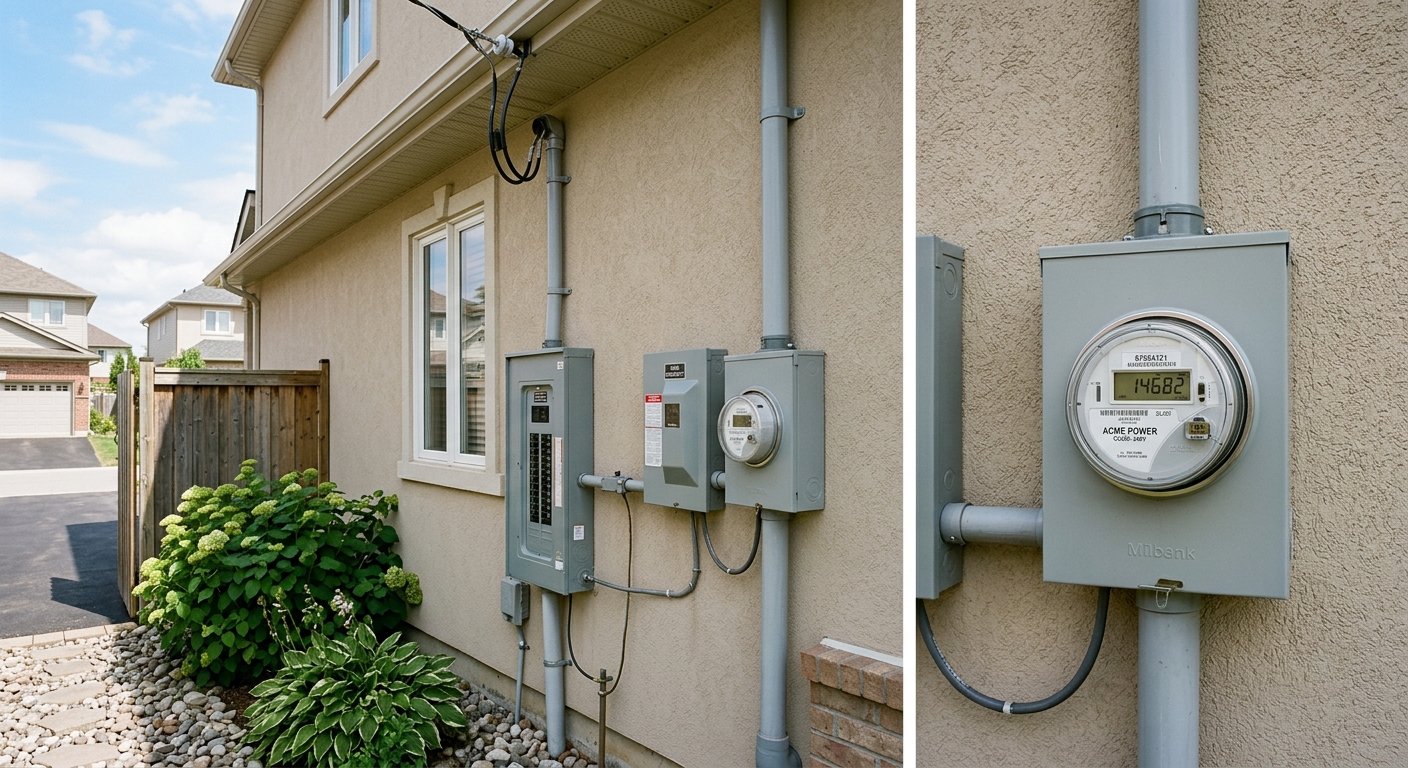
Electrical services and costs in Wellesley
Electrical work in Wellesley, Ontario is usually driven by what homeowners have behind the walls: older services, dated wiring, and growing electrical loads. With 44.1% of dwellings in Wellesley built before 1981 (Statistics Canada, 2021 Census), it’s common to see panel upgrades and rewire projects that bring homes from “works for decades” to “meets modern Ontario Electrical Code safety expectations.” At the same time, the community has a strong owner-occupancy base—86.9% of households own (Statistics Canada, 2021 Census)—so many projects get timed around renovations, basement finishes, and major appliance changes.
In the Kitchener–Waterloo–Barrie economic region, contractor availability and material lead-times influence pricing. When multiple homeowners are adding heat pumps, upgrading kitchens, or planning Level 2 EV charging, electricians tend to price with tighter scheduling and more on-site diagnostics. Winter demand also matters: cold-weather inspections and “service fall-off” troubleshooting can add labour time on older gear, especially in homes with long cable runs or corrosion at service disconnects.
Across Wellesley—particularly in neighbourhood pockets around main corridors such as downtown Wellesley where older housing is more concentrated—homeowners often need a careful load calculation before anything is upgraded. That’s why many quotes cluster around panel upgrades (commonly moving from 100A to 200A) and targeted wiring remediation, rather than “swap one breaker and hope.” Use the table below as a practical starting point for the scope types most often requested in Wellesley, then we can narrow your range once we understand your service size, wiring type, and intended loads.
| Service |
Why It's Needed |
Permit Required |
Price Range |
| Panel upgrade — 100A to 200A service |
To safely support modern loads (electric range, heat pumps, EV charging) and meet current code requirements for breakers, bonding/grounding, and protection devices. |
Yes (service change/panel work requires a permit and ESA inspection) |
$2,500–$7,000 |
| EV charger installation (Level 2, 40–50A) |
Adds a dedicated, code-compliant circuit for a faster Level 2 charge and prevents overloading shared circuits. |
Yes (new branch circuit for EV charging) |
$800–$2,500 |
| Knob-and-tube wiring removal and replacement |
Legacy insulation and wiring methods are unreliable for today’s insulation integrity and are frequently a deal-breaker for insurers and resale due to overheating and contact issues. |
Yes (rewiring work requires permit and inspection) |
$4,000–$15,000 |
| Aluminum wiring remediation (CO/ALR connectors) |
Aluminum branch wiring can loosen over time; approved CO/ALR connectors (or full replacement) restore safe terminations. |
Usually yes (major wiring work/remediation typically requires permit) |
$4,000–$10,500 |
| New dedicated circuit (HVAC, appliance, hot tub) |
Provides proper protection and capacity for high-demand equipment so you don’t rely on undersized shared circuits. |
Yes (new branch circuits require permit and inspection) |
$750–$3,500 |
| Whole-home rewire (older home, full replacement) |
When multiple systems are undersized, unsafe, or incompatible with modern devices, a complete rewiring delivers a safer foundation for decades. |
Yes (rewiring requires permit and ESA inspection) |
$12,000–$25,000 |
Prices are estimates only and vary by project scope, site access and material selection.
What affects the price of electrical work in Wellesley
It’s normal to see quotes for the “same” electrical job vary by 30–50% across the Kitchener–Waterloo–Barrie region, and that gap is usually not about the electrician’s attitude—it’s about the unseen conditions. Here, the dominant cost driver is the age and condition of the housing stock: in Wellesley, a large share of homes were built before 1981 (Statistics Canada, 2021 Census), which means more homes with legacy wiring details, older fusing/panels, and service arrangements that need upgrading to today’s Ontario Electrical Code expectations.
Homes built before 1950 are where costs can jump most: older knob-and-tube or brittle insulation problems take time to locate and replace safely, and insurance coverage may be impacted if wiring isn’t remediated. Meanwhile, many 1960s–70s homes have 60A or 100A panels that were never meant for today’s load mix—EV chargers, heat pumps, induction stoves, and electric dryers running at the same time. Aluminum wiring remediation (common in homes from about 1965–1976) also affects pricing because approved CO/ALR connectors require licensed terminations, and sometimes full replacement is the prudent “do it once” approach.
In this region, EV adoption is a visible trend, and that translates into a surge of permit applications for Level 2 circuits. A straightforward 40A–50A EV install can align with the $800–$2,500 band, but if your service capacity is tight, the quote may shift into the $2,500–$7,000 panel-upgrade range to complete a safe load plan. Two common Wellesley examples: (1) finishing basements often uncovers old splices or inaccessible cable paths, adding labour; (2) homes with clear attic access and modern grounding infrastructure generally price closer to the lower end of a wiring or service band.
| Price Factor |
Why It Matters |
Cost Impact |
| Panel size upgrade — 100A to 200A is the standard minimum today |
Adequate breaker space and safer capacity for modern loads. |
Often the largest single line item; typically aligns with $2,500–$7,000 |
| Wiring type — copper vs. aluminum remediation vs. K&T removal |
Legacy methods require careful tracing, safe terminations, or full replacement. |
Remediation can add thousands; full rewires move into higher bands (often $4,000–$15,000+ |
| Number of new circuits — each adds material and labour time |
New cables, breakers, and potentially panel space are required for every dedicated load. |
Each added circuit can move total cost noticeably (materials + labour) |
| Permit + ESA/TSBC inspection fee — mandatory for all major work |
Service changes and new circuits require permitting and inspections. |
Usually adds a predictable administrative cost to keep work code-compliant |
| Labour rate for licensed electricians — journeyman rates in Kitchener–Waterloo–Barrie |
Licensed, insured work with correct safety practices is labour-intensive. |
Labour differences can explain a large part of 30–50% quote variation |
| EV charger amperage — 40A vs. 50A circuit affects cable and breaker cost |
The charger circuit design changes conductor size and protective devices. |
May shift EV installs within $800–$2,500 |
| Emergency or after-hours premium |
More costly scheduling and faster mobilization. |
Can add a noticeable surcharge on top of base labour |
| Load calculation required for service upgrade |
ESA expectations and safe design require confirming your actual connected load. |
May add time before work starts, but prevents expensive rework |
Permits & regulations in Ontario
In Ontario, electrical work beyond changing a light bulb must be done by a licensed electrician. That includes panel upgrades, service changes, new branch circuits (including EV charger circuits), and rewiring. Most homeowners focus on the “work” and forget the “verification,” but in Ontario all permitted electrical work must pass inspection by the electrical safety authority—commonly referred to as ESA in Ontario.
DIY electrical is not “allowed if you’re careful.” Exceptions for homeowners are narrow and do not cover things like running new circuits, changing a service, reconnecting a panel, or working inside the service area. As a practical rule: if the work would require a permit, you should assume it’s not DIY. Typical tasks that usually do not require a permit include replacing a like-for-like fixture (for example, a ceiling light) where no wiring is altered, as long as the electrician (or homeowner, where permitted) does not open service equipment or modify wiring methods. Any new wiring, any new breaker/circuit, any change to the panel, or any work affecting grounding/bonding is generally in the “permit required” category.
To verify a contractor in Wellesley, first confirm their Ontario licence number using the Ontario licensing registry, then ask for a certificate of liability insurance and evidence of WSIB (or WCB) coverage. Finally, make sure you get the ESA permit/inspection process clearly stated in the contract—your invoice should show that permit work is handled for you.
When your Wellesley home needs an electrical upgrade
Electrical upgrades in Wellesley aren’t just about convenience—they’re about safety and code compliance in a climate where winter extremes and older wiring details can reveal weak points. Start with the warning signs below. If you see one, treat it as a diagnostic prompt; if you see several, plan an upgrade rather than continuing to “reset and forget.”
(1) Breakers that trip regularly usually indicates an overloaded circuit, undersized wiring for the load, or a fault that can worsen. If it’s happening repeatedly—especially on circuits feeding kitchen appliances or baseboard heaters—arrange an inspection promptly. (2) Knob-and-tube wiring present is a key insurance and safety concern due to damaged insulation and contact issues over time; this typically needs a planned removal/replacement. (3) 60A or 100A service can become inadequate when modern loads stack (EV charging, heat pumps, and an electric range). In this market, the standard solution is often a move to 200A so the whole home can be safely supported. (4) Aluminum wiring (pre-1976 construction) may not be immediately dangerous if it’s stable, but it requires licensed remediation or replacement at terminations; otherwise, connection heating risk can rise over time. (5) Insufficient outlets—extension cords everywhere—is not “small” in Ontario: it can be a fire hazard. (6) No AFCI or GFCI protection where required is a compliance and resale issue that surfaces during home inspections.
For urgency, trips and signs of arcing/heat smell are “act now.” Other signs like knob-and-tube or aging services usually justify a scheduled upgrade. For budgeting: a dedicated EV circuit may fit the $800–$2,500 range, but if your load calculation shows your service can’t safely support it, the additional $2,500–$7,000 panel-upgrade cost is justified because it prevents forced downtime later and avoids repeated work.
| Warning Sign |
What It Means |
Recommended Action |
Urgency |
Price Band |
| Breakers trip frequently |
Possible overload, faulty device, loose connection, or undersized circuit for current loads. |
Electrician diagnostic first; then replace/upgrade affected circuits or equipment. |
Immediate |
$750–$3,500 |
| Knob-and-tube wiring present |
Legacy wiring with aging insulation and increased risk of overheating/insulation failure. |
Plan removal and replacement; may require rewiring sections or whole-home rewire. |
Planned (urgent scheduling) |
$4,000–$15,000 |
| 60A or 100A panel (inadequate load capacity) |
Limited capacity for today’s loads, leading to nuisance tripping and unsafe design margins. |
Load calculation and service upgrade (often 200A) with updated breakers and grounding. |
Planned |
$2,500–$7,000 |
| Aluminum wiring (pre-1976 construction) |
Terminations may loosen; safe operation requires approved connectors or replacement. |
Licensed remediation with CO/ALR connectors or targeted rewiring of affected runs. |
Planned |
$4,000–$10,500 |
| Insufficient outlets — extension cords everywhere |
Overloaded outlet circuits and increased risk of damage and overheating. |
Add receptacles/circuits and address breaker/cable capacity rather than relying on cords. |
Planned (but fix promptly) |
$750–$3,500 |
| No AFCI or GFCI protection where required |
Higher risk of fire from arc faults and shock hazards; may fail sale/investigation. |
Upgrade breakers and/or add GFCI/AFCI devices as needed for compliance. |
Planned |
$150–$3,500 |
How to choose a electrical work contractor in Wellesley
Choosing an electrician in Wellesley is mostly about verifying the basics—then protecting yourself with good paperwork. First, confirm Ontario licensing: ask for their licence number and check it using the provincial licensing registry. Next, request a certificate of liability insurance and evidence of WSIB (or WCB) coverage. If a contractor can’t provide both, treat it as a major risk—especially for older homes where wiring access can become complicated.
Get 2–3 itemised written quotes, not just a single lump sum. A useful quote lists labour and materials separately (for example: breaker costs, conduit/cable, connectors for aluminum wiring, panel hardware), and it should state whether a permit pull is included. Ask what is excluded (wall patching, drywall access, disposal of old breakers/wiring, attic access limitations, or upgrades required by discoveries during opening walls).
Warranty matters too. Look for a workmanship warranty (commonly at least 1 year) and understand whether manufacturer warranties apply to devices. Ask if the warranty is transferable to the next owner, because that can matter for resale in owner-heavy communities.
For payment, avoid paying most of the job up front; a safe approach is typically 10–15% down, with the remainder tied to milestones and final completion. Ensure the timeline includes a start date and an estimate for completion in writing.
- Ontario licence number provided up front
- Liability insurance certificate supplied
- WSIB/WCB clearance confirmed before work starts
- Permit pull included (or clearly costed) for service/panel work and new circuits
- Load calculation included for service upgrades
- Itemised quote: labour vs materials
- Clear scope: what rooms/circuits are included and excluded
- Notes for old wiring conditions (K&T/aluminum) and how unknowns are handled
- Specific AFCI/GFCI provisions (where required) stated in the quote
- Product/model numbers listed for panels, breakers, connectors, and EV components
- Workmanship warranty length written into the contract
- Payment schedule with holdback until permit/inspection completion
Red flags in Wellesley include: refusing to provide their Ontario licence number, quoting without any permit/inspection plan, offering only a lump sum with no circuit-by-circuit scope, asking for most payment up front, or dismissing safety discoveries (like knob-and-tube sections or aluminum termination issues) without revising the plan.
Frequently asked questions — electrical work in Wellesley
How do I find a licensed electrician in Wellesley?
Start by searching for Ontario-licensed electricians servicing Wellesley and nearby towns in the Kitchener–Waterloo–Barrie region, then verify the licence number in the provincial registry. Ask every contractor you contact for their certificate of liability insurance and proof of WSIB/WCB coverage before you schedule. For older Wellesley homes—44.1% of dwellings are built before 1981 (Statistics Canada, 2021 Census)—it’s especially important to choose someone experienced with panel upgrades and legacy wiring types like aluminum wiring or knob-and-tube. When you request quotes, make sure the electrician explains how permits and ESA inspections will be handled for service changes or any new circuits. If they can’t clearly describe the ESA/permit steps, consider it a warning sign.
Can I add a subpanel to my Wellesley home?
Yes, a subpanel can be added in many Wellesley homes, but it depends on your existing main panel capacity, available space, and your service setup. Typically, you’ll need a permit and an ESA inspection when you add a subpanel because it’s connected to the panel system and involves new conductors, breakers, and potentially changes to grounding/bonding. If you’re planning major loads—common with basement renovations, workshops, or additional heating—your electrician should run a load calculation first. Costs vary based on distance, cable routing, and whether you need a main service upgrade; many subpanel-related upgrades end up within circuit and panel work pricing ranges rather than just “small parts.” If your service is near capacity, you may need a 200A plan similar to a $2,500–$7,000 panel upgrade to do it safely.
How much does an electrician cost in Wellesley?
In Wellesley, electricians typically charge based on scope complexity, site access, and whether permits and inspections are required. For day-to-day jobs like troubleshooting or adding a dedicated circuit, homeowners often see pricing that fits within the region’s bands—for example, new dedicated circuit work commonly starts around the lower end of $800–$2,500 when there’s straightforward access and minimal panel work. More complex service and wiring work is usually priced higher: panel upgrades and service changes often align with $2,500–$7,000, while more involved wiring remediation or rewiring projects can extend into the higher $4,000–$15,000 range. Because Wellesley has a large pre-1981 housing stock (Statistics Canada, 2021 Census), unexpected wiring conditions can add time, so itemised quotes are key.
How much does a panel upgrade cost in Wellesley?
Panel upgrade pricing in Wellesley commonly falls in the $2,500–$7,000 range when the work is straightforward and you’re moving to an updated panel arrangement (often upgrading from 100A to 200A). The spread depends on factors like the panel location, how much cable replacement is needed, whether grounding/bonding must be corrected, and whether the job uncovers legacy wiring issues. In homes built before 1981—44.1% locally (Statistics Canada, 2021 Census)—it’s common to find additional work scope, such as aluminum wiring remediation or circuit upgrades for code compliance (including AFCI/GFCI devices). If your load calculation confirms you don’t need a full service increase, the price may land closer to the lower end; if you do need full service change plus panel reconfiguration, it can land near the top of the band.
Do I need to upgrade to a 200A panel?
You might, and in many Wellesley homes it’s the prudent choice when modern loads are planned. A 200A upgrade is commonly recommended when your existing service is 60A or 100A and you’re adding an EV charger, heat pumps, induction cooking, or finishing a basement with multiple circuits. In practice, the electrician should do a load calculation to determine whether your service can safely handle the connected load and future use. If you have a Level 2 EV charger planned, your circuit may be feasible on paper with the right breaker and wiring, but the bigger question is whether the overall panel/service capacity is sufficient for the whole house—especially in older homes where wiring and panel spacing can be limiting. If your electrician says 200A is required, it’s usually because it avoids repeated upgrades and creates a safer long-term electrical foundation.
How much does an EV charger installation cost in Wellesley?
For Wellesley homeowners installing a Level 2 EV charger (typically a 40–50A circuit), pricing commonly lands in the $800–$2,500 band. The lower end applies when the main panel has space, wiring access is straightforward, and your service capacity supports the added load without further panel changes. The higher end often applies when the electrician must add new circuits with more cable/conduit runs, upgrade protection devices, or coordinate with a service/panel upgrade. In the Kitchener–Waterloo–Barrie region, EV adoption is increasing permit applications, and in older homes—44.1% pre-1981 (Statistics Canada, 2021 Census)—a load calculation is frequently required to confirm whether a 100A service can safely support the charger plus other modern electrical loads.