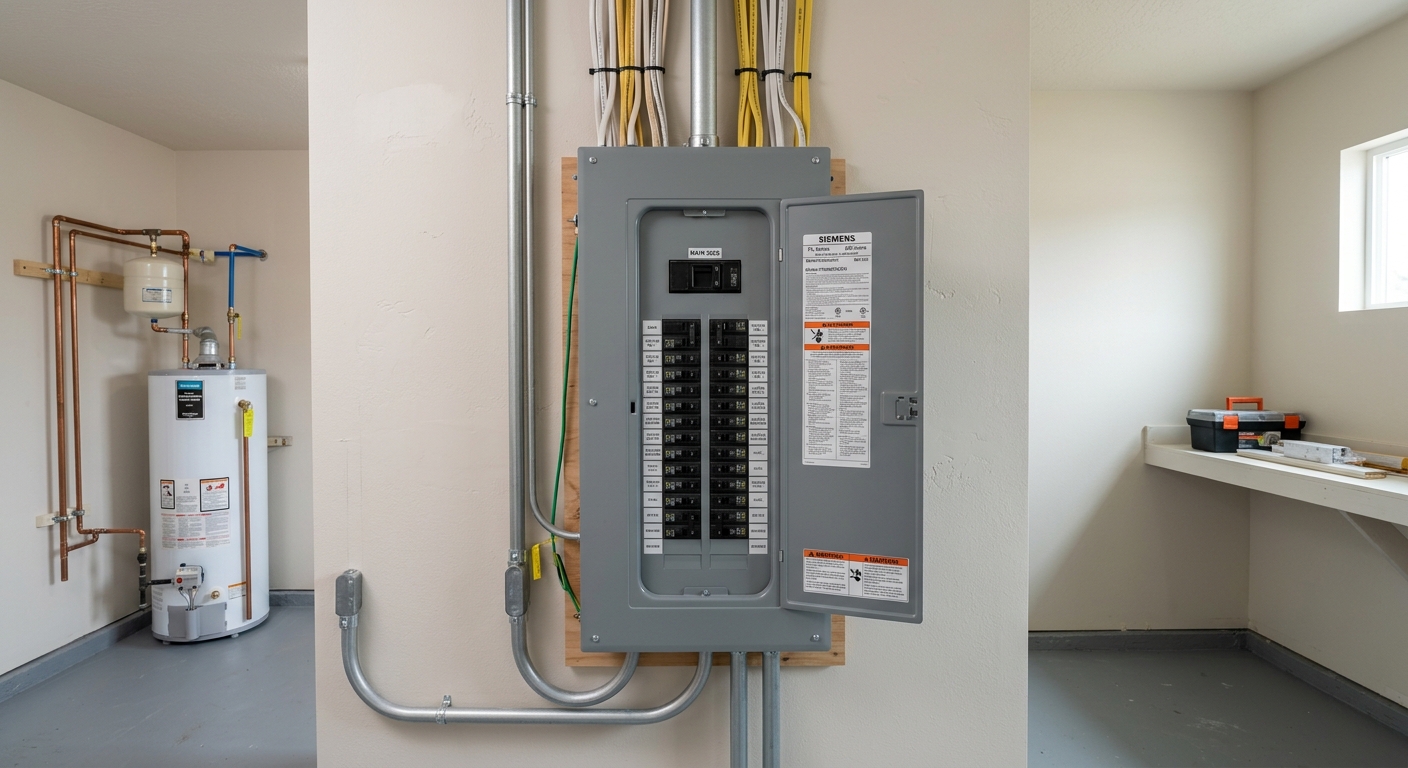
Electrical services and costs in Danforth
Danforth homes are a great mix of older bungalows and growing infill, and that blend is exactly why electrical service work is so common here. With a population of 9,666 people in the Danforth area (Statistics Canada, 2021 Census), you also tend to see steady demand for licensed electricians who can handle both legacy wiring and modern loads. In many nearby Toronto neighbourhoods, older housing stock is the dominant driver of cost because it’s where homeowners most often uncover knob-and-tube wiring, aging fuse/two-pole setups, or mid-century panels that can’t keep up with today’s appliance and heat demands.
Toronto pricing is influenced by tight contractor availability during peak renovation seasons, plus the fact that older homes frequently need more than “just a new panel.” The cost often rises when the scope includes service relocation, panel-to-meter adjustments, drywall patching, or significant wiring remediation to meet current Ontario Electrical Code requirements. Winter cold also matters: when people rely more heavily on electric heat or keep ventilation equipment running harder, the same electrical system may experience heavier continuous loading. And in demand pockets like the Danforth–Broadview and Woodbine Avenue corridor, it’s not unusual to see homeowners add EV chargers and heat pumps in the same renovation cycle.
Below is a practical cost comparison for the most common electrical services in Danforth, including permit-driven work and typical price ranges contractors quote in the Toronto economic region.
| Service |
Why It's Needed |
Permit Required |
Price Range |
| Panel upgrade — 100A to 200A service |
Add capacity for EV charging, heat pumps, kitchen loads, and modern AFCI/GFCI requirements; improves safety when the existing panel is outdated or undersized. |
Yes, major service work requires permits and inspection. |
$2,500–$6,000 |
| EV charger installation (Level 2, 40–50A) |
Supports Level 2 charging with correct breaker/cabling for long-term safe use and future-proofing as EV adoption grows. |
Yes, new circuit/breaker and charger connection require a permit and inspection. |
$900–$2,2 00 |
| Knob-and-tube wiring removal and replacement |
Old wiring insulation and connection methods can be unsafe and may be uninsurable; replacement brings the home to current code practices. |
Yes, rewiring/remediation requires permits and inspection. |
$6,000–$15,000 |
| Aluminum wiring remediation (CO/ALR connectors) |
Aluminum branch wiring from certain eras needs approved connections (CO/ALR) or replacement to reduce overheating risk. |
Yes, significant alteration of feeders/branch connections requires permits and inspection. |
$3,000–$8,500 |
| New dedicated circuit (HVAC, appliance, hot tub) |
Dedicated supply prevents nuisance trips and improves safe operation for high-demand equipment. |
Yes, new circuits require permits and inspection. |
$450–$2,500 |
| Whole-home rewire (older home, full replacement) |
When multiple rooms, circuits, and junctions are outdated, a full rewire addresses safety, code compliance, and future loads. |
Yes, full rewiring is permitted and inspected. |
$8,000–$20,000 |
Prices are estimates only and vary by project scope, site access and material selection.
What affects the price of electrical work in Danforth
In Danforth (Toronto economic region), two homeowners can receive quotes for the same general task and still see swings of 30–50% because the “hidden” work isn’t the same—materials, wire routing difficulty, and how much remediation is required all change the final price. Toronto’s blend of dense older housing and ongoing infill means contractors are juggling a broad mix of service sizes, wiring types, and renovation complexity. That’s why a panel upgrade that’s straightforward in one home can escalate quickly in another once knob-and-tube or aluminum branch wiring is discovered behind walls.
The dominant cost driver is the age and condition of the housing stock. Older wiring systems can’t always support today’s appliance and EV loads safely, so contractors may need to move from a simple panel swap to full or partial rewiring. Homes with 1965–1976-era aluminum wiring often require licensed remediation with approved CO/ALR connectors, while knob-and-tube setups usually trigger a larger replacement project rather than patching. Even when the panel is “working,” many households now run simultaneous loads—EV chargers, induction stoves, heat pumps, and high-demand laundry—so a 60A or 100A service can become inadequate quickly, pushing upgrades into the $2,500–$6,000 range for typical 100A-to-200A replacements, with higher-end scenarios reaching $5,000–$6,000 when remediation or service relocation is involved.
Local conditions also raise or lower costs. For example, if the Danforth home has finished basements, access may mean careful wiring runs and more drywall repair. If a breaker panel is far from the service area, copper runs and labour increase. On the other hand, if a home already has a modern panel with room to add circuits and no risky wiring behind the walls, adding a dedicated circuit may stay closer to the lower end of the $200–$5,000 lighting/fixture band or the $450–$2,500 dedicated-circuit band depending on materials and distance.
| Price Factor |
Why It Matters |
Cost Impact |
| Panel size upgrade — 100A to 200A is the standard minimum today |
More capacity for EV charging, heat pumps, and code-required protection (AFCI/GFCI) reduces nuisance tripping and improves safety. |
Often the biggest line item; commonly aligns with the $2,500–$6,000 panel/service band. |
| Wiring type — copper vs. aluminum remediation vs. K&T removal |
Different materials and connection methods change labour, testing, and whether connectors or replacement is needed. |
Copper additions are usually cheaper; aluminum remediation and knob-and-tube removal can push projects toward $3,000–$15,000+. |
| Number of new circuits — each adds material and labour time |
Every circuit requires breaker, cable, routing, testing, and terminations. |
Expect incremental costs that can add hundreds to thousands depending on runs and finishes. |
| Permit + ESA/TSBC inspection fee — mandatory for all major work |
Permitting and inspections are required for panel upgrades, rewiring, and new circuits. |
Typically adds about $200–$500 depending on scope. |
| Labour rate for licensed electricians — journeyman rates in {region} |
Toronto-area contractors price labour based on complexity, time on site, and overhead. |
Often runs around $90–$120 per hour for a licensed crew in this region. |
| EV charger amperage — 40A vs. 50A circuit affects cable and breaker cost |
Higher amperage can require heavier cable and a differently sized breaker and sometimes a larger service plan. |
May shift the charger job within the $900–$2,500 band depending on service capacity and routing. |
| Emergency or after-hours premium |
Urgency increases crew scheduling costs and may involve additional trip charges. |
Can add a noticeable surcharge, especially if parts must be sourced quickly. |
| Load calculation required for service upgrade |
Proper sizing prevents under-capacity panels and supports a permit-ready design. |
May add time (and sometimes additional engineering steps), but helps avoid rework and safer long-term operation. |
Permits & regulations in Ontario
In Ontario, ALL electrical work beyond changing a light bulb must be done by a licensed electrician. That includes panel upgrades, service work, adding or replacing breakers and circuits, rewiring, and installing EV chargers. For these jobs, a permit is required and the work must pass inspection—Ontario’s electrical safety oversight is handled by the Electrical Safety Authority (ESA). If you see “we’ll do the permit later” or “inspection is optional,” that’s a red flag: permitted work is a legal requirement for major electrical changes and must be inspected before you close up walls or energize new circuits.
What typically does not require a permit includes like-for-like replacements such as swapping a like-for-like fixture, changing a lamp, or replacing a receptacle cover plate—provided no circuits are altered and you’re not doing any wiring connections. However, even small changes can become permit-required quickly if they involve new wiring runs, new receptacles, breaker changes, or any circuit modifications.
To verify a contractor in Danforth step-by-step: (1) confirm their Ontario licence is active using the provincial licence registry, (2) request a clearance letter or proof of clearance, (3) ask for certificate of insurance (liability) naming the job site, and (4) verify WSIB coverage. If they can’t provide these documents promptly, move on—licensed, insured contractors protect you and speed up ESA permitting and inspection.
When your Danforth home needs an electrical upgrade
Danforth homeowners usually notice electrical issues through symptoms that are safety-critical, not just “annoying.” First, breakers that trip frequently are often a sign of overload, undersized circuits, or a failing breaker—especially when winter heating or kitchen/laundry loads stack up. Second, knob-and-tube wiring is an urgent concern: it’s not only about age, but about how insulation and connections can deteriorate and become uninsurable. Third, a 60A or 100A panel can be inadequate for a modern home running an EV charger, heat pump, and electric stove at the same time; in those situations, a 200A upgrade is usually the standard solution to restore capacity.
Fourth, aluminum wiring in pre-1976 construction isn’t automatically “immediate danger,” but it typically requires licensed remediation (approved CO/ALR connectors or replacement) because the connections can overheat if not done correctly. Fifth, insufficient outlets—extension cords everywhere—often points to circuit capacity and spacing issues, and it can become a code and fire risk problem. Sixth, missing AFCI/GFCI protection where it’s required can surface during resale or renovation, since buyers and inspectors increasingly expect modern code-compliant protection.
In Danforth’s climate, heavier winter use can make marginal wiring fail under continuous load. If your breakers trip, you should address it immediately. If you suspect knob-and-tube or aluminum wiring, plan a remediation assessment right away. For a dollar reality check: if a 100A upgrade alone might land near the $2,500–$6,000 band, discovering deeper wiring remediation can shift the project upward—so a good contractor will investigate before locking your quote.
| Warning Sign |
What It Means |
Recommended Action |
Urgency |
Price Band |
| Breakers trip frequently |
Possible overload, loose connections, failing breaker, or undersized wiring for your current usage. |
Inspection + load test; likely add circuits and/or correct wiring; evaluate service capacity. |
Immediate |
$450–$2,500 |
| Knob-and-tube wiring present |
Old insulation/connection methods can be unsafe and may lead to insurance cancellations. |
Plan knob-and-tube removal and replacement with code-compliant wiring. |
Immediate to planned |
$6,000–$15,000 |
| 60A or 100A panel (inadequate load capacity) |
Not enough headroom for EV charging, heat pumps, and modern kitchen loads. |
Load calculation and upgrade to 200A service (often with related circuit upgrades). |
Planned soon |
$2,500–$6,000 |
| Aluminum wiring (pre-1976 construction) |
Requires proper terminations and approved remediation to reduce overheating risk. |
Assess connections; remediate with CO/ALR connectors or replace sections as needed. |
Planned |
$3,000–$8,500 |
| Insufficient outlets — extension cords everywhere |
Indicates poor distribution and increases risk of overloads and trip hazards. |
Add outlets and circuits; ensure correct GFCI/AFCI protection where required. |
Planned |
$300–$2,000 |
| No AFCI or GFCI protection where required |
Older protection levels may not meet today’s safety/code expectations for certain areas. |
Upgrade receptacles/breakers and confirm code compliance in relevant zones. |
Planned soon |
$200–$5,000 |
How to choose a electrical work contractor in Danforth
Start by verifying Ontario licensing, liability insurance, and WSIB coverage. In practice, Danforth homeowners should ask the contractor for their Ontario licence number and confirm it’s active through the provincial registry, then request a certificate of insurance (liability) showing the correct legal entity. Finally, confirm WSIB coverage (or a clearance letter where applicable). If they can’t provide these documents, it’s safer to keep looking—electrical work is regulated for a reason, and it affects your home’s long-term safety and resale paperwork.
Next, get at least 2–3 itemised written quotes. You want a line-by-line breakdown (labour vs. materials, cable type, breakers, disconnects, permit handling, and any remediation allowances), not a single lump-sum number. Read the scope carefully: is the permit pull included? Is ESA inspection included? Is disposal of old wiring included? What about patching drywall or restoring finishes? Warranty matters too: ask for workmanship warranty length, how manufacturer warranties apply to breakers/chargers, and whether warranties are transferable to future owners.
For payment scheduling, never pay more than 10–15% upfront. Hold a portion until the job is complete and inspected. Request a written timeline with start date and estimated completion, and ask what happens if ESA requests changes.
- Confirm Ontario licence is active and matches the contractor’s legal name.
- Request proof of liability insurance for the job value.
- Verify WSIB coverage and ask for the right clearance documentation.
- Ask whether permits and ESA inspection are included in the quote.
- Request an itemised labour/material breakdown (no vague allowances).
- Confirm cable/breaker sizes and whether load calculations are included.
- Ask about troubleshooting and rework if concealed wiring issues appear.
- Clarify patching responsibilities for drywall/ceiling/flooring.
- Confirm disposal/recycling of removed materials is included.
- Ask for a written workmanship warranty and what it covers.
- Keep payment tied to milestones (rough-in complete, inspection passed, final sign-off).
- Get the start date and completion estimate in writing before signing.
Red flags in Danforth include: refusing to provide licence/insurance/WSIB proof, quoting without a site visit (especially for service upgrades), giving only a lump-sum without scope details, skipping permit/inspection discussion, and pushing for high upfront deposits.
Frequently asked questions — electrical work in Danforth
Why do my breakers keep tripping?
In Danforth, frequent breaker trips are usually a sign of overload (too many high-demand loads on one circuit), a loose connection, a failing breaker, or undersized wiring for your current usage pattern. In winter, electric heat, kitchen appliances, laundry, and ventilation can run longer, making borderline circuits act up. If you also have an older panel (for example, 60A/100A) or mixed wiring types, the system may simply be out of capacity for modern electronics and EV charging. A licensed electrician will check the panel, look for heat damage at terminations, and confirm what circuits share loads. If you’re planning a service upgrade, it’s common to see projects land in the $2,500–$6,000 range for a typical 100A to 200A upgrade, depending on remediation and access.
How do I compare electrical quotes?
When comparing quotes in Ontario for Danforth homes, avoid comparing only the bottom-line total. Instead, compare scope: what exact circuits are being added, what wiring type and breaker sizes are specified, and whether load calculation is included for any service upgrade. Confirm whether the permit pull and ESA inspection are included and priced separately if needed. Make sure the quote addresses older wiring realities—if knob-and-tube or aluminum wiring is present, some companies quote “panel-only” while others include remediation, which is why prices can differ by 30–50%. Ask for an itemised labour and materials breakdown and check for allowances for drywall patching and disposal. If one quote is near the low end of the $900–$2,500 EV charger band but doesn’t mention permitting or cable routing, it may be missing key steps.
How long does a panel upgrade take in Danforth?
A panel upgrade timeline in Danforth typically depends on whether it’s a straight swap or a larger service change. For many standard 100A-to-200A upgrades, the electrical portion is often completed in a day, but the overall job can take longer due to material staging, shutdown coordination, and any required repairs to bring wiring and protection up to code. If there’s service relocation, significant aluminum or knob-and-tube remediation, or long cable runs through finished areas, schedule time increases. Also factor in permitting and inspection lead times with ESA. Your electrician should provide a written start date, completion estimate, and what needs to happen before the inspection. Many panel upgrades land in the $2,500–$6,000 band; complex remediation is often where the schedule stretches.
What is a GFCI outlet and where is it required in Ontario?
A GFCI (Ground-Fault Circuit Interrupter) outlet is designed to quickly shut off power when it detects an unsafe ground fault, helping reduce shock risk. In Ontario and the Ontario Electrical Code, GFCI protection is required in specific locations where water or dampness is more likely—commonly kitchens, bathrooms, garages, basements (where applicable), outdoors, and other areas subject to moisture. Many older Danforth homes have older receptacles without modern GFCI/AFCI protection, so upgrades may be needed during renovations or when adding outlets. Some electricians accomplish this by replacing receptacles with GFCI devices; others may use GFCI breakers where that’s more appropriate for the layout. If you’re upgrading a circuit or doing a service upgrade, it’s common for quotes to bundle required protection changes as part of code compliance.
How do I know if my Danforth home has aluminum wiring?
You can often tell from the wiring labels inside the panel—aluminum conductors may be marked, and some service equipment diagrams will note the conductor type. However, the safest confirmation is an electrician’s inspection and measurement (and in some cases, verification at terminations) because wiring can look similar while still being different in composition. Homes built in the mid-1960s to mid-1970s era are the most common Danforth candidates for aluminum branch wiring, and the consequence is that connections must be made with approved methods. If aluminum wiring is present, it usually doesn’t mean everything must be replaced immediately; it often means remediation with CO/ALR connectors or replacement of problematic sections. Budget-wise, aluminum remediation projects are commonly quoted in the $3,000–$8,500 range depending on how much wiring is affected and how accessible the runs are.
What is the cost of rewiring a house in Danforth?
The cost to rewire depends heavily on how much of the home is actually being replaced: a partial rewire for problem areas is different from whole-home replacement. In Danforth and across the Toronto region, knob-and-tube removal and full rewiring typically fall toward the higher end because it’s labour-intensive and requires extensive teardown and replacement to meet today’s Ontario Electrical Code. As a planning reference, knob-and-tube removal and replacement commonly lands in the $6,000–$15,000 range, while whole-home rewires can go higher when access is difficult or there are many rooms/circuits to update. If your rewiring includes a service change (for example, upgrading to 200A), many homeowners end up combining rewiring with a panel/service upgrade that often sits in the $2,500–$6,000 band for typical jobs. A licensed electrician can give a firm number once they confirm wiring type, panel condition, and routing constraints.