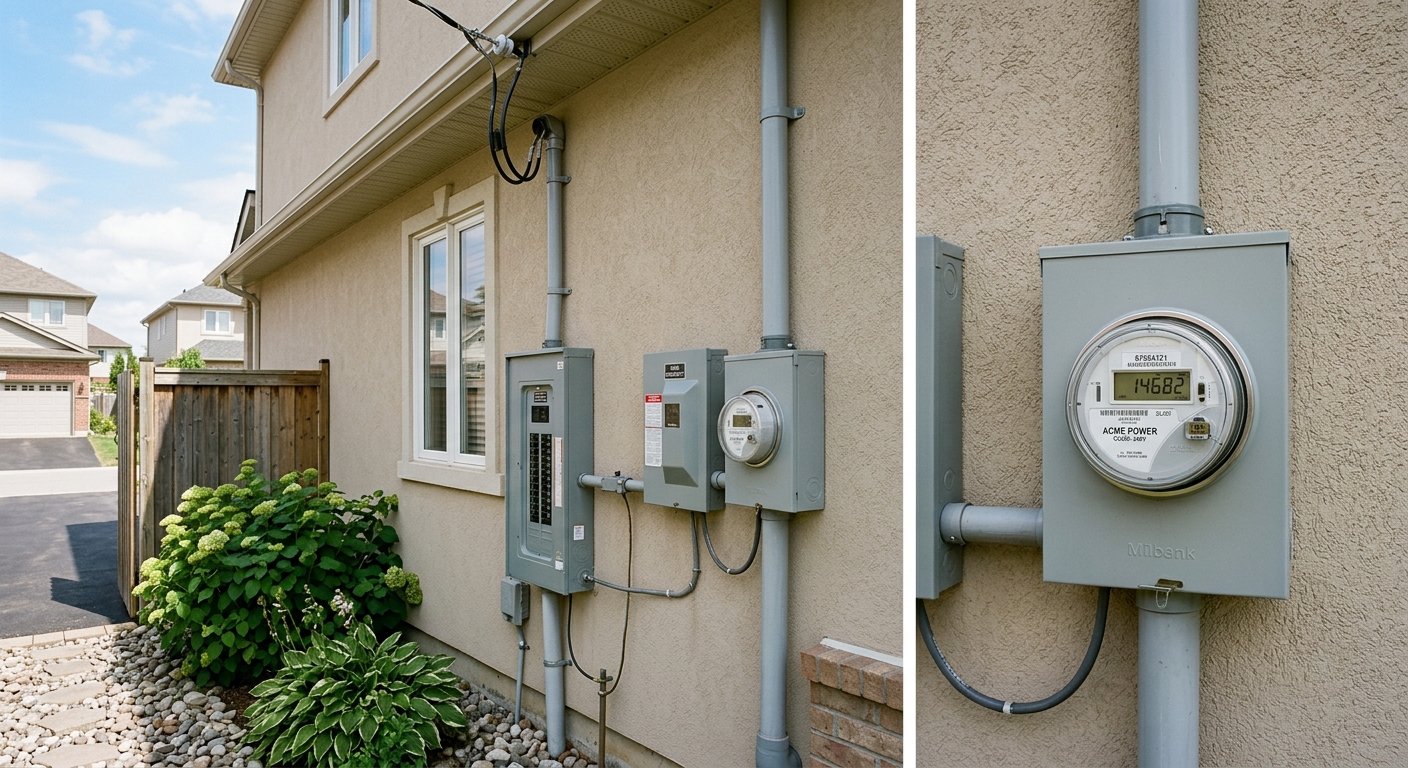
Electrical services and costs in Yorkdale-Glen Park
Yorkdale-Glen Park is a neighbourhood where electrical upgrades are especially common because the housing stock ranges from older pre-renovation homes to newer infill and basement developments. With a population of 14,804 people (Statistics Canada, 2021 Census), there’s steady demand for licensed electricians to handle everything from service upgrades to EV charging. In practice, many older properties are prime candidates for removal of knob-and-tube wiring or remediation of mid-century wiring systems—both of which can struggle with today’s loads.
Toronto pricing and scheduling are also shaped by how quickly new power demands are arriving. The GTA market mixes dense older streets with rapid condo and infill growth, so contractors are busy—particularly in areas around Yorkdale and Glen Park where homeowners often add heat pumps, finish basements, or convert space for rental use. Weather matters too: cold snaps in winter and summer heat can increase reliance on HVAC and A/C, and that higher peak draw makes it more likely you’ll need a 100A-to-200A service and load assessment rather than “just adding a breaker.” Labour in this economic region is a major cost driver, and licensed contractors commonly bill around 90–120 per hour.
Below is a practical side-by-side comparison of the most common electrical services and what typically triggers permits and inspections in Yorkdale-Glen Park—so you can sanity-check the quotes you receive.
| Service |
Why It's Needed |
Permit Required |
Price Range |
| Panel upgrade — 100A to 200A service |
Modern loads (EV charging, heat pumps, electric cooking) often exceed older service capacity and leave insufficient breaker space. |
Yes (service equipment work) |
$2,500–$6,000 |
| EV charger installation (Level 2, 40–50A) |
Adds a dedicated, safer charging circuit with correct protection and wiring sized for repeated use. |
Yes (new circuit and charger connection) |
$900–$2,2 00 |
| Knob-and-tube wiring removal and replacement |
Older insulation and wiring methods are not designed for today’s load profiles and can be harder to insure. |
Yes (rewiring/remediation) |
$3,000–$15,000 |
| Aluminum wiring remediation (CO/ALR connectors) |
Replaces high-risk terminations using approved connectors or section replacement to reduce overheating risk. |
Yes (alterations to branch conductors/terminations) |
$1,800–$6,500 |
| New dedicated circuit (HVAC, appliance, hot tub) |
Prevents nuisance tripping and overheating by giving heavy equipment its own correctly protected wiring path. |
Yes (new circuit wiring/breaker) |
$700–$2,800 |
| Whole-home rewire (older home, full replacement) |
Ensures consistent modern wiring methods, safer device/box fill, and compatibility with AFCI/GFCI requirements. |
Yes (full rewiring) |
$8,000–$20,000 |
Prices are estimates only and vary by project scope, site access and material selection.
What affects the price of electrical work in Yorkdale-Glen Park
In Yorkdale-Glen Park and the broader Toronto economic region, quotes for the “same” electrical job can swing by 30–50% because the scope often differs in hidden ways—especially in older wiring. The age of the housing stock is the dominant cost driver. Homes with pre-1950 wiring may include knob-and-tube, which often forces full section replacement rather than patch fixes. Homes from the 1960s–70s commonly have older 60A or 100A service panels that aren’t built for today’s combined load: EV chargers, induction cooking, heat pumps, dehumidifiers, and home office electronics.
Aluminum wiring (common in many homes built in the mid-1970s era) typically requires licensed remediation using approved methods such as CO/ALR connectors or targeted replacement—materials and labour both add up. Meanwhile, EV adoption is driving a surge in Level 2 permit applications, and the amperage you choose affects cable size and breaker pricing. That’s why a 40A EV circuit may be cheaper than a 50A install, but the “right” choice should still be based on your charger model and electrical load plan.
Concrete examples from Yorkdale-Glen Park that raise cost: (1) difficult access for trenching or long runs between the panel and the intended charger location; (2) replacing outdated service equipment while also upgrading for modern protection devices. Cost can be lower when the existing panel is modern enough to accept new breakers safely and when circuit routes follow accessible joists or existing conduits. For reference, panel upgrades in this region commonly sit around the $2,500–$6,000 range for a straightforward 200A path, while wiring and rewiring jobs can broaden from $3,000 into higher-end full replacements depending on what’s actually behind the walls.
| Price Factor |
Why It Matters |
Cost Impact |
| Panel size upgrade — 100A to 200A is the standard minimum today |
More capacity and breaker space for modern loads and safety equipment. |
Typically adds the biggest ticket item; often aligns with the $2,500–$6,000 band. |
| Wiring type — copper vs. aluminum remediation vs. K&T removal |
Aluminum terminations need approved remediation; knob-and-tube often requires replacement of unsafe sections. |
Can shift a job from “minor remediation” into $3,000–$15,000 wiring scope. |
| Number of new circuits — each adds material and labour time |
Each circuit requires cable, breaker protection, possible drywall access, and termination work. |
More circuits often add hundreds per circuit, plus any opening/repair work. |
| Permit + ESA/TSBC inspection fee — mandatory for all major work |
Large electrical changes must be permitted and inspected. |
Typically a few hundred dollars depending on scope. |
| Labour rate for licensed electricians — journeyman rates in {region} |
Ontario contractors price labour based on licensed hours, complexity, and access constraints. |
Commonly around $90–$120 per hour in the Toronto market. |
| EV charger amperage — 40A vs. 50A circuit affects cable and breaker cost |
Cable sizing, breaker rating, and charger configuration change with amperage. |
Can add noticeable cost even when labour time is similar. |
| Emergency or after-hours premium |
Urgency can mean different crew scheduling and priority dispatch. |
Often increases labour rates by a premium for the timeline. |
| Load calculation required for service upgrade |
Modern service decisions often require a proper load calculation to confirm capacity. |
More time on site/documentation; generally modest but can add up in complex homes. |
Permits & regulations in Ontario
In Ontario, electrical work must be done by a licensed electrician except for a very narrow set of tasks (like replacing a light bulb or certain fixtures where permitted by code and safety rules). For Yorkdale-Glen Park homeowners, the key point is that ALL work beyond the most minor like-for-like replacements generally needs a permit and inspection—especially anything that changes wiring pathways, introduces new circuits, or touches service equipment.
Work that typically requires a permit includes: panel upgrades (including 100A to 200A), service upgrades, adding or changing breakers and circuits (including new outlets/cables for hot tubs, HVAC, and EV chargers), rewiring, knob-and-tube removal/replacement, and aluminum wiring remediation when terminations are altered. Work that typically does not require a permit usually includes: swapping a receptacle or switch only where it’s like-for-like and code-compliant, and replacing a light fixture or bulb (subject to safe installation). If you’re unsure, ask your electrician to confirm what will be permitted before work starts.
Step-by-step, verify a contractor before they touch your panel: (1) confirm their Ontario licence on the Electrical Contractors Association/ESA-related public tools (or ESA licence verification page as directed by the electrician), (2) request a certificate of insurance showing liability coverage and make sure it matches the company name on the invoice, and (3) ask for WSIB clearance or documentation of coverage—then verify it through the proper channel provided by the insurer/contractor. A clearance letter or proof of coverage should be provided before the first workday. Finally, confirm which permits are being pulled for your address and that inspection scheduling is included.
When your Yorkdale-Glen Park home needs an electrical upgrade
Electrical upgrades in Yorkdale-Glen Park aren’t just about convenience—they’re often about preventing unsafe conditions and meeting modern code requirements. Start with the warning signs that can affect safety and insurance coverage. First, breakers that trip frequently usually point to an overloaded panel, undersized or damaged circuits, or incorrect breaker/circuit assignments. This is more than an inconvenience, especially in winter when heaters and kitchen loads stack up.
Second, knob-and-tube wiring is the big one. The concern isn’t only “it’s old”—it’s aging insulation and contact points that can compromise reliability and safety. If knob-and-tube is present, plan remediation as a priority because it can affect insurance and resale discussions. Third, check your service capacity: a 60A or 100A panel may feel “fine” until you add a heat pump, an EV charger, or even run electric stove plus A/C. In Toronto homes, that’s where the 200A upgrade standard solution becomes justified.
Fourth, aluminum wiring (commonly associated with pre-1976 construction) may not be immediately dangerous if the installation has been maintained, but it often requires licensed remediation at terminations using approved connectors. Fifth, insufficient outlets—extension cords everywhere—signals you’re compensating for missing circuits with unsafe usage patterns. Lastly, missing AFCI or GFCI protection where required can become a compliance issue during a sale or inspection.
Urgency guide: tripping breakers and overheating smells are immediate “stop using and get inspected.” Knob-and-tube and aluminum remediation are planned soon. Service capacity upgrades and missing protection should be scheduled before adding new high-load equipment. If you’re deciding between options, note that a simple dedicated circuit might cost a few hundred to a couple thousand dollars, while a full service change (often $2,500–$6,000 for a typical 200A path) becomes the better long-term value when you’re adding EV charging or expanding HVAC demand.
| Warning Sign |
What It Means |
Recommended Action |
Urgency |
Price Band |
| Breakers trip frequently |
Possible overload, short, faulty breaker/cable, or circuit misallocation. |
Electrical inspection and load/circuit troubleshooting; may lead to panel/circuit correction. |
Immediate |
$700–$3,500 |
| Knob-and-tube wiring present |
Outdated wiring method with aging insulation and connections; safety and insurance concerns. |
Plan remediation/removal of affected sections or full rewire depending on extent. |
Planned soon |
$3,000–$15,000 |
| 60A or 100A panel (inadequate load capacity) |
Limited capacity for EV charging, heat pumps, and modern appliance loads. |
Load calculation and service upgrade plan; typically to 200A. |
Planned before adding loads |
$2,500–$6,000 |
| Aluminum wiring (pre-1976 construction) |
Higher-risk terminations; requires licensed remediation for CO/ALR/approved methods. |
Inspection of connections and remediation or targeted replacement. |
Planned soon |
$1,800–$6,500 |
| Insufficient outlets — extension cords everywhere |
Overreliance on temporary power increases overheating and trip risk. |
Add dedicated circuits and appropriately placed receptacles. |
Planned (safety fix) |
$700–$2,800 |
| No AFCI or GFCI protection where required |
Higher risk of arc-fault and shock; may be flagged at sale or inspection. |
Add/upgrade protection devices and bring circuits to code requirements. |
Planned soon |
$500–$2,500 |
How to choose a electrical work contractor in Yorkdale-Glen Park
Choosing the right licensed electrical contractor in Yorkdale-Glen Park comes down to verification, clarity, and realistic timelines. First, verify Ontario licensing: ask for their licence details and confirm it using the provincial licensing tools (and ensure the licence name matches the company on your quote). Next, confirm liability insurance—request a certificate of insurance showing current coverage. Then verify WSIB/WCB coverage: ask for a clearance letter or documentation of coverage, and ensure it’s consistent with the work being performed at your address.
When you request quotes, don’t accept a single “lump sum” with vague wording. Ask for 2–3 itemised written quotes that separate labour, materials, permits, and any required testing/diagnostics. Check the scope line-by-line: what’s excluded (drywall repairs, trenching, permit rework, disposal), is the permit pull included, and are inspection bookings part of the package? Confirm the workmanship warranty length, whether it covers labour for defects after completion, and whether product warranties from the manufacturer are included and transferable (important for panels, breakers, EV chargers, and protection devices).
Payment schedule matters. Never pay more than 10–15% upfront; hold back a portion until the job is complete and inspected. For timeline, get a start date and an expected completion estimate in writing, including when materials are ordered and when the electrical inspection will be scheduled.
- Verify Ontario licence status before signing anything.
- Confirm liability insurance certificate (current dates and matching company name).
- Request WSIB/WCB clearance documentation and confirm it applies to the work.
- Get 2–3 itemised quotes (labour/materials/permit/testing separated).
- Ensure permit pull and ESA inspection are explicitly included or clearly excluded.
- Ask how they handle hidden conditions (old wiring damage, unknown cable routes).
- Confirm disposal of old breakers/panel components is included.
- Check for a written scope: cable sizes, breaker ratings, panel model and protection types.
- Require a workmanship warranty in writing (duration and coverage).
- Confirm manufacturer warranty terms for the EV charger/panel/components.
- Review payment terms: keep deposits at 10–15% max and hold back until done.
- Get a written schedule with inspection timing and start/finish estimates.
Red flags to watch for in Yorkdale-Glen Park: (1) refusing to provide licence/insurance/WSIB documentation, (2) offering “DIY-level” shortcuts like tying into unsafe terminations for aluminum or ignoring load calculations, (3) quoting only after-hours urgency without a written scope, (4) vague exclusions such as “repairs not included” without clarifying what you’ll pay later, and (5) pushing upgrades you didn’t request (like recommending a full rewire) without explaining the extent of the problem with an inspection report.
Frequently asked questions — electrical work in Yorkdale-Glen Park
What is knob-and-tube wiring and should I replace it?
Knob-and-tube wiring is an older wiring method where conductors are routed through porcelain knobs and insulated tubing, typically seen in pre-mid-20th-century homes. In Yorkdale-Glen Park and across Ontario, the main issue isn’t just age—it’s that the insulation and connection points can deteriorate over time, which makes it less suitable for today’s appliance and electronics loads. Many homeowners also find insurance can become harder when knob-and-tube remains in active use.
Whether to replace everything depends on where it’s located and what condition it’s in, but “patching around it” is often not a safe long-term plan. If you’re planning a panel upgrade or adding a Level 2 EV charger, electricians often recommend addressing knob-and-tube sections first to create a code-compliant and safer load path. Costs vary widely, but wiring/remediation projects frequently start in the $3,000 band and can go higher depending on how extensive the affected runs are. (Statistics Canada, 2021 Census)
Is aluminum wiring safe in older Yorkdale-Glen Park homes?
Aluminum wiring can be safe when it’s installed and maintained correctly, but the risk is often at the connection points. Over time, aluminum terminations can loosen or oxidize, which may lead to overheating if not remediated using approved methods. In Ontario, licensed electricians typically inspect accessible connections and look for signs of damage or poor termination quality before advising remediation.
In many Yorkdale-Glen Park homes built in the mid-1900s era, the safer approach is targeted remediation: using approved CO/ALR connectors where applicable, replacing problematic sections, and ensuring breakers and devices are matched appropriately. If you’re adding major loads—like heat pumps or EV charging—the existing aluminum terminations become more important because higher sustained loads increase the value of addressing weak points. Depending on the extent, aluminum remediation may land around the $1,800–$6,500 range, while a full rewire is obviously more if wiring throughout is compromised.
Do I need a permit for electrical work in Ontario?
In Ontario, most electrical work beyond basic like-for-like changes requires a permit and inspection, and it must be carried out by a licensed electrician. For Yorkdale-Glen Park homeowners, anything involving panel/service changes, new circuits, rewiring, EV charger installations, or significant modifications generally needs a permit. The permit process ensures the work is inspected for compliance with the Ontario Electrical Code.
Typical examples that do require a permit include: panel upgrades (for example, moving from 100A to 200A), adding a dedicated circuit for an appliance or hot tub, installing a Level 2 EV charger (usually tied to a new or modified breaker circuit), and knob-and-tube removal or aluminum remediation when terminations are changed. Tasks that typically don’t require a permit are limited, such as replacing a bulb or certain like-for-like fixture replacements—however, it still must be done safely. Your electrician should confirm what permit(s) are being pulled before work starts. (Statistics Canada, 2021 Census)
What are signs of an overloaded electrical panel?
Common signs of an overloaded or undersized electrical setup in Yorkdale-Glen Park include breakers that trip frequently, warm or discoloured breaker areas, flickering lights when high-load appliances start, and the need to use multiple extension cords because there aren’t enough circuits. Another strong indicator is “capacity creep”: your home feels fine until you add an EV charger, heat pump, or new electric cooking setup—and then problems begin.
Overloading can also occur when the panel has been expanded informally over the years without addressing wiring condition or distribution balance. If you’re seeing nuisance trips or you’re planning new high-demand equipment, get a load calculation and panel inspection. In many GTA homes, the fix is a service/panel upgrade to 200A so there’s enough capacity and breaker space. Depending on scope, a panel upgrade typically falls around $2,500–$6,000. If knob-and-tube or aluminum wiring is involved, remediation may be required alongside or prior to the upgrade.
Can I do my own electrical work in Ontario?
For most homeowners, the answer is no—DIY electrical is restricted in Ontario. Electrical work beyond very limited “like-for-like” tasks generally must be done by a licensed electrician, and it often requires permits and inspection. In Yorkdale-Glen Park, the safest and most code-compliant path is to hire a licensed contractor for anything that touches circuits, panels, new wiring, or protection devices like breakers, GFCI/AFCI units, or wiring for EV chargers.
Ontario allows narrow exceptions (for example, simple replacements like certain fixtures), but the boundaries can be confusing. If your job involves running new cables, altering existing wiring, opening the panel, or adding circuits, assume you need a licensed electrician and a permit. Also remember insurance implications: if unpermitted work is discovered, claims can be delayed or denied. When you book an electrician, ask them to outline what is permitted, what’s exempt, and what inspections will occur—so there are no surprises later.
How long does a rewiring job take?
Rewiring timelines depend heavily on how much of the home is being replaced, whether walls are open, and what other work is being coordinated (basement finishing, drywall repairs, panel relocation). In Yorkdale-Glen Park, many older homes have partially accessible wiring routes, but other properties require more invasive access, which increases time. A targeted replacement of specific runs can be relatively quick; a whole-home rewire can take substantially longer.
As a rule of thumb, complex projects often take from several days up to a few weeks for a full replacement, especially when an updated panel/service, inspection scheduling, and any remediation of unsafe wiring types are included. If knob-and-tube or aluminum terminations are present throughout, the job can extend because electricians must plan safe routing and replacement methodically. The best way to estimate duration is to ask for an inspection-based scope and a written schedule. Costs for whole-home rewires commonly start higher than smaller remediation, frequently aligning with ranges well above the $3,000 band when extensive access and replacement are required.