Electrical services and costs in Penticton
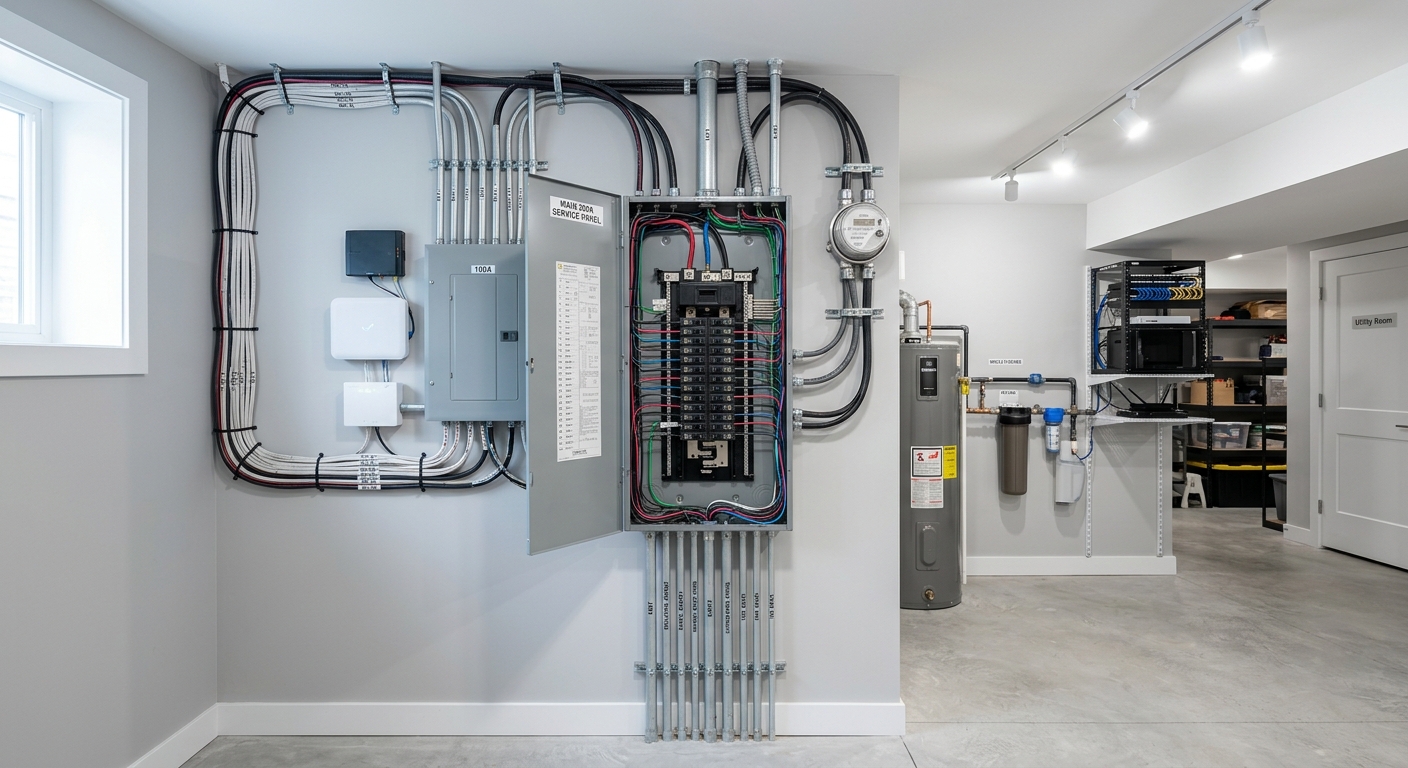
Penticton homeowners typically feel electrical costs first when they hit capacity limits—especially in older housing areas where wiring and panel sizes were never designed for today’s loads. About 45.5% of homes in the region were built before 1981, and that older stock is a prime candidate for knob-and-tube removal, aluminum wiring remediation, and panel upgrades. Add to that the reality that 10,985 homeowner households in the area means steady demand for service work and upgrades rather than one-off repairs. (Statistics Canada, 2021 Census.)
In the Thompson–Okanagan, winter heating patterns and the local mix of newer subdivisions plus mid-century homes drive variability in quotes. Homes that once relied on gas or small electric baseboard loads often now support electric heat, heat pumps, hot tubs, and workshop equipment—so load calculations frequently point to larger services. Meanwhile, rapid EV adoption in the Penticton area is creating a steady stream of Level 2 charger installs, sometimes revealing that a 100A panel can’t comfortably support a new 40–50A branch circuit without major upgrades.
You’ll also notice contractor demand is especially high in established neighbourhoods around downtown and near Okanagan Lake, where older wiring and tighter site access can add labour time. Next, use the table below to compare the most common electrical services and what typically triggers permits and inspection work in BC.
| Service |
Why It's Needed |
Permit Required |
Price Range |
| Panel upgrade — 100A to 200A service |
Modern homes in Penticton often exceed older panel capacity once you add EV charging, heat pumps/electric heat, and new kitchen/laundry loads. |
Yes (service upgrade; permit + inspection required) |
$2,500 – $6,000 |
| EV charger installation (Level 2, 40–50A) |
Dedicated 240V circuit reduces nuisance trips and supports safe charging; charger installs typically require capacity verification. |
Yes (new circuit; permit + inspection required) |
$1,200 – $3,500 |
| Knob-and-tube wiring removal and replacement |
Older insulation and wiring methods can create overheating risk; insurance and code compliance concerns push many owners toward full replacement. |
Yes (rewiring/removal; permit + inspection required) |
$8,000 – $20,000 |
| Aluminum wiring remediation (CO/ALR connectors) |
Approved connections and safe terminations reduce overheating risk on aluminum conductors (commonly seen in homes from the 1960s–1970s). |
Usually yes (depending on scope; connectors/repairs typically involve permitted work) |
$8,000 – $20,000 |
| New dedicated circuit (HVAC, appliance, hot tub) |
Dedicated circuits improve safety and performance—especially for heat pumps, hot tubs, and major appliances that don’t tolerate shared loads. |
Yes (new circuit; permit + inspection required) |
$300 – $3,000 |
| Whole-home rewire (older home, full replacement) |
When multiple issues show up (K&T, aluminum, failed splices, aging receptacles), whole-home replacement is the most reliable long-term fix. |
Yes (extensive rewiring; permit + inspection required) |
$8,000 – $20,000 |
Prices are estimates only and vary by project scope, site access and material selection.
What affects the price of electrical work in Penticton
In Penticton and across the Thompson–Okanagan, you can see quote differences of 30–50% for the “same” electrical job because scope details often change once a licensed electrician inspects wiring condition, panel capacity, and access routes. The dominant driver is housing age: homes built before 1950 may contain knob-and-tube wiring, and many insurance policies scrutinize it closely due to insulation deterioration and termination concerns. Even without K&T, homes from the 1960s–1970s often have 60A or 100A panels that were adequate for lighter appliance use but struggle with today’s EV chargers, heat pumps, electric ranges, and auxiliary heat.
Aluminum wiring is another major cost driver. Aluminum conductor and connections require licensed remediation using approved methods (for example, CO/ALR connectors) or full replacement—meaning labour time isn’t limited to “swapping parts,” it includes safe terminations, testing, and sometimes re-routing cable. In parallel, EV adoption is pushing more Level 2 permit applications, and amperage matters: a 50A circuit typically uses larger cable and breaker materials than a 40A setup.
Two concrete Penticton examples: (1) If your service is already a 60A/100A back to the panel, upgrading to a 200A system often becomes the only way to run an EV charger alongside electric cooking and heat without nuisance issues. (2) If you’re converting a small number of aluminum terminations, remediation may cost far less than a full rewire; but if the wiring is widespread, whole-home replacement can move into the $8,000 – $20,000 band rather than a smaller connector-only fix. Meanwhile, the service work component typically anchors in the $2,500 – $6,000 range for many 100A-to-200A projects.
| Price Factor |
Why It Matters |
Cost Impact |
| Panel size upgrade — 100A to 200A is the standard minimum today |
Modern loads often exceed older capacity; utilities and inspection standards expect proper load calculation and breaker sizing. |
$2,500 – $6,000 |
| Wiring type — copper vs. aluminum remediation vs. K&T removal |
Aluminum connections and knob-and-tube require specific approved methods and sometimes wholesale replacement. |
$8,000 – $20,000 |
| Number of new circuits — each adds material and labour time |
Each circuit means cable runs, terminations, testing, and typically another permit line-item. |
$300 – $3,000 |
| Permit + ESA/TSBC inspection fee — mandatory for all major work |
Permitting and inspections are required for panel/service work, rewiring, and new circuits like EV chargers. |
$300 – $1,500 |
| Labour rate for licensed electricians — journeyman rates in {region} |
Travel across a large geographic area and seasonal demand affect time-on-site and scheduling. |
$300 – $3,000 |
| EV charger amperage — 40A vs. 50A circuit affects cable and breaker cost |
Higher amperage can require larger cable and breaker, plus more careful capacity planning. |
$0 – $500 |
| Emergency or after-hours premium |
Urgent attendance and night/weekend scheduling raise labour costs. |
$300 – $1,200 |
| Load calculation required for service upgrade |
Proper load calculation can add inspection/testing time but prevents undersizing and costly rework. |
$200 – $800 |
Permits & regulations in British Columbia
In British Columbia, electrical work beyond changing a light bulb must be performed by a licensed electrician. Permits are required for panel upgrades, new circuits (including Level 2 EV charger circuits), rewiring, and service upgrades—because the work must be inspected for safety before it’s energized. In practice, this means most “major” residential jobs in Penticton will include a permit package and an inspection step, not just the labour on site. For any permitted work, the contractor typically submits documentation and your project is inspected by the provincial electrical safety authority system administered in BC (Technical Safety BC).
DIY electrical is restricted. Homeowners can usually handle low-voltage or non-electrical tasks, but attempting work inside panels, running new circuits, replacing breakers, or modifying permanent wiring is generally not an eligible DIY scope. Even when you’re tempted to “just add a receptacle,” once it becomes a new circuit or requires panel work, it usually falls into permitted electrical work.
To verify a contractor before signing in Penticton, do three checks: (1) confirm the electrician’s BC licence via the provincial licensing registry; (2) request a certificate of insurance showing liability coverage (and clearance letters/coverage details if applicable for the worksite); and (3) confirm their workers are covered (workers’ compensation coverage). Ask for proof and keep copies in your records so you’re protected if anything goes wrong or if an inspection requires documentation.
When your Penticton home needs an electrical upgrade
Electrical upgrades in Penticton are often triggered by safety warnings, not by convenience. If breakers trip regularly—especially when you run more than one appliance or when electric heat cycles—that can indicate an overloaded panel, undersized circuits, or failing connections. This is a “stop and assess” situation because persistent tripping can also point to damaged wiring rather than simply “too much load.”
Knob-and-tube wiring is the next big red flag. The concern isn’t just that it’s old; the insulation around conductors can contact, deteriorate, or fail, and insurance may decline coverage or require corrective work. Aluminum wiring (common in pre-1976 homes) isn’t always immediately dangerous if properly maintained, but it does require licensed remediation with approved connections and inspection/testing—especially at terminations.
Service size is where modern habits collide with older design. If you have a 60A or 100A panel, it may be inadequate for a Penticton home running EV charging plus heat pump/electric heat and an electric range at the same time. In these cases, a 200A upgrade is usually the standard solution to create room for new circuits and safer load distribution. If you’re also missing AFCI/GFCI protection where required, that’s often a compliance issue that can surface during home sales, not just during inspections.
For a dollar comparison: if you’re only adding a single dedicated circuit, dedicated work can fall nearer the $300 – $3,000 band, but if the same job forces you into a service upgrade, the project shifts toward the $2,500 – $6,000 panel/service range—and sometimes further if wiring replacement is needed due to condition.
| Warning Sign |
What It Means |
Recommended Action |
Urgency |
Price Band |
| Breakers trip frequently |
Often indicates overloaded circuits, failing breakers, or connection issues; could also be wiring damage. |
Arrange inspection, check load and circuit condition, and test/repair the faulted sections. |
Immediate |
$300 – $3,000 |
| Knob-and-tube wiring present |
Insulation/termination risk and increased scrutiny from insurers and inspection expectations. |
Plan removal and replacement; usually a staged or whole-home approach depending on scope. |
Immediate to planned |
$8,000 – $20,000 |
| 60A or 100A panel (inadequate load capacity) |
Service may not support EV charging, heat pumps/electric heat, and major appliances simultaneously. |
Run a load calculation, then upgrade to 200A and add necessary circuits. |
Planned (before adding major loads) |
$2,500 – $6,000 |
| Aluminum wiring (pre-1976 construction) |
Termination and connection overheating risk if not remediated with approved methods. |
Identify affected runs; remediate with CO/ALR connectors or replace wiring as required. |
Planned |
$8,000 – $20,000 |
| Insufficient outlets — extension cords everywhere |
Overreliance on temporary power can overheat cords and indicates the circuit layout can’t support normal use. |
Add receptacles and create proper dedicated circuits where needed. |
Planned (safety sooner if cords are being used constantly) |
$300 – $3,000 |
| No AFCI or GFCI protection where required |
Code-compliance gaps increase risk of shock and arcing; issues may appear on resale or inspection. |
Upgrade devices/protection in the affected areas and match code requirements. |
Planned |
$300 – $3,000 |
How to choose a electrical work contractor in Penticton
Start by verifying credentials the way you would for any major trade in British Columbia: ask for the contractor’s BC electrical licence details (and confirm them through the provincial online registry), request proof of liability insurance, and confirm workers’ compensation coverage. For electrical work, gaps in coverage are a common reason homeowners get stuck with unexpected costs—so don’t accept “we’re covered” without documentation you can keep.
Next, get 2–3 itemised written quotes rather than a lump sum. A good quote breaks labour and materials, identifies whether old wiring is being removed, lists the panel and breaker type, and states what’s included for permitting and inspection. Confirm specifics like permit pull handling, whether disposal is included, and whether drywall patching or conduit/routing work is part of the scope (or excluded). This is where Penticton projects often diverge: tighter access near older foundations can change how cable routes are planned.
Warranty matters too. Ask for the workmanship warranty length in writing, whether product/manufacturer warranties apply to breakers, chargers, and panels, and whether those warranties are transferable if you sell. On payment, use a schedule that keeps control: never pay more than 10–15% upfront, and hold back a portion until the job is complete and inspected/tested.
Finally, insist on a written timeline with a start date and completion estimate—seasonal demand in the Thompson–Okanagan can affect scheduling, and you want clarity before work begins.
- BC licence number and verification method stated in writing
- Liability insurance certificate provided before work starts
- Workers’ compensation coverage proof requested
- Itemised quote: labour, materials, and testing/inspection costs broken out
- Explicit scope of work: what’s included vs. excluded (demo, disposal, patching)
- Permit handling and inspection responsibility stated
- Panel/charger brand and model numbers listed
- Clear amperage/circuit specs for EV charging (40A vs. 50A) and dedicated-circuit details
- Workmanship warranty length and process for warranty service
- Payment schedule: 10–15% max upfront; holdback until completion
- Written start date and completion target
- Written change-order process if the electrician finds hidden wiring issues
Red flags I often see in Penticton include contractors who (1) won’t provide licence/insurance documents, (2) quote a service upgrade without mentioning load calculation, (3) offer a “no permit required” promise for new circuits, (4) won’t itemize materials and breaker/panel specs, or (5) ask for large upfront deposits with no signed scope.
Frequently asked questions — electrical work in Penticton
What is a load calculation and why does my electrician need one?
In Penticton (and across BC), a load calculation is the documented method your electrician uses to estimate how much electrical demand your home can place on the service at peak times. It’s essential for panel and service upgrades because older homes were sized for lighter use, while today’s loads—EV chargers, heat pumps/electric heat, electric stoves, and hot tubs—can push a 100A service beyond practical capacity. The electrician uses code-based rules to produce a calculation for your permit application, which helps inspectors confirm the proposed service size and breaker layout are appropriate. If your home was built before 1981 (a substantial share of local stock), the wiring condition and available panel capacity also factor into what work is required.
How do I find a licensed electrician in Penticton?
Start by asking the company for their BC licence details and then verify the licence through the provincial registry. In Penticton, you should also request a certificate of insurance (liability coverage) and confirm workers’ compensation coverage before any work starts. When you call for estimates, insist on an itemised quote that mentions permitting and inspection handling for major work. It’s also smart to compare availability: Thompson–Okanagan demand can spike seasonally, so a contractor who can schedule inspection-ready work within a reasonable timeline is often more reliable. If your job is in the $2,500 – $6,000 service-upgrade range, licences and permitting competence matter even more, because rework after an inspection failure is costly.
Can I add a subpanel to my Penticton home?
Yes, in many Penticton homes you can add a subpanel, but it must be designed and installed to BC electrical safety requirements. A subpanel is typically used when you want more breaker space or you’re improving circuit organization (for example, separating EV charging and workshop circuits). Whether you need a permit depends on whether you’re adding new circuits and modifying feeder wiring—most subpanel installs require a permit and inspection because they change your permanent electrical distribution. Your electrician will usually start with a load calculation to confirm the existing service (60A/100A vs. 200A) can support the additional breakers. If your home has older wiring (including aluminum or knob-and-tube), the subpanel plan may also trigger broader remediation rather than just adding hardware.
How much does an electrician cost in Penticton?
Electrician pricing in Penticton varies by scope, but you can think in terms of common residential bands. Minor lighting or small additions can land around the $300 – $3,000 band, while panel/service work and EV charging often fall into separate categories. Labour pricing also reflects the region’s travel requirements across the Thompson–Okanagan and the fact that licensed work is required for anything beyond basic bulb replacement. For example, a dedicated circuit for an appliance or hot tub may price differently depending on cable runs and whether the panel has spare capacity. If the job turns into a service upgrade, you’re typically looking at the $2,500 – $6,000 range for many 100A-to-200A projects, plus any wiring remediation if older wiring methods are present.
How much does a panel upgrade cost in Penticton?
Many Penticton panel upgrades fall into the $2,500 – $6,000 band when moving from a 100A service to a 200A service, assuming the work is straightforward (reasonable access, no major surprises with existing wiring, and inspection requirements are met). If the contractor discovers widespread wiring issues—like problematic aluminum terminations or knob-and-tube sections—the total can rise substantially because it may require partial rewiring in addition to the panel change. In cold winter conditions, owners often plan upgrades before adding electric heating support, heat pump systems, or EV charging, which is why timing affects scope and sometimes cost. Your best next step is a load calculation and an inspection-based quote that itemizes materials and permits so you can see what’s driving the number.
Do I need to upgrade to a 200A panel?
You may need a 200A panel if your load calculation shows your current service can’t safely support modern usage patterns in BC, especially in older Penticton homes where the electrical system was originally sized for less electricity. A 100A service may be adequate for limited additions, but once you plan Level 2 EV charging (often a 40–50A circuit), electric cooking, and heat pumps/electric heat running in winter, many systems become marginal. In those cases, a 200A upgrade is the most common long-term solution because it provides capacity for additional breakers and safer distribution. If your home already has a larger service, you might not need a full upgrade—your electrician may instead add circuits efficiently or remediate specific connection issues. The right answer always starts with the load calculation and a review of your wiring condition.