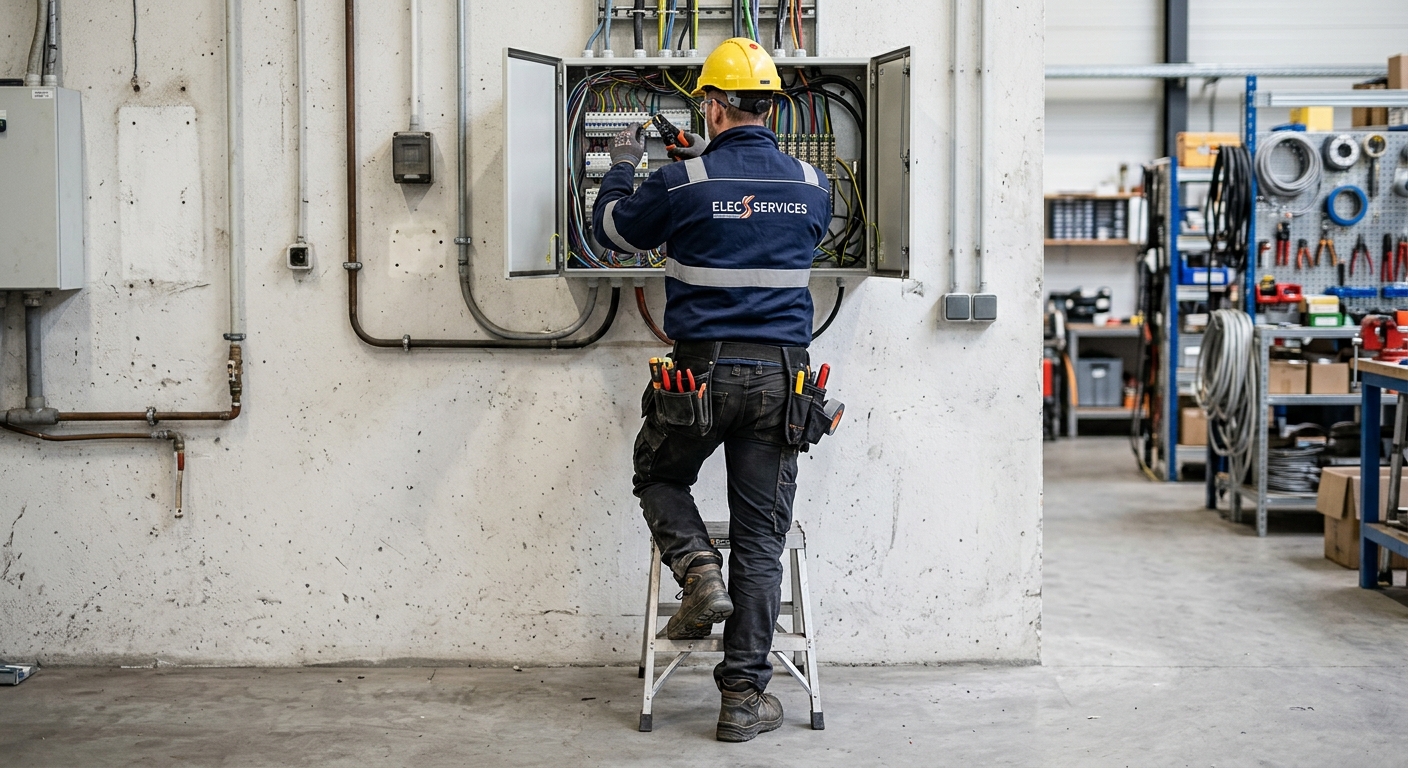
Electrical services and costs in Belleville
Belleville homeowners typically see electrical upgrades sooner than you’d expect, especially with a housing mix where many dwellings were built long before modern EVs, heat pumps and high-demand kitchens. In Belleville, 63.6% of homes were built before 1981 (Statistics Canada, 2021 Census), and that older stock is a prime driver of panel upgrades, knob-and-tube removals, and aluminum wiring remediation. With 14,720 homeowner households (Statistics Canada, 2021 Census), the market has steady demand for safe, code-compliant work—so quotes are often competitive, but scheduling can be tight in peak seasons.
In the Kingston–Pembroke region, the cost of electrical work is shaped by two practical realities: first, a large inventory of pre-1970 homes means more time is spent opening walls, tracing circuits, and dealing with outdated wiring types. Second, eastern Ontario winter conditions increase both risk and jobsite logistics—outdoor service work, weatherproofing, and long restore-to-service timelines can add labour even when the electrical scope is unchanged.
In neighbourhoods such as West End Belleville and near the older core, trades are especially busy with rewire and service upgrades tied to home sales and insurance requirements. If you’re comparing contractors, it helps to match the job scope to the most common cost categories, then confirm how permits and inspections are handled before work starts. Use the guide below to sanity-check what your electrical upgrade typically costs in Belleville, before you request itemised quotes.
| Service |
Why It's Needed |
Permit Required |
Price Range |
| Panel upgrade — 100A to 200A service |
Modern homes add demand from electric ranges, water heating, heat pumps, and EV charging; older services can be undersized or lack proper protection |
Yes (service change/permitted work reviewed by ESA) |
$2,500–$4,500 |
| EV charger installation (Level 2, 40–50A) |
Dedicated circuit reduces nuisance breaker trips and improves charging safety; may require panel capacity review or load management |
Yes (new circuit/service impact; ESA inspection) |
$1,200–$2,800 |
| Knob-and-tube wiring removal and replacement |
Outdated insulation and wiring methods can create fire risk; often required for insurance or when circuits can’t be safely extended/repurposed |
Yes (rewiring/removal is permitted and inspected) |
$6,000–$20,000 |
| Aluminum wiring remediation (CO/ALR connectors) |
Aluminum branch wiring requires approved terminations; CO/ALR connectors can mitigate overheating risks when properly installed |
Typically yes (major wiring work; ESA permit/inspection common) |
$3,000–$8,500 |
| New dedicated circuit (HVAC, appliance, hot tub) |
Dedicated feed improves reliability for high-draw equipment and reduces shared-circuit overload issues |
Yes (new circuit requires permit and inspection) |
$1,000–$2,800 |
| Whole-home rewire (older home, full replacement) |
Best solution when multiple circuits are end-of-life, unsafe, or cannot be reliably brought to current code without extensive work |
Yes (permitted rewiring with ESA inspection) |
$12,000–$35,000 |
Prices are estimates only and vary by project scope, site access and material selection.
What affects the price of electrical work in Belleville
In Belleville and the broader Kingston–Pembroke region, two quotes for the “same” electrical job can differ by 30% to 50% because the real scope is rarely identical once we evaluate the wiring condition, panel capacity, and how complicated the path from the panel to the device actually is. Labour and materials in eastern Ontario typically run with licensed electrician rates in the $90 to $130 per hour range, and the ESA permit/inspection workflow affects timelines and documentation even before the first wire is pulled.
Housing age is usually the dominant cost driver. Homes built before 1950 may contain knob-and-tube wiring, and insurance and safety requirements frequently force replacement rather than patching. Homes from the 1960s to 1970s commonly have 60A or 100A panels that are inadequate for today’s loads—particularly when EV charging is added alongside heat pumps and electric appliances. Aluminum branch wiring, often found in homes built roughly between 1965 and 1976, requires licensed remediation using approved CO/ALR connections or full replacement for reliable terminations and long-term heat management. In 2024–2026, EV adoption is also driving a surge in permit applications for Level 2 charger circuits, which can trigger either a panel capacity upgrade (commonly in the $2,500 to $4,500 band) or a load calculation and load management plan.
Concrete local examples: a charger circuit in a detached house with easy stud-bay access can land closer to the lower end of the $1,200 to $2,800 EV band, while a retrofit that routes through finished basements, masonry, or long exterior runs typically pushes labour and cable costs upward. Similarly, a localized aluminum fix with a clear termination path can be far cheaper than a wall-open rewire when multiple runs show deterioration.
| Price Factor |
Why It Matters |
Cost Impact |
| Panel size upgrade — 100A to 200A is the standard minimum today |
Determines whether your home can safely handle new high-demand loads without nuisance trips or unsafe overheating |
Often the biggest jump, commonly aligning with the $2,500–$4,500 service band |
| Wiring type — copper vs. aluminum remediation vs. K&T removal |
Outdated methods require careful removal/termination and approved components (CO/ALR or full replacement) |
Can add thousands; K&T removal and replacement commonly scales into the $6,000–$20,000 range |
| Number of new circuits — each adds material and labour time |
More circuits means more breakers, cable, junctions, and labour for routing and labeling |
Each additional circuit can shift the job by $500–$1,500+ depending on distance and finish level |
| Permit + ESA/TSBC inspection fee — mandatory for all major work |
Major electrical work requires permitting and inspections before energizing |
Adds fixed administrative cost and can affect scheduling; typically baked into all proper quotes |
| Labour rate for licensed electricians — journeyman rates in Kingston–Pembroke |
Hourly rates reflect licensing, safety practices, and insured workmanship |
At $90–$130/hour, wall-opening time quickly changes totals |
| EV charger amperage — 40A vs. 50A circuit affects cable and breaker cost |
Higher amperage can require larger conductor and breaker sizing and sometimes more panel headroom |
May move the EV install toward the higher end of the $1,200–$2,800 band |
| Emergency or after-hours premium |
Scheduling, overtime, and parts availability typically cost more for time-sensitive work |
Can add a noticeable premium over standard daytime rates |
| Load calculation required for service upgrade |
A proper capacity review prevents repeated visits and ensures the panel and breakers match the code-required demand |
Usually a manageable added step, but it can prevent an incorrect undersized install |
Permits & regulations in Ontario
In Ontario, essentially all electrical work beyond basic, non-electrical tasks (like changing a light bulb) must be done by a licensed electrician. Permits are required for panel upgrades (including service changes), new circuits, rewiring, and EV charger installations—especially where wiring is added, breakers are changed, or the service load is affected. Once the work is permitted, it must pass inspection by the Electrical Safety Authority (ESA) before the electrician can return the system to service. “DIY” electrical is heavily restricted; homeowner exemptions are narrow and don’t cover the kinds of work that commonly drive risk—like altering a panel, adding circuits, or touching service equipment.
What typically does not require a permit (when done safely and only replacing existing, like-for-like components) is usually limited to things such as swapping a fixture for an identical device and replacing a cord-connected appliance plug (where no wiring modification is required). However, if you’re adding any new wiring path, changing breaker sizes, or extending permanent circuits, assume you’ll need a permit.
To verify a contractor before hiring in Belleville, ask for the electrician’s Ontario licence details and verify them through the provincial registry. Request a clearance letter or proof of licensing as provided by their business. Also ask for a current certificate of insurance (liability) and confirm workers’ compensation coverage (WSIB/WCB) so you aren’t held responsible if something goes wrong on site. A legitimate quote should align with a permitted scope and clearly state the permit/inspection is included.
When your Belleville home needs an electrical upgrade
If you live in Belleville, electrical problems are often “winter amplified”—not because the wiring suddenly changes, but because electric heating loads run longer and outdoor conditions make loose connections and moisture exposure more consequential. Look for safety-critical warning signs, not just cosmetic issues.
(1) Breakers that trip regularly usually mean an overloaded circuit, a failing breaker, or improper wiring. If the trips happen when running baseboard heat, a hair dryer, or kitchen appliances, plan for a load review rather than repeatedly resetting breakers.
(2) Knob-and-tube wiring present is a high-priority concern. The issue isn’t only “how old it is”—it’s deteriorated insulation and contact points that can fail under heat and age. In many cases, insurers and safety expectations push for removal or full rewire.
(3) 60A or 100A service often can’t keep up with modern combined loads (EV charger + heat pump + electric stove/water heating). A 200A upgrade is commonly the standard solution, frequently landing in the $2,500 to $4,500 band for many typical service-change scopes, depending on access and parts.
(4) Aluminum wiring (pre-1976 construction) can be safe if properly maintained, but it requires licensed remediation (approved CO/ALR terminations) and correct torque/connector selection.
(5) Insufficient outlets (extension cords everywhere) is a practical hazard and a signal you need additional circuits or outlet upgrades—especially where AFCI/GFCI protection is required.
(6) No AFCI or GFCI protection where required can surface during resale and is a code-compliance risk.
Which signs are immediate? Frequent breaker trips, evidence of arcing/scorching, and knob-and-tube should be addressed promptly. Service sizing, aluminum remediation, and outlet protection are usually planned upgrades, but they should be scheduled with a permit/inspection timeline—particularly in older Belleville homes built before 1981, where rewiring and service work are most common.
| Warning Sign |
What It Means |
Recommended Action |
Urgency |
Price Band |
| Breakers trip frequently |
Overload, undersized circuits, failing devices, or improper load distribution |
Licensed troubleshooting and load calculation; add circuits or upgrade service if needed |
Urgent (schedule soon) |
$1,000–$2,800 |
| Knob-and-tube wiring present |
Outdated insulation and connection methods that can elevate fire risk and complicate safe additions |
K&T removal and replacement of affected circuits (or whole-home rewire if widespread) |
High priority |
$6,000–$20,000 |
| 60A or 100A panel (inadequate load capacity) |
Panel can’t safely handle today’s combined loads (EV charging, heat pumps, electric cooking) |
Service capacity review, then upgrade to 200A if required |
Urgent (before adding new loads) |
$2,500–$4,500 |
| Aluminum wiring (pre-1976 construction) |
Potential overheating/loose connections at terminations if not remediated properly |
Licensed remediation using approved CO/ALR connectors or section-by-section replacement |
Planned (but don’t ignore) |
$3,000–$8,500 |
| Insufficient outlets — extension cords everywhere |
Overreliance on temporary power increases trip and shock risks |
Add outlets and, where appropriate, new dedicated circuits for high-load equipment |
Medium urgency |
$1,000–$2,800 |
| No AFCI or GFCI protection where required |
Increased risk from arc faults and shock; may be flagged during home sale/inspection |
Add required protection devices and update affected circuits to current safety expectations |
Planned (before sale if possible) |
$200–$800 |
How to choose a electrical work contractor in Belleville
Start by verifying the contractor is properly licensed in Ontario for the kind of work they’re proposing. In Belleville, service upgrades, new circuits, EV charger installations and rewiring should always involve permits and ESA inspections—so your electrician should readily provide their licence information. Ask for a certificate of insurance (liability) and confirm WSIB/WCB coverage for the people who will be on your property; if they can’t produce it, you’re taking an unnecessary risk.
Next, request 2–3 itemised written quotes that separate labour and materials instead of only giving a lump sum. Itemisation should show cable type, breakers, the panel/model being used, protection devices (like AFCI/GFCI where applicable), and any disposal/dust-control assumptions. Confirm whether the quote includes ESA permit fees and inspection scheduling, and whether wall repairs, patching, or drywall reinstatement are included or explicitly excluded.
Then check warranty terms. A solid workmanship warranty (commonly covering installation-related issues) should be clearly stated, and you should understand whether manufacturer warranties apply to parts like breakers or charger components and whether those warranties transfer to you. For payment, avoid large upfront deposits—aim to keep any initial payment around 10% to 15%, with the remaining balance tied to milestones and a final inspection-ready finish. Finally, get a start date and completion estimate in writing, so you can plan around heating season disruptions.
- Licence verification: ask for Ontario licence details and confirm via the provincial registry.
- Insurance: request a current liability certificate (and expiry date).
- WSIB/WCB clearance: confirm coverage for workers on your site.
- Permit included: ensure ESA permit and inspection are included for panel, rewiring, and EV charger work.
- Itemised quote: labour + materials, not just “electrical labour” line items.
- Scope clarity: what’s excluded (drywall repair, disposal, trenching, drilling, patching)?
- Load calculation mentioned: for service upgrades and EV additions, confirm a capacity review.
- AFCI/GFCI compliance: confirm which circuits/devices will be upgraded and why.
- EV details: charger amperage (40A vs 50A), breaker size, location, and cable routing plan.
- Warranty: workmanship warranty length and what’s covered; confirm product warranty terms.
- Payment schedule: keep upfront payment to 10%–15% and hold back until completion.
- Schedule realism: provide a start date and restore-to-service timeline.
Red flags to watch for in Belleville: they won’t provide itemised quotes, they minimize permit/ESA requirements, they ask for full payment upfront, they can’t show insurance/WSIB proof, or their scope is vague about circuit routing and disposal/restoration.
Frequently asked questions — electrical work in Belleville
How much does an EV charger installation cost in Belleville?
In Belleville, a typical Level 2 EV charger installation (often a 40A to 50A dedicated circuit) commonly falls in the $1,200 to $2,800 range, assuming straightforward routing and adequate panel capacity. If your home is an older Kingston–Pembroke stock that needs a capacity review or a service/panel upgrade, costs can increase—service upgrades are often in the $2,500 to $4,500 band for many standard 100A to 200A conversions. Most EV charger installs require an ESA permit and inspection because a new dedicated circuit is being added. If you’re in a pre-1981 home (63.6% of Belleville homes were built before 1981, Statistics Canada, 2021 Census), plan extra time for load calculations and potential older wiring remediation.
What is knob-and-tube wiring and should I replace it?
Knob-and-tube (K&T) wiring is an older wiring method used in many homes decades ago, recognizable by porcelain knobs and tubes that route conductors through the structure without the modern sheathing systems. In Ontario (including Belleville), K&T is a safety concern because insulation and contact points can degrade with time and heat. Whether you must replace it depends on extent and condition, but if you’re planning any new circuits, EV charger work, or major renovations, insurers and inspectors often expect K&T removal from affected areas. For homeowners in Belleville’s older housing stock, a partial K&T replacement can start around the $6,000 to $20,000 band depending on how widespread it is, while a whole-home rewire can be higher. The key is getting a licensed assessment and planning permitted replacement where required.
Is aluminum wiring safe in older Belleville homes?
Aluminum wiring can be safe when it has been properly installed and maintained, but it does require correct connections and licensed remediation if terminations are not up to modern expectations. In many eastern Ontario homes, aluminum branch wiring was installed in an earlier period; if the connectors and terminations weren’t done correctly, the risk is increased heat at connections over time. In Belleville, a common approach is licensed remediation using approved CO/ALR connectors, which can address many issues without a full rewire. Typical remediation pricing often lands around $3,000 to $8,500 depending on how many junctions and terminations are involved and how accessible they are. If you’re adding new loads—like a Level 2 EV charger—you’ll still want a capacity review and wiring inspection so the whole system is safe together.
Do I need a permit for electrical work in Ontario?
Yes—most electrical work that modifies wiring, circuits, panels, or service equipment requires an Ontario permit, and it must be inspected. In Belleville, panel upgrades (including 100A to 200A service changes), rewiring, new circuits, and EV charger installations are the most common projects that require an ESA permit and inspection. DIY electrical is restricted in Ontario; even when homeowners can legally do limited tasks, anything involving circuits, service work, or new wiring routes generally requires a licensed electrician and permits. A few simple, like-for-like changes (such as replacing an existing bulb or an identical fixture) typically don’t trigger permits, but once you’re adding wiring or changing protection devices, assume a permit is required. A proper quote should include the permit/inspection workflow and clearly state what is included.
What are signs of an overloaded electrical panel?
Signs of an overloaded panel include breakers tripping repeatedly, lights dimming when equipment starts, and persistent nuisance trips on the same circuits—especially when you run electric heating elements plus kitchen or laundry loads. In Belleville winters, these symptoms can be more frequent because electric demand stays higher for longer. Another clue is a panel that’s already full of breakers with little room for additional circuits, or a service rating (often 60A or 100A) that can’t support modern additions like EV chargers and heat pumps. If you’re seeing trips and you’re planning new loads, the recommended next step is a load calculation and inspection. Service upgrades are commonly in the $2,500 to $4,500 band for 100A to 200A conversions, but the exact requirement depends on your connected load and wiring condition.
Can I do my own electrical work in Ontario?
In Ontario, most electrical work must be done by a licensed electrician, and the homeowner “do-it-yourself” allowance is narrow. For Belleville homeowners, the key point is that panel work, new circuits, EV charger wiring, and rewiring generally require permits and must be performed by a licensed professional, then inspected by the ESA. While some very limited tasks may be permitted for homeowners, they don’t extend to adding or modifying permanent wiring, changing breakers, or touching service equipment. If you’re tempted to DIY, consider the long-term cost: improper work can fail inspection, increase hazard risk, and create insurance issues. The safest approach is to hire a licensed electrician for any scope that affects circuits or code compliance, then leave cosmetic work (like drywall patching) to whoever your electrician coordinates or to a separate tradesperson.