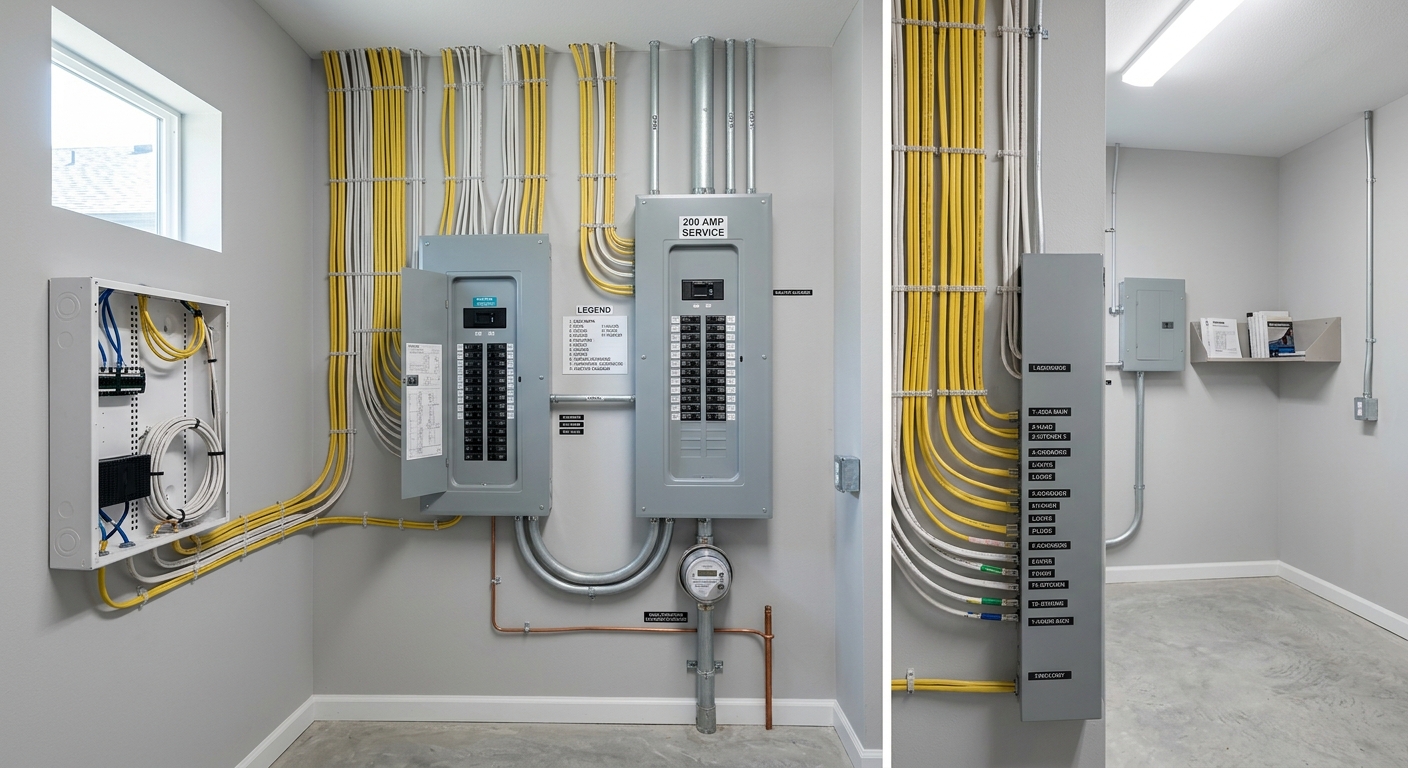
Electrical services and costs in Brant
Electrical work in Brant is strongly shaped by the age and wiring types still found in the community—most homeowners here are dealing with legacy systems when they renovate, finish a basement, or add modern loads. With 50.0% of homes built before 1981, it’s common to see older wiring that needs service improvements and, in many cases, knob-and-tube removal or aluminum remediation during upgrades. Just as importantly, 87.7% of households in Brant are owner-occupied (Statistics Canada, 2021 Census), so there’s steady demand for whole-home reliability work rather than short “patch” jobs.
On the Hamilton–Niagara Peninsula, the market often runs busy because older housing stock is paired with higher peak electrical demand. The region’s mix of older homes plus modern electrification—EV charging, heat pumps, and electric cooking—pushes panels and feeders beyond what 60–100A services were originally built for. In practice, that means many projects land in the “service upgrade plus rewiring/circuit adds” category, which affects both material choice and inspection readiness. Labour availability can also influence the timeline and effective cost, especially in areas like the Brantford–Brant corridor where contractors are coordinating ESA/utility requirements across similar projects.
If you’re budgeting for an upgrade, it helps to compare the most common service and wiring requests side-by-side—especially where permits and inspection requirements can’t be skipped. See the table below for realistic Brant price bands and what each scope typically includes.
| Service |
Why It's Needed |
Permit Required |
Price Range |
| Panel upgrade — 100A to 200A service |
Modern homes add heat pumps, EV chargers, and larger appliances; a 60–100A setup often can’t handle today’s load safely. |
Yes (ESA permit + inspection) |
$1,800–$4,500 |
| EV charger installation (Level 2, 40–50A) |
Dedicated power reduces nuisance trips and supports reliable charging; cable sizing and breaker selection depend on the circuit amperage. |
Yes (ESA permit + inspection) |
$1,000–$3,500 |
| Knob-and-tube wiring removal and replacement |
K&T wiring is older insulation/contact material that can be incompatible with current safety expectations and sale/insurance concerns. |
Yes (typically full rewire scope) |
$8,000–$20,000 |
| Aluminum wiring remediation (CO/ALR connectors) |
Aluminum branch wiring requires approved connection methods and testing; connectors and potential partial replacement are often needed. |
Yes (major corrective work) |
$8,000–$20,000 |
| New dedicated circuit (HVAC, appliance, hot tub) |
Dedicated circuits improve safety and performance, especially for electric heat systems and outdoor loads like hot tubs. |
Yes (for new circuit work) |
$650–$2,800 |
| Whole-home rewire (older home, full replacement) |
When wiring is widely degraded or uses multiple legacy types, full replacement restores reliability and compatibility with modern protection devices. |
Yes (ESA permit + inspection) |
$12,000–$35,000 |
Prices are estimates only and vary by project scope, site access and material selection.
What affects the price of electrical work in Brant
In Brant and across the Hamilton–Niagara Peninsula, quotes for what looks like the “same” electrical upgrade can vary by 30–50% once you account for hidden conditions, wiring type, and how much work is required to meet ESA expectations and utility requirements. Two homes can both need a service change, but the one with straightforward routing through finished walls will price differently than the one with older wiring runs, partial knob-and-tube sections, or inaccessible attic/basement pathways. Because licensed contractors build their labour and permit timelines around these realities, scope details matter more than the headline line item.
Housing-stock age is the dominant cost driver. Homes built before 1950 may still contain knob-and-tube wiring, which often triggers broader replacement rather than “safe patching.” Homes from the 1960s–70s are frequently associated with older 60A or 100A panels and, in many cases, aluminum branch wiring (often around 1965–1976). Aluminum remediation requires approved CO/ALR connectors, extra care in testing, and sometimes panel or partial rewire work—costs that can move a project from the lower end of the $1,800–$4,500 service band into a larger service+rewire scope. Meanwhile, EV adoption is pushing a surge in Level 2 charger permits, and peak-demand days (cold snaps with simultaneous heating and charging) make load calculations and breaker/cable sizing critical.
Local conditions that commonly raise cost in Brant include long cable routes to garages, buried service entry constraints, and older drywall/plaster finishes in pre-1981 homes. Costs can be lower when there’s easy access (unfinished basement, open attic) or when the new circuit is close to the panel. As a quick budgeting check, a panel upgrade alone may land in the $1,800–$4,500 range, but if it’s paired with rewiring and multiple new circuits for heat and EV charging, projects can move toward the $8,000–$20,000 wiring band.
| Price Factor |
Why It Matters |
Cost Impact |
| Panel size upgrade — 100A to 200A is the standard minimum today |
More capacity requires new equipment, larger service components, and often utility coordination. |
Typically adds a major portion of the $1,800–$4,500 service band |
| Wiring type — copper vs. aluminum remediation vs. K&T removal |
Aluminum and knob-and-tube work require different approved connection methods, testing, and more labour time. |
Can shift the project into the $8,000–$20,000 range |
| Number of new circuits — each adds material and labour time |
Each circuit needs its own cable path, breaker, and termination work; panel space and load balancing are key. |
More circuits often increases both parts and total hours significantly |
| Permit + ESA/TSBC inspection fee — mandatory for all major work |
Major electrical work requires permits and inspections to be completed before energization. |
Usually adds fixed administrative and compliance costs |
| Labour rate for licensed electricians — journeyman rates in region |
Labour is where older housing complexity shows up: troubleshooting, opening finishes, and careful terminations. |
Can swing the total price by tens of percent depending on accessibility |
| EV charger amperage — 40A vs. 50A circuit affects cable and breaker cost |
Cable sizing, breaker selection, and sometimes conduit routing change with circuit rating. |
40A circuits often cost less than 50A configurations |
| Emergency or after-hours premium |
After-hours attendance and expedited inspections increase labour and scheduling overhead. |
Often adds a noticeable premium to labour portions |
| Load calculation required for service upgrade |
Accurate calculation supports safe design; undersizing leads to rework and inspection failure risk. |
Added design time, but it can prevent expensive fixes |
Permits & regulations in Ontario
In Ontario, ALL electrical work beyond changing a light bulb must be done by a licensed electrician. That includes work that most homeowners think of as “simple,” such as adding outlets, installing new dedicated circuits, replacing a breaker or panel components as part of a larger service change, rewiring sections, and installing an EV charger circuit. Permits are required for panel upgrades, new circuits (including Level 2 EV chargers), rewiring, and service upgrades. Once the electrician completes the permitted work, it must pass inspection by the Electrical Safety Authority (ESA) before it can be finalized with the utility.
To be concrete, permit-required work typically includes: anything that changes the service size, replaces or adds breakers/feeder conductors at the panel, extends branch circuits through walls/ceilings, installs a new grounding/bonding arrangement for a charger or hot tub, and any significant wiring replacement (including knob-and-tube removal or aluminum remediation that involves re-termination or replacement). Work that typically does not require a permit is limited—most homeowners can replace fixtures or bulbs that are already installed, provided no wiring is modified and no new circuits are created.
When hiring in Brant, verify the electrician’s Ontario licence using the ESA/public licence verification tools, confirm certificate of insurance (liability coverage) and ask for proof of WSIB/WCB coverage where applicable. Finally, request a written quote and ensure the electrician will file the ESA permit and schedule inspection; reputable contractors will provide you documentation and an inspection outcome before energization.
When your Brant home needs an electrical upgrade
In Brant, the warning signs that you need electrical work are usually about safety-critical performance, not just convenience. First, breakers that trip regularly are a major red flag: they can indicate overloaded circuits, failing connections, or wiring problems behind the wall. Second, knob-and-tube wiring is a key concern. The issue isn’t only that it’s old; it’s the condition and insulation/contact behaviour, which can create insurance and safety complications and often leads to a broader rewire plan.
Third, a 60A or 100A service may be inadequate for a modern load picture—especially when EV charging, heat pumps, and electric stoves are all used together on peak evenings and cold mornings. In those situations, a 200A upgrade is the standard solution because it provides the capacity and breaker space to distribute modern loads correctly. Fourth, aluminum wiring (common in pre-1976 homes) isn’t always an immediate “sparks tomorrow” hazard if connections are in good shape, but it does require licensed remediation such as approved CO/ALR connections or partial replacement to reduce overheating risk. Fifth, insufficient outlets and widespread use of extension cords are more than inconvenience—they can increase hazard risk and often point to hidden circuit limits. Lastly, missing AFCI/GFCI protection where required is a code compliance concern that can surface during home sale or when you add new circuits.
Urgency guidance: if breakers are tripping repeatedly, you smell burning, or you have warm/discolored outlets or panels, treat it as urgent and get the electrician onsite promptly. If you’re dealing with K&T or older service capacity, schedule a planned upgrade, but don’t delay indefinitely. For example, if you’re already paying for access during a basement renovation, pairing a service upgrade with rewiring can be cheaper than doing them years apart; a panel upgrade alone may be in the $1,800–$4,500 band, but doing it after an incomplete fix often costs more in labour due to re-opening walls.
| Warning Sign |
What It Means |
Recommended Action |
Urgency |
Price Band |
| Breakers trip frequently |
May indicate overloaded circuits, failing breakers, or unsafe wiring connections. |
Electrical troubleshooting and load review; add circuits or correct wiring as required. |
Immediate |
$650–$2,800 |
| Knob-and-tube wiring present |
Legacy insulation/contact materials that can create safety and insurance/sale issues. |
Remove and replace with modern wiring; plan whole-home scope if widespread. |
Planned (but schedule soon) |
$8,000–$20,000 |
| 60A or 100A panel (inadequate load capacity) |
Often can’t support EV chargers, heat pumps, and electric cooking under normal use. |
Load calculation and typically upgrade to a 200A service. |
Planned |
$1,800–$4,500 |
| Aluminum wiring (pre-1976 construction) |
Requires remediation for safe terminations and connections using approved methods. |
Assess connections and re-terminate/replace as needed; consider partial or full correction. |
Planned (prioritize if connections are poor) |
$8,000–$20,000 |
| Insufficient outlets — extension cords everywhere |
Higher risk of overload and poor connection quality. |
Add circuits/outlets and address load distribution at the panel. |
Planned |
$650–$2,800 |
| No AFCI or GFCI protection where required |
Can leave circuits unprotected and can become an issue during sale or when adding circuits. |
Upgrade protection devices and update wiring to meet current requirements. |
Planned |
$150–$1,600 |
How to choose a electrical work contractor in Brant
Choosing a contractor in Brant comes down to verification, clarity, and accountability. First, confirm the electrician is properly licensed in Ontario—use the ESA/public licence verification options to match the licence details to the person/company on your quote. Next, ask for a certificate of insurance showing liability coverage and ensure the scope includes permit filing where required. For coverage protection, request proof of WSIB/WCB coverage (or the appropriate proof your contractor provides under Ontario requirements) before work begins, so you’re not exposed if something happens on site.
Then get 2–3 itemised written quotes rather than a single lump sum. You want to see labour and materials broken out, including how much cable, conduit, breakers, and any panel supplies are included. Read the scope carefully: is the ESA permit pull included, is inspection included, and how will disposal work be handled? Confirm whether restoration (drywall patching/ceiling access) is included or excluded—many electrical contractors do electrical work only.
For warranty, ask how long the workmanship warranty is and whether it’s in writing. Also separate product/manufacturer warranty (for chargers, panels, breakers) from workmanship. Payment should be staged: never pay more than about 10–15% upfront, and hold back payment until the job is complete and inspected. Lastly, get a start date and realistic completion estimate in writing, especially if your project depends on utility coordination for a service upgrade.
- Provide a written ESA-permit scope for any panel, new circuit, EV charger, or rewiring work.
- List the exact panel brand/model and breakers proposed (including AFCI/GFCI when required).
- Confirm whether the quote includes load calculation documentation for a service upgrade.
- State the wiring method and routing plan (attic/basement/conduit) for clear cost accountability.
- Include the cable type, conduit size, and any specialty parts (CO/ALR connectors, grounding parts).
- Specify whether disposal of old breakers/wiring debris is included.
- Show inspection scheduling responsibility (who schedules ESA inspection).
- Give a clear warranty term for workmanship and whether it’s transferable.
- Use milestone payments tied to permit completion, rough-in, and final inspection.
- Confirm your preferred EV charger model compatibility and amperage (40A vs. 50A) with breaker/cable specs.
- Request photos/video documentation of key stages (old wiring condition, terminations, panel labeling).
- Provide a written timeline that accounts for inspection wait times.
In Brant, I’d treat these as red flags: (1) they won’t pull an ESA permit for a service upgrade, new circuit, or charger; (2) they quote a “panel upgrade” without discussing load calculations or panel spacing; (3) they won’t provide licence/insurance proof; (4) they ask for most payment upfront; and (5) they minimize risks with aluminum or knob-and-tube work without explaining approved remediation steps.
Frequently asked questions — electrical work in Brant
What is a GFCI outlet and where is it required in Ontario?
A GFCI (Ground-Fault Circuit-Interrupter) outlet or breaker detects dangerous leakage current and shuts power off quickly to reduce shock risk. In Ontario, GFCI protection is required in specific areas where water contact is more likely—common examples are bathrooms, kitchens (as required by code for receptacles in those zones), garages, basements with receptacles, and outdoor receptacles. If you’re updating circuits for a reno in Brant, the electrician typically checks your existing device types and the circuit’s protection method when adding new outlets or new circuits. It’s also common to see GFCI included as part of compliance when you add dedicated loads, so the work may align with other upgrades (like additional circuits near the panel). If your scope is mainly protection updates, many households see costs in the $150–$1,600 lighting/fixture-adjacent band, but outlet and circuit changes can move higher depending on wiring access and whether a permit is required.
How do I know if my Brant home has aluminum wiring?
The safest way to confirm aluminum wiring is to have a licensed electrician inspect at accessible locations—typically the panel and at a few receptacles/switch boxes. Aluminum branch wiring often has distinct markings on the cable jacket and looks different from copper conductors, and it may have specific connection types at terminations. In Brant and the wider Hamilton–Niagara Peninsula, aluminum wiring is more commonly encountered in homes built in the 1960s–70s era, so it’s a frequent topic when 50.0% of local homes were built before 1981. Some homeowners also notice older connectors or signs of pitting/discoloration at terminations; those aren’t definitive by themselves, but they justify deeper inspection. After identification, electricians usually assess connection condition and may recommend CO/ALR connectors or partial/full remediation—work that generally needs ESA permits if it involves rewiring or re-termination on major portions. If your plan is to add an EV charger or increase service capacity, confirmation is especially important so the electrical design doesn’t rely on unsafe connections.
What is the cost of rewiring a house in Brant?
Rewiring costs in Brant depend heavily on whether you’re doing a targeted replacement of problem sections or a full whole-home rewire. For many older homes with knob-and-tube or widespread legacy wiring, the typical residential pricing band lands around $8,000–$20,000 for rewiring and replacement scopes, and full replacement can be higher when the circuit count is large and finish access is difficult. If you’re pairing rewiring with a service upgrade (for example, moving from 100A to 200A to support EV charging, heat pumps, and electric cooking), you’ll often see the project move beyond the wiring band because panel equipment, labour time, and coordination add up. Homes built before 1981 are a common starting point for these conversations, and 87.7% owner-occupancy means many homeowners choose long-term fixes rather than temporary repairs (Statistics Canada, 2021 Census). The best way to get an accurate number is an itemised quote after an inspection of the panel, representative rooms, and wiring routes.
What electrical upgrades are required when selling a home in Ontario?
Ontario doesn’t impose a single “mandatory upgrade list” for every sale the way some jurisdictions do, but buyers and inspectors often focus on safety and functional code compliance. In practice, that means sellers frequently need corrections when inspection reveals missing required protection devices, unsafe wiring conditions, or electrical components that can’t support modern loads. A common example in Brant is the need to ensure proper grounding and GFCI/AFCI protection where required when circuits are extended or when hazards are identified. If you have knob-and-tube wiring, aluminum wiring with problematic connections, or an undersized service that can’t support the home’s electrical demands, those issues can become deal blockers and may require an ESA-permitted remediation/replacement. If your home already has modern protection devices and safe wiring, the upgrades may be limited—sometimes to device replacements. Pricing varies widely, but smaller compliance updates can fall into the $150–$1,600 band when work is localized, while full wiring remediation commonly aligns with the $8,000–$20,000 band or higher depending on the extent. A licensed electrician can tell you what’s likely to matter for inspection and what changes are actually required.
What is a load calculation and why does my electrician need one?
A load calculation is a method of estimating how much electricity your home will draw under typical conditions—based on the appliances and heating sources you have (and sometimes additions you plan). It’s used to ensure the service size, feeder capacity, and circuit distribution are appropriate and safe. In Brant, this becomes especially important when you’re upgrading a 60A or 100A service to support modern electrification like a Level 2 EV charger, heat pumps, and electric cooking running around the same time on peak days. Without a load calculation, a panel upgrade can be undersized or poorly configured, increasing the chance of nuisance tripping or inspection problems. ESA-permitted service upgrades typically require properly designed work, and load calculations support that design. It also helps you avoid paying for a bigger upgrade than needed, because the electrician can justify the exact approach. For homeowners, the practical takeaway is: the load calculation may add some design time, but it prevents rework and helps keep the project within the expected $1,800–$4,500 service upgrade band when appropriate.
How do I find a licensed electrician in Brant?
Start with licensing verification. In Ontario, you should confirm your contractor’s licence details using ESA’s licence verification/public listing tools and ensure the licence holder matches the company/person on the quote. Next, request a certificate of insurance and ask about WSIB/WCB coverage proof before work begins—this is an important homeowner protection step. For the job scope you’re planning (panel upgrade, new circuits, EV charger, rewiring), make sure the electrician is willing to pull the required ESA permits and schedule inspections. Then compare itemised quotes: reputable contractors will break down labour and materials, clearly state what’s included/excluded (permit pull, disposal, restoration), and document the proposed panel/breakers and any safety devices. In Brant’s Hamilton–Niagara Peninsula market, demand for older-home upgrades means you may see lead-time differences, so ask for a written timeline. If you want, you can also ask for references from similar Brant/area projects involving pre-1981 wiring and service upgrades.