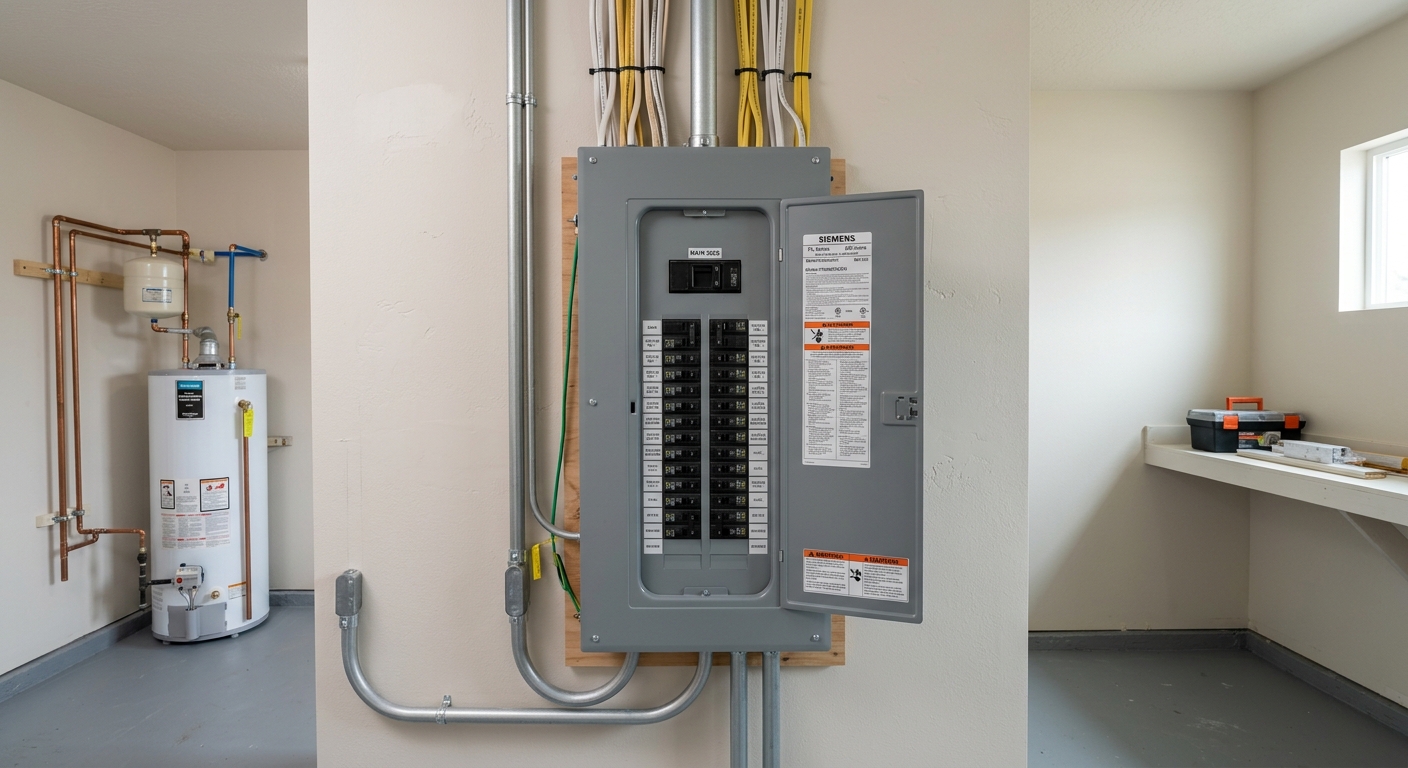
Electrical services and costs in Ignace
Electrical services in Ignace often start with one big question: does your electrical system have the capacity and safety margin for today’s loads? With Ignace’s 1,206 residents and 435 homeowner households, most homes are owner-occupied, and many of them were built long ago—about 80.0% of dwellings were built before 1981. That matters because older wiring styles, dated panels, and limited grounding can’t always handle modern additions without upgrades. In the Northwest market, it’s common to find homes that need more than a simple breaker swap: knob-and-tube sections, aluminum branch wiring from the mid-20th century, or legacy 60A/100A services that become tight once you add electric heat, heat pumps, an induction range, or an EV charger.
Northwestern weather also plays into cost. Cold snaps and shorter service windows mean troubleshooting takes longer, and contractors schedule panel/service work carefully to keep downtime minimal—especially in homes where backup heat relies on working circuits. At the same time, demand can cluster around the larger residential pockets near Ignace’s core—meaning trades are sometimes booked ahead for service-call and ESA inspection availability.
Below is a practical comparison of common electrical jobs and what typically drives the scope. Use it as a starting point for conversations with electricians, then align the quote to your home’s wiring type, panel size, and expected loads.
| Service |
Why It's Needed |
Permit Required |
Price Range |
| Panel upgrade — 100A to 200A service |
Supports modern loads (heat pumps, electric ranges, EV charging) and improves safety/availability of circuits |
Yes (ESA) |
$1,800–$6,800 |
| EV charger installation (Level 2, 40–50A) |
Adds a dedicated, code-compliant circuit with correct breaker sizing and safe load management |
Yes |
$900–$2,500 |
| Knob-and-tube wiring removal and replacement |
Eliminates aging insulation and contact risks; allows modern protection devices and safer routing |
Yes |
$3,900–$10,300 |
| Aluminum wiring remediation (CO/ALR connectors) |
Reduces heat/splice risks using approved connectors or targeted section replacement |
Yes (for remedial work) |
$1,600–$5,800 |
| New dedicated circuit (HVAC, appliance, hot tub) |
Prevents nuisance tripping and ensures correct conductor protection for the equipment |
Yes (new circuit) |
$650–$2,450 |
| Whole-home rewire (older home, full replacement) |
Replaces multiple aged circuits so the panel, grounding, and devices can meet current code requirements |
Yes |
$6,200–$13,900 |
Prices are estimates only and vary by project scope, site access and material selection.
What affects the price of electrical work in Ignace
In Ignace and across Ontario’s Northwest, quotes for the “same” electrical need can differ by 30–50% because the real variables aren’t visible from the street. The dominant cost driver is housing age and the wiring method behind the walls. In Northwest homes that predate modern wiring practices, it’s common to uncover knob-and-tube runs or undersized grounding that force more than patching. Where homes were built before 1950, some insurers increasingly challenge coverage for knob-and-tube systems, and that can push the job toward removal and replacement rather than partial fixes.
Next, panel capacity drives scope. Many older houses have 60A or older 100A setups that are inadequate for today’s simultaneous loads—EV chargers, heat pumps, electric ranges, and garage or workshop circuits can create continuous demand that forces a move toward 200A. Aluminum wiring (often seen in homes constructed roughly between 1965 and 1976) also changes the work: remediation requires licensed workmanship with approved CO/ALR connectors, and in some cases full replacement of the affected branch circuits. On the demand side, EV adoption is increasing Level 2 permit applications, and the difference between a 40A and 50A charger circuit affects breaker choice and cable sizing.
Concrete local examples in Ignace: (1) a panel replacement in a tight, older utility area with limited clearance may add labour time and labour-only cost versus an easier location; (2) a service upgrade becomes more expensive when the meter/supply coordination adds scheduling constraints; (3) homes using electric heat often need a more careful load calculation and may require an “upgrade-first” plan to avoid downtime. In practical terms, a service/panel project often lands in the $1,400–$7,000 band, but if hidden wiring issues appear, wiring & rewiring can move toward the $3,850–$10,300 range.
| Price Factor |
Why It Matters |
Cost Impact |
| Panel size upgrade — 100A to 200A is the standard minimum today |
More breakers, better capacity for modern appliances and EV charging |
Typically adds the largest labour/material component of a “load upgrade” |
| Wiring type — copper vs. aluminum remediation vs. K&T removal |
Aluminum and knob-and-tube require specific remediation/removal steps for safety and code compliance |
Can shift a project by thousands, especially with wall-openings |
| Number of new circuits — each adds material and labour time |
Each dedicated circuit needs conductors, protection devices, and testing/labeling |
Incremental adds accumulate quickly on rewires and service upgrades |
| Permit + ESA/TSBC inspection fee — mandatory for all major work |
Permitting/inspection is required for panel/service changes and new circuits |
Non-negotiable add-on cost and scheduling time |
| Labour rate for licensed electricians — journeyman rates in Northwest |
Licensed labour is priced based on trades availability and travel/time in remote areas |
Explains much of the 30–50% variability between quotes |
| EV charger amperage — 40A vs. 50A circuit affects cable and breaker cost |
Higher amperage may require larger cable, breaker adjustments, and sometimes load management changes |
Often a few hundred to over $1,000 depending on feed/cable run complexity |
| Emergency or after-hours premium |
Urgent troubleshooting and after-hours attendance increases staffing/dispatch cost |
Can add a visible surcharge to the job total |
| Load calculation required for service upgrade |
Ensures the new service size and panel layout can safely support current and planned loads |
Adds planning time and may change the recommended final system size |
Permits & regulations in Ontario
In Ontario, ALL electrical work beyond changing a light bulb must be done by a licensed electrician. That includes anything involving new circuits, panel or service upgrades, rewiring, EV charger installations, and most outlet/switch additions. If an electrician pulls a permit, the work must also pass inspection by the provincial electrical safety authority. In Ontario, inspections are handled through the Electrical Safety Authority (ESA), and the work must comply with the Ontario Electrical Code.
Typical work that DOES require a permit in Ignace includes: panel upgrades (100A to 200A), adding or replacing circuit breakers when connected to panel modifications, installing new dedicated circuits (such as for HVAC, ranges, or hot tubs), removing knob-and-tube wiring, aluminum remediation that changes connections, and Level 2 EV charger installs. Work that typically does NOT require a permit is limited—think like-for-like replacement of receptacles or fixtures only when no wiring changes, and simple tasks that do not alter conductors, circuits, or protection devices. When in doubt, a reputable electrician will confirm the permit path before starting.
To verify a contractor in Ontario, start by checking the licence/registration information through the ESA-related channels (the electrician should be properly licensed to do the work). Then request a certificate of insurance showing liability coverage (and ask about any specific jobsite endorsements). Finally, confirm WSIB/WCB coverage (as applicable for their workforce) before work begins, and ask for a clearance letter or proof of account status. This reduces the risk of uninsured work during a service outage in winter conditions.
When your Ignace home needs an electrical upgrade
Electrical upgrades in Ignace are usually prompted by safety and capacity signals—not aesthetics. Here are the warning signs that your home likely needs more than a simple fix. (1) Breakers that trip regularly: this often means an overloaded panel, undersized circuits, or failing protection coordination. (2) Knob-and-tube wiring: the concern isn’t just “it’s old”; the insulation and contact condition can create heat and failure risks, and insurers may reduce or cancel coverage if the system isn’t addressed. (3) A 60A or 100A service: in a modern Ignace home—especially one combining an EV charger, heat pump, and electric stove at the same time—capacity can become insufficient, and an upgrade to 200A is commonly the standard solution.
(4) Aluminum wiring (often found in pre-1976 construction): aluminum isn’t automatically “dangerous” everywhere, but it requires licensed remediation to ensure safe terminations and connections. (5) Insufficient outlets and extension cords everywhere: in Canadian winter, extension cords and power bars are a fire-risk escalation and often indicate missing dedicated circuits. (6) No AFCI or GFCI protection where required: this becomes a code-compliance issue that can surface at home sale or inspection.
Immediate action is recommended if you see repeated tripping, burning smells/scorching at outlets, or any sign of arcing. Plan ahead for upgrades if you have knob-and-tube or aluminum wiring—timing matters because your electrician may need wall-openings, load calculations, and ESA scheduling.
Example of justified price difference: adding a single dedicated circuit might fit in the $650–$2,450 band, but if the underlying panel and service can’t support the new load safely, a panel upgrade toward the $1,800–$6,800 range can prevent repeated breaker trips and reduce the risk of rework.
| Warning Sign |
What It Means |
Recommended Action |
Urgency |
Price Band |
| Breakers trip frequently |
Overloaded circuits, aging breakers, or panel/service capacity limitations |
Professional load assessment; check for undersized circuits and panel adequacy |
Immediate to 24–48 hours (depending on frequency) |
$650–$2,450 |
| Knob-and-tube wiring present |
Aged insulation/terminations that can fail and create safety/insurance concerns |
K&T removal plan (targeted removal or full rewire based on inspection) |
Planned upgrade (schedule promptly) |
$3,900–$10,300 |
| 60A or 100A panel (inadequate load capacity) |
Cannot support modern continuous loads safely |
100A to 200A service and panel upgrade with load calculation |
Planned upgrade before adding major loads |
$1,800–$6,800 |
| Aluminum wiring (pre-1976 construction) |
Connections can loosen/overheat without correct remediation |
CO/ALR connector remediation or branch replacement where needed |
Planned upgrade |
$1,600–$5,800 |
| Insufficient outlets — extension cords everywhere |
Missing receptacles/circuits leading to unsafe temporary wiring |
Add receptacles and/or new dedicated circuits |
Immediate safety improvement |
$650–$2,450 |
| No AFCI or GFCI protection where required |
Higher risk of certain faults and potential inspection/transfer issues |
Add AFCI/GFCI protection where code requires for your circuit types |
Planned upgrade (prioritize before sale/inspection) |
$130–$1,200 |
How to choose a electrical work contractor in Ignace
Choosing the right electrician in Ignace is mostly about verification and clarity. First, confirm Ontario licensing: ask for their Ontario licence/registration details and verify the credential through the appropriate provincial/licensing registry channels referenced by the Electrical Safety Authority. Next, request proof of liability insurance before work starts—this should match the contractor/company name on the quote. For workforce coverage, confirm WSIB/WCB status and ask for proof (or a clearance document) so you’re not left holding the risk if something goes wrong. A proper contractor won’t treat these requests as “optional.”
Second, get 2–3 itemised written quotes. You want line items that separate labour from materials, including any required breakers, cable, grounding components, and specialty parts (like CO/ALR connectors for aluminum remediation). Ask whether permit fees and ESA inspection are included or billed separately. Disposal matters too: ask if debris removal/haul-away is part of the scope, especially if wall openings are required.
Third, scrutinize payment scheduling. Never pay more than 10–15% upfront. Hold back the balance until the job is complete, tested, labelled, and the inspection paperwork is handled. Ask for a workmanship warranty (how many years, what failures it covers) and clarify product/manufacturer warranty terms—also whether it’s transferable to you as the homeowner. Finally, insist on a written start date and an estimated completion timeline, since winter conditions can affect access and inspection scheduling.
- Licence verification provided before booking
- Certificate of liability insurance on request
- WSIB/WCB proof or clearance documented
- Itemised quote (labour vs materials) rather than a single lump sum
- Permit/ESA inspection responsibility stated in writing
- Scope excludes “unknowns” clearly (what happens if hidden wiring issues are discovered)
- Labeling/testing plan included (panel labels, circuit testing results)
- Warranty length for workmanship stated
- Product warranty details and model numbers listed
- Payment schedule capped at 10–15% deposit
- Start date and completion estimate in writing
- Clean-up/disposal expectations spelled out
In Ignace, watch for red flags such as “no permit needed” claims for panel/service work, reluctance to provide licence/insurance/WSIB proof, vague scopes that don’t list materials or breakers, unusually low pricing with no breakdown (often skipping inspections or testing), and pressure to pay a large deposit before any work is staged.
Frequently asked questions — electrical work in Ignace
How do I find a licensed electrician in Ignace?
Start by asking electricians directly for their Ontario licence details and verifying them through Ontario’s licensing/ESA-linked channels. In Ignace, the safest approach is to shortlist contractors who regularly do service upgrades and troubleshooting in older Northwest housing stock (built mostly before 1981). Before you sign anything, request proof of liability insurance and confirm WSIB/WCB coverage for their workers. Then compare written, itemised quotes—especially where knob-and-tube or aluminum remediation may be hidden behind walls. If a contractor cannot explain what permits they’ll pull for the work (panel, new circuits, EV charger installs), that’s a strong signal to keep looking. (Statistics Canada, 2021 Census)
Can I add a subpanel to my Ignace home?
Yes, you can often add a subpanel in an Ignace home, but it depends on your existing service capacity and wiring condition. A subpanel usually requires a permit because it involves new circuit distribution, conductor routing, and breaker/fusing changes. If you have a 60A/100A service or older wiring (including aluminum or knob-and-tube), the electrician may recommend a service/panel upgrade first to avoid repeated overload problems—especially in homes with electric heat and modern loads. The cost varies widely based on cable length, trenching or drywall access, and whether you need a main service upgrade. If your quote is only slightly cheaper than a full 200A upgrade, ask for the load calculation details so you can compare apples-to-apples.
How much does an electrician cost in Ignace?
Ignace pricing depends on travel, job complexity, and whether permits and inspections are required. For straightforward repairs or adding one dedicated circuit, labour plus materials can commonly fall within the $650–$2,450 band, but older homes can increase the scope quickly when hidden wiring issues are discovered. For larger projects like panel/service upgrades, pricing typically aligns with the $1,400–$7,000 regional band depending on whether it’s a simple modernization or a full 100A-to-200A change with coordination and load calculation. Always ask for an itemised quote and ensure permit/ESA inspection responsibility is clearly stated so you’re not surprised by add-ons later.
How much does a panel upgrade cost in Ignace?
For many Ignace homeowners, the practical panel upgrade today is a 100A to 200A service and panel modernization so the system can support newer appliances and EV charging. Typical pricing commonly lands in the $1,800–$6,800 range, with the wider provincial Northwest span reflecting factors like wall access, grounding/bonding condition, and how much of the wiring must be corrected. Homes built before 1981 are more likely to have wiring or grounding issues that expand the job beyond just swapping the panel. If the quote doesn’t mention load calculations, grounding review, and permit/ESA inspection steps, ask—those are core parts of a proper service upgrade in Ontario.
Do I need to upgrade to a 200A panel?
You don’t automatically need 200A, but it’s often the standard recommendation in Ignace once you add modern high-demand loads. Many older homes have 60A or 100A services, which may be adequate until you install an EV charger, heat pump, electric range, and additional workshop circuits—then capacity can become a problem. In that scenario, upgrading to 200A is usually the most straightforward long-term fix because it provides breaker space and safe headroom. A licensed electrician should perform a load calculation and check your existing wiring condition (including aluminum terminations or any remaining legacy wiring). If your electrician is only offering a small “patch” without a documented load calculation, request a second quote.
How much does an EV charger installation cost in Ignace?
Level 2 EV charger installation in Ignace typically costs in the $900–$2,500 range for a 40–50A class circuit, assuming your panel/service capacity and routing are reasonably straightforward. The price can be higher if you need a panel/service upgrade (often bringing the job into the service/panel band) or if there’s difficult cable routing through older finished spaces. Because EV chargers are continuous-load style installations, electricians will usually confirm your load calculation and confirm the correct circuit sizing and protective devices to meet Ontario Electrical Code requirements. If you’re planning the charger alongside other upgrades, it’s often cheaper to coordinate the work so the permit and wiring changes are done in one integrated plan.