Electrical services and costs in West End
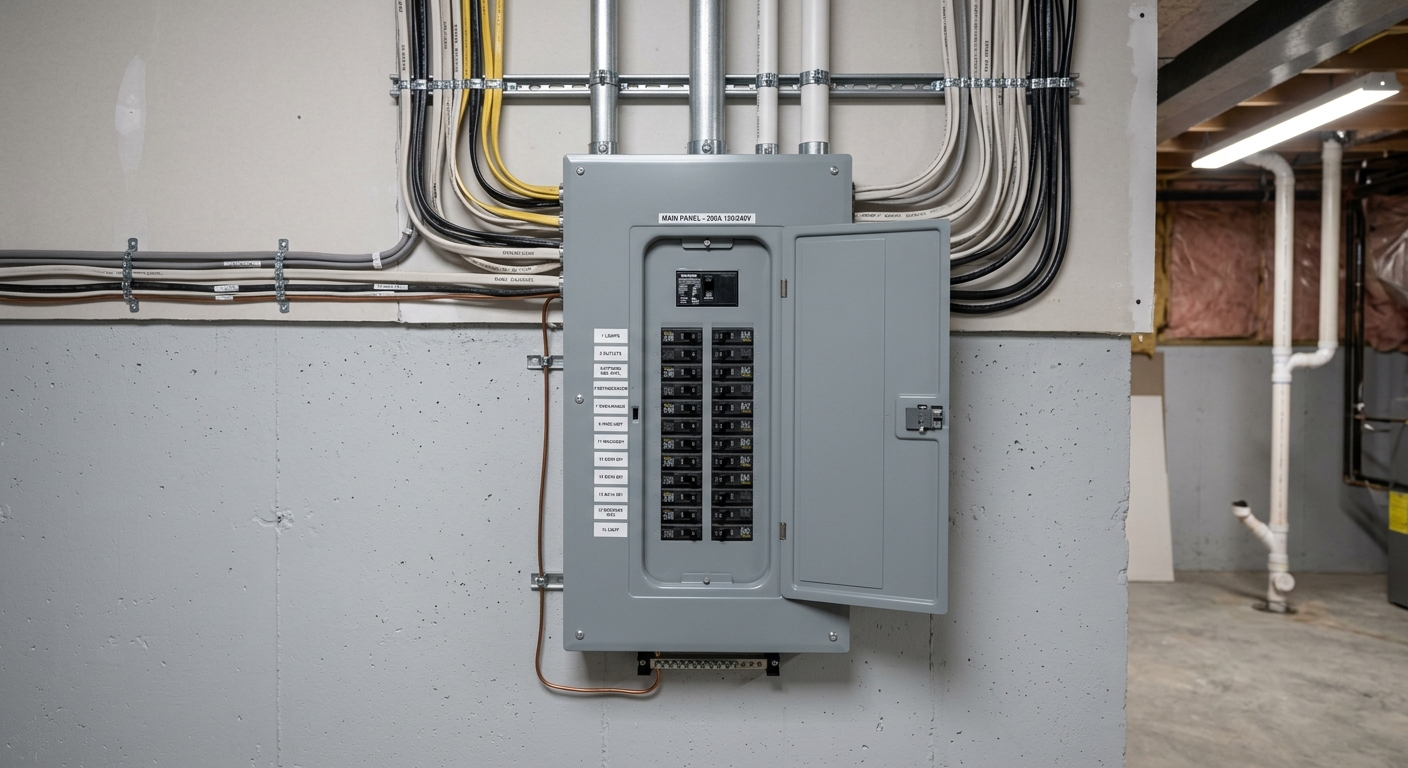
In West End, electrical services tend to get busy because the housing mix is older and highly upgrade-driven. With a West End population of about 4,142 people (Statistics Canada, 2021 Census), the market is small enough that contractors see repeated patterns: lots of pre‑1970 and mid‑century homes that were wired for fewer appliances, less comfort tech, and none of today’s EV/heat-pump load. Two common cost triggers show up often—older knob-and-tube remnants in aging neighbourhood pockets and aluminum branch wiring in homes from the mid‑20th century that need proper remediation for modern connections and long-term reliability.
Toronto’s dense, traffic-heavy repair environment and its fast-growing infill/condo-adjacent demand also affect pricing and availability. When crews are scheduling both service upgrades and new circuit work, timelines can move, and that labour demand shows up in the quote. Climate is a practical driver too: Ontario winters push heat pumps, electric backup, and basement finishers into higher runtime, which means load calculations and service capacity become more important—not just “nice to have.” Areas like the Junction and parts of Parkdale are especially active for wiring and panel work because many homes there are being renovated or converted for added bedrooms and utility needs.
Below is a practical comparison of typical electrical services you’ll see around West End, along with the permits that usually apply and realistic price bands.
| Service |
Why It's Needed |
Permit Required |
Price Range |
| Panel upgrade — 100A to 200A service |
To safely add capacity for EV charging, heat pumps/electric heating, kitchens, and modern electronics |
Yes (major service work) |
$2,500–$6,000 |
| EV charger installation (Level 2, 40–50A) |
Adds a dedicated, code-compliant circuit with appropriate breaker/cable sizing and grounding |
Yes (new circuit/feeder work) |
$900–$2,500 |
| Knob-and-tube wiring removal and replacement |
Knob-and-tube is aging insulation; replacement reduces safety risk and supports insurability during renewals/sales |
Yes (rewiring of occupied circuits) |
$3,000–$15,000 |
| Aluminum wiring remediation (CO/ALR connectors) |
Homes with aluminum branch wiring (often mid-century) need approved connector remediation or selective replacement |
Yes (alterations to existing wiring terminations/conductors) |
$3,000–$9,000 |
| New dedicated circuit (HVAC, appliance, hot tub) |
Prevents nuisance trips and overheating by dedicating the load and using the correct conductor/breaker |
Yes (new circuit) |
$500–$2,500 |
| Whole-home rewire (older home, full replacement) |
For extensive rewiring due to K&T, repeated faults, or when a full electrical system update is needed |
Yes (complete rewiring) |
$10,000–$25,000 |
Prices are estimates only and vary by project scope, site access and material selection.
What affects the price of electrical work in West End
In West End, even when homeowners describe “the same job,” quotes can swing by 30–50% across the Toronto area. The biggest reason is that electrical work pricing is strongly tied to labour time, complexity, and what needs to change in the existing system—not just the end result. Toronto’s housing stock is the dominant cost driver: older homes (including those with knob-and-tube) often require open-wall work and more labour to make the wiring safe and code-compliant. Homes from the 1960s–70s frequently have service sizes like 60A or 100A that can struggle with today’s loads, especially when you add an EV charger, heat pump systems, and modern kitchen appliances all in the same operating period.
Aluminum wiring is another major variable. In homes where aluminum branch wiring is present (common in that 1965–1976 range), remediation with approved CO/ALR connectors typically requires licensed, inspected work; in more extensive cases it becomes selective or full replacement. That means quotes that start as “a wiring job” can move into “rewire/remediation” territory once the contractor opens walls and verifies conditions.
EV adoption is also changing permit demand. Level 2 charger installs in the GTA are trending upward, and contractors often need to do load calculations and sometimes pair the charger with a panel upgrade. Practically, a homeowner who goes from a basic install to a service upgrade can see the project move from an EV charger band of $900–$2,500 into the panel/service band of $2,500–$6,000—and the difference is justified when the existing panel can’t support the additional breaker and feeder safely.
Two West End examples that typically raise cost: buried or inaccessible service wiring that requires more dismantling, and multi-trade renovations where electrical rough-in must align with HVAC/insulation schedules. Conversely, costs can be lower when the panel location allows straightforward conduit runs and when the home already has a compatible panel capacity and grounding/bonding setup.
| Price Factor |
Why It Matters |
Cost Impact |
| Panel size upgrade — 100A to 200A is the standard minimum today |
Modern loads often exceed 60A/100A capacity, especially with EVs and electric heating |
Typically adds the $2,500–$6,000 panel/service band, sometimes more if remediation is required |
| Wiring type — copper vs. aluminum remediation vs. K&T removal |
Aluminum and knob-and-tube require specific methods, extra labour, and inspection-ready terminations |
Can move from a few circuits into $3,000–$15,000 depending on scope |
| Number of new circuits — each adds material and labour time |
Every circuit means cable, breakers, boxes, terminations, testing, and often rough-in wall work |
Often increases the project by hundreds per circuit plus any access costs |
| Permit + ESA/TSBC inspection fee — mandatory for all major work |
Code work must be permitted and inspected before energization |
Usually adds a few hundred to the total (commonly ~$200–$500 depending on scope) |
| Labour rate for licensed electricians — journeyman rates in {region} |
Toronto-area contractors often charge based on experience, urgency, and jobsite disruption |
Regional rates around $90–$120/hour can strongly affect total labour |
| EV charger amperage — 40A vs. 50A circuit affects cable and breaker cost |
Higher amperage requires larger conductors and appropriately rated components |
May shift the charger project closer to the upper end of $900–$2,500 |
| Emergency or after-hours premium |
Scheduling and safe commissioning outside normal hours adds overhead and risk controls |
Often increases labour cost by a noticeable percentage |
| Load calculation required for service upgrade |
ESA expects the system to be sized correctly for actual connected loads and future additions |
May add professional time and can unlock or block a cheaper “panel-only” plan |
Permits & regulations in Ontario
In Ontario, electrical work beyond changing a light bulb must be completed by a licensed electrician. Permits are required for common “bigger than cosmetic” jobs—panel upgrades, rewiring, new circuits (including EV charger installations), and service upgrades. When you’re adding capacity or altering conductors, breakers, or service equipment, the work must be permitted and inspected to confirm it meets the Ontario Electrical Code.
In Ontario, inspection is handled through the Electrical Safety Authority (ESA). Homeowners sometimes ask about DIY—while you may be able to replace certain fixtures that are part of an existing outlet/light arrangement, DIY for wiring, new circuits, breaker/panel changes, and any work that affects the supply or permanently connected wiring is not appropriate for normal homeowners. The safe and practical path in West End is to hire a licensed contractor who will submit permits and schedule the required inspections.
To protect yourself, verify the electrician’s Ontario licence and coverage before work starts. Step-by-step: (1) Ask for their licence information and verify it through the Ontario registry used for electrical contractor licensing; (2) Request a certificate of insurance (liability) showing the contractor is insured for the job; (3) Confirm WSIB/WCB coverage—this matters if an injury happens on site. Then (4) ask what permit number will be used for your project and ensure the scope includes the ESA inspection step and any documentation you need for resale or lender review.
When your West End home needs an electrical upgrade
Electrical upgrades in West End aren’t just about convenience—they’re about keeping your system safe under real winter demand. Start with warning signs that suggest overload or failing components. (1) Breakers that trip regularly: this is often a sign of an overloaded panel, undersized circuits, or connections that are no longer reliable. If it’s happening multiple times a week, treat it as urgent and stop adding loads until it’s checked. (2) Knob-and-tube wiring present: the danger isn’t only “age”; aging insulation and hidden junctions can increase risk. If you discover it during renovations or inspection, plan replacement—many buyers/insurers also respond poorly to it. (3) 60A or 100A service: Toronto homes with EV chargers, heat pumps, and electric stoves can exceed capacity during peak seasons. A 200A upgrade is the standard remedy in many cases. (4) Aluminum wiring (often pre‑1976 construction): it may not fail immediately, but it needs licensed remediation or selective replacement to ensure safe terminations. (5) Insufficient outlets and missing AFCI/GFCI where required: this can create code-compliance and safety issues that surface at home sale or during insurance underwriting.
Climate matters too: with longer winter run times, heating and ventilation loads are higher, which can make an “almost fine” panel capacity turn into nuisance trips. In the Toronto market, it’s common to bundle fixes. For example, upgrading from an EV charger install (often in the $900–$2,500 range) into a paired service/panel improvement (commonly $2,500–$6,000) can be worth it when the electrician’s load calculation shows your existing service can’t support the added breaker safely.
| Warning Sign |
What It Means |
Recommended Action |
Urgency |
Price Band |
| Breakers trip frequently |
Overload, failing connections, or circuits sized incorrectly for modern usage |
Call for a diagnostic visit and load/circuit assessment |
Immediate |
$200–$900 |
| Knob-and-tube wiring present |
Old insulation/junctions may be a safety and insurability concern |
Plan removal/replacement of affected circuits; consider whole-home scope if extensive |
High (plan promptly) |
$3,000–$15,000 |
| 60A or 100A panel (inadequate load capacity) |
Not enough capacity for EV, heat pumps, and electric cooking simultaneously |
Load calculation and likely 200A panel/service upgrade |
High |
$2,500–$6,000 |
| Aluminum wiring (pre-1976 construction) |
Connector/termination performance can be a safety issue without approved remediation |
Licensed CO/ALR connector remediation or selective replacement of problem sections |
Planned (but don’t ignore) |
$3,000–$9,000 |
| Insufficient outlets — extension cords everywhere |
Too few receptacles encourages unsafe temporary connections and overloading |
Add circuits/outlets to reduce extension cord use; prioritize high-use rooms |
Medium |
$500–$2,500 |
| No AFCI or GFCI protection where required |
Increased shock/fire risk; may fail sale/insurance expectations |
Upgrade devices/breakers in the affected locations to meet code requirements |
Planned |
$200–$1,500 |
How to choose a electrical work contractor in West End
Choosing the right contractor is how you avoid “surprise scope” and rework in West End. First, verify Ontario licensing: ask for their licence details and confirm through Ontario’s contractor licensing registry. Next, get proof of liability insurance (a current certificate of insurance) and confirm WSIB/WCB coverage so you’re not left holding the risk if something goes wrong on site.
Second, get 2–3 itemised written quotes. You want labour and materials broken out—panel equipment vs. breakers, wiring type, permits, inspection coordination, and any disposal/patching assumptions. A lump-sum number can hide the reason prices differ. Third, read the scope carefully: is the permit pull included, who schedules the ESA inspection, and does the quote include testing/commissioning and required documentation? Also ask what’s excluded—common exclusions include drywall repair beyond basic patching, concrete cutting, or bringing service pathways up to code.
Warranty matters. Confirm the workmanship warranty length (and what it covers) and how product/manufacturer warranties apply. If you’re in a renovation timeline, ask whether the warranty is transferable if you sell the home.
Payment should be controlled: never pay more than 10–15% upfront, and hold back a portion until the job is complete and inspected. Finally, get a timeline in writing: expected start date, inspection scheduling window, and a realistic completion estimate.
- Licence verification (Ontario) and copy of the licence details
- Liability insurance certificate valid for the project dates
- WSIB/WCB clearance for the contractor/company
- Permits included for panel work, rewiring, new circuits, and EV charger installs
- Itemised quote: labour, materials, breakers, cabling, grounding/bonding, and testing
- Who performs/coordinates ESA inspection and who covers failed inspection rework
- Clear scope boundaries (what’s patched vs. repaired, what’s included for disposal)
- Warranty on workmanship and documentation of coverage
- Payment schedule: 10–15% max upfront; staged payments tied to milestones
- Estimated start and completion dates in writing
- Photo documentation for existing wiring conditions before/after remediation
- Availability of electrician-led load calculation for service upgrades/EV plans
Red flags in West End include: contractors who won’t provide licence/insurance/WSIB proof, quotes that omit permit/inspection steps, pressure to pay a large deposit upfront, vague “materials included” wording without specifying wiring type/connectors, and refusal to do a load calculation when you’re adding an EV charger or doing a service upgrade.
Frequently asked questions — electrical work in West End
What electrical upgrades are required when selling a home in Ontario?
Ontario rules don’t create a single “must-do” electrical checklist for every sale, but safety and code expectations are often enforced through inspections, lender requirements, and what buyers/insurers flag. In West End, common deal-breakers are outdated protection (missing GFCI/AFCI where required), active safety hazards (burning smells, damaged outlets, frequent breaker trips), and older wiring conditions like knob-and-tube that insurers may refuse to cover. If your electrical system needs capacity for modern buyers’ priorities (EV charging, heat pumps, electric cooking), a load calculation and service/panel upgrade is frequently recommended rather than waiting. For many homes, electrical work ranges from GFCI/AFCI updates to larger panel upgrades—panel/service work commonly sits around $2,500–$6,000 depending on the scope and whether more remediation is needed. Your best path is a pre-listing electrical assessment so issues are corrected before inspection or insurance questions arise.
What is a load calculation and why does my electrician need one?
A load calculation is a structured method electricians use to confirm your electrical panel and service have enough capacity for the connected loads that exist today (and sometimes future loads you plan to add). In Ontario, this becomes especially important when you’re adding an EV charger, upgrading a panel/service, or increasing heavy loads like electric heating, heat pumps with backup, or larger kitchens. For West End homes—where older panels like 60A/100A are still common—the calculation can prevent an unsafe “it might be okay” approach. It also helps your electrician choose the right breaker and feeder sizing, which is critical for permitting and inspection. If your current panel can’t support the new connected loads, the project often moves from a lower-cost circuit addition toward a panel/service upgrade. That’s why an EV charger plan in the $900–$2,500 band sometimes becomes part of a larger $2,500–$6,000 panel upgrade when capacity is the limiting factor.
How do I find a licensed electrician in West End?
For West End homeowners, the simplest approach is to start with contractors who clearly serve the GTA and can provide Ontario licence information. Ask them directly for their Ontario electrical contractor licence details and verify them using the provincial licensing registry. Next, request a certificate of insurance (liability) and confirm WSIB/WCB coverage—this protects you if an injury occurs on site. When you contact companies, give them your key details (panel size, any knob-and-tube/aluminum wiring concerns, and whether you’re adding an EV charger or new circuits) so they can quote accurately and determine whether permits/ESA inspection are needed. A reputable electrician will also tell you what documentation they’ll provide after the work (permit/inspection completion details). If a contractor avoids licence/insurance questions or offers “no permit needed” reassurance for panel or wiring work, treat that as a serious red flag. For bigger projects, you’ll typically be in the $2,500–$6,000 panel/service band or higher, so it’s worth verifying credentials before you sign.
Can I add a subpanel to my West End home?
Often yes, but it depends on your current service capacity, panel type, and the wiring layout. In West End homes with renovations, a subpanel can reduce the number of “daisy-chained” circuits and make it easier to add circuits for a basement, workshop, or rental suite—especially if you’re trying to bring the system up to code for modern loads. However, adding a subpanel typically involves new breakers, feeders, grounding/bonding changes, and permit work. If you currently have a 60A or 100A service (not uncommon in older Toronto neighbourhood housing stock), a subpanel plan can still be blocked by capacity until you do a load calculation and possibly a 200A service upgrade. The cost then moves with the scope: a straightforward subpanel/circuit expansion may be much less than a full service upgrade, but when capacity is insufficient, panel/service work commonly lands in the $2,500–$6,000 band. A licensed electrician should confirm feasibility after inspecting your panel, bus bars, grounding setup, and available service pathways.
How much does an electrician cost in West End?
In Ontario’s Greater Toronto area, many licensed electrical contractors price labour around roughly $90–$120/hour depending on experience, complexity, and urgency. Your total cost depends heavily on whether this is a diagnostic call, a new circuit, or a service/panel upgrade with permits and ESA inspection. For example, adding a dedicated circuit can land in the $500–$2,500 range depending on cable runs, access, and required components. If your job requires a panel/service upgrade (commonly to 200A in modern homes), the typical GTA band is about $2,500–$6,000, with higher-end projects reaching more when service relocation, extensive remediation, or difficult access is involved. If you’re adding EV charging, a Level 2 installation often sits around $900–$2,500, but the price can rise if you also need a larger service. Always request itemised quotes so you can see what labour time, permit steps, and materials are included.
How much does a panel upgrade cost in West End?
Panel upgrades in West End typically fall within the Toronto-region band of $2,500–$6,000, especially when upgrading from 100A to a 200A service—the minimum capacity most homeowners consider for EVs, heat pumps/electric backup, and modern kitchen/laundry loads. The lower end usually corresponds to straightforward swaps with reasonable access and minimal remediation. The upper end usually appears when the electrician must address additional issues uncovered during the work—like aluminum wiring remediation, knob-and-tube remnants, complex grounding/bonding corrections, or difficult service routing. Because you’re in a cold-climate region where winter heating runtime is significant, capacity planning matters and often requires load calculations for safe sizing and permitting. If major remediation is needed alongside the upgrade, the overall project cost can exceed the mid-range. Your contractor should explain what changed in the estimate and tie it to code/inspection requirements, not just “time on site.”