Electrical services and costs in Meaford
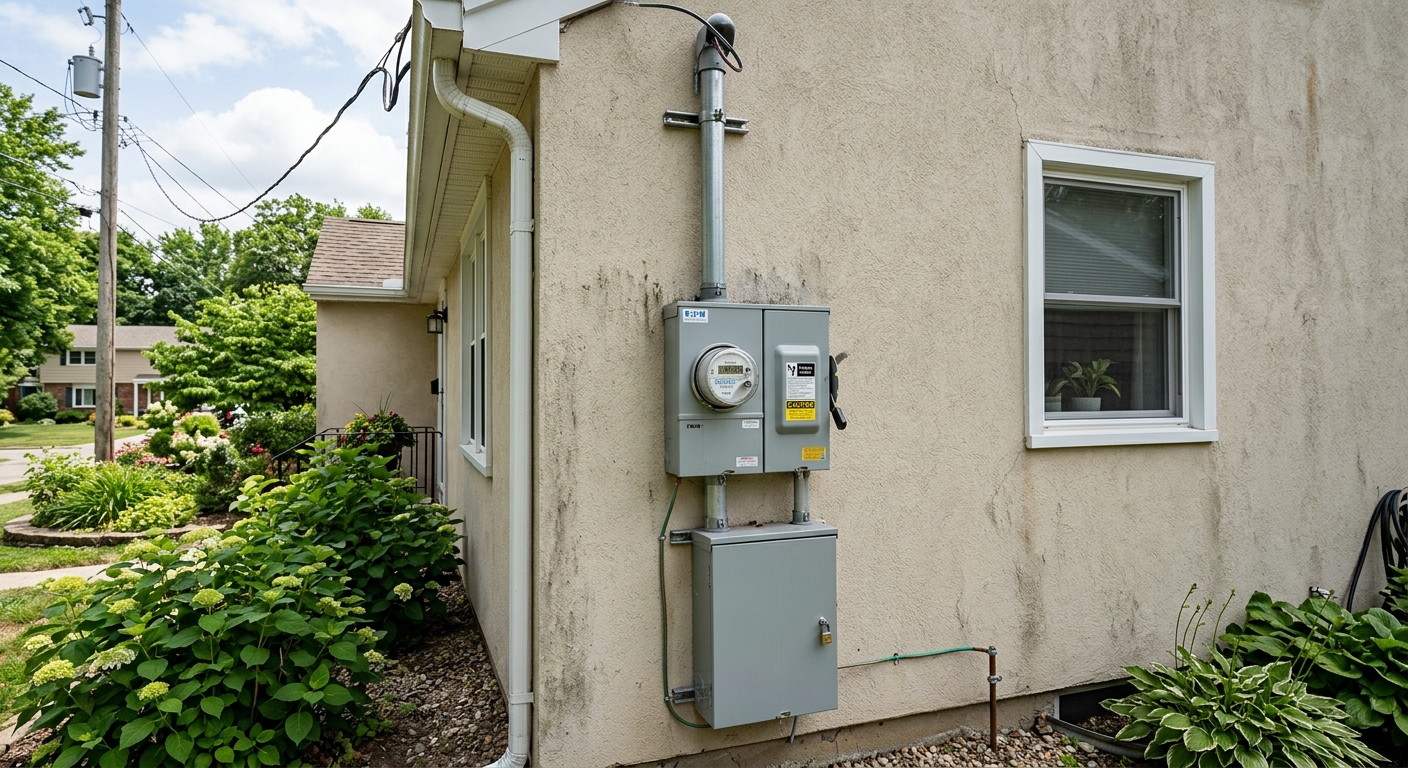
Meaford homeowners often face electrical projects that are driven by older homes, evolving power demands, and the practical realities of rural service calls. In the Stratford–Bruce Peninsula region, the housing stock is frequently dated—58.3% of homes were built before 1981—so many service upgrades are paired with modernization work like knob-and-tube removal, panel downsizing fixes, and circuit additions. That “foundation” work matters because many houses here were designed around lower household loads, long before EV charging and modern heat pumps became common.
Stratford–Bruce Peninsula also has a mixed workload: rural properties mean longer travel distances and sometimes limited jobsite access during winter road conditions. At the same time, electrification is increasing electrical permitting and inspection volume. EV adoption is pushing more Level 2 installations (40–50A circuits), and service sizing is often revisited through load calculations and ESA-required design details.
Another local driver is homeowner expectations—most buyers in Meaford are planning for long-term living, and the regional contractor market reflects that. In neighbourhoods around Meaford Harbour / downtown, where older detached houses are common, electricians are especially in demand for panel evaluations, wiring remediation, and “finish-ready” installs that can be inspected before drywall is closed.
Because of these factors, two quotes for the “same” end goal can differ widely. Use the table below as a realistic starting point for budgeting panel work, EV charging, and full rewires in Meaford.
| Service |
Why It's Needed |
Permit Required |
Price Range |
| Panel upgrade — 100A to 200A service |
Modern loads (EV chargers, heat pumps, induction cooking) often exceed older panel capacity; 200A is commonly recommended after load calculations |
Yes (ESA permit and inspection) |
$2,900–$5,300 |
| EV charger installation (Level 2, 40–50A) |
Dedicated circuit reduces nuisance breaker trips and improves charging reliability; may include subpanel or service re-evaluation |
Yes (ESA permit and inspection) |
$1,400–$3,100 |
| Knob-and-tube wiring removal and replacement |
Old wiring systems are not accepted for new work and are often treated as an insurance risk; replacement restores safe routing and modern protection |
Yes (ESA permit and inspection) |
$9,500–$18,500 |
| Aluminum wiring remediation (CO/ALR connectors) |
Licensed remediation with approved connectors can reduce overheating risk; some homes still require partial or full replacement depending on condition |
Yes (ESA permit and inspection) |
$4,000–$10,500 |
| New dedicated circuit (HVAC, appliance, hot tub) |
Adds capacity for high-demand loads and reduces overloaded shared circuits; often requires new cable runs through finished areas |
Yes (ESA permit and inspection) |
$1,400–$3,600 |
| Whole-home rewire (older home, full replacement) |
When wiring has multiple hazards (age, mixed materials, unsafe junctions), full replacement is the safest long-term approach |
Yes (ESA permit and inspection) |
$12,000–$25,000 |
Prices are estimates only and vary by project scope, site access and material selection.
What affects the price of electrical work in Meaford
Electrical quotes for the same outcome can easily swing by 30–50% across Stratford–Bruce Peninsula and Ontario because labour hours, material selection, and permit/inspection planning aren’t identical from one home to the next. Even when the visible scope is “just” a panel upgrade, older wiring routes, patchwork past repairs, and the need for fishing wires through finished walls can add substantial time.
The dominant cost driver here is the age and wiring type of the home. With 58.3% of homes built before 1981, many projects start from a panel that’s undersized (common scenarios include 60A or early 100A service) and wiring systems that don’t match today’s code expectations. Homes built before 1950 may involve knob-and-tube; insurance and resale due diligence often require removal rather than “leave as-is.” In the 1965–1976 window, aluminum wiring is a frequent issue, and it typically needs licensed remediation using approved CO/ALR connectors—or full replacement if connections are deteriorated.
EV adoption is also tightening timelines and increasing workload: Level 2 installations typically require a dedicated 40–50A circuit, and many homes need updated load calculations before an electrician can confirm whether 100A-to-200A is enough. In practical budgeting terms, a panel upgrade/service upgrade typically falls in the $2,500–$5,000 band, while wiring and rewiring often lands in the $8,000–$20,000 range depending on how much wall opening is required.
In Meaford specifically, two examples frequently change the price: (1) whether the cable route is accessible in basement/crawlspace vs. fully finished walls, and (2) winter access and travel time to rural lots outside the core. On the other hand, quotes can come down when the electrician can reuse existing low-voltage pathways, confirm wiring conditions early, and avoid extra permit amendments.
| Price Factor |
Why It Matters |
Cost Impact |
| Panel size upgrade — 100A to 200A is the standard minimum today |
More capacity for modern loads; may require service equipment changes and updated grounding/bonding |
Often the biggest line item at roughly $2,500–$5,000 for the backbone work |
| Wiring type — copper vs. aluminum remediation vs. K&T removal |
Aluminum requires approved remedial work; knob-and-tube frequently requires replacement for safety and insurance |
Can add thousands: remediation may be $4,000–$10,500, while K&T removal can be $8,000–$20,000+ |
| Number of new circuits — each adds material and labour time |
New breakers, wiring runs, and terminations increase labour hours (especially through finished spaces) |
Commonly adds $1,400–$3,600 per meaningful dedicated circuit |
| Permit + ESA/TSBC inspection fee — mandatory for all major work |
Major work must be permitted and inspected; fees are not optional |
Typically a few hundred to over a thousand depending on scope and amendments |
| Labour rate for licensed electricians — journeyman rates in {region} |
Licensed journeyman time is the cost driver when walls must be opened and cables fished |
At $90–$140/hour regionally, additional hours can swing total cost by 30–50% |
| EV charger amperage — 40A vs. 50A circuit affects cable and breaker cost |
Higher amperage can require heavier cable and different breaker/loads confirmation |
May shift the EV line item within about $1,200–$2,800 for typical installs |
| Emergency or after-hours premium |
Urgent troubleshooting and scheduling costs more for crews and travel |
Can add a noticeable premium (often several hundred or more depending on time and urgency) |
| Load calculation required for service upgrade |
ESA expectations and engineering assumptions determine required service size and breaker planning |
Sometimes adds design time, preventing rework and change-orders later |
Permits & regulations in Ontario
In Ontario, ALL electrical work beyond changing a light bulb must be performed by a licensed electrician. That includes panel upgrades, adding or moving outlets, installing dedicated circuits (including EV chargers), rewiring, and any service change. For these permit-required jobs, your contractor pulls an ESA permit and the work must pass ESA inspection before it’s considered compliant. In practice, the most common “permit surprises” for homeowners are new circuits, service equipment changes, and any “new wire run” that extends the electrical system—not just surface-level fixture swaps.
Homeowner DIY for electrical is restricted and not a substitute for hiring a licensed electrician for safety-critical work. Even when something seems minor, if it involves connecting wiring, altering circuits, or modifying protection devices, it typically crosses into regulated territory. If you’re unsure, ask the electrician what’s permitted and what inspections are required before work begins.
To verify an Ontario contractor in Meaford, start with their licence number and confirm it through the ESA/online licensing registry. Next, request a certificate of insurance naming you (or your property) as an additional insured where appropriate, and confirm they have WSIB/WCB coverage (not just general liability). Finally, ask whether they provide an ESA permit number and inspection completion paperwork. Clear documentation protects you during resale and if any insurance questions arise later.
When your Meaford home needs an electrical upgrade
Meaford homes can look “fine” right up until a safety-critical issue shows up, especially in older detached houses where wiring paths are hidden behind finished walls. Here are the most common warning signs that point to real electrical upgrades—not cosmetic fixes.
(1) Breakers that trip regularly usually means an overloaded panel, undersized circuits, or failing connections. If it’s frequent, treat it as urgent because repeated tripping can indicate overheating at terminations.
(2) Knob-and-tube wiring present is a key concern because older insulation and connection practices can degrade. Even if it’s “still working,” it’s a high-risk system for both safety and insurance; plan removal and replacement, and don’t rely on patch repairs.
(3) 60A or 100A service is often inadequate for today’s combined loads—EV charging, heat pumps, and modern kitchen appliances running together. In many Meaford homes, a 200A upgrade is the standard solution after load calculations, especially when planning for Level 2 EV charging.
(4) Aluminum wiring (pre-1976 construction) is not always immediately dangerous if properly maintained, but it requires licensed remediation. Approved CO/ALR connectors or replacement is what you should expect.
(5) Insufficient outlets or extension cords everywhere points to circuit limitations. It’s not automatically “emergency,” but it typically becomes unsafe quickly, so plan additional circuits—especially before winter when cords and temporary heaters increase risk.
(6) No AFCI or GFCI protection where required is a code-compliance issue that can show up during sale or inspection. If you’re listing your home, this is often a planned upgrade that pays off.
For budgeting context, a panel/service upgrade is commonly in the $2,500–$5,000 band, and that’s often justified when it prevents expensive partial work later (like redoing wiring again to support an EV). If the wiring is already failing, full rewiring can be the cheaper “total” over time, but it’s a bigger upfront investment—often $8,000–$20,000 depending on scope.
| Warning Sign |
What It Means |
Recommended Action |
Urgency |
Price Band |
| Breakers trip frequently |
Possible overload, failing breaker, or overheating/connection issues |
Troubleshoot load and circuits; inspect panel and connections; add capacity if needed |
Immediate |
$500–$3,600 |
| Knob-and-tube wiring present |
Older insulation and connection methods that don’t meet today’s safety expectations |
Plan staged removal and replacement; update outlets/protection as circuits are rebuilt |
Planned urgent |
$9,500–$18,500 |
| 60A or 100A panel (inadequate load capacity) |
Not enough headroom for EV chargers, heat pumps, and modern kitchen loads |
Service and panel upgrade with load calculation; add EV-ready breaker/circuit planning |
Planned |
$2,900–$5,300 |
| Aluminum wiring (pre-1976 construction) |
Connection heating risk without proper licensed remediation and approved connectors |
Inspect and remediate with CO/ALR connectors or replace affected runs |
Planned |
$4,000–$10,500 |
| Insufficient outlets — extension cords everywhere |
Circuits are being overloaded with temporary power use |
Add dedicated circuits and additional receptacles; verify GFCI protection where required |
Planned urgent |
$1,400–$3,600 |
| No AFCI or GFCI protection where required |
Older safety protection not meeting current expectations; can affect resale and inspection outcomes |
Replace/upgrade receptacles and breakers to appropriate protection levels |
Planned |
$600–$2,500 |
How to choose a electrical work contractor in Meaford
Choosing the right electrical contractor in Meaford starts with verification and clear paperwork. First, confirm Ontario licensing: ask for the contractor’s licence number and verify it through the ESA licensing registry. Next, request proof of liability insurance (certificate of insurance) and confirm WSIB/WCB coverage—don’t accept “we’re covered” without documents. If you’re hiring for a permit-required project like a panel upgrade or EV charger, these details matter for both safety and your protection.
Then, get 2–3 itemised written quotes. Ideally, the quote breaks out labour and materials separately (panel gear, breakers, cable, connectors, conduit, charger hardware), and it lists permit and inspection responsibilities. Read the scope carefully: what’s included for disposal, drywall patching restoration, cable routing through finished areas, and whether permit amendments are included if ESA requires changes. Also check warranty terms—workmanship warranty length, manufacturer warranties on equipment, and whether warranties are transferable if you sell your home.
For payment, use a schedule that limits upfront payment to about 10–15%, and hold back a portion until the job is complete and inspected. Get a start date and completion estimate in writing so you can plan around winter heating needs and inspection timing.
- Ask for ESA permit number and who will book the inspection.
- Confirm the quote includes load calculation for service upgrades when required.
- Request an itemised labour plan (hours/phases) and materials list.
- Check whether the quote includes disposal of removed wiring/panel components.
- Clarify which components are included (breaker types, AFCI/GFCI where needed).
- Verify they will test and commission chargers/circuits before closing walls.
- Confirm how they handle finished drywall (patching, reinstatement, or not).
- Ask how they manage winter scheduling and rural travel on your property.
- Require a workmanship warranty in writing, not just a verbal assurance.
- Confirm manufacturer model numbers for the panel, breakers and EV equipment.
- Use payment milestones tied to inspection-ready completion.
- Make sure the electrician’s licence details are on the contract/invoice.
Red flags I see in Meaford include: quotes that only list a “lump sum” with no permit responsibility, refusal to provide licence/insurance/WSIB documents, unclear scope around wiring access through finished walls, pushing for large upfront payments, and missing details on AFCI/GFCI or EV circuit amperage/breaker sizing.
Frequently asked questions — electrical work in Meaford
How do I compare electrical quotes?
In Meaford, compare quotes using the same checklist, not just the final total. Ask each contractor for an itemised breakdown of labour hours and materials (panel gear, breakers, cable, connectors, charger hardware) and confirm who applies for the ESA permit and books inspections. Look for scope clarity: are disposal and any required cable routing/fishing included, and are restoration/patching of finished walls included or excluded? For grounding and protection upgrades, ensure each quote addresses AFCI/GFCI where applicable. Finally, compare “like-for-like” equipment—brand/model numbers matter. If one quote is far below a typical range, it may be skipping required permit work or using lower-spec components.
How long does a panel upgrade take in Meaford?
Most 100A-to-200A panel upgrades in Meaford take a day to about two days of active work, depending on access and whether ESA requirements mean additional changes (like service grounding/bonding updates, cable adjustments, or breaker layout rework). If walls are opened for wiring reroutes or if the electrician discovers older wiring issues during the first site visit, timelines can extend. Winter travel and rural access can also add scheduling time, even when the actual install work is efficient. A good contractor will provide a start date and inspection-ready completion estimate in writing, and will plan for ESA inspection scheduling so you’re not waiting weeks to restore normal operations.
What is a GFCI outlet and where is it required in Ontario?
A GFCI (Ground-Fault Circuit Interrupter) outlet protects against shock hazards by monitoring current differences and shutting the circuit off quickly if a fault is detected. In Ontario, GFCI protection is required in specific locations where moisture is present or shock risk is higher—commonly in areas like kitchens, bathrooms, garages, basements, and outdoors (subject to the exact conditions in your install). If your home is older, it may have “standard” receptacles without GFCI, which can become an issue at inspection or during resale. Upgrading protection may be part of a larger panel or rewire project, and costs are often smaller line items compared with full rewiring. For reference, panel/service changes are often in the $2,500–$5,000 range, while protection upgrades can be much less depending on scope.
How do I know if my Meaford home has aluminum wiring?
The surest method is a licensed electrician’s inspection, because aluminum wiring can be hidden behind walls, and the condition/connection type matters. That said, homeowners can often start with a few clues: look in the panel for wire markings (aluminum is commonly labelled), check receptacle boxes for wiring type when safe to do so visually, and review any prior home inspection or electrical documentation. In the Stratford–Bruce Peninsula region, aluminum wiring is more frequently associated with homes from the mid-1960s through the mid-1970s, so age is a helpful indicator—but not proof. An electrician can also confirm based on conductor type and assess connections. Remediation typically uses approved CO/ALR connectors; the cost can land around $4,000–$10,500 depending on how much is affected.
What is the cost of rewiring a house in Meaford?
Whole-home rewiring costs in Meaford depend on whether it’s a full replacement (all circuits and major routing) and how much wiring access is available. In the region, older housing stock and finished-wall fishing usually drive labour time, so the job can be substantially more than “surface-only” upgrades. As a budgeting benchmark, whole-home rewire projects often fall in the $12,000–$25,000 range, while specific wiring remediation/removal (like knob-and-tube removal and replacement) commonly falls around $9,500–$18,500. If your goal is mainly to add circuits for EV charging or modern appliances, partial work and a panel upgrade may be a lower-cost first step—but the safest choice depends on the actual wiring condition.
What electrical upgrades are required when selling a home in Ontario?
Ontario doesn’t have one universal “must-do list” for selling, but electrical work must be safe and meet inspection expectations when required. In practice, many sales proceed smoother when key safety items are addressed: missing GFCI protection in required locations, absence of AFCI protection where applicable, faulty or unsafe receptacles/switches, and—most importantly—hazardous wiring types. For Meaford homes with older wiring systems, insurance and home inspection scrutiny can focus on knob-and-tube or improper connections. Service and panel adequacy also matter because buyers often expect capacity for modern loads, especially EV readiness. If you’re planning upgrades before listing, a service/panel plan is often justified within the $2,500–$5,000 band, but whether you need that depends on your current service size and load calculations.