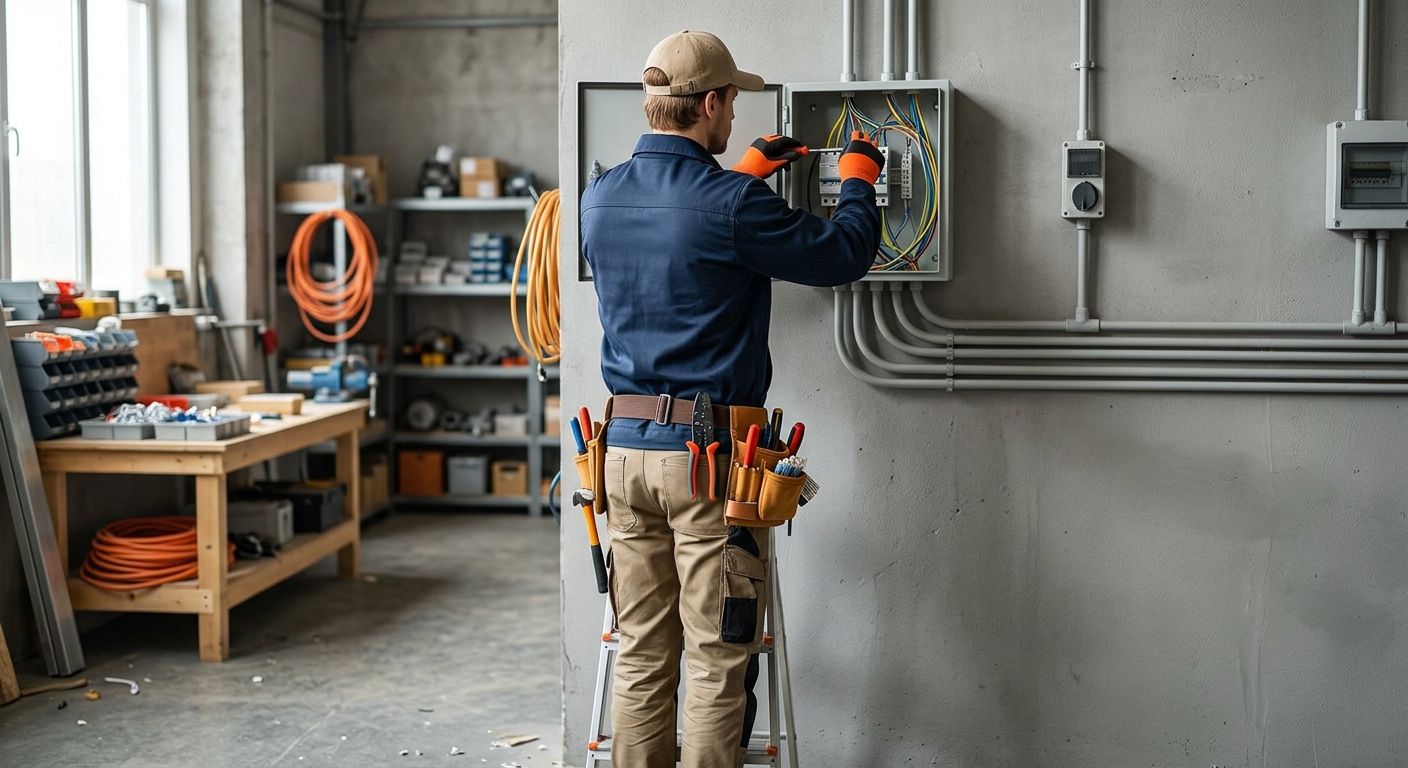
Electrical services and costs in Etobicoke
Etobicoke homeowners often run into electrical bottlenecks sooner than people expect, especially when they upgrade kitchens, add an EV charger, or finish a basement. In the wider Toronto area, the housing stock skews older—Etobicoke’s population is about 365,000 (Statistics Canada, 2021 Census)—and many properties still reflect wiring designs that pre-date today’s appliance and comfort expectations. In practice, that means you’ll commonly see knob-and-tube wiring in older homes and, in mid-century neighbourhoods, aluminum branch wiring that may require remediation. These are prime candidates for panel upgrades, safer load distribution, and (where necessary) partial or full rewiring.
Toronto’s real-world conditions also push electrical costs up and down. Density means lots of work is done in tight spaces with finished basements, finished ceilings, or exterior retrofits that require careful access. At the same time, the GTA market has a large, established contractor base—so competition can improve scheduling, but it doesn’t eliminate price pressure. Demand drivers like heat pumps, electric heating, and Level 2 EV charging increase permit applications and extend lead times for panels, breakers, specialty cable, and sometimes trenching materials for exterior work. Neighbourhoods with older stock and active infill—such as Islington-City Centre West and areas closer to Kipling—tend to see higher volume of service upgrades, appliance-circuit additions, and rewiring projects.
To help you budget realistically, here’s a side-by-side comparison of common electrical services and what typically triggers permitting and inspection.
| Service |
Why It's Needed |
Permit Required |
Price Range |
| Panel upgrade — 100A to 200A service |
Modern homes add load: EV chargers, heat pumps, induction/electric stoves, finished basements, and heat recovery ventilation; a 200A service is the common minimum for safe future capacity. |
Yes (permit + ESA inspection) |
$2,500–$6,000 |
| EV charger installation (Level 2, 40–50A) |
Provides a dedicated, code-compliant circuit for faster home charging and reduces nuisance tripping caused by shared or overloaded circuits. |
Yes (permit + inspection) |
$900–$2,500 |
| Knob-and-tube wiring removal and replacement |
Old insulation and connection methods can fail over time; replacement improves safety and usually resolves insurance concerns tied to legacy wiring. |
Yes (permit + inspection) |
$3,000–$12,000 |
| Aluminum wiring remediation (CO/ALR connectors) |
Licensed remediation using approved connectors reduces the risk of overheating at terminations and may restore safer performance without tearing everything out. |
Yes (permit + inspection) |
$3,000–$8,000 |
| New dedicated circuit (HVAC, appliance, hot tub) |
Dedicated circuits keep high-draw equipment from overloading shared wiring and help meet modern code expectations for specific loads. |
Yes (permit + inspection) |
$500–$3,500 |
| Whole-home rewire (older home, full replacement) |
When wiring is widespread, unstable, or undersized for today’s load, a full rewire modernizes protection, bonding/grounding, and circuit layout. |
Yes (permit + inspection) |
$8,000–$15,000 |
Prices are estimates only and vary by project scope, site access and material selection.
What affects the price of electrical work in Etobicoke
In Etobicoke, two quotes for the “same” job can vary by 30–50% because electrical work is rarely identical in the field. The dominant driver is the age and condition of the housing wiring. Older homes built before 1950 may have knob-and-tube wiring, and many insurers are increasingly strict about legacy wiring that increases fire risk; even when the work is primarily electrical, the cost is often higher because you’re relocating circuits, opening walls, and upgrading protection devices. Homes from the 1960s to 1970s often show 60A or 100A services that were adequate for past loads but struggle when homeowners add a Level 2 EV charger, a heat pump, and modern electric cooking or larger basements. In many 1965–1976 homes, aluminum branch wiring is also common; remediation must be done with approved CO/ALR connectors (or full replacement), and terminations take time.
EV adoption is also reshaping costs across the Toronto economic region. In many cases, the charger circuit alone isn’t the issue—the service capacity and panel space are. If your panel is crowded or you need a load calculation, that can push the project toward a 100A-to-200A panel upgrade. Toronto-area labour pricing typically runs about 90–120 per hour for licensed electrical contractors, and travel/time for coordinating permits and ESA inspections adds cost when access is difficult.
Concrete examples from Etobicoke that raise or lower cost: (1) Finished basement ceilings or drywall patching can add both labour and materials when you need new homeruns; (2) A straightforward, accessible panel location reduces labour compared with relocating the service equipment; (3) If your existing wiring can be safely extended and the panel has capacity, a dedicated circuit may stay closer to the lower end, whereas whole-home wiring work often lands in the higher bands.
As a rule of thumb, a panel upgrade band of $2,500–$6,000 can be the “unlock” cost for upgrades like EV charging, while wiring and rewiring work can climb from $3,000–$15,000 depending on how much is being opened, replaced, or modernized.
| Price Factor |
Why It Matters |
Cost Impact |
| Panel size upgrade — 100A to 200A is the standard minimum today |
Improves capacity for EVs, heat pumps, and modern appliance loads and creates space for additional breakers. |
Often shifts the project into the $2,500–$6,000 service upgrade band |
| Wiring type — copper vs. aluminum remediation vs. K&T removal |
Copper extensions are usually faster; aluminum requires approved connectors and careful terminations; knob-and-tube often means removal and replacement. |
Can add thousands when moving from targeted work into broad rewiring |
| Number of new circuits — each adds material and labour time |
Each breaker/cable run includes estimating, parts, testing, and cleanup; more circuits means more labour hours. |
Commonly increases labour and materials by 10%–30% per additional circuit |
| Permit + ESA/TSBC inspection fee — mandatory for all major work |
Permits ensure compliance with the Ontario Electrical Code and trigger required inspections before energizing. |
Typically adds about $200–$500 in permit/inspection costs depending on scope |
| Labour rate for licensed electricians — journeyman rates in {region} |
Licensed labour costs and scheduling availability directly affect total price. |
At roughly $90–$120/hr, a few extra hours can swing the quote meaningfully |
| EV charger amperage — 40A vs. 50A circuit affects cable and breaker cost |
Higher amperage may require larger conductors, breakers, and sometimes different charger configuration. |
Often moves EV work toward the upper end of $900–$2,500 |
| Emergency or after-hours premium |
Urgent callouts reduce scheduling flexibility and increase rates. |
Can add a noticeable premium (often a couple hundred dollars or more) |
| Load calculation required for service upgrade |
When panels are old or the home is being renovated, engineers/calculations may be required to justify the service size and circuit additions. |
May add $300–$800+ depending on complexity and documentation needs |
Permits & regulations in Ontario
In Ontario, all electrical work beyond changing a light bulb must be done by a licensed electrician, and most homeowners should assume permits and inspections are required for anything that changes circuits, panels, wiring, or safety devices. This includes panel upgrades (including 100A-to-200A service), new dedicated circuits (such as for an EV charger, hot tub, HVAC, or electric heating), rewiring work, and any service-related modifications. Simply swapping a like-for-like receptacle or fixture is typically not the same as adding circuits or altering wiring paths; when in doubt, ask your electrician whether a permit is required for the exact scope.
Permitted work must pass inspection by the Electrical Safety Authority (ESA) in Ontario before it’s signed off for energization and compliance. DIY electrical is restricted—there aren’t broad homeowner “exceptions” for wiring changes—so if someone offers to do it without permitting, that’s a major red flag for both safety and future resale.
Step-by-step, here’s how a homeowner in Etobicoke can verify a contractor: (1) confirm the electrician/company licence using the Ontario online registry listings provided for licensed electrical contractors; (2) request a Certificate of Insurance showing liability coverage and ensure it’s current; (3) ask for WSIB/WCB clearance (or documentation of exemption/coverage); and (4) before work starts, review the written scope and confirm that the permit will be pulled for panel upgrades, EV circuits, and rewiring. Clear documentation protects you during inspection and reduces liability if issues arise.
When your Etobicoke home needs an electrical upgrade
Electrical upgrades aren’t just about having “more power”—they’re about preventing unsafe conditions that show up in everyday symptoms. In Etobicoke and across the Toronto market, the warning signs usually reflect either overloaded capacity, outdated wiring methods, or missing modern safety protection.
Start with the most common safety indicator: (1) breakers that trip regularly. If breakers trip when you run the microwave, kettle, laundry, or A/C, the issue is often an overloaded circuit or panel capacity limits rather than “bad luck.” (2) Knob-and-tube wiring is a key concern because of legacy insulation and connection methods; it’s often not just an age issue, but an insurance and safety issue. (3) A 60A or 100A service can be inadequate for a modern household running an EV charger, heat pump, electric stove, and a finished basement—this is why a 200A upgrade is often the standard solution. (4) Aluminum wiring (commonly found in pre-1976 construction) may still be serviceable if maintained, but it generally requires licensed remediation and safe termination practices, not DIY fixes. (5) Insufficient outlets—extension cords everywhere—signals a layout problem that commonly leads to nuisance trips and overheating risks.
Finally, (6) missing AFCI/GFCI protection where required can become a compliance issue at home sale or inspection. In Toronto’s climate, winter heating loads and summer A/C spikes can reveal weaknesses that a brief warm-weather test won’t catch.
Budget-wise, if you’re considering options, remember that a panel upgrade in the $2,500–$6,000 band may cost less than repeated troubleshooting and circuit-by-circuit work that still can’t handle EV charging and modern loads. When the wiring is widespread, the “fix” can’t be only cosmetic—it has to be structural.
| Warning Sign |
What It Means |
Recommended Action |
Urgency |
Price Band |
| Breakers trip frequently |
Possible overloaded circuits, undersized wiring, or a panel that can’t handle current loads safely. |
Schedule a load/circuit assessment and test for underlying faults. |
High (book soon) |
$500–$3,500 |
| Knob-and-tube wiring present |
Legacy wiring with aging insulation and connection methods that can increase risk. |
Plan removal and replacement of affected sections; prioritize circuits serving high-use areas. |
High (safety/insurance concern) |
$3,000–$12,000 |
| 60A or 100A panel (inadequate load capacity) |
Modern appliance loads and EV/heat equipment can exceed capacity or breaker space. |
Consider 100A-to-200A panel upgrade with load calculation and new circuits. |
High (especially before EV/heat pump use) |
$2,500–$6,000 |
| Aluminum wiring (pre-1976 construction) |
Risk is often at connections/terminations; aluminum requires proper remediation. |
Use licensed aluminum remediation (CO/ALR connectors) or targeted replacement where needed. |
Medium to high |
$3,000–$8,000 |
| Insufficient outlets — extension cords everywhere |
Improper temporary wiring increases overheating and tripping risks. |
Add receptacles and dedicated circuits for high-load devices. |
Medium |
$500–$3,500 |
| No AFCI or GFCI protection where required |
Increased risk of arc faults and shock hazards; can be flagged during home sale/inspection. |
Replace/upgrade breakers and receptacles as required by the Ontario Electrical Code. |
Planned (but don’t delay) |
$200–$5,000 |
How to choose a electrical work contractor in Etobicoke
Choosing the right contractor matters as much as price—especially in Etobicoke, where older wiring and service upgrades are common. Start by confirming Ontario licensing. Ask for the licence details and verify them in Ontario’s official online registry. Next, request proof of liability insurance and ensure the Certificate of Insurance is current and matches the work being performed. Finally, confirm WSIB/WCB coverage documentation—this is important for jobsite safety and protects you if a worker is injured.
When you get quotes, request 2–3 itemised written estimates rather than a lump sum. A good quote breaks out labour versus materials (panel equipment, breakers, cable, connectors for aluminum/CO/ALR, disposal/demolition allowances, and any required specialty parts). Read the scope carefully: what’s included and what’s excluded? For example, is permit pulling included, who pays for inspection fees, and is debris removal/drywall patching part of the scope or billed separately? Ask whether the contractor plans any remediation for aluminum terminations and whether they’ll address knob-and-tube circuits in a defined area.
Warranty matters too. Confirm workmanship warranty length and whether the manufacturer warranty on panels/chargers is provided to you as the owner; ask if it’s transferable if you sell the home. For payment, avoid paying more than 10–15% upfront and use a holdback until the job is complete and inspected. Get a written start date and completion estimate so you have schedule clarity, especially during Toronto-area renovation peaks.
- Verify Ontario licensing through the official registry before signing.
- Confirm liability insurance (current COI) and ensure coverage applies to your project.
- Check WSIB/WCB status or clearance documentation.
- Ask for ESA/permit responsibility in writing for panel work and EV circuits.
- Use itemised quotes (labour + materials, not just a total).
- Confirm whether disposal/cleanup is included.
- Confirm any load calculation requirement for service upgrades.
- Ask how aluminum remediation will be handled (approved CO/ALR connectors vs replacement).
- Request details on testing/commissioning and final inspection coordination.
- Check workmanship warranty length and what it covers.
- Agree on payment schedule: 10–15% max upfront, holdback on completion.
- Get a written timeline: start date, inspection day, and completion target.
Red flags in Etobicoke include: contractors who won’t pull permits for panel upgrades/EV circuits, quotes that omit whether materials like the panel, breakers, or required cable are included, unclear warranty terms, requests for large deposits (beyond 10–15%), and “verbal-only” scope descriptions that don’t match the site conditions (access constraints, finished basements, or known aluminum/K&T areas).
Frequently asked questions — electrical work in Etobicoke
How long does a rewiring job take?
Rewiring timelines in Etobicoke depend heavily on whether it’s a targeted section (for example, replacing a knob-and-tube run feeding a kitchen) or a full-home rewire. For a partial rewiring, many projects are completed in about a few days to a week when access is reasonable. Whole-home rewires commonly take longer because you’re coordinating circuit layout, fishing cable through walls/ceilings, replacing devices, and completing testing before ESA inspection. Finished basements and occupied homes can add time due to protecting surfaces and doing careful cut-in work. If your project also includes a service upgrade (often done alongside rewiring), you should plan additional time for equipment scheduling and inspection availability. Your electrician should provide a written start date and estimated inspection date in the quote package.
Why do my breakers keep tripping?
In Ontario homes (including Etobicoke), breakers that trip repeatedly usually point to an overloaded circuit, a failing connection, or undersized/aging wiring for today’s load. For example, a 60A or 100A service may be adequate “on paper,” but once you add a heat pump, an EV charger, electric cooking, and laundry in winter peak usage, the combined demand can stress circuits. If you have aluminum wiring (common in some pre-1976 homes), terminations can heat up over time and cause issues at specific junction points—so it’s not always a simple “reset and forget” problem. The right fix depends on identifying which breaker trips, which loads are running, and whether there are signs of arcing or loose connections. Don’t troubleshoot by repeatedly resetting; schedule an inspection and load assessment so you can move toward the correct service upgrade band if needed, such as $2,500–$6,000 for many 100A-to-200A panel upgrades.
How do I compare electrical quotes?
To compare electrical quotes in Etobicoke fairly, ask for itemised pricing with a clear scope: labour hours, materials, permit and inspection handling, and any remediation approach. Make sure each quote specifies the same essentials—panel size, breaker types, conductor sizes, and whether old wiring (knob-and-tube or aluminum) is being removed, remediated, or bypassed. Watch for quotes that only list a lump sum without naming equipment or stating whether disposal and cleanup are included. For EV charging, compare the amperage (40A vs 50A) and whether the quote assumes a panel upgrade; in many cases, EV work that begins as a $900–$2,500 charger install can increase if the panel capacity or space requires a $2,500–$6,000 service upgrade. Finally, confirm each quote includes ESA-permitted work, testing/commissioning, and a workmanship warranty—those details can make one “cheaper” quote more expensive long-term.
How long does a panel upgrade take in Etobicoke?
A typical panel upgrade in Etobicoke often takes one to two working days, but the full timeline is longer once you include permit processing and ESA inspection scheduling. If the existing panel location is accessible and the upgrade is a straightforward 100A-to-200A replacement, electricians can usually complete the hardware swap, cable terminations, breaker installation, and initial testing quickly. If relocation is required (moving the service, addressing damaged exterior wiring paths, or dealing with difficult access in finished basements), expect extra time for safe remediation and rework. Weather can also affect exterior work and trenching, since Toronto-area conditions change quickly. Your contractor should provide an estimated start date, inspection booking plan, and completion window in writing. While the main “on-site” time may be short, don’t rush energization until the inspection is completed and signed off.
What is a GFCI outlet and where is it required in Ontario?
A GFCI (ground-fault circuit-interrupter) outlet is a protective device that shuts off power when it detects an imbalance in current that could indicate a shock hazard. In Ontario, GFCI protection is required in locations where water exposure increases the risk of electric shock—commonly kitchens and bathrooms, garages, unfinished basements, and outdoor receptacle circuits (and other locations specified by the Ontario Electrical Code). Because requirements can depend on the exact room type and receptacle location, your electrician should confirm whether you need GFCI receptacles or upstream GFCI protection for the circuit. In homes being renovated in Etobicoke, adding or upgrading GFCI/AFCI protection is often part of making circuits compliant during rewiring or circuit additions. If you’re budgeting, GFCI-related upgrades can range widely depending on how many devices are updated; lighting and fixture updates can run in the $200–$5,000 band, while broader compliance work usually ties back into wiring scope.
How do I know if my Etobicoke home has aluminum wiring?
You can often identify aluminum wiring by label/markings on junctions and device boxes, or by how conductors look and behave at terminations. In Etobicoke, aluminum wiring is commonly associated with homes built in the mid-20th century (especially periods when it was widely used in branch wiring). Look for the letters “AL” or “AAC” on wire identification markings inside accessible junction boxes (where permitted and safe to check), and pay attention to any historical notes or disclosure documents from prior owners. However, the most reliable method is having a licensed electrician inspect the conductors and terminations. They may measure, check connection types, and confirm whether CO/ALR-approved remediation is needed or whether replacement is warranted. If aluminum is present, a licensed remediation plan using approved connectors is often part of fixing the real risk—overheating at terminations—rather than treating it like an immediate fire hazard. Pricing depends on scope, but aluminum remediation is frequently in the $3,000–$8,000 range when it’s targeted to affected areas.